Cisco EA and the network estate: what the bundle hides.
A Cisco Enterprise Agreement is sold as simplification: one agreement across networking, security, and collaboration, one true-up, one number. Simplification is also concealment. The bundle hides which parts you use, which you overbought, and what each would cost on its own. See the estate before you renew the wrapper.
A Cisco Enterprise Agreement is one of the broadest bundles a company signs, and breadth is the point. A single agreement can span networking hardware and software, security, and collaboration, rolled into one commitment with one true-up mechanism and one headline number. Cisco presents this as simplification, and the simplification is genuine, one negotiation instead of many, predictable budgeting, portfolio-wide access. But every bundle that simplifies also conceals, and a Cisco EA conceals exactly the things a buyer needs to see: which of the bundled capabilities you actually use, which you are paying for and have not deployed, and what each component would cost if it were priced on its own.
That concealment is where the money hides. When several product families are wrapped into one number, the underused ones are invisible, the overlaps with other vendors are unexamined, and the true-up quietly grows the commitment as your estate expands. Renewing the wrapper without unpicking it means renewing every assumption inside it, including the ones that no longer hold. The move against a Cisco EA is not to reject the bundle, which may genuinely be the right structure, but to see the estate it spans clearly enough to renew it on your terms rather than Cisco's.
The bundle is a portfolio, so see it as one
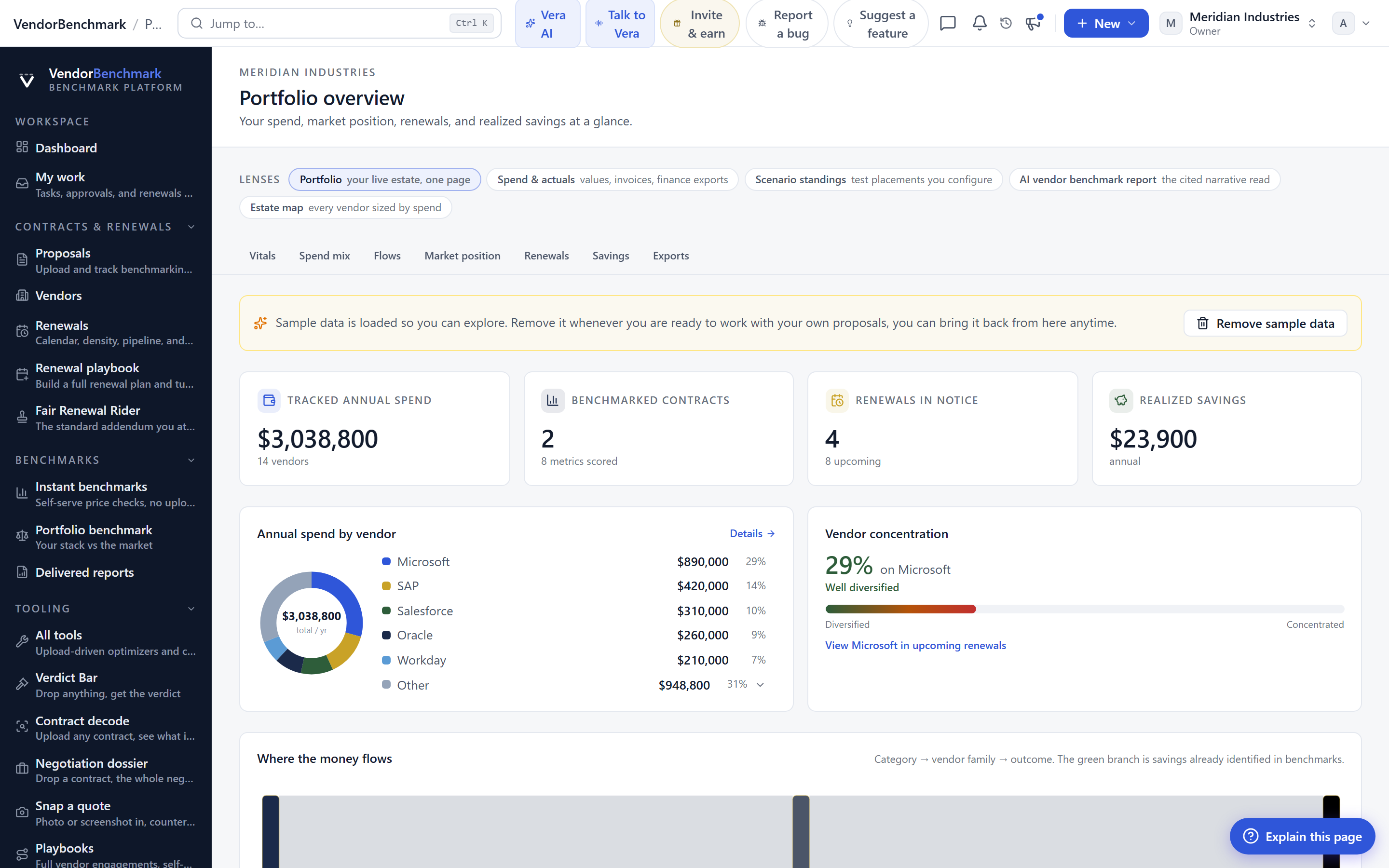
The first step is to stop treating the EA as a single line and start treating it as what it is, a portfolio of distinct product families that happen to share an agreement. Networking, security, and collaboration have different usage patterns, different competitive alternatives, and different value to you, and lumping them into one number erases all of that. Laying the estate out, family by family, with what you are entitled to and what you actually deploy in each, turns the opaque bundle into a set of specific positions you can reason about, and it is almost always the case that the picture is uneven: one family heavily used, another barely touched, a third overlapping something you buy elsewhere.
Seeing the estate this way is what makes the renewal negotiable. A single EA number is hard to argue with because it has no visible parts; a portfolio of families, each with a utilization and a value, gives you specific levers. The underused family is a candidate to drop or shrink at renewal. The overlapping one is a consolidation opportunity. The heavily used one is where the value is and where you might reasonably invest. None of those moves exist while the estate is a single wrapped number, and all of them appear the moment you unpick it.
Price what you use, spot what you overbought
Once the bundle is a portfolio, the underused capacity becomes visible and priceable. Enterprise agreements encourage over-provisioning, because the marginal cost of including another capability in the bundle feels small at signing, and true-ups tend to ratchet the commitment up as you grow without a symmetric mechanism to bring it down when usage does not materialize. The result, on many Cisco EAs, is a meaningful slice of the commitment sitting on entitlements that are provisioned but not deployed, invisible inside the total and quietly renewed every cycle. Naming that gap, family by family, is the clearest saving in the whole exercise.
The same view surfaces the overlaps. Cisco's breadth means its security and collaboration capabilities frequently overlap with tools you already run from other vendors, and a bundle makes that duplication easy to miss because the overlapping Cisco component has no separate price to notice. Seeing the estate against the rest of your portfolio reveals where you are paying twice, once inside the EA and once outside it, which is both a consolidation saving and a negotiating lever, since a capability you can credibly drop from the bundle is a capability Cisco has to price to keep.
Want to be updated when major licensing and pricing changes land? One analyst brief a week: the price rises, metric changes and audit campaigns that move software costs. Work email only.
Benchmark the components, not just the total
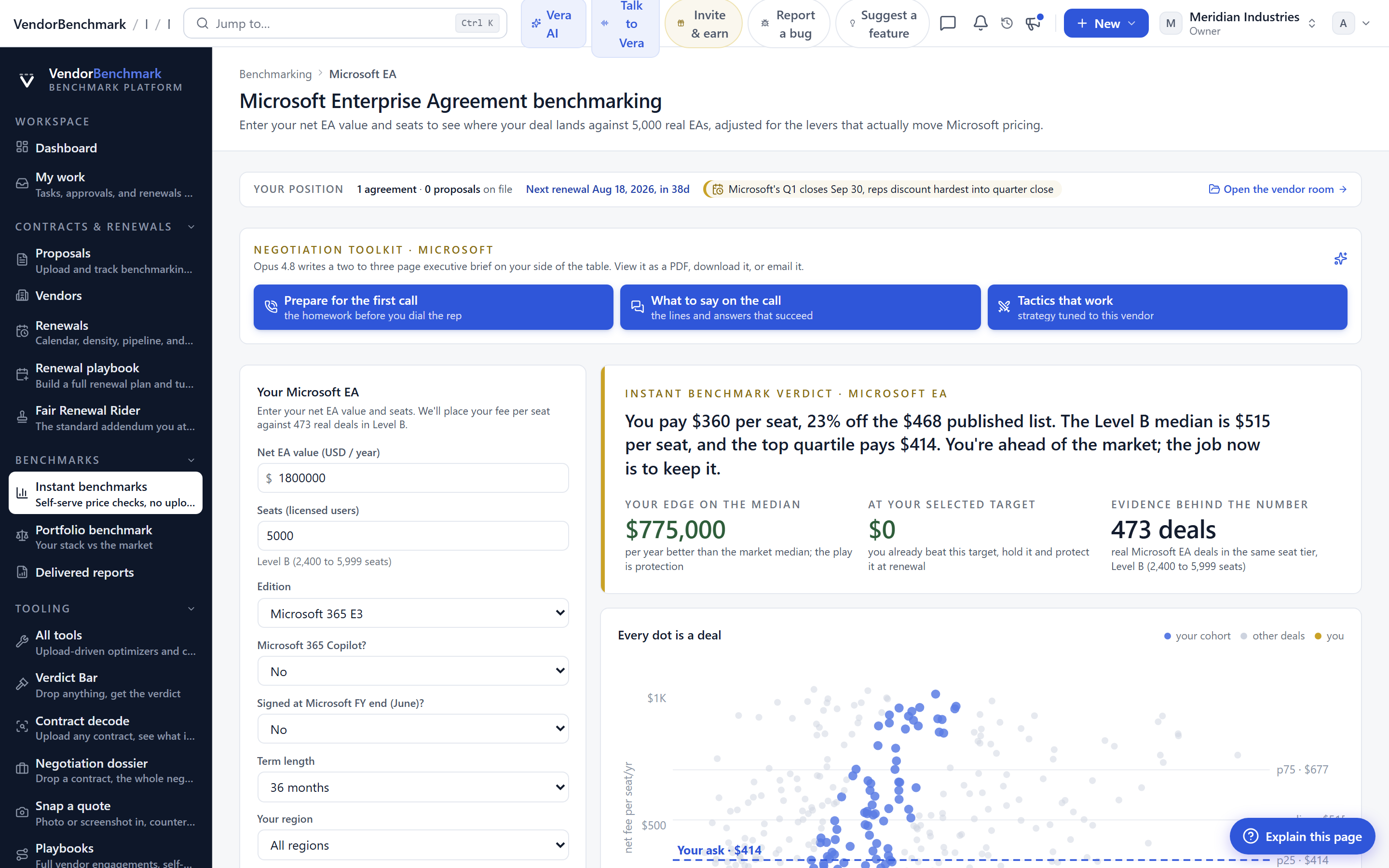
The final move is to benchmark, and the trap to avoid is benchmarking the bundle as a whole, which is nearly impossible because no two companies' EAs contain the same mix. What can be benchmarked is the components: what comparable buyers pay for the networking, security, and collaboration capabilities that make up your specific bundle, priced against modelled cohorts. Assembling the benchmark from the parts tells you whether the EA, taken as the sum of what you actually use, is a good deal or a bundle premium dressed up as a discount, which the single headline number can never reveal.
This component-level benchmark is also what protects you from the bundle's favorite justification, that the whole is cheaper than buying the parts separately. Sometimes that is true and the EA is genuinely the best structure. Often it is only true if you use everything in it, and you do not, so the bundle discount on capabilities you barely touch is no discount at all. Benchmarking the parts you use against the market, and setting that against the all-in EA number, is the only way to know which case you are in, and therefore whether to renew the wrapper, shrink it, or unbundle it.
Renewing the bundle on your terms
The bundle can be right, once you can see it
A Cisco EA is not a trap to escape; for an organization that genuinely uses the breadth, the bundle can be the most cost-effective and operationally simplest structure available, and the analysis may confirm exactly that. The point is not to reject the EA on principle but to renew it as a decision rather than a default, with the estate visible, the underuse priced, and the components benchmarked, so that whatever you sign is a structure you chose knowing what is inside it.
What unpicking the bundle removes is the concealment that makes an EA renewal a leap of faith. Renewed blind, the wrapper carries forward every overbought entitlement and every unnoticed overlap, and the true-up compounds them. Renewed with the estate in view, the same agreement becomes a portfolio you can shape, dropping what you do not use, consolidating what you duplicate, and investing where the value is. The simplification Cisco sells is real; the trick is to have it without paying for the parts you cannot see.
Fredrik has spent more than twenty years in enterprise software, with time at Oracle, IBM, SAP, and Salesforce before moving to the buy side. He structured and priced the kind of large agreements most buyers only see once or twice in a career, which taught him where the leverage sits and how far a vendor will actually move. He started VendorBenchmark to hand that knowledge to every sourcing team.
The week in enterprise software buying, in one email.
What shipped on the platform, and the pricing and licensing moves worth knowing before your next renewal. One email a week, to your work address. Unsubscribe any time.