Legal counsel: AI review that argues your playbook, not generic advice.
In-house counsel does not need an AI that explains what a liability cap is. That is noise. What a legal team needs is a review that knows its own positions, its preferred wording, and its walk-aways, and applies them the same way on every deal, so the lawyer's scarce time goes to judgment, not to finding the issues.
Ask most contract AI to review an agreement and it produces a competent legal opinion that a qualified lawyer does not need. This liability cap is low. This indemnity is one-sided. You might want to negotiate the auto-renewal. All true, all things in-house counsel already knows on sight, and none of it engaging with the one thing that actually matters to a legal team: what this organization has already decided it will and will not accept. For a lawyer, generic contract AI is not a shortcut, it is a slower way to arrive at conclusions they reached in the first read, dressed up as assistance.
The review worth a legal team's attention is the opposite of generic. It knows the organization's playbook, the specific positions the legal function has established, the wording it prefers, the fallbacks it will accept, and the points past which the answer is no, and it applies that playbook consistently across every contract, on the four hundredth as carefully as the first. That is not advice a lawyer already has; it is the enforcement of the lawyer's own standard at a scale and consistency no human review team can match, which is precisely what changes where counsel's time goes.
The AI should argue your positions, not opinions
The shift from generic to useful is the shift from opinion to representation. A generic reviewer tells you a clause is weak; a review built on your clause library tells you that this clause deviates from your organization's established position, proposes the wording your legal team has pre-approved as the replacement, and flags where it crosses your walk-away. The AI stops offering a reasonable-lawyer's view and starts arguing your view, in your words, which is what a legal function actually wants from an assistant: not another opinion to weigh, but its own standard applied.
This matters most because it makes good legal judgment repeatable. A legal team's best negotiator carries a nuanced sense of the organization's positions that does not scale, cannot be everywhere, and leaves with them when they move on. Encoding those positions into a playbook the AI argues from means the standard is applied to every contract regardless of which lawyer or which tool touches it, and it is applied in the approved wording rather than paraphrased into something weaker. The institutional knowledge stops depending on who happens to review the deal.
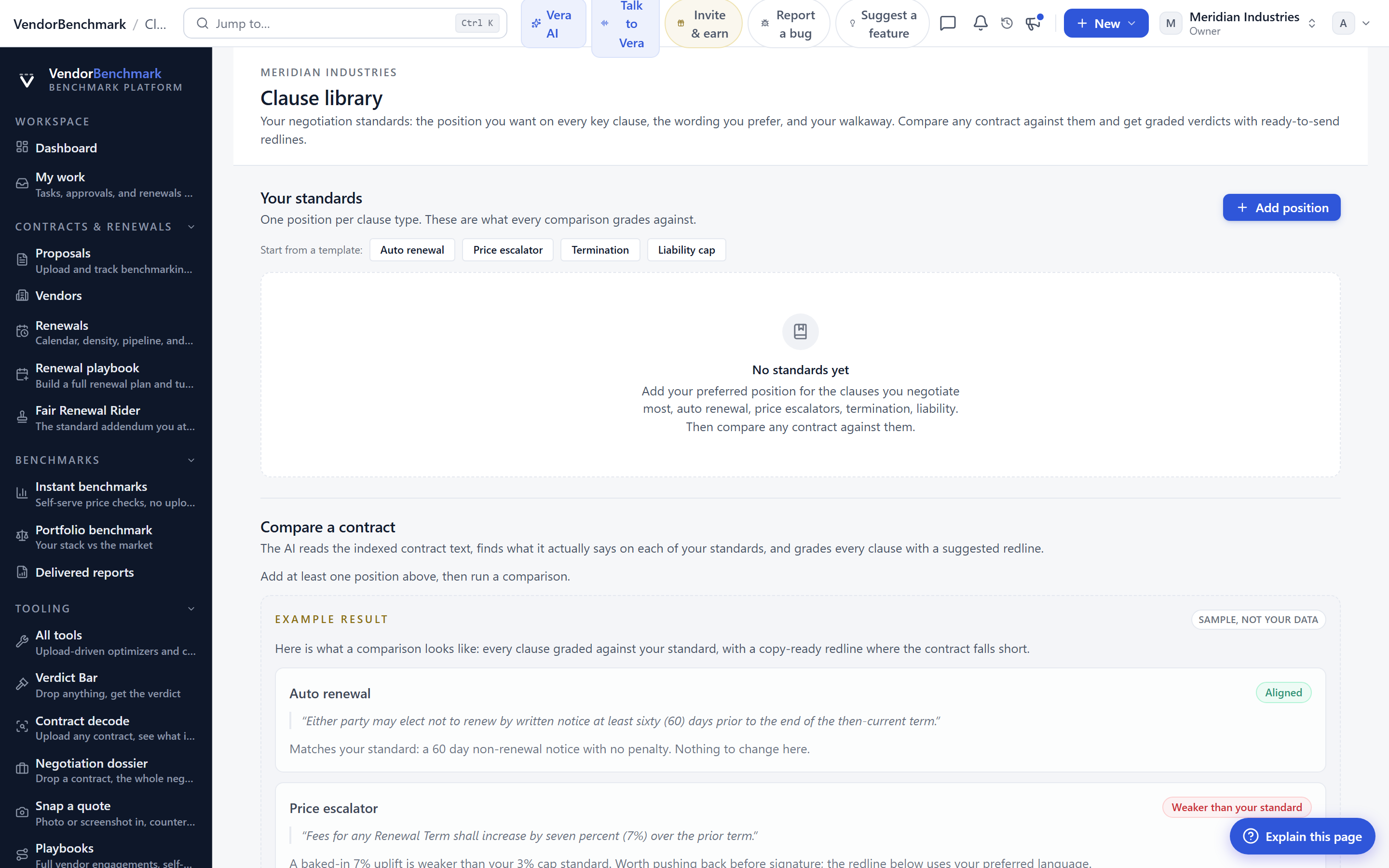
A redline in your language, not the machine's
For counsel, the difference between a review and a redline is the difference between more work and less. A review that lists deviations still leaves the lawyer to open the document, find each clause, and draft the replacement language, which is most of the labor. A review that produces a redline in your own pre-approved wording does that drafting for you, marking the vendor's paper with your standard language as tracked changes, so what lands on the lawyer's desk is a marked-up document to check rather than a memo to act on. The tedious first pass, finding the issues and drafting the edits, is done, in the firm's own words.
That is what shifts where counsel's time goes, and it is the real value for a legal function under load. Instead of spending the first hours of every contract finding the problems and composing the edits, the lawyer spends them judging edits already drafted against the organization's playbook, which is faster precisely because they are reviewing whether the machine applied a known standard correctly rather than evaluating an unfamiliar opinion from scratch. Where the AI cannot cleanly rewrite a clause, it flags it for a human rather than guessing, so the hard, genuinely lawyerly judgments are surfaced and the mechanical drafting is absorbed.
Want to be updated when major licensing and pricing changes land? One analyst brief a week: the price rises, metric changes and audit campaigns that move software costs. Work email only.
The whole estate against your standard, at once
Beyond the single contract, an AI that knows your playbook can do something no human review team can: apply the standard backward across the entire estate at once. A legal function knows the protections it now insists on, but those are enforced on new deals and almost never checked against the hundreds of contracts already signed by different people at different times. A coverage view runs the team's must-have positions across the whole book and shows which existing contracts fall short, turning "our older contracts probably have gaps" into a specific, ranked list of exposures the legal team can actually work.
This is the leverage a legal function gains from encoding its playbook once: the same positions that guide a single review also audit the estate, prepare the renewals, and enforce the standard everywhere the AI operates. The lawyer's judgment is captured as a reusable asset rather than re-expended on every contract, and the function's standard becomes something applied systematically rather than depending on a lawyer being in the room. For a legal team that is always the bottleneck, that shift, from reviewing everything by hand to enforcing a standard the AI carries, is what lets the same team cover far more of the estate without lowering the bar.
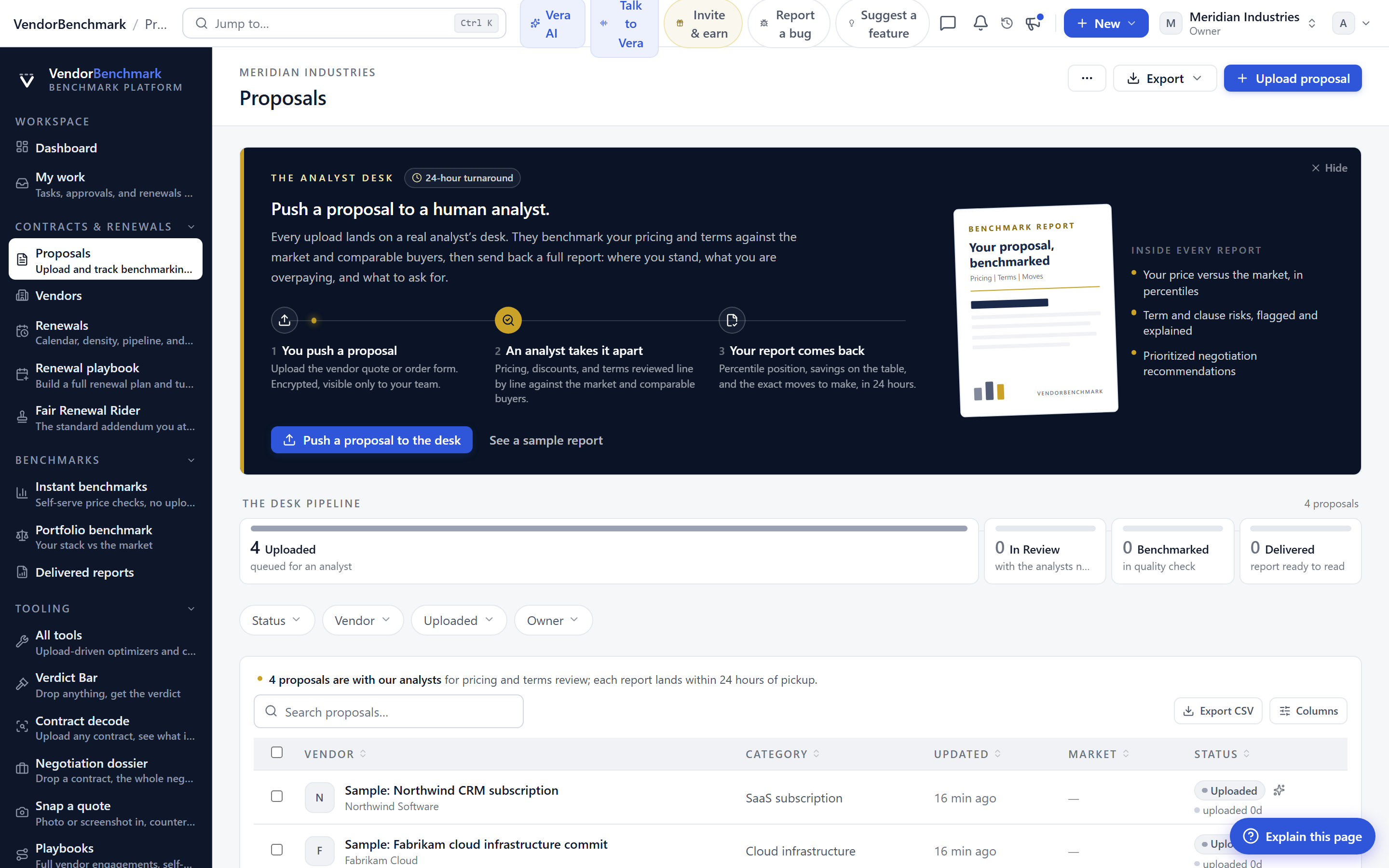
AI review that earns a lawyer's time
The AI enforces judgment, it does not supply it
An AI that argues your playbook is only as good as the playbook, and encoding the organization's positions is itself legal work that no tool performs for you. Garbage positions produce garbage reviews, and a clause the AI cannot cleanly handle still needs a lawyer, as does any genuinely novel or high-stakes term the playbook did not anticipate. The AI applies the standard the legal team defines; it does not define the standard, and it does not replace the counsel who decides where the lines are drawn.
What it removes is the waste of a lawyer's time on work beneath their judgment. Generic contract AI hands counsel opinions they already hold; a playbook-driven review hands them their own standard, applied consistently and drafted in their own language, so their scarce attention goes to the decisions that actually require a lawyer. The line stays exactly where the legal team drew it, and it stops moving just because it was a busy week and nobody had time to check every contract against it.
Morten brings two decades of enterprise and software procurement, with stints across Oracle, IBM, SAP, and Salesforce shaping how he reads a deal. He has led sourcing through hundreds of renewals, from mid market order forms to nine figure global agreements, and learned that the buyers who win are the ones who walk in knowing the market. He built VendorBenchmark to make that pattern recognition repeatable.
The week in enterprise software buying, in one email.
What shipped on the platform, and the pricing and licensing moves worth knowing before your next renewal. One email a week, to your work address. Unsubscribe any time.