The spec skipped compliance, and the review reset your whole timeline
Data residency, security review, and compliance terms arrive at signature instead of intake, and the deal you thought was closing starts again. Here is why the pattern repeats and how to break it.
You had a deal that was almost done. The business case was signed, the shortlist was one vendor, the price was inside the range, and the calendar said signature by end of month. Then the security review opened the paper and asked where the data lived. The answer was a region your policy does not permit. Then legal asked for the subprocessor list and a data processing addendum that matched your regulatory footprint. Neither of those requirements appeared in the original request, because the person who wrote the request was a business proxy optimising for the outcome, not for the constraints. So the requirements that legal and security consider non-negotiable arrived at signature instead of at intake, and the timeline reset by weeks.
Why the constraints go missing
The request that starts a sourcing cycle is usually written by someone who owns the business problem. They know the workflow, the users, and the outcome they need. What they do not carry, because it is not their job to carry it, is the list of terms that legal and security will refuse to sign without. Data residency. Encryption at rest and in transit. Breach notification windows. Audit rights. Subprocessor disclosure. Deletion on termination. These are not features a business owner shops for, so they do not appear in the spec, and the spec is what sets the timeline.
This is a cousin of a problem we have written about before, the intake form that asks for everything except the point. The form collects fields the requester can fill, and the fields the requester cannot fill are simply absent. Compliance and security live in that absence. Nobody decided to skip them. The intake process had no place to put them, so they surfaced later, at the one moment where late is most expensive.
Why late is not just annoying, it is a reset
A missing feature can be added in a change order. A missing compliance term cannot, because it changes the contract structure. If data residency was assumed to be one region and must be another, the vendor may have to re-price, re-architect, or route to a different entity. If the DPA does not match your regulatory footprint, legal cannot redline forward, they have to send the vendor back to draft. Each of those is not a comment on the paper, it is a new negotiation round. And a new round means re-approval, re-scheduling, and the loss of whatever commercial urgency you had built.
The buyers who feel this most are the ones who moved fast on everything else. They compressed the evaluation, they got the price early, they had executive air cover. All of that speed becomes irrelevant the moment security opens a fresh objection, because the objection sits upstream of the price. You cannot negotiate a rate on a contract that legal will not let you sign.
Put the non-negotiables in the spec, at intake
The fix is not to make business owners fluent in data protection law. It is to have the compliance, data, and security terms already in the spec before anyone asks the business owner to write it. That means knowing, for a given vendor category, which terms comparable deals actually carry. Not the aspirational policy list, the terms that closed deals in the same category actually contain, so you are asking for what the market gives rather than what a template imagines.
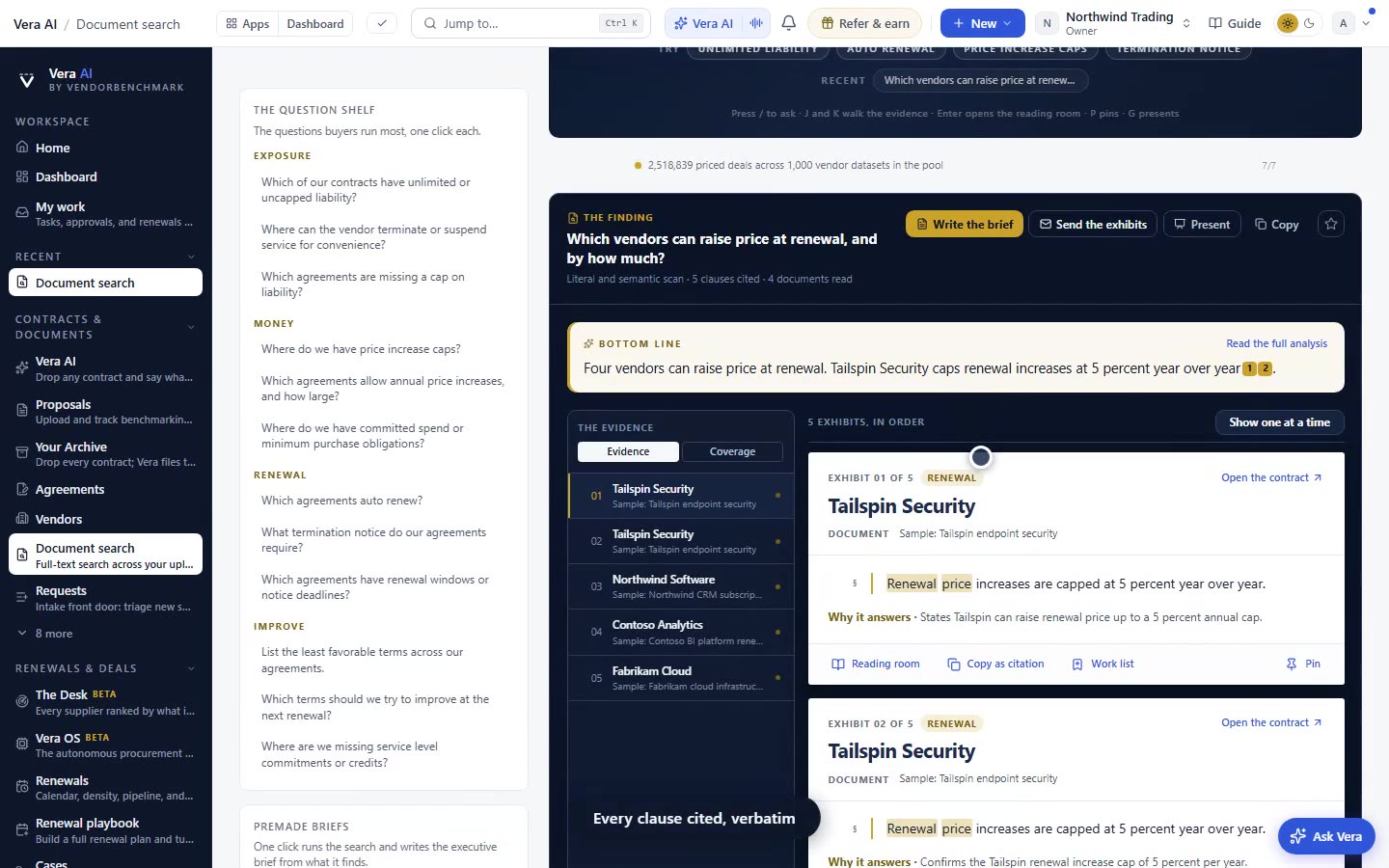
This is what contract decoding does. It reads across comparable deals and surfaces which security, data, and compliance terms recur, and at what frequency. If ninety of a hundred comparable deals carry a specific breach notification window, that window belongs in your spec at intake, framed as an expectation rather than a discovery. The same applies to residency clauses, audit rights, and subprocessor disclosure. You can decode any contract in a minute to see what a single vendor's paper carries, and you can decode a cohort to see what the category carries.
What the platform motion actually looks like
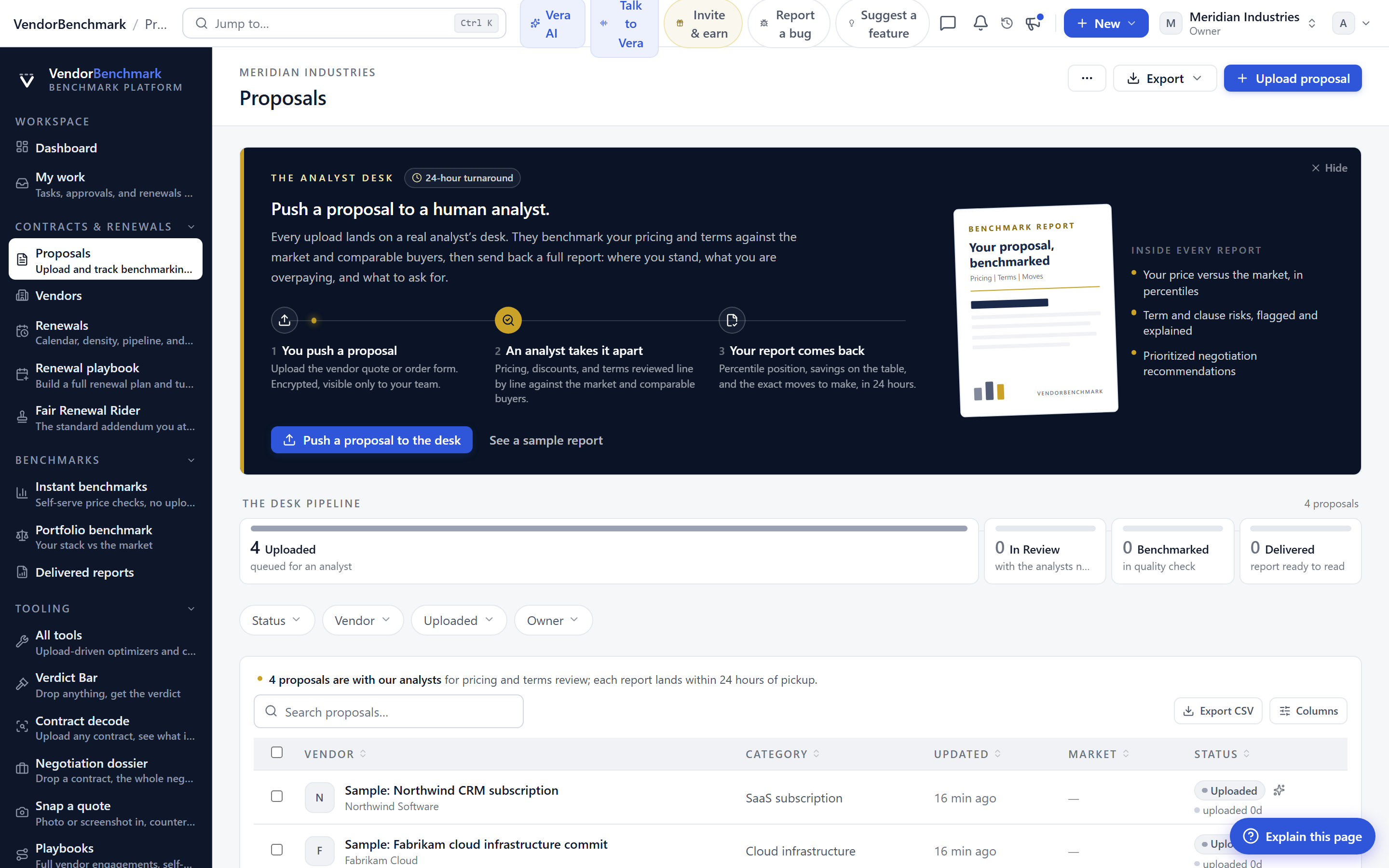
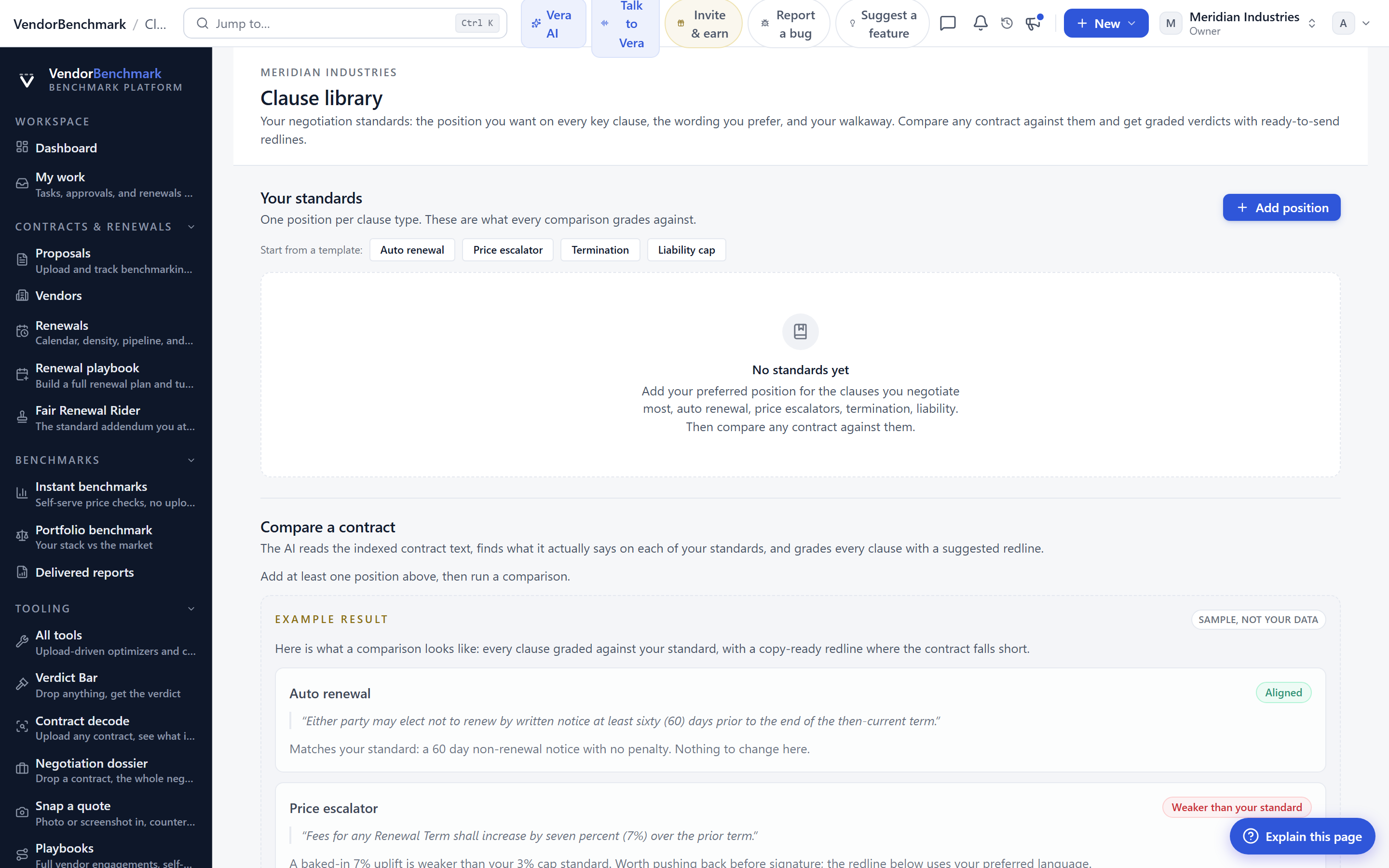
In practice, the sequence is short. You classify the buy into a vendor category. The platform surfaces the security, data, and compliance terms that comparable deals in that category carry, drawn from the benchmark library and kept current so you are reading present terms, not last year's. Those terms populate a clause library of standing positions, so the residency clause, the audit right, and the notification window are written once and reused. The intake spec then includes them by default. Legal and security see a spec that already reflects their non-negotiables, and their review becomes confirmation rather than objection.
The freshness matters here, because residency rules and standard security terms move. A clause that was market two years ago may be below market now. How benchmark data stays fresh covers why we treat currency as more important than raw volume for exactly this reason. And when the paper does come back from the vendor, the same standing positions drive the redline, so your legal counsel gets AI review that argues your playbook instead of generic advice. The spec and the redline draw from one library, which is why the review stops surprising you.
What this does not solve
Be honest about the boundary. The platform tells you which terms comparable deals carry and helps you put them in the spec. It does not replace your legal and security teams' judgement about whether a specific vendor's implementation of those terms is acceptable. A residency clause on paper is not the same as a passing penetration test or a satisfactory audit result. Those are human reviews, and they should stay human.
Nor does putting the terms in the spec guarantee every vendor can meet them. Some vendors will decline your residency requirement or your notification window, and that is useful information to have at intake rather than at signature, because it tells you to widen the shortlist before you have invested the negotiation. What the platform removes is the surprise, and the reset. It cannot remove a genuine incompatibility, it can only surface it a month earlier, when a month earlier is cheap. The point of moving compliance to intake is not to skip the review. It is to make sure the review confirms a deal you can actually close, instead of resetting one you thought you already had.
Fredrik has spent more than twenty years in enterprise software, with time at Oracle, IBM, SAP, and Salesforce before moving to the buy side. He structured and priced the kind of large agreements most buyers only see once or twice in a career, which taught him where the leverage sits and how far a vendor will actually move. He started VendorBenchmark to hand that knowledge to every sourcing team.