Decode any contract in a minute, and what to look for first.
A 40 page order form is designed to be signed, not read, and the drafting side knows exactly which clauses you will skim. The contract decoder reads the whole thing in about a minute and reports back in plain English: what each clause means, which terms hurt, which already work in your favor, and the exact language to ask for instead.
Software contracts have a strange property: the party that wrote the document is also the party betting you will not read it carefully. The bet usually pays. The renewal lands two weeks before the deadline, legal is booked, and the person who signs has read the pricing table, the term, and whatever bolded text survived the skim. The auto renewal clause, the uplift language, and the audit rights got the silence that passes for consent.
Reading properly was never the hard part. Reading properly in the time available was. A line by line review of a 40 page agreement is an evening of expert attention per document, and the estate has hundreds of documents. This is precisely the shape of work AI does well: exhaustive, patient, and the same on page 38 as on page 1.
What comes back when you upload one document
Drop in a contract, an order form, a renewal quote, or an invoice, PDF or DOCX, and the decode returns four things.
The plain English read. Every material clause explained in buyer's terms: what it commits you to, what it lets the vendor do, and when it matters. Not a summary, a translation, anchored to the clause it came from so you can check the original in one click.
The terms that hurt. The clauses a buyer should challenge, flagged with why: the uncapped uplift, the silent auto renewal, the audit clause with no notice period, the termination right that only points one way.
The terms already in your favor. Just as important and almost always forgotten: the price hold, the true-down right, the swap window you negotiated last cycle and nobody wrote down. A concession you do not know you have is one you cannot use.
Up to ten paste-ready asks. For each flagged term, the replacement language to request, written to be pasted into an email to the vendor. The gap between "we do not like clause 14.2" and "here is the wording we need" is where most challenges die, so the decoder closes it for you.
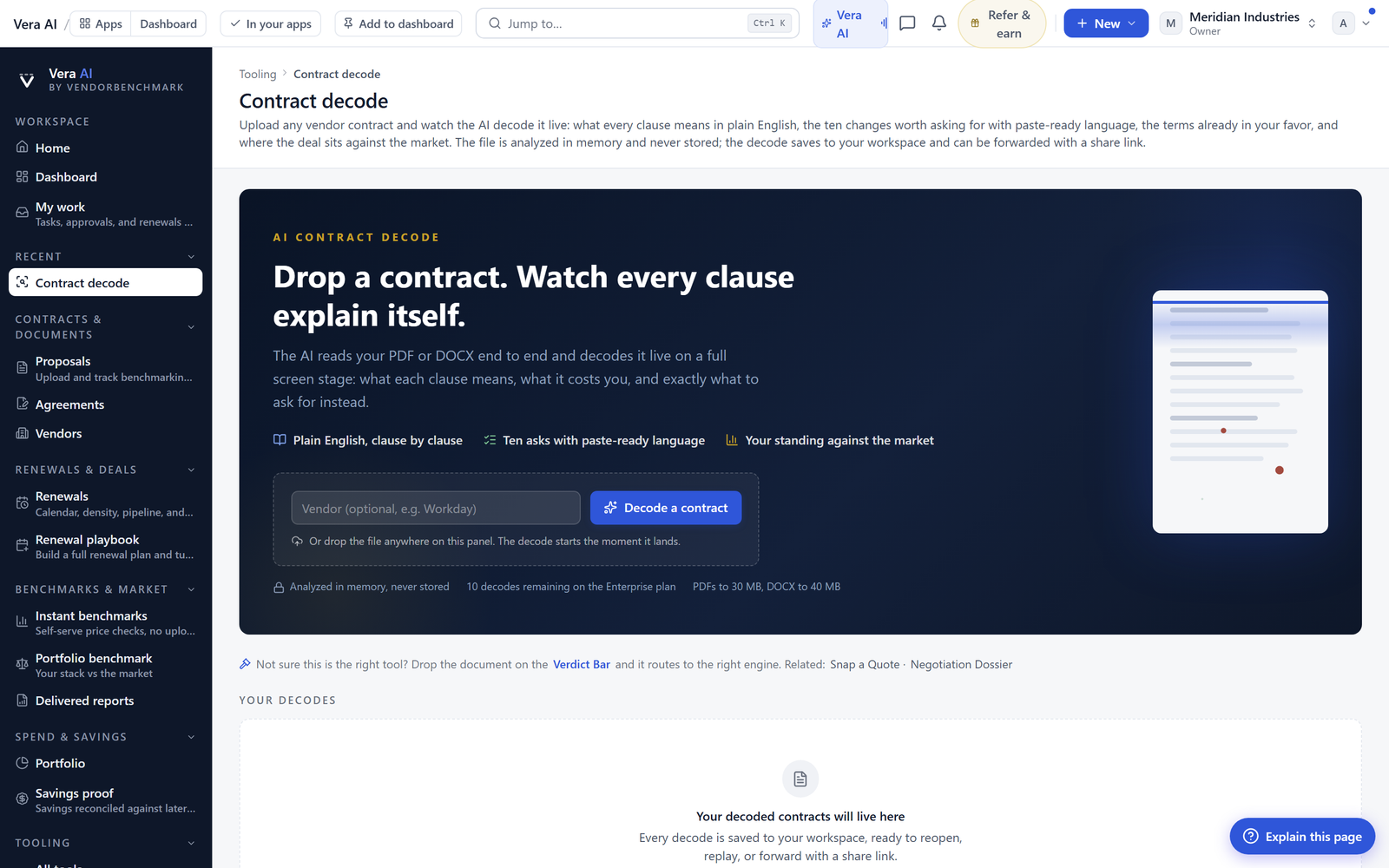
The decoder is also the platform's front door: it runs free, for anyone, with no account. Upload one document and see the read. The full platform picks up from there, with the term-by-term benchmark, the clause library enforcing your own playbook language, and the redline export for legal.
Want to be updated when major licensing and pricing changes land? One analyst brief a week: the price rises, metric changes and audit campaigns that move software costs. Work email only.
The four clauses to check before anything else
Whether you use our decoder or your own eyes, decades of buyer-side reviews keep landing on the same four places where the money hides.
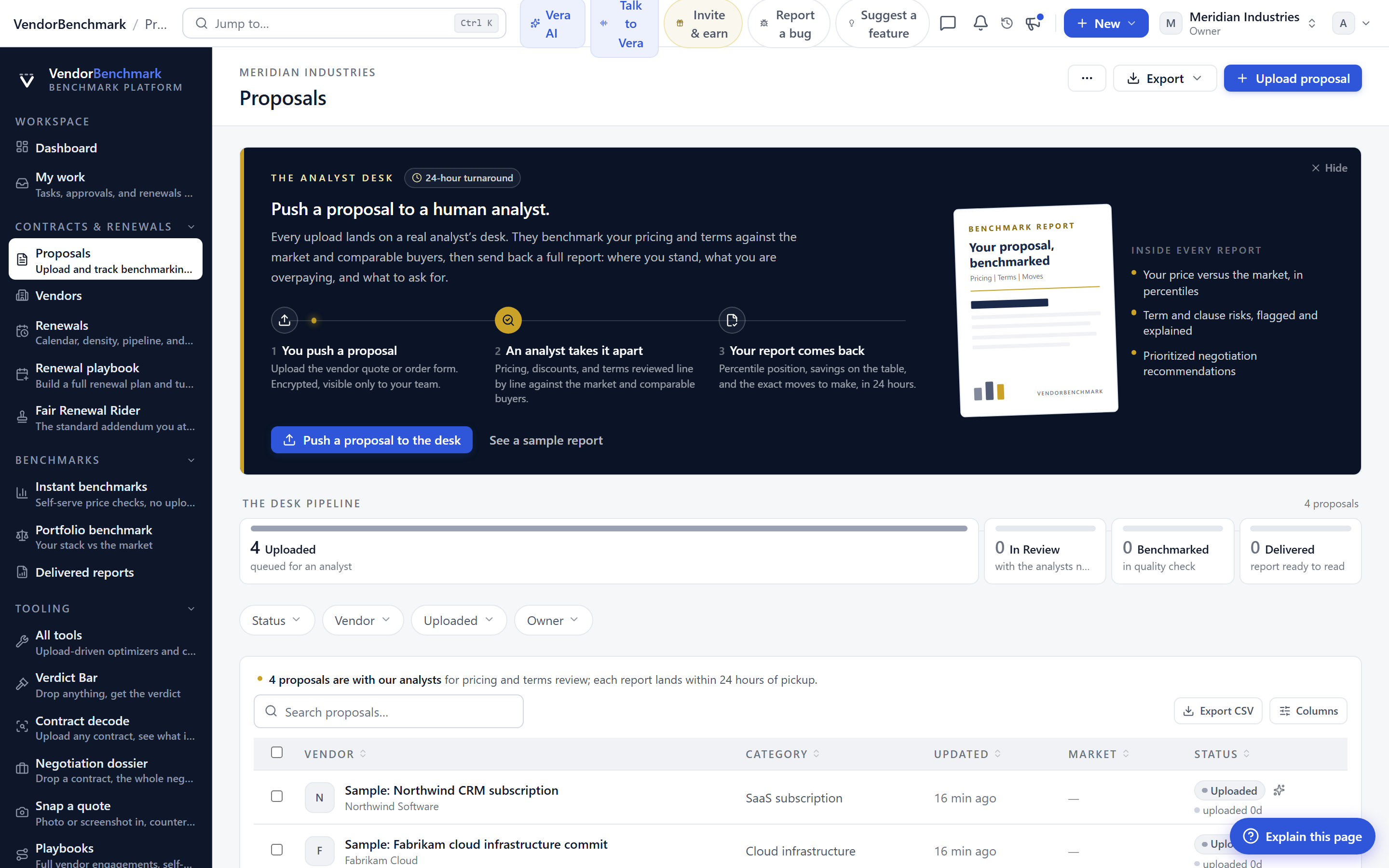
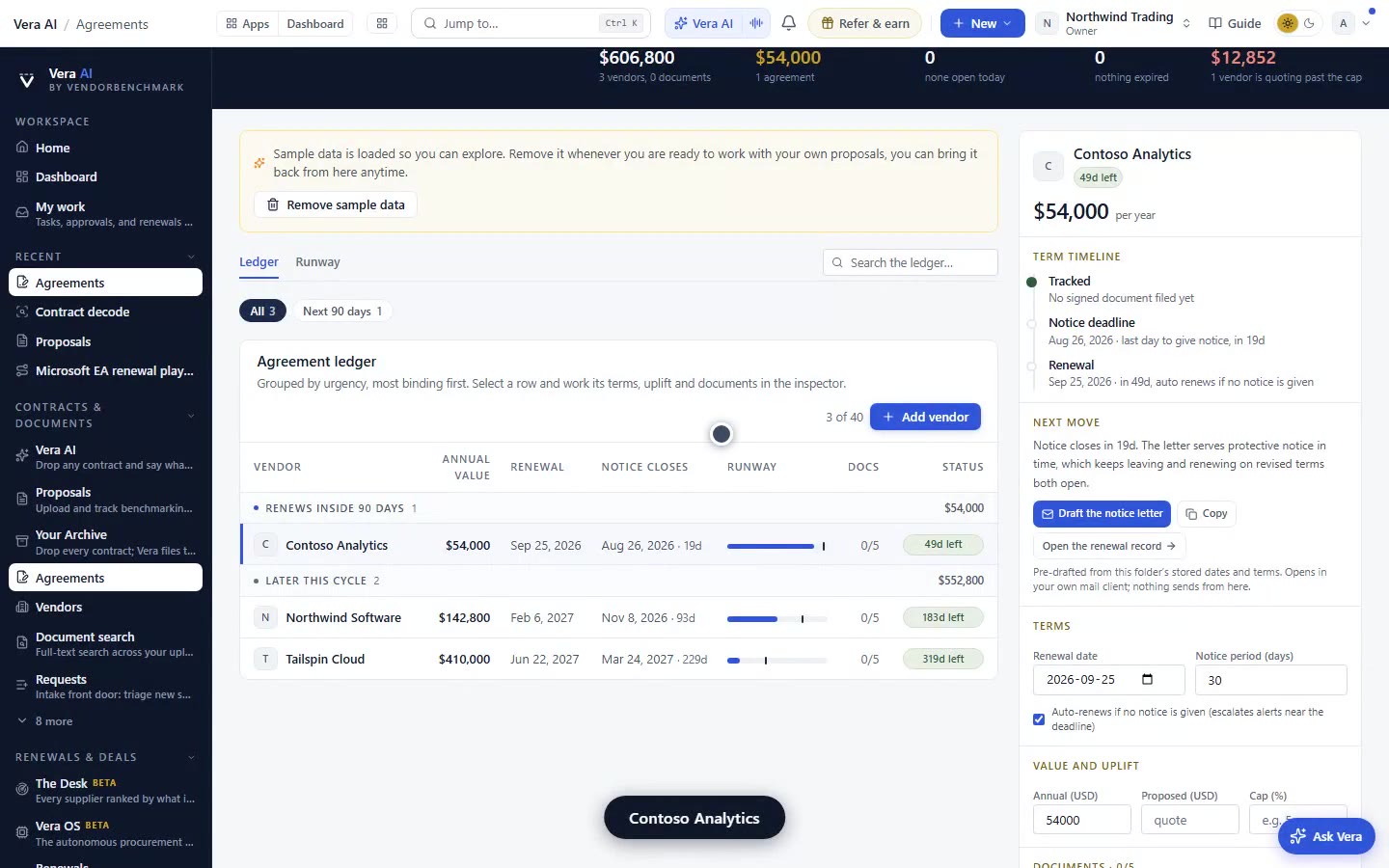
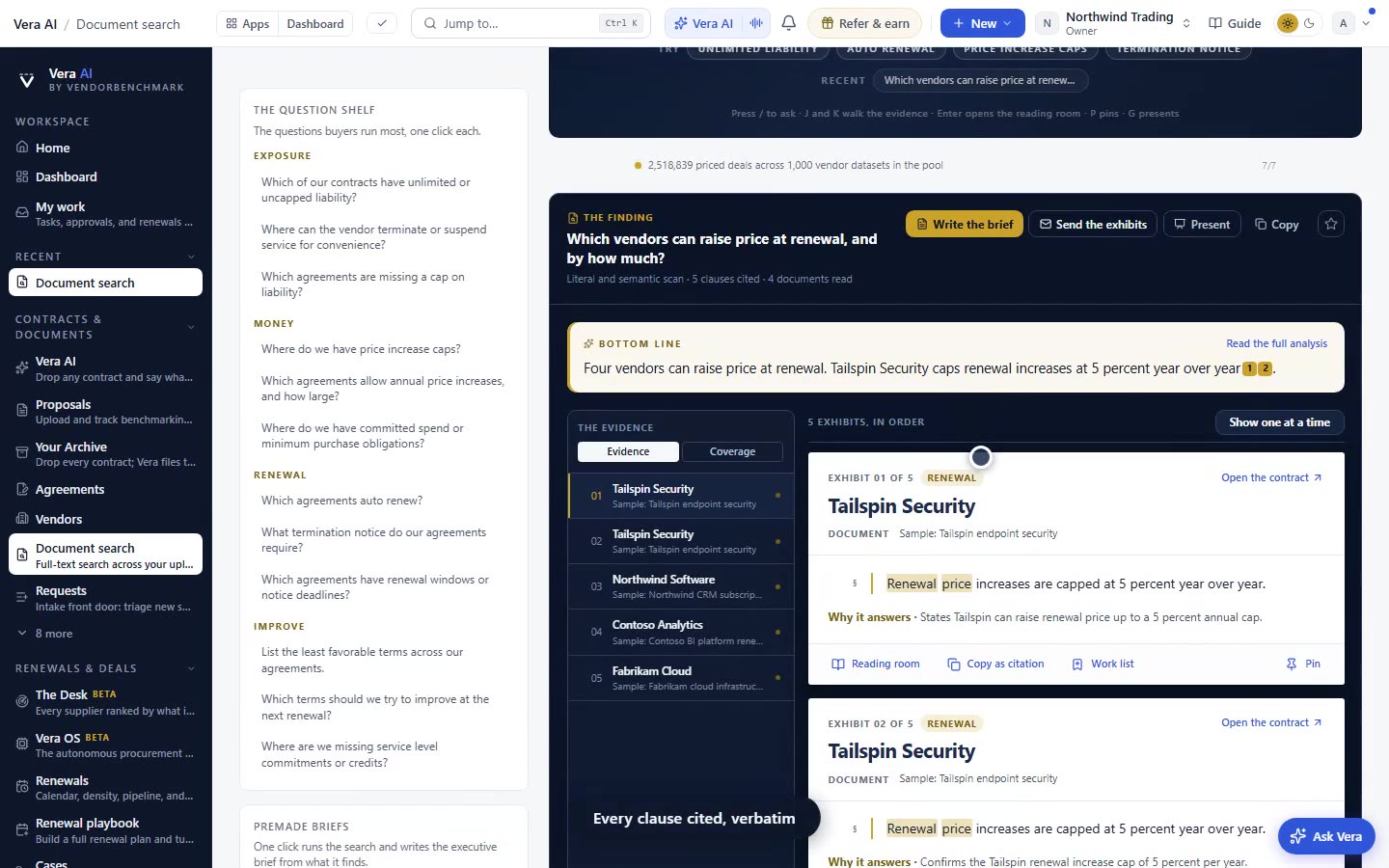
Every uploaded contract also feeds the estate-wide views: the coverage grid showing which agreements are missing a price cap or an exit clause, review tables that ask one question across 500 contracts at once, and the rights register tracking the favorable terms with expiry alerts.
The honest limit: the decoder reads the contract you were given, it does not know the deal you want. Deciding which flagged terms are worth spending negotiating capital on, and which favorable terms to quietly keep, is judgment, and judgment improves dramatically when it starts from a complete read instead of a skim. A minute of decoding does not replace your lawyer. It makes sure the evening of expert attention, when you spend it, goes to the five clauses that deserve it.
Fredrik has spent more than twenty years in enterprise software, with time at Oracle, IBM, SAP, and Salesforce before moving to the buy side. He structured and priced the kind of large agreements most buyers only see once or twice in a career, which taught him where the leverage sits and how far a vendor will actually move. He started VendorBenchmark to hand that knowledge to every sourcing team.
The week in enterprise software buying, in one email.
What shipped on the platform, and the pricing and licensing moves worth knowing before your next renewal. One email a week, to your work address. Unsubscribe any time.