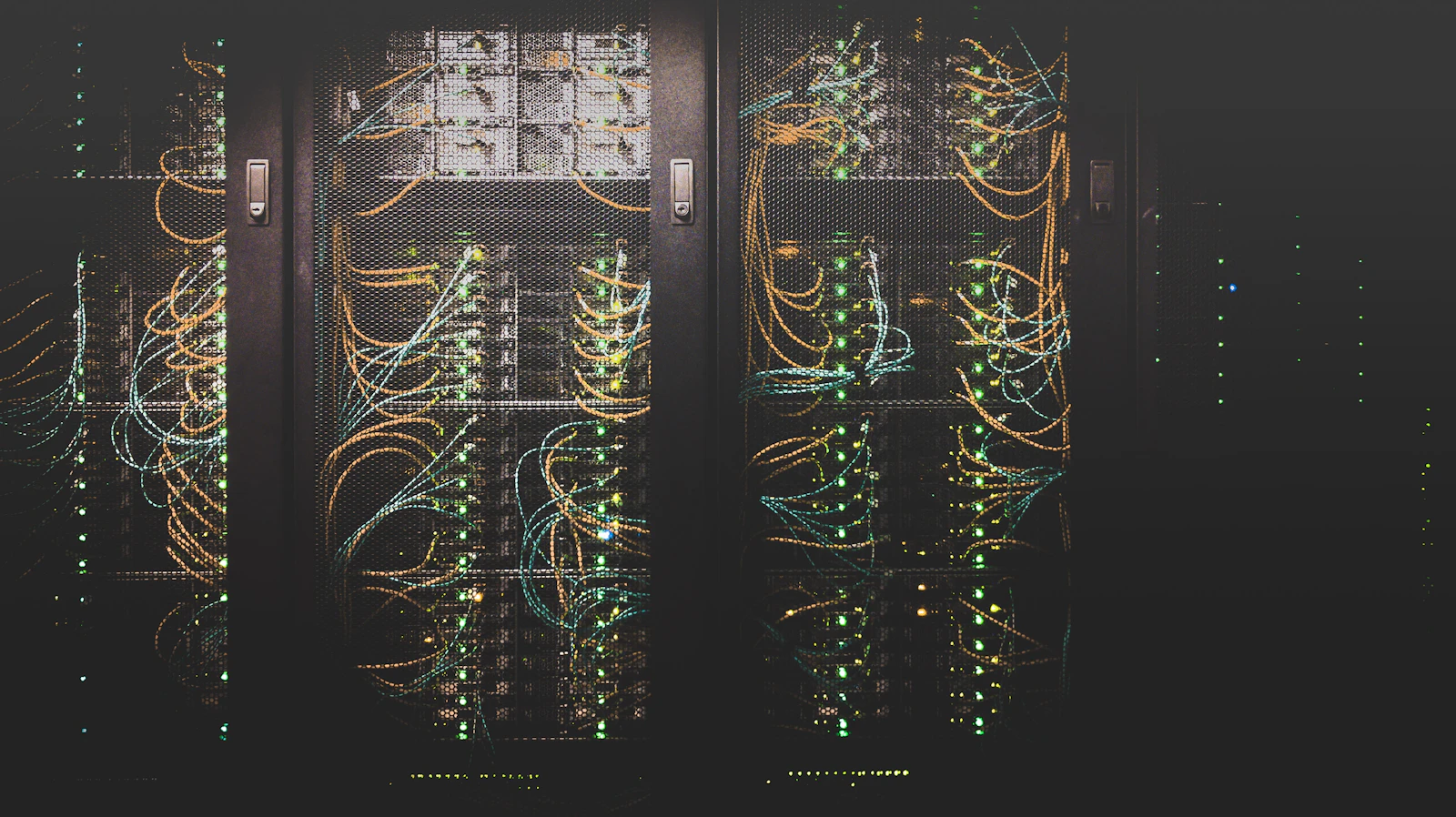
Linode, acquired by Akamai in 2022 and now branded as Akamai Connected Cloud, is the alternative cloud infrastructure platform built around commodity compute, distributed global regions, and integrated edge delivery services (CDN, DDoS protection, WAAP, Bot Manager) inherited from the Akamai edge platform. Positioned structurally below AWS, Azure, and Google Cloud Platform on price and complexity and above DigitalOcean, Vultr, and OVH on edge delivery integration and enterprise support, Akamai Connected Cloud occupies the TCO-efficient segment of the cloud infrastructure category. The platform's differentiator is publicly transparent per-hour compute pricing at 40-60% below AWS/Azure for commodity workloads plus free bundled egress bandwidth up to substantial monthly caps — a material TCO advantage for high-egress workloads. Deal economics reward competitive pressure from AWS, Azure, GCP, and DigitalOcean; multi-year committed-use discounts; and explicit contract-language protection on edge service bundling and committed-use floors. For category context, see the Cloud Infrastructure category benchmark.
Linode / Akamai Cloud Pricing Model Explained
Akamai Connected Cloud's 2026 commercial architecture combines publicly transparent per-hour compute pricing with tiered storage pricing, free bundled egress up to substantial monthly caps, and optional edge delivery services (CDN, DDoS, WAAP, Bot Manager, image optimization) priced separately or bundled into enterprise license agreements. Compute, storage, and egress drive the dominant cost variation for cloud-native workloads; edge delivery services drive incremental cost when Akamai edge capabilities are consolidated onto the compute side.
Compute architecture: Shared CPU instances (Nanode, Linode plans) at $5-$192/month list for 1-32 vCPU shared-tenancy instances; Dedicated CPU instances at $30-$1,536/month list for 2-64 vCPU dedicated-tenancy instances with predictable performance; High Memory instances for memory-intensive workloads (32-300GB RAM); GPU instances (RTX 4000, RTX 6000) for ML training and inference at $700-$2,800/month list per GPU; Premium CPU instances for latest-generation workloads at 15-25% premium over Dedicated CPU. All instances bundle generous egress bandwidth (1-11TB/month depending on instance size), a material differentiator versus AWS and Azure per-GB egress pricing.
Storage architecture: Block Storage at $0.10/GB/month for provisioned block volumes attached to compute instances; Object Storage at $5/month for first 250GB and $0.020/GB/month beyond (S3-compatible API); Backup Service at $2.50/month for smallest instances scaling to $80/month for largest, automated incremental backup with 1-day / 7-day / 30-day retention tiers. Storage pricing is broadly 50-75% below AWS EBS and Azure Managed Disks at equivalent performance tiers.
Edge delivery services (inherited from Akamai side): Content Delivery Network priced on egress GB plus request count; DDoS protection bundled into enterprise packages or priced standalone; Web Application and API Protection (WAAP) bundled or standalone; Bot Manager for bot traffic management; Image & Video Manager for media optimization at the edge. Pricing varies materially by traffic profile, request volume, and contract structure — edge services are routinely 2-3x Cloudflare Enterprise at equivalent scope when bundled into connected-cloud agreements and carry the highest negotiation leverage of any Akamai Connected Cloud component.
Where Linode / Akamai Cloud Pricing Differs from Peers
Three commercial attributes differentiate Akamai Connected Cloud. First, compute and storage list pricing is 40-60% below AWS and Azure for commodity workloads, a structural advantage versus quote-based enterprise discount negotiation at hyperscalers. Second, egress bandwidth is bundled with compute instances up to substantial monthly caps (1-11TB/month depending on instance), eliminating the per-GB egress cost inflation common at AWS ($0.09/GB default) and Azure. For workloads with >10TB monthly egress, the TCO delta versus AWS typically exceeds 60% on comparable compute scope. Third, edge delivery integration (CDN, DDoS, WAAP, Bot Manager) from Akamai's edge platform creates a unified compute + edge offering without the typical AWS + Cloudflare or Azure + Fastly multi-vendor stack, reducing operational complexity for global applications.
What Enterprises Actually Pay for Linode / Akamai Cloud
These 2026 figures reflect negotiated annual consumption and committed-use pricing across 28+ benchmarked Akamai Connected Cloud enterprise commitments. "Typical" reflects median deal economics with modest competitive pressure; "Strong Leverage" assumes written AWS, Azure, GCP, and DigitalOcean RFP responses, 3-year commitment, and full Akamai edge services bundling.
| Deployment Scale | Configuration | Typical Annual Cost (Negotiated) | With Strong Leverage |
|---|---|---|---|
| Small production (20–50 instances) | Shared CPU + Block Storage + Object Storage | $28K–$85K | $22K–$68K |
| Mid-market (50–200 instances) | Dedicated CPU + Block Storage + Object Storage | $85K–$380K | $68K–$295K |
| Enterprise (200–800 instances) | Dedicated + Premium CPU + NodeBalancer + Object | $380K–$1.4M | $280K–$1.05M |
| Large enterprise (800–2,000 instances) | Full compute + managed DB + edge services | $1.4M–$4.2M | $1.0M–$3.0M |
| GPU workloads (ML training, inference) | RTX 4000 / RTX 6000 reserved | +$8.5K–$34K per GPU/year | +$6.5K–$26K per GPU/year |
| Edge services bundle (CDN + DDoS + WAAP) | Akamai edge add-on | +25–55% of compute base | +15–35% of compute base |
Akamai Connected Cloud enterprise deal sizes cluster in the 200-1,000 instance range with $380K-$1.4M annual compute spend. Median benchmarked enterprise ACV including moderate edge services integration sits near $680,000. Full enterprise migration deals consolidating compute + edge from AWS + Cloudflare stacks commonly exceed $2M annual with TCO savings of 30-50% versus continued AWS + Cloudflare operation at equivalent workload scope.
Submit your Akamai Connected Cloud contract for a free benchmark
Upload your Linode / Akamai Connected Cloud proposal and get a 24-hour pricing benchmark. See exactly where you stand on committed-use discounts, egress bandwidth economics, edge service bundling, and renewal terms versus 28+ comparable enterprise deployments.
Submit Your Contract →Linode / Akamai Cloud Discount Benchmarks — What Is Achievable?
Akamai Connected Cloud's publicly posted list pricing already represents 40-60% savings versus AWS and Azure for commodity compute; additional negotiation produces 10-45% further reduction through committed-use discounts, enterprise license agreements, and bundled edge services.
| Deal Scenario | Typical Discount | With Full Leverage |
|---|---|---|
| Pay-as-you-go monthly, no competitive pressure | 0% | 0–5% |
| 1-year committed-use, no competitive pressure | 10–18% | 15–22% |
| 3-year committed-use with AWS + DO RFPs | 22–32% | 28–38% |
| Enterprise ELA (compute + edge services bundle) | 28–38% | 36–45% |
| Strategic migration from AWS + Cloudflare stack | 30–40% | 40–50% |
| Renewal with documented AWS + Azure RFPs | 8–14% reduction | 14–22% reduction |
Akamai's commercial team carries meaningful discount authority on bundled compute + edge deals where the structural value of displacing a multi-vendor stack (AWS + Cloudflare, Azure + Fastly, GCP + Akamai edge-only) is concrete. The four credible alternatives Akamai Connected Cloud models against: AWS (dominant hyperscaler, structurally higher pricing, deepest service catalog), Azure (Microsoft enterprise bundle leverage, competitive for Microsoft-standardized organizations), Google Cloud Platform (analytics and AI strength, structurally closer pricing to Linode than AWS/Azure), and DigitalOcean / Vultr (commodity cloud competitors, structurally similar pricing but without enterprise edge delivery integration). See our AWS pricing guide, DigitalOcean pricing guide, and Google Cloud pricing guide for side-by-side context.
Linode / Akamai Cloud Pricing by Service
Shared CPU Compute (Nanode / Linode Plans)
Shared-tenancy compute instances at $5-$192/month list for 1-32 vCPU, 1-96GB RAM configurations. Appropriate for development, test, and non-performance-critical production workloads. Committed-use discounts of 10-15% on 1-year commitments. Approximately 35% of enterprise instance fleet runs on Shared CPU at benchmarked deployments; the remainder on Dedicated CPU or Premium CPU for performance-sensitive workloads.
Dedicated CPU Compute
Dedicated-tenancy compute instances at $30-$1,536/month list for 2-64 vCPU, 4-512GB RAM configurations. Appropriate for performance-critical production workloads, databases, and steady-state application tiers. Committed-use discounts of 15-22% on 1-year commitments, 25-35% on 3-year commitments. Core compute tier for 50-60% of enterprise instance fleet at benchmarked deployments.
Premium CPU Compute
Latest-generation dedicated compute at 15-25% premium over Dedicated CPU. Appropriate for latency-sensitive and performance-maximized workloads. Typically 8-12% of enterprise instance fleet.
Block Storage and Object Storage
Block Storage at $0.10/GB/month for provisioned volumes; Object Storage at $5/month for first 250GB plus $0.020/GB/month beyond (S3-compatible API). Typical enterprise deployment storage cost runs 12-22% of compute cost — materially lower ratio than AWS EBS + S3 at equivalent scope. Negotiate storage commitment discounts of 10-15% on multi-year commitments.
Egress Bandwidth
Egress bandwidth is bundled with compute instances up to substantial monthly caps (1-11TB/month depending on instance size). Overage priced at $0.005/GB, approximately 95% below AWS and Azure per-GB egress. For workloads with >10TB monthly egress, this represents the largest TCO differentiator in the category — a 100TB/month egress workload costs approximately $500/month at Akamai Connected Cloud overage rates versus $9,000/month at AWS default egress.
Managed Database Services
Managed PostgreSQL, MySQL, Redis, and MongoDB clusters at 2-3x compute-instance equivalent pricing. Appropriate for production database workloads where managed operations are preferred to self-managed. Committed-use discounts of 15-25% on multi-year commitments.
Edge Delivery Services (CDN + DDoS + WAAP)
Akamai edge services priced on egress GB, request count, and feature bundle selection. Standalone CDN pricing typically $0.02-$0.08/GB depending on geography and tier; DDoS protection bundled into enterprise packages at $2,500-$15,000/month depending on protected capacity; WAAP at similar premium tier pricing. When bundled with compute in an enterprise license agreement, edge services commonly price at 25-55% uplift over compute base — structurally higher than Cloudflare Enterprise or Fastly at equivalent scope. Negotiate edge service pricing separately from compute; benchmark against Cloudflare Enterprise before accepting bundled pricing.
Overpaying for Akamai Connected Cloud?
Upload your Akamai Connected Cloud or Linode contract and get a full pricing benchmark within 24 hours. See exactly where you stand versus AWS, Azure, GCP, and DigitalOcean at equivalent compute, storage, egress, and edge service scope.
Submit Your Contract →Common Linode / Akamai Cloud Contract Traps to Watch For
Edge Delivery Service Bundling
Akamai Connected Cloud enterprise agreements routinely bundle CDN, DDoS, WAAP, and Bot Manager at 2-3x equivalent Cloudflare Enterprise or Fastly pricing when packaged with compute. The bundle creates operational simplicity but obscures cost: the edge services represent material standalone market — if not for the compute attach, they would price competitively against Cloudflare and Fastly. Negotiate edge service pricing separately from compute. Benchmark edge services against Cloudflare Enterprise at equivalent scope before accepting bundled pricing. Consider keeping Cloudflare or Fastly as edge provider while using Akamai Connected Cloud for compute.
Committed-Use Discount Utilization Floors
Akamai's committed-use discount structures routinely require 80-90% compute utilization of committed capacity to realize headline discount, with penalties for under-consumption. For organizations with variable workload patterns or seasonal demand, the utilization floor creates structural risk. Negotiate utilization floors at 70-75% (matching typical cloud workload utilization), with grace periods for quarterly utilization variance, and the option to reallocate committed capacity across regions or instance types.
Annual Renewal with Discount Reset
Akamai's default renewal behavior resets committed-use discounts at each anniversary unless explicitly re-committed. Non-committed-use consumption renews at current list pricing, discarding any prior-term negotiated discount. Negotiate explicit renewal discount preservation: prior-term effective rates preserved at renewal with list-price uplift capped at lower of CPI or 5% per year, committed-use discount structures auto-renewing at prior-term rates unless explicitly terminated.
Linode / Akamai Cloud Renewal Pricing: What Changes and What Does Not
Akamai Connected Cloud renewals behave distinctly from hyperscaler enterprise discount program peers due to the platform's hybrid consumption + committed-use pricing model and the Akamai edge services bundling dynamics.
What changes at renewal: Committed-use discount structures renew at current committed-use discount schedule unless explicitly re-committed. Non-committed consumption renews at current list pricing. List pricing itself rises 4-8% annually at the platform level. Edge service bundle pricing reviewed for current Akamai package rates.
What does not change without leverage: Prior-term committed-use discount depth rarely preserved at renewal absent explicit master agreement language. Edge service bundling rarely unbundled at renewal absent explicit customer action. Utilization floor requirements rarely reduced at renewal.
What changes with leverage: Written AWS, Azure, GCP, and DigitalOcean RFP responses at renewal initiation routinely unlock 8-18% net reduction below prior-term effective pricing on retention-flagged accounts. Workload utilization audit (identifying idle or under-utilized committed capacity for right-sizing) produces 15-25% savings on committed-use spend. Edge service separation from compute bundle unlocks 20-40% savings on edge delivery cost when rebenchmarked against Cloudflare or Fastly.
Frequently Asked Questions
How much does Linode / Akamai Cloud cost for enterprise deployments?
Akamai Connected Cloud enterprise annual spend typically lands between $120,000 and $4.2M depending on compute footprint, storage tiers, edge delivery attach, and commitment structure. Median benchmarked enterprise ACV sits near $680,000 for 800-1,500 instance deployments with moderate edge delivery integration.
What discount is achievable on Linode / Akamai Cloud?
Committed-use discounts run 10-22% for 1-year commitments and 22-35% for 3-year commitments on top of already-discounted list pricing. Strategic deals above $1M annual or with Akamai edge delivery consolidation unlock 30-45% additional discount via enterprise license agreements.
How does Linode / Akamai Cloud pricing compare to AWS, Azure, and GCP?
Compute prices 40-60% below AWS and Azure at equivalent vCPU/RAM configurations, 15-25% below GCP, roughly on par with DigitalOcean and Vultr. Storage and egress pricing carries the largest competitive advantage: egress is bundled with compute (free up to substantial caps) versus per-GB egress at AWS ($0.09/GB default). High-egress workloads see >60% TCO delta.
What are common Linode / Akamai Cloud contract traps?
Three traps: (1) edge delivery service bundling priced 2-3x standalone Cloudflare or Fastly when bundled with compute, (2) committed-use discount structures with 80-90% utilization floors, (3) annual renewal with discount reset for non-committed consumption. Negotiate separate edge service pricing, 70-75% utilization floors, and preserved-discount renewal language.
When is the best time to negotiate a Linode / Akamai Cloud deal?
Akamai's fiscal year ends December 31. Q4 (October-December) carries peak discount authority with December closes delivering deepest cuts. Enterprise ELA negotiations benefit from aligning timing to Akamai fiscal Q4 plus bundled edge services renegotiation. For renewals, initiate 120 days before anniversary to enable competitive RFP cycle.
Next Steps
Akamai Connected Cloud deals reward aggressive competitive pressure from AWS, Azure, GCP, and DigitalOcean; multi-year committed-use commitments; explicit edge service separation from compute; utilization floor flexibility; and preserved-discount renewal language. The worst-priced Akamai Connected Cloud contracts we benchmark share a pattern: single-vendor evaluation, full edge services bundling accepted, 80-90% utilization floors accepted, renewal without competitive re-RFP. The best-priced deals do the opposite.
If you are evaluating Akamai Connected Cloud for new purchase, migration, or facing a renewal within 6-12 months, upload your current proposal for a 24-hour benchmark analysis against 28+ comparable enterprise deployments. For competitive context, see our AWS pricing guide, DigitalOcean pricing guide, Google Cloud pricing guide, and the Cloud Infrastructure category benchmark.