The Go Decision That Waits on One Calendar
The quote clock runs while one executive's calendar pushes the meeting a week at a time. The fix is to make most of the call before the meeting starts.
You have the evaluation. The scores are in, the reference calls are done, the redlines are down to two open clauses. The only thing between you and a signature is thirty minutes of one executive's attention, and that thirty minutes has now moved three times. Meanwhile the vendor's quote carries an expiry date, the discount was tied to a quarter that is closing, and every slip costs you leverage you already earned. The decision is ready. The calendar is not. This is the most common way a good sourcing process still loses money.
Why one meeting became the whole decision
The single go or no-go meeting persists because it feels responsible. Everyone with a stake sits in one room, hears the same summary, and commits together. In practice that ritual concentrates all the risk into one point of failure: a calendar. When the deciding executive travels, or a board prep swallows the week, the entire decision waits behind them. Nothing about the underlying analysis needed to wait. The meeting was never where the thinking happened. It was where the thinking got ratified, and ratification does not require a synchronous quorum.
There is a second reason the meeting bloats. People arrive unprepared. The brief was attached to a calendar invite nobody opened, so the first fifteen minutes get spent re-establishing what the deal even is. That means the meeting has to be long, which means it has to be scheduled far out, which means the quote clock outruns it. The problem is not the executive being busy. The problem is that the meeting is doing work that could have been done days earlier, asynchronously, in the gaps of everyone's actual week.
The decision brief that goes out first
The motion that removes the bottleneck is to invert the sequence. Instead of a meeting that starts the decision, you want a brief that nearly finishes it. The AI analyst assembles a decision brief that states the recommendation, the price against market, the open risks, and the specific question each stakeholder must answer. It circulates that brief to every named party and captures their position where they sit, on their own schedule. Security answers the security question. Finance answers the budget question. The sponsor answers the priority question. None of them wait on the others, and none of them wait on a room.
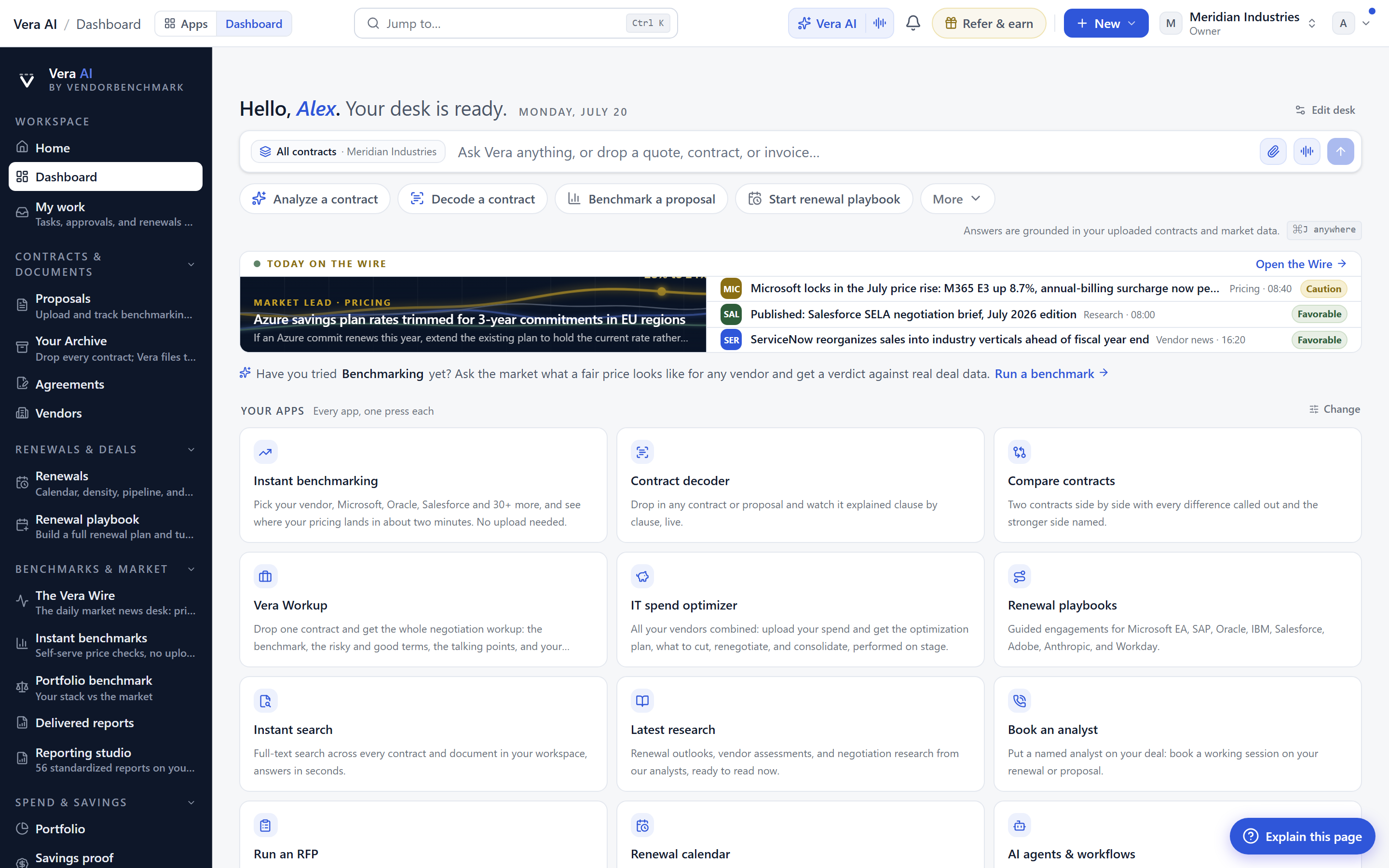
The brief is not a summary someone still has to defend live. It carries the numbers with it. When the sponsor asks whether the price is fair, the answer is already sitting in the brief, cited against comparable deals, the way the benchmark verdict argues your side in both directions. Nobody has to hold that context in their head until the meeting. It travels with the document.
Capturing positions where people actually work
Asynchronous capture only works if answering is cheaper than avoiding. The analyst frames each stakeholder's question narrowly enough to answer in one reply, and it reads the context for them first, the same way it reads up for you first before any call. A finance lead does not have to open the evaluation pack to answer whether the number fits the budget. The relevant figure is quoted in the question. The reply becomes a position on the record, timestamped, attributable, and visible to everyone else on the decision.
This does two things. It surfaces dissent early, while there is still time to resolve it, rather than in the last five minutes of a meeting that then needs a follow-up meeting. And it makes the eventual gathering short. If four of five positions are green and one is a specific conditional, the meeting exists to close that one condition. That is a fifteen-minute conversation you can schedule this week, not a forty-five-minute review you schedule next month.
What the meeting is for now
You do not remove the meeting. You demote it. When people gather, the brief is near-final, the positions are on the record, and the single open item is named at the top. The deciding executive walks in and reads a state, not a story. If they concur, the decision closes in the room in minutes. If they push back, they are pushing back on one specific point that everyone can already see, not reopening the whole evaluation. The meeting becomes confirmation, which is exactly the work a synchronous gathering is good at and the only work worth waiting a calendar slot for.
The prep that used to sit in one person's head now lives in the brief, and the room opens on it, the way the negotiation room now opens on the morning brief. The executive's scarce attention gets spent on the judgment call, not on being re-briefed from zero.
What this does not solve
Asynchronous capture moves the decision forward. It does not manufacture consensus that is not there. If two stakeholders genuinely disagree on whether to proceed, the brief will show you the disagreement cleanly and early, but it will not resolve it for you. That is a judgment call, and it belongs to a human with authority. The platform makes the disagreement visible and cheap to reach, which is often enough to close it before the meeting. Sometimes it is not, and then you still need the room.
It also does not override an executive who simply refuses to decide asynchronously and wants to see everyone's face before committing. Some cultures require the ritual, and no tool changes that in a quarter. What the platform guarantees is that when that person finally sits down, they sit down to a near-final call rather than a blank page. The quote clock is still real. The vendor's quarter still closes on its own date. The brief cannot stop time. It can only make sure that when the meeting happens, it is the last thing standing between you and a signature, not the first.
Fredrik has spent more than twenty years in enterprise software, with time at Oracle, IBM, SAP, and Salesforce before moving to the buy side. He structured and priced the kind of large agreements most buyers only see once or twice in a career, which taught him where the leverage sits and how far a vendor will actually move. He started VendorBenchmark to hand that knowledge to every sourcing team.