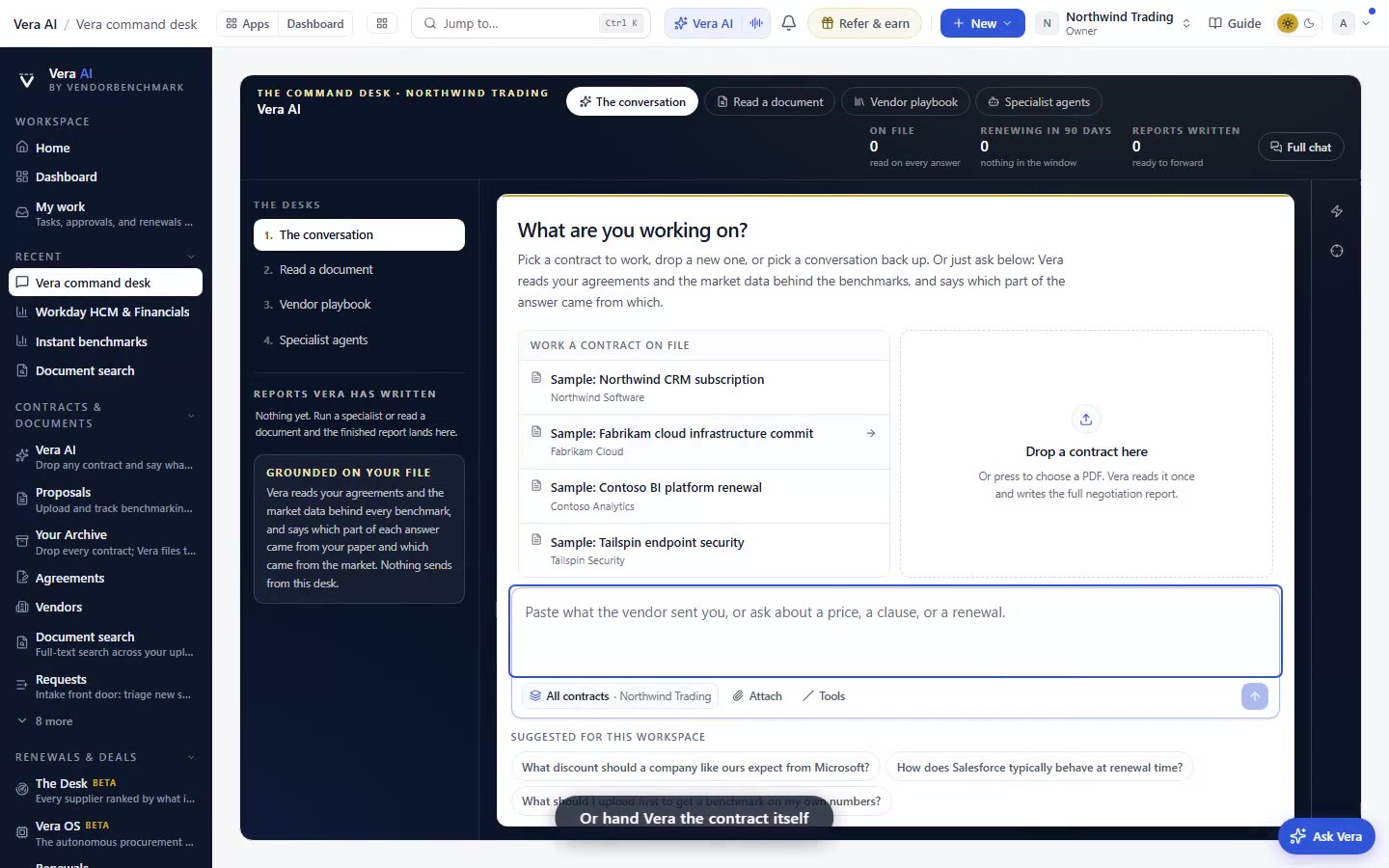
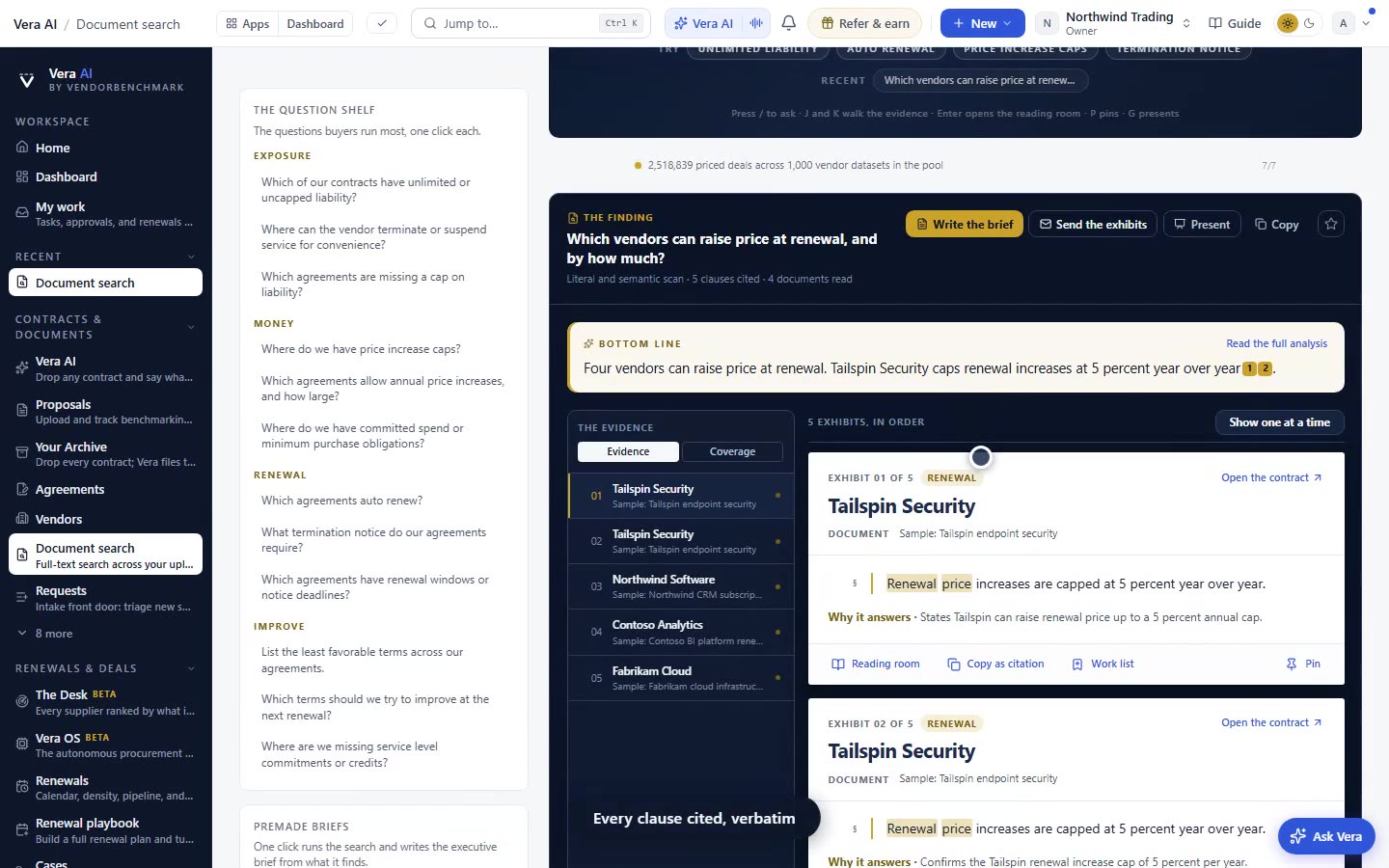
The benchmark verdict now argues your side in both directions
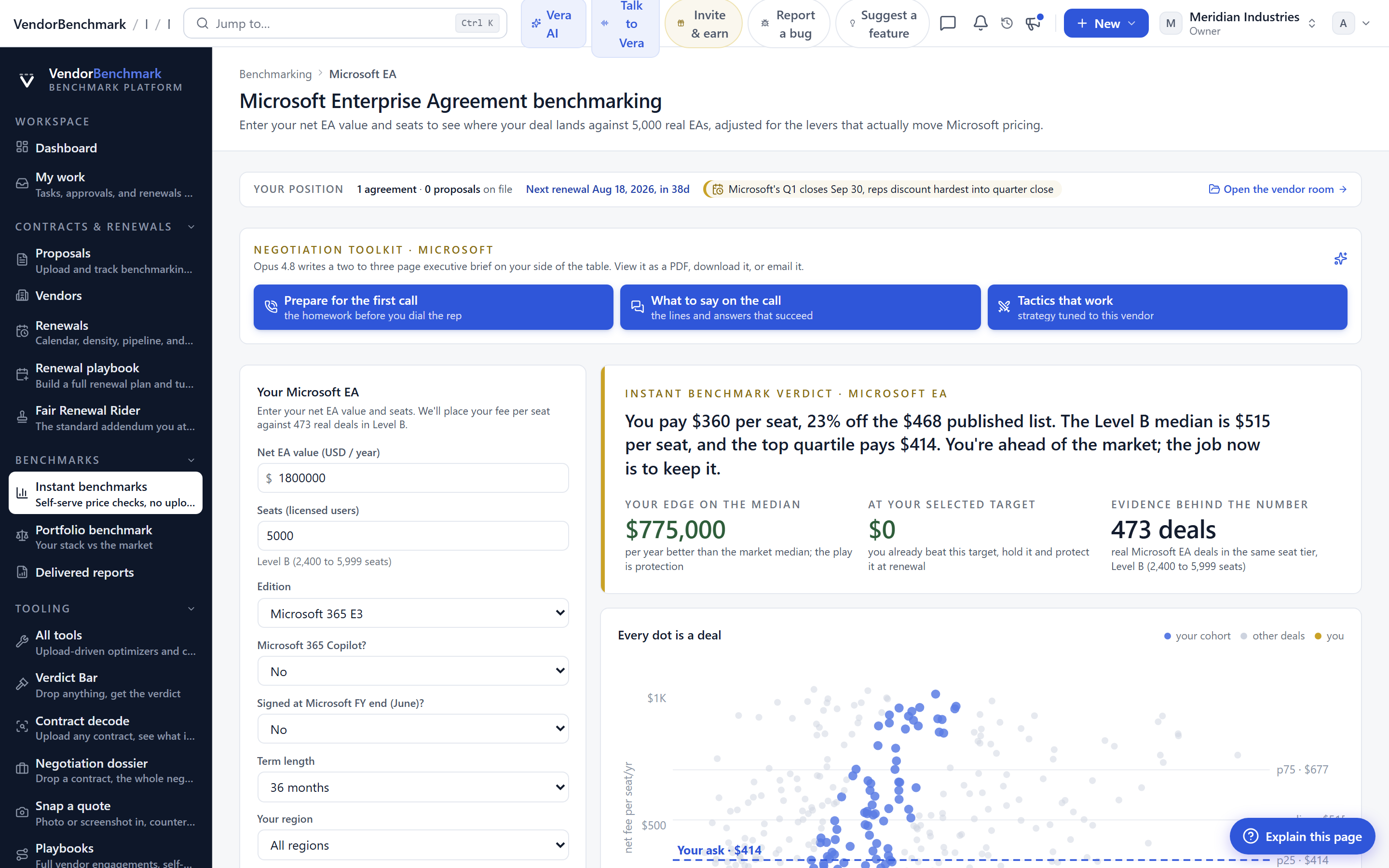
The verdict used to hand a winning deal the same repair chapter as a losing one. Now the ahead state gets its own arc, built around protecting the rate you already hold.
Here is a problem you have felt without naming it. You run a benchmark, the tool tells you that you are already ahead of the market, and then it hands you a chapter that reads like you are behind. Push the vendor. Target a better rate. Reopen the term. The advice was written for the deal you did not do, and it treated your win as if it were a loss. So you either ignored the read, which trained you to trust it less, or you followed it and reopened a rate you should have been guarding. This update fixes that. When the benchmark finds you ahead, the verdict now argues the ahead case. It stops selling you a repair you do not need and starts costing out the protection you do.
The ahead state gets its own arc
An overpaying verdict has an obvious job. Find the gap, name the trade that closes it, hand you a next step that reopens the number. That logic is fine when you are behind. It is exactly wrong when you are in front, because the risk is no longer the rate you pay today. The risk is the rate you pay next year. So the ahead verdict now builds around the protection. It reads what a written uplift cap is worth in dollars against what the vendor will actually propose.
Take a concrete illustration. Say you hold a commitment and the vendor's standard renewal language runs an 8 percent annual uplift. A written 3 or 5 percent cap does not change the rate you pay this year at all. It changes the compounding. Over a multi year commitment, the difference between 8 percent and 5 percent, applied to your specific base, is real money, and the verdict now puts that number on the page instead of leaving you to model it. Then it names the trade that buys the cap, and a next step that reads protect, not reopen. This is the same discipline we wrote about in discount off list is a trap: the headline number is not the number that governs your spend.
Five words, everywhere, in colours that agree
Verdicts used to vary their vocabulary. One benchmark said you were competitive, another said you were strong, a third said you were exposed, and you spent effort translating between them. That is gone. Every verdict now speaks the same five words: Poor, Below market, At market, Good, Top of the market. The colour agrees with the headline, so a green band and a red word never appear together on the same read. This sounds small. It is not. It means a benchmark you ran in March and one you run today are directly comparable at a glance, which is what makes portfolio benchmarking actually work rather than becoming a translation exercise.
There is one more behaviour worth calling out, because it protects you from the tool itself. When a read produces numbers that cannot be right, a claimed edge larger than the deal is worth, the verdict does not celebrate. It says Check the inputs and it names the suspect field. A benchmark that tells you that you saved more than you are spending is not good news, it is a data error, and the honest move is to flag it rather than let you carry a fantasy into a negotiation. That is the same principle behind grounded AI in negotiation: a number that goes to a vendor has to survive contact with arithmetic first.
A shorter brief, with the working file behind it
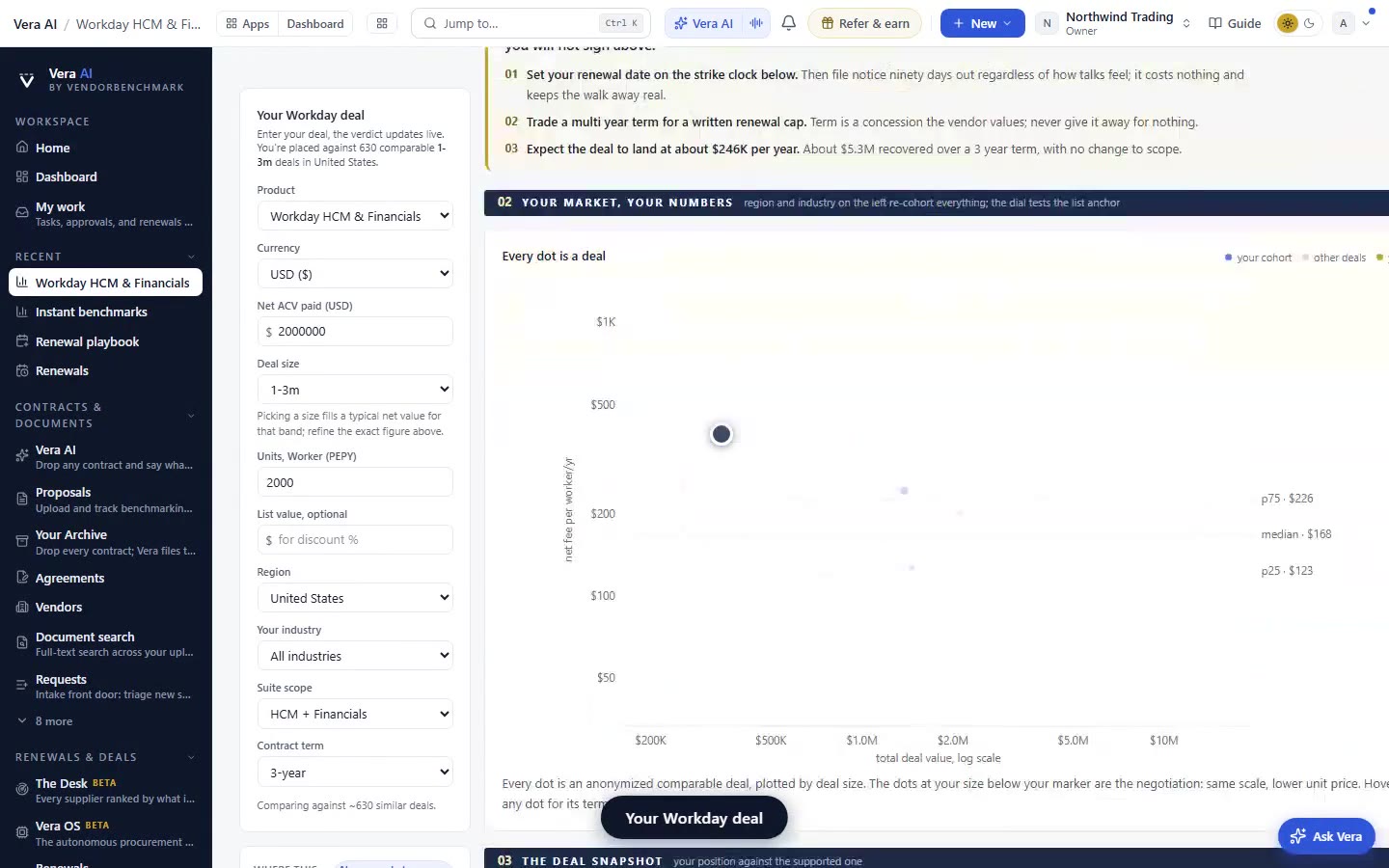
The brief itself is now five chapters. The dot field, the snapshot table and the savings bridge have not been removed, they have moved to the working file, waiting for you when you need to show the arithmetic to an approver. What stays on the front page is the read you act on. The curve guideline used to run as a second form above the tool, a separate object you had to reconcile with the verdict. It now captions the verdict's own chart, so the guidance and the picture are the same object. If you have read every vendor benchmark now opens as the verdict reading, this is the natural next step in the same direction: put the conclusion first, keep the evidence one click away.
Where it fits, and where it does not
This lives inside the same read you already open. Nothing new to configure. If you run a commitment through benchmarking and it comes back ahead, you now get the protection arc automatically, and the next step flows into a negotiation the same way an overpaying verdict always has. For teams that manage many renewals, the shared five word vocabulary is what lets you sort the whole book by whether each deal needs fighting or defending.
Now the honest limits. The dollar value on an uplift cap is only as good as the term you feed it. If your commitment length or base is entered loosely, the protection figure is loose too, which is exactly why the Check the inputs behaviour exists. Second, ahead is a snapshot against comparable deals as they stand today. Market rates move, and a position that is Top of the market this quarter can drift, so the verdict tells you where you sit now, not where you will sit at renewal. Third, the verdict costs out a cap, it does not win you the cap. Whether the vendor grants written protection depends on the trade you bring and the leverage you hold, and no read changes that. It gives you the number and the argument. You still have to sit across the table. Finally, a protection next step assumes you want to hold the deal. If your real intent is to exit or consolidate, that is a different question, and the verdict will not talk you out of a decision the benchmark was never asked about.
Want to be updated when major licensing and pricing changes land? One analyst brief a week: the price rises, metric changes and audit campaigns that move software costs. Work email only.
Morten brings two decades of enterprise and software procurement, with stints across Oracle, IBM, SAP, and Salesforce shaping how he reads a deal. He has led sourcing through hundreds of renewals, from mid market order forms to nine figure global agreements, and learned that the buyers who win are the ones who walk in knowing the market. He built VendorBenchmark to make that pattern recognition repeatable.