It records every meeting, and it will read up for you first
The recorder starts itself at the top of any real meeting and stops when it ends. Above the prep, a new box turns a plain question into a cited brief you can read before the call.
Here is the problem you already know. The vendor call is on the calendar for 30 minutes, you have three of those to prepare, and the prep you skip is the prep that costs you. The last two calls with this account are somewhere in your recordings folder, unwatched. The MSA renewal terms are in a PDF you have not opened since signing. The account team has swapped reps twice, and you cannot remember what they conceded last time. So you go in cold, take notes by hand, half listen because you are writing, and reconstruct the meeting from memory afterwards. Two habits have quietly eaten your leverage: you do not record consistently, and you do not read up before you sit down. Second Chair now fixes both, and it does so without asking you to remember to turn anything on.
The recorder stops waiting to be reached for
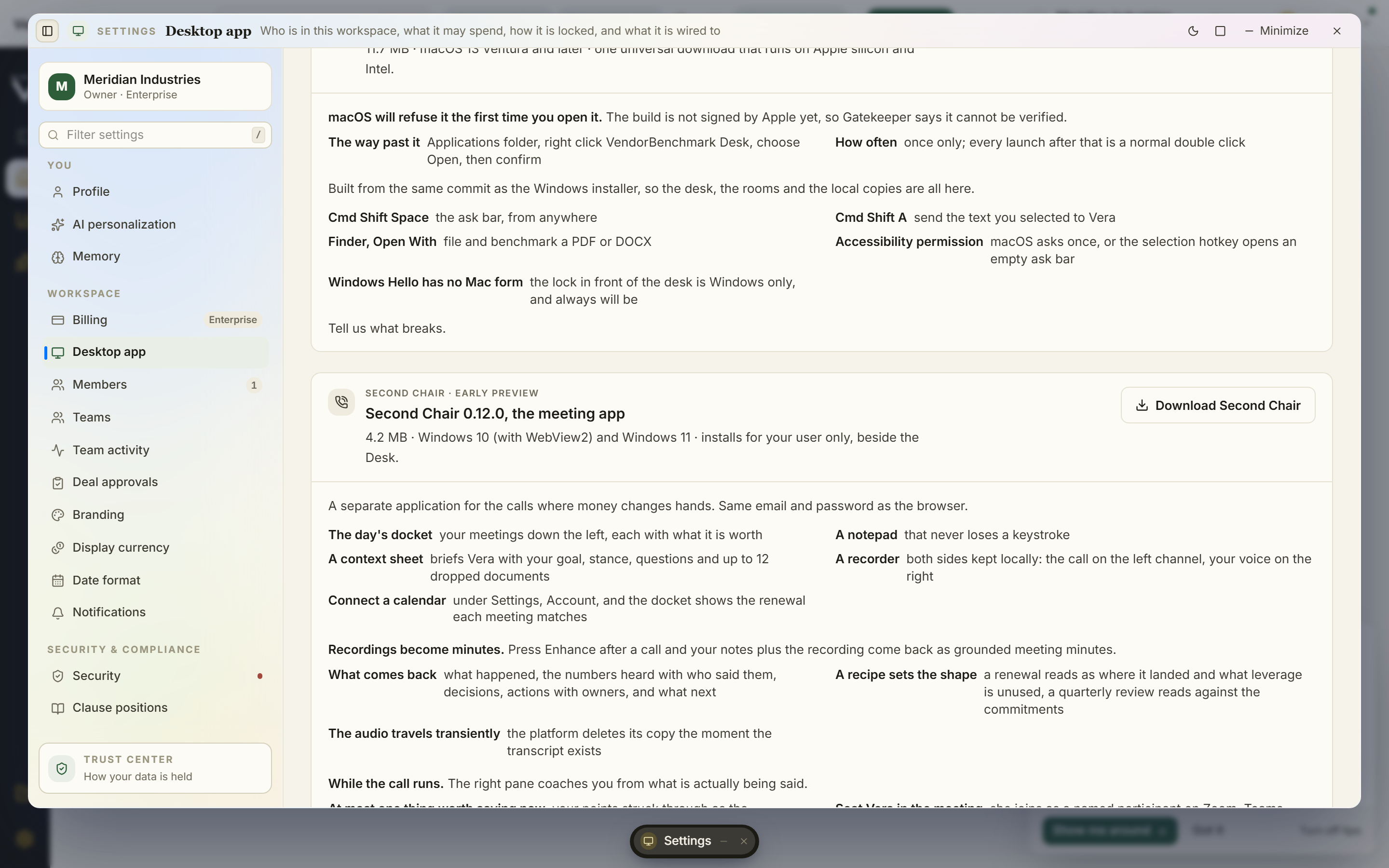
Until now the recorder was a button, and buttons get forgotten. The change is small to describe and large in effect. Second Chair starts recording on its own at the top of any meeting with two or more people, and on any call it notices that nobody bothered to put in a calendar. When the meeting ends, it stops. You do not click, you do not remember, you do not lose the first eight minutes while you fumble for the control. Everything stays on your machine, governed by the retention dial you set, and one switch turns the whole thing off. Nothing here reaches out to a vendor call you did not join. This is capture that behaves the way a note taker should have all along, present by default and quiet about it.
A box above the prep that reads up for you
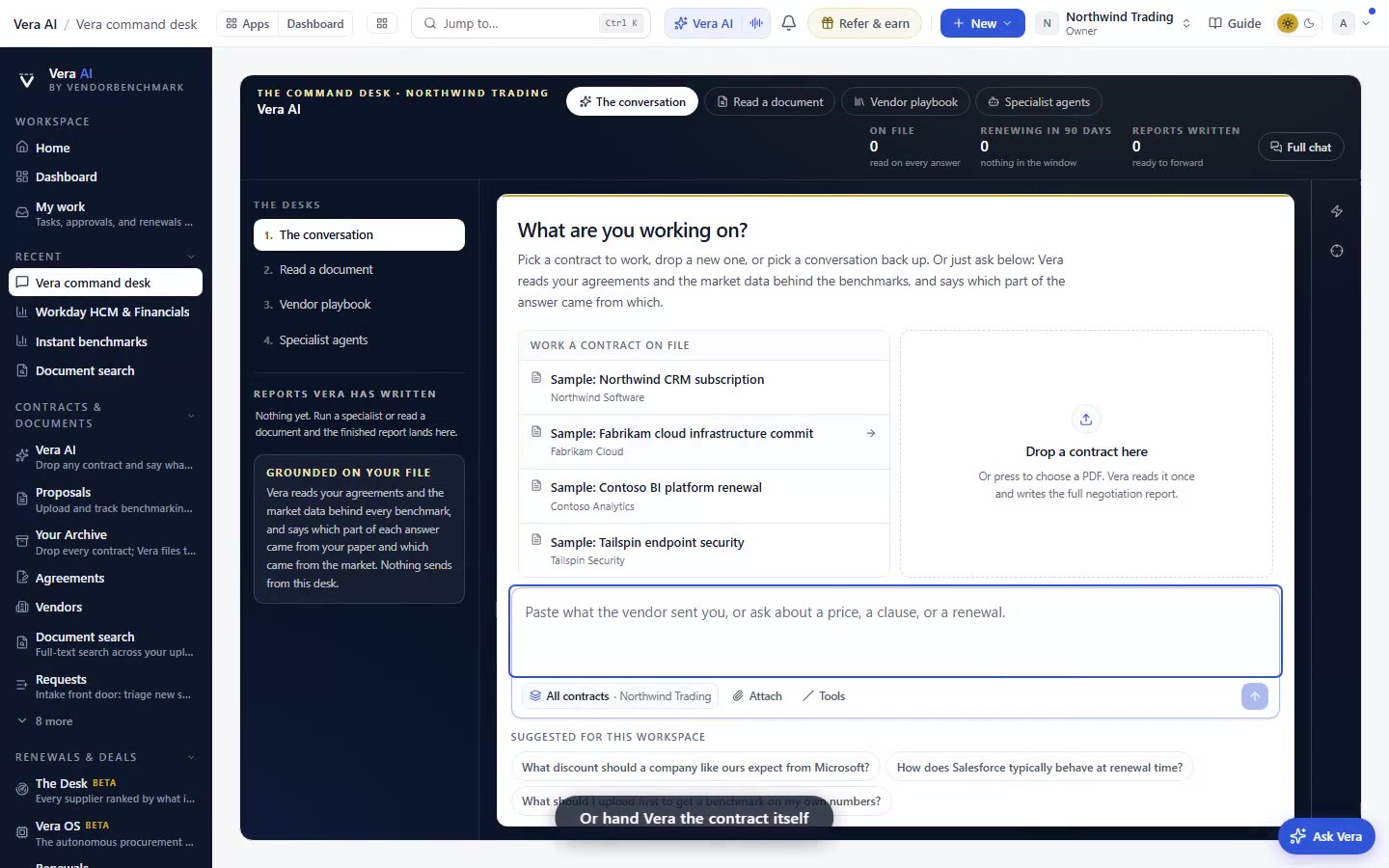
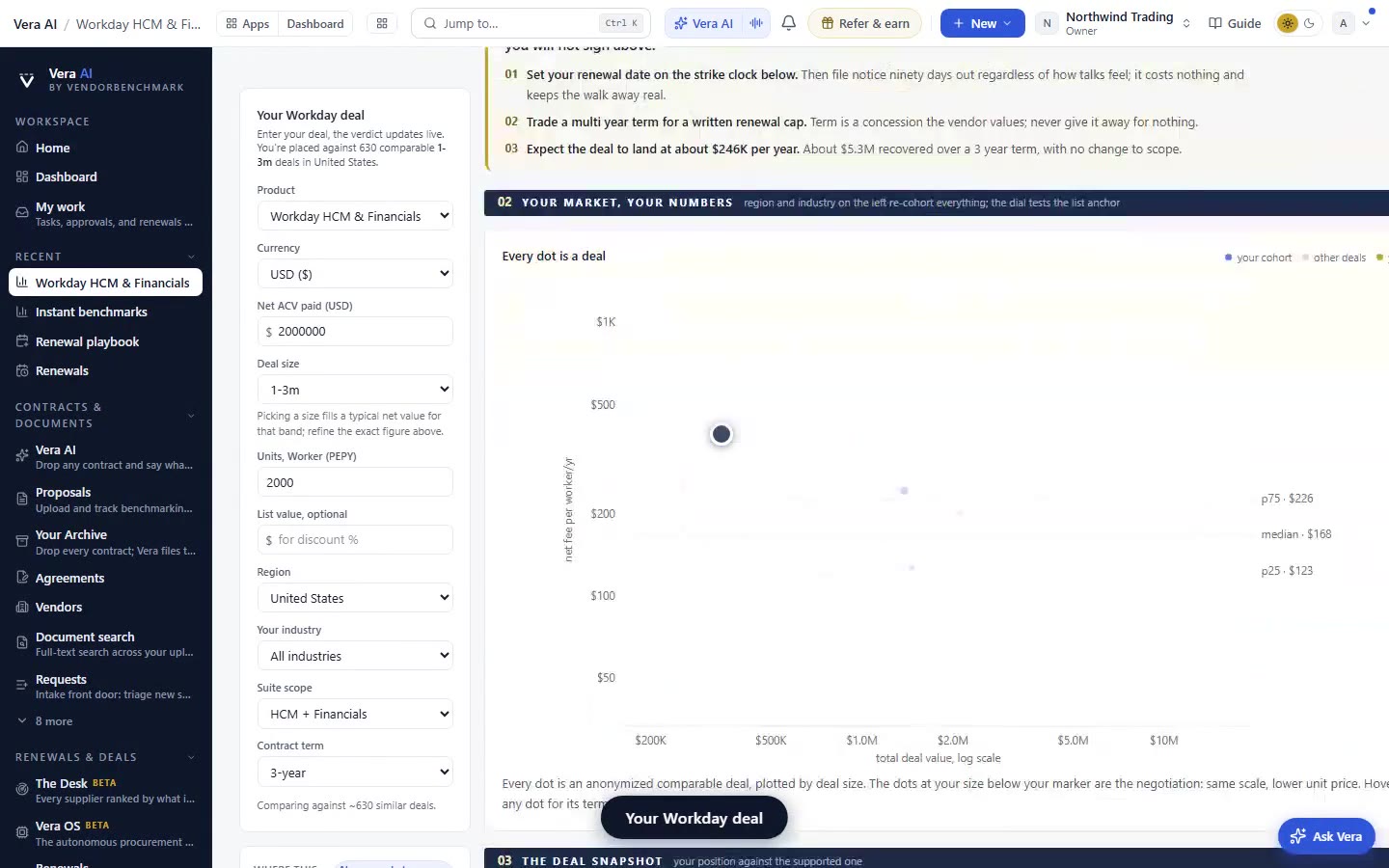
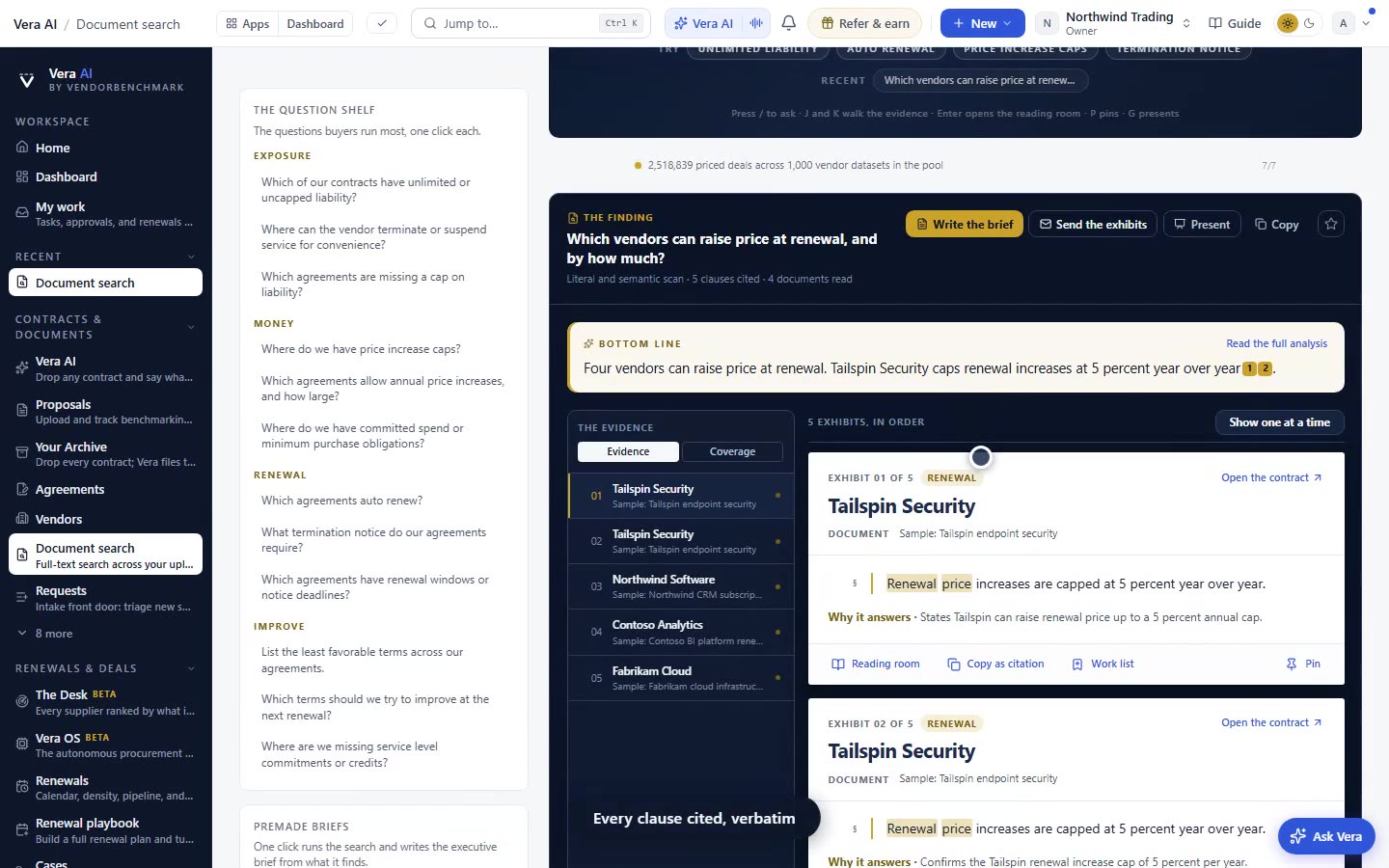
The second change sits above the prep panel, and it is the one that changes how the call feels. You type what you want found out about the vendor, in plain words, the way you would ask a colleague who had done the homework. Second Chair writes a brief for you to read before the call. It draws from four places at once: your own paper, meaning the contracts and documents in your workspace, your last calls with them, the recordings the tool has already captured, the house corpus, the accumulated knowledge across your team, and a live read of the public record. Every claim in the brief is attributed, so you can see where a figure or a quote came from before you repeat it across the table. This is the same discipline we described in Every upload gets the two minute read, applied to the moment right before you speak rather than the moment a file lands.
The attribution matters more than it sounds. A brief that asserts things without sourcing them is just confidence you did not earn. When you tell a rep their renewal uplift sits above what comparable accounts pay, you want to know that came from a benchmark and not from a hunch, and you want to be able to point at it. The brief saves to your workspace, so the reading you did once becomes reference the whole team can reuse. That is the same principle behind the org brain: the work of one prepared buyer should not evaporate when the call ends.

Where this fits the rest of the workflow
The brief is the front of a chain, not the whole of it. Read up before, then let the live copilot carry you through the call itself, the way we walked through in the call copilot. Rehearse the hard exchanges against a synthetic rep in the voice sparring room if the stakes are high. Afterwards, the recording is already sitting in your workspace, ready to become the raw material for the next brief. Nothing here is a separate destination you have to remember to visit. Second Chair sits on your desktop and folds into the meetings you were already going to have. You can set the retention dial, tune the auto start behaviour and flip the master switch from the desktop app settings.
Honest limits
Be clear about what this does not do. The auto start triggers on real meetings, two or more people or an ad hoc call with no calendar entry, so a solo dry run you host alone will not be captured, and that is deliberate. It is capture, not consent management, so you remain responsible for telling the other side they are being recorded where your jurisdiction or your policy requires it. The switch and the retention dial are there precisely so you can honour that.
The brief is only as good as its sources. A live read of the public record surfaces what is public, which for a private vendor may be thin, and the house corpus reflects what your team has actually loaded. If your contracts are not in the workspace, the brief cannot cite them, in the same way a decode is only as sharp as the document you feed it, a point we made in decoding any contract. Attribution tells you where a claim came from, it does not certify that the source was right. Treat the brief as a fast, sourced starting position that you sharpen with judgement, not as a verdict. Used that way, it gives you back the hours you were spending on retrieval and lets you spend them where the number actually moves.
Fredrik has spent more than twenty years in enterprise software, with time at Oracle, IBM, SAP, and Salesforce before moving to the buy side. He structured and priced the kind of large agreements most buyers only see once or twice in a career, which taught him where the leverage sits and how far a vendor will actually move. He started VendorBenchmark to hand that knowledge to every sourcing team.