The sign-off that waits for a calendar that never clears
A finance or security sign-off sits untouched for days because the approver only sees it when the calendar clears. The fix is not chasing. It is making the pending decision small enough to answer in the gap between two meetings.
Think about the last renewal you almost lost time on. The commercials were settled. The redlines were agreed. Everything waited on one line in someone else's inbox: a finance approval, or a security sign-off, that needed a yes. You sent it on a Tuesday. It was still sitting there on Friday. When you finally pinged the approver, they replied within the hour, read it, and approved it in four minutes. The decision was never hard. It just never got a moment. This series is about the sourcing problems you recognise from your own week, and this one is almost never about difficulty. It is about scheduling.
The wait no one is measuring
Here is the uncomfortable part. Nobody in the chain thinks they are the bottleneck, because nobody is watching the clock on the pending item. The approver has forty open tabs and yours is one of them. Their calendar is booked solid through Thursday, so your request waits for a gap that keeps not arriving. Meanwhile the deal timeline quietly slips, and when the renewal date lands, everyone blames the vendor's slow paper or the buyer's late start. The truth is simpler. The decision spent five days in a queue that no one owned.
Approval latency is a scheduling artifact. The moment you frame it that way, the fix stops being about pressure and starts being about design. You do not need the approver to care more. You need the pending decision to be so small and so self explanatory that it fits in the gap between two meetings instead of requiring a slot they cannot find. We covered the structure of this in the deal sign-off chain, where every approver gets a brief built for their question and no one else's.
Why chasing makes it worse
The instinct when a sign-off stalls is to chase. A reminder, a nudge, a forward with "any update on this?" in the subject line. This rarely works, and it is worth being honest about why. A reminder adds urgency without adding clarity. The approver still faces the same unscoped task, the same forty tabs, the same need to reconstruct context before they can safely say yes. You have not reduced the size of the decision. You have only made them feel bad about not doing it yet.
Worse, chasing trains the chain to respond to volume rather than to value. The person who pings loudest gets the slot, which means the quiet, well prepared request waits behind the noisy, half finished one. If your process rewards pressure, you have built a process that punishes preparation. The alternative is to make preparation the thing that moves the queue. When a request arrives fully scoped, with the benchmark attached and the single question isolated, it does not need a chase. It needs a spare four minutes, and those exist far more often than a clear thirty minute slot does.
What a decision-ready brief actually contains
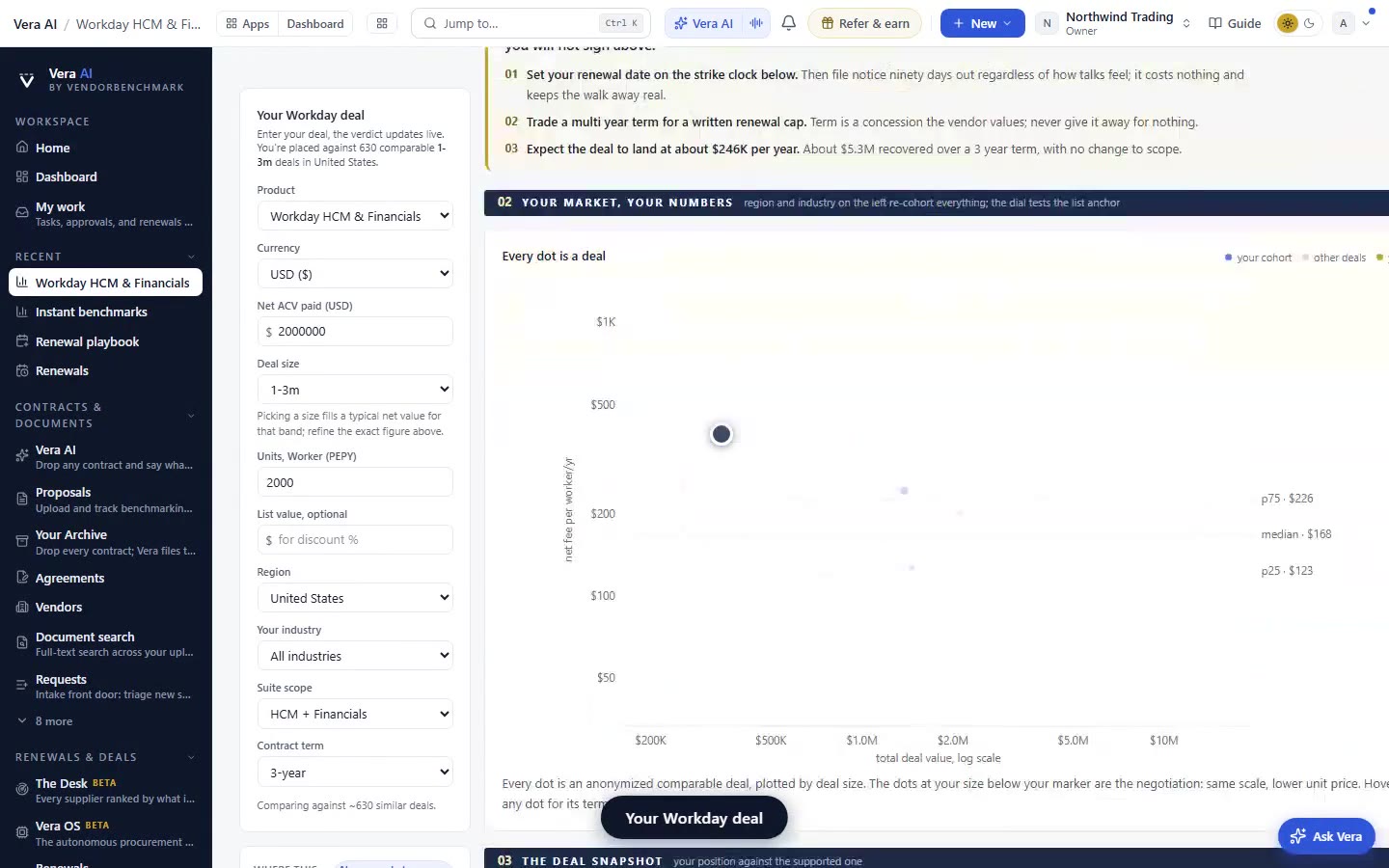
A brief that clears in minutes is not a shorter version of the deal file. It is a different object. It answers three things and nothing else. First, the benchmark: is this price, term, or clause inside or outside market, and by how much. Second, the recommendation: what the analyst thinks the approver should do, stated plainly. Third, the one confirmation the approver personally owns, the single fact only they can verify. Everything the approver does not need is left out. That editing is the whole point. A finance approver does not need the security posture, and a security reviewer does not need the discount curve.
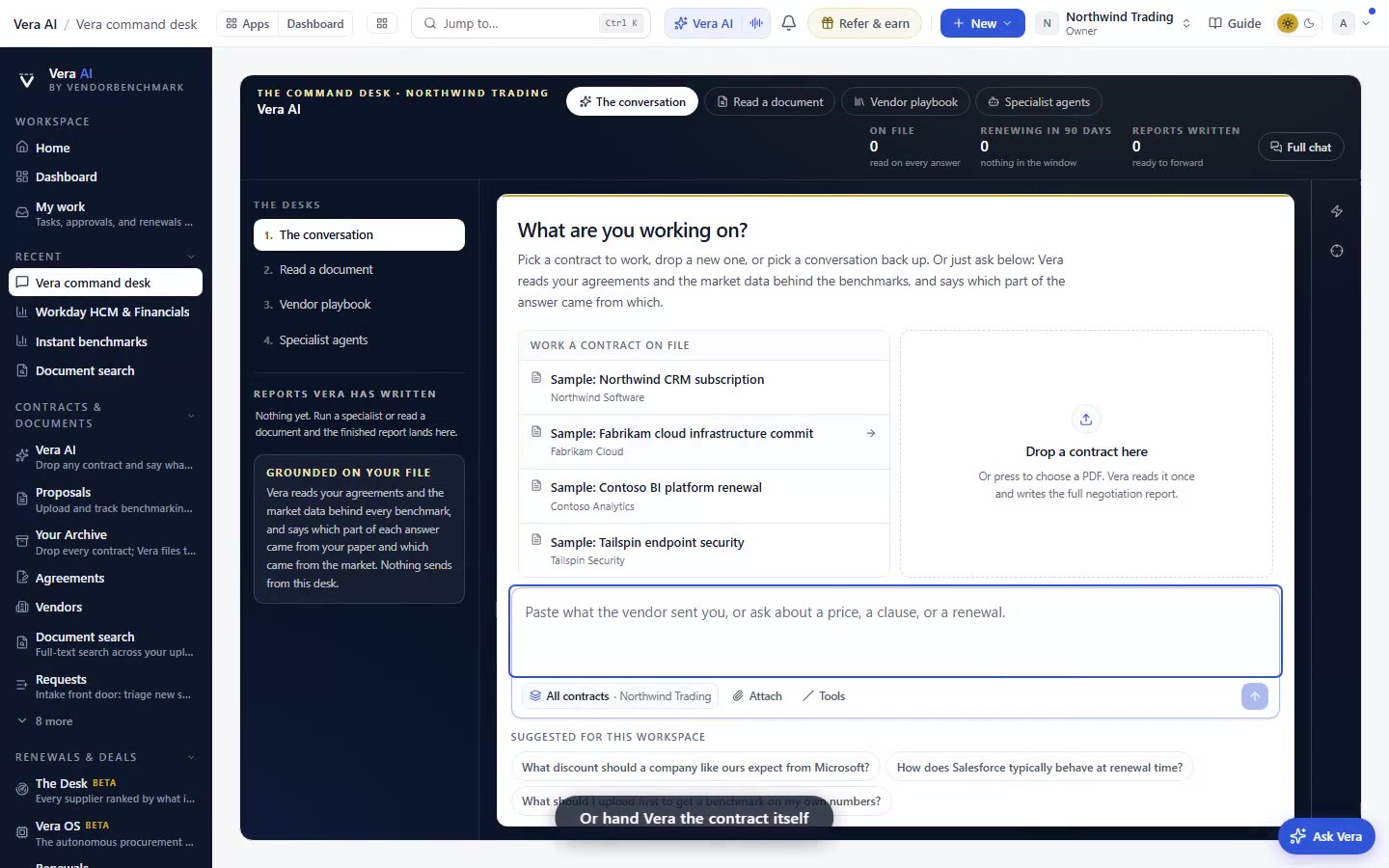
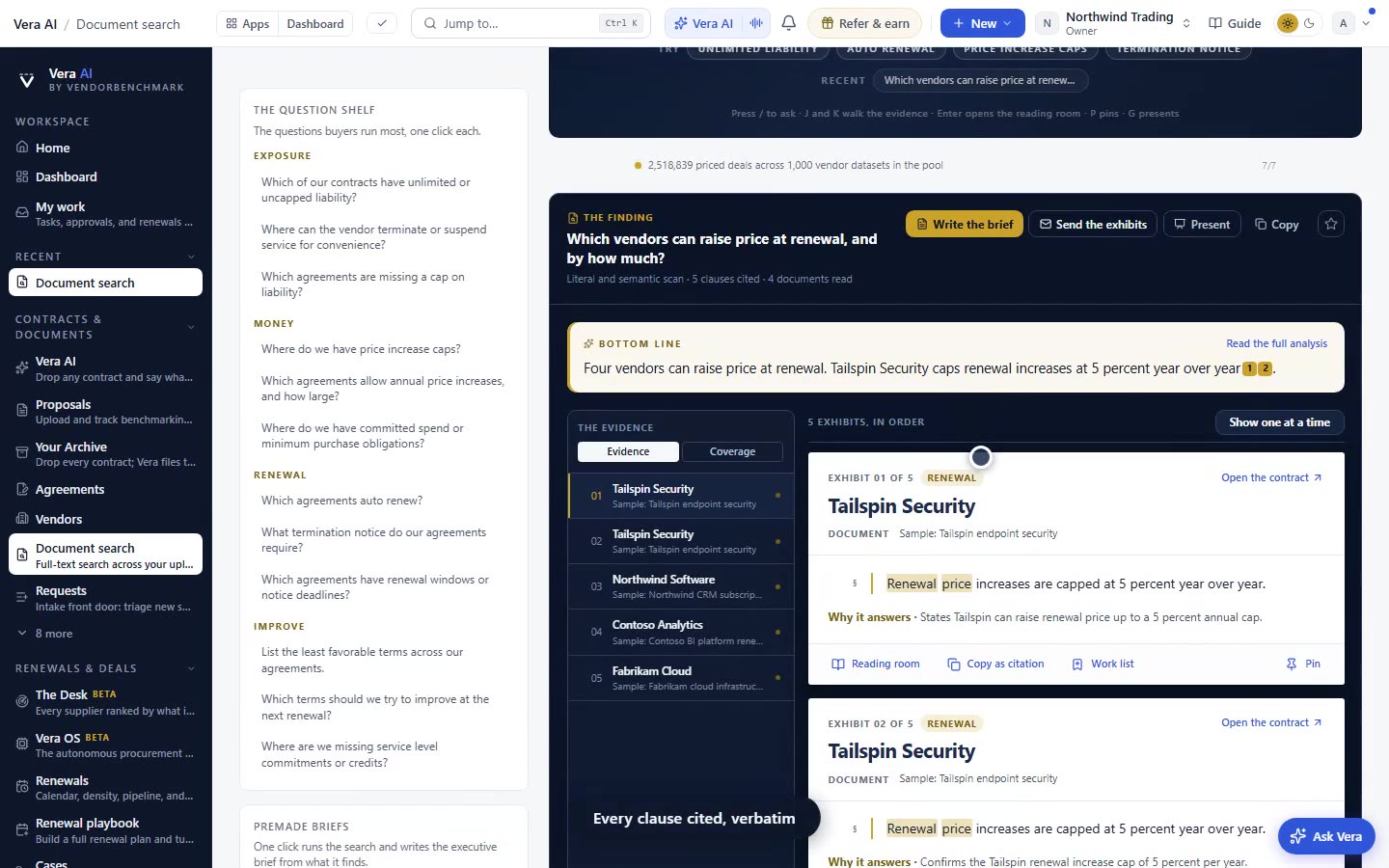
This is where Vera, the AI analyst, does the work a human analyst would do if they had the hours. Vera reads the deal, pulls the relevant benchmark from the library, and writes the brief scoped to each approver's question. The recommendation is grounded, not asserted. When the brief says a renewal uplift is above market, it cites the comparable deals behind that claim, in the same way our benchmark verdict shows both what you should push on and where you are already fair. The approver is not asked to trust a number. They are shown where it comes from.

Putting the wait on a clock
The second half of the fix is measurement. If no one is timing the pending decision, no one can improve it. The analyst desk puts a clock on every sign-off from the moment it enters the queue. That does two things. It tells the buyer where the deal actually is, so the renewal date stops arriving as a surprise. And it tells the organisation, over time, which approvals are genuinely slow versus which ones were simply never packaged well. Most of what looks like a slow approver is really an unscoped request, and the clock makes that visible without blaming anyone.
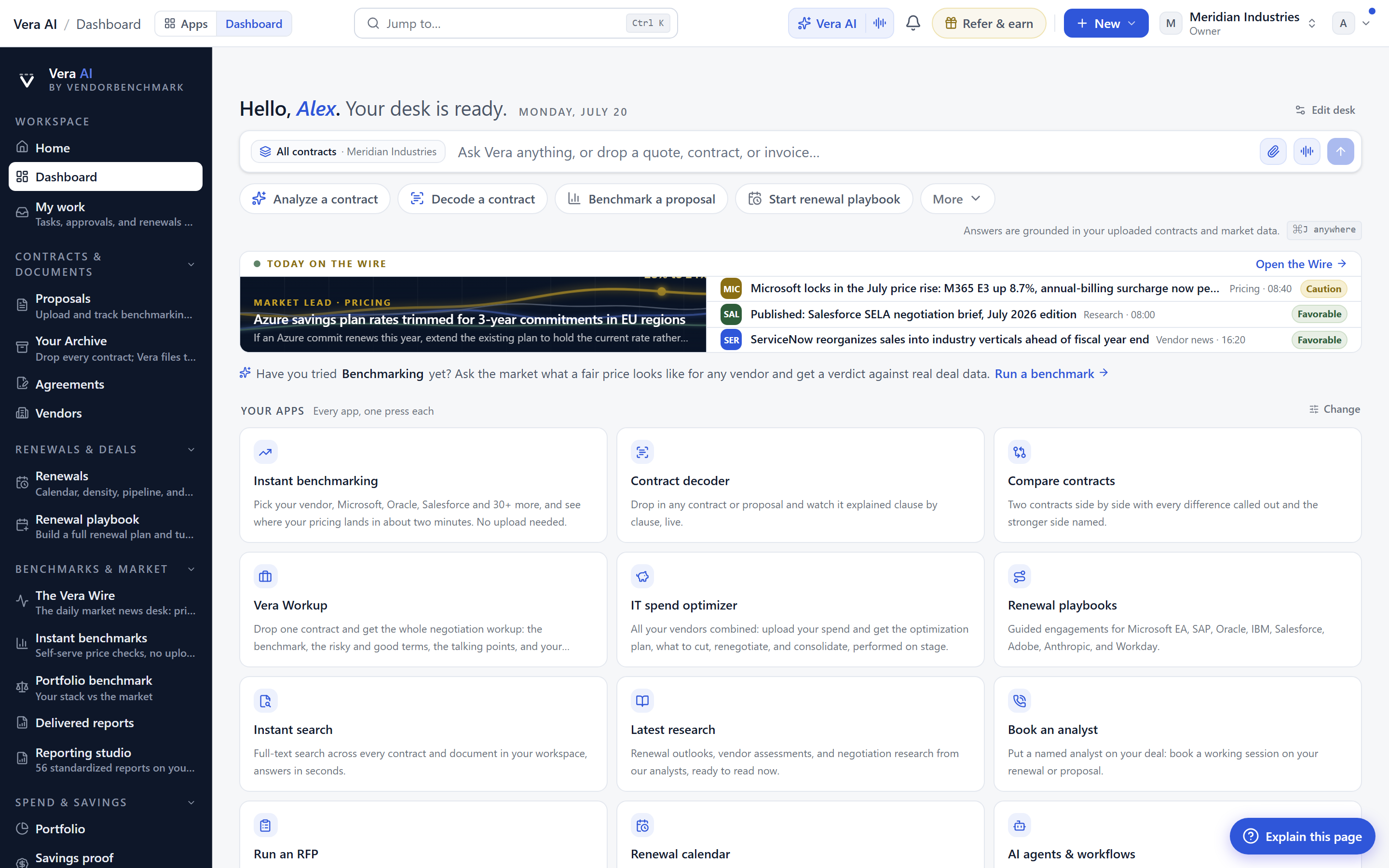
Behind the desk, the platform runs the assembly for you. Vera is one of six specialist agents, supported by ten inbox agents that watch the threads and thirty background jobs that keep the underlying benchmarks current. You do not schedule any of this. When a deal reaches the point where a sign-off is due, the brief is already drafted and waiting, in the same way the meeting notes are written before you ask. The buyer's job shrinks to routing and the approver's job shrinks to confirming.
What this does not solve
Be honest about the edges. A decision-ready brief removes the scheduling friction. It does not remove a genuine disagreement. If a security reviewer believes the vendor's data residency terms are unacceptable, no packaging makes that a four minute yes, nor should it. The brief will surface the objection faster, which is the point, but the objection is real work that belongs to people. Vera scopes and grounds the decision. It does not make the decision for the approver, and it should not.
The clock also cannot manufacture an approver who is simply out of office for a week. It will tell you the wait is happening, which lets you route to a delegate sooner, but a queue with no one in it stays a queue. And the benchmark is only as good as the comparables behind it. When you build a recommendation on grounded numbers, you inherit both their strength and their limits. What the platform does reliably is take the most common cause of approval latency, an unscoped request waiting for a slot that never comes, and dissolve it. The decisions that are hard stay hard. The decisions that were only ever slow stop being slow.
Want to be updated when major licensing and pricing changes land? One analyst brief a week: the price rises, metric changes and audit campaigns that move software costs. Work email only.
Morten brings two decades of enterprise and software procurement, with stints across Oracle, IBM, SAP, and Salesforce shaping how he reads a deal. He has led sourcing through hundreds of renewals, from mid market order forms to nine figure global agreements, and learned that the buyers who win are the ones who walk in knowing the market. He built VendorBenchmark to make that pattern recognition repeatable.