What "grounded AI" means when the number goes into a negotiation.
Every AI vendor now claims its answers are grounded. The claim matters more in procurement than almost anywhere else, because the number the AI gives you is a number you will repeat to a vendor with your credibility attached. Here is what grounding actually means on this platform, and how to audit any AI answer before you use it.
Picture the failure case precisely, because it is worth being afraid of. You ask an AI whether your ServiceNow price is fair. It answers, fluently and confidently, that comparable companies pay about 18 percent less. You repeat that number on the vendor call. The rep, who prices ServiceNow deals for a living, asks where it comes from. If the honest answer is "a language model's impression of the internet," you have not just lost the point, you have taught the vendor that your numbers can be dismissed for the rest of the negotiation.
A general purpose chatbot fails this test by construction. It was trained to produce plausible text, and a plausible-sounding discount is exactly what it will produce, whether or not any deal on earth ever closed there. In most jobs a wrong AI answer costs you an edit. In a negotiation it costs you the deal's credibility, which is the only currency you brought.
Grounding is a pipeline, not a promise
On VendorBenchmark, "grounded" is a specific, checkable property with three mechanical parts.
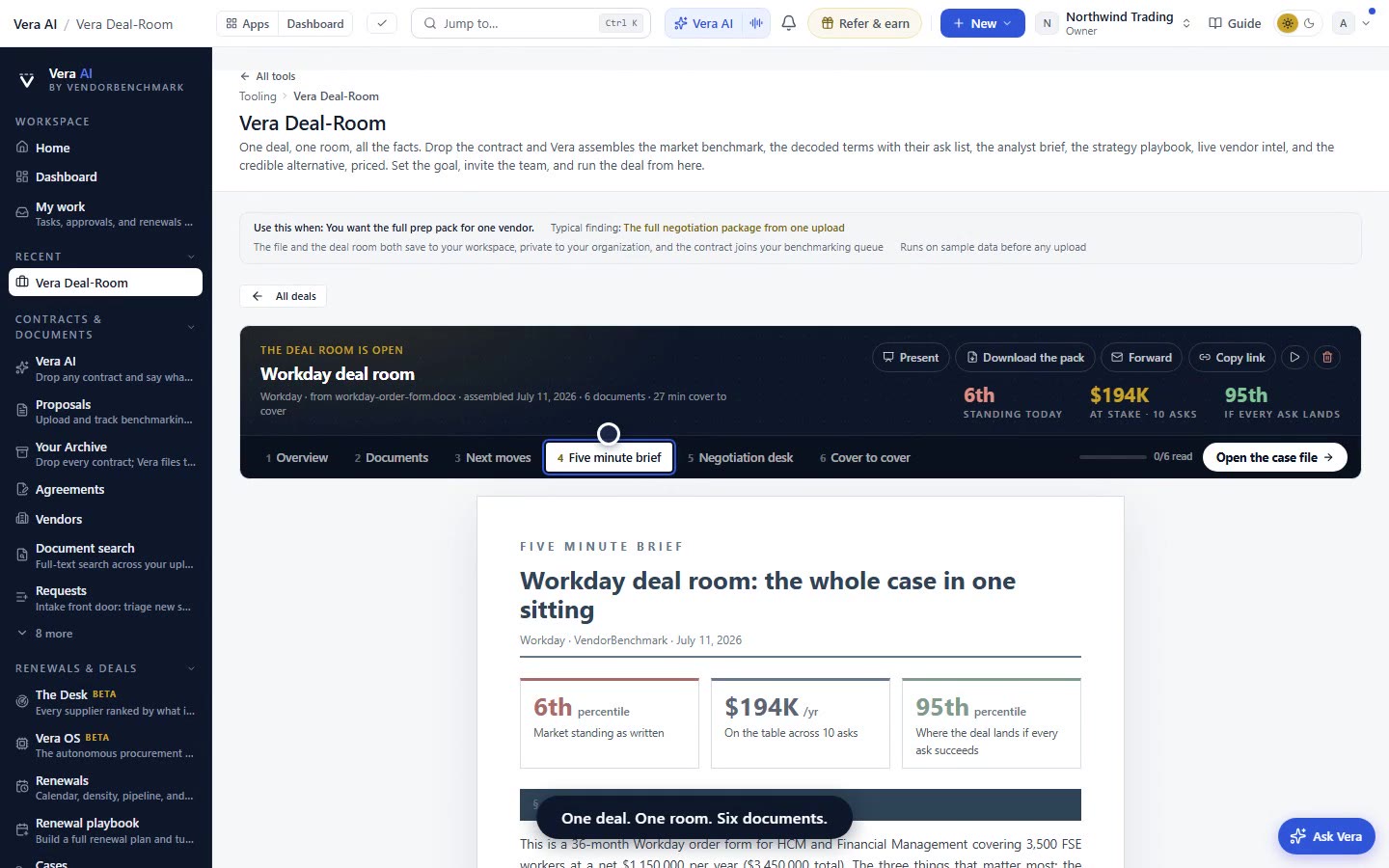
Every figure carries a citation tag. When Vera answers, each number in the answer is tagged back to its source: the clause in your stored contract, the line on your invoice, or the benchmark cohort it was computed from. The citation is not a footnote for decoration. It is a link you can click, and the source it opens is the evidence you would hand a skeptic.
Answers pass a groundedness check before you see them. After the answer is drafted, a separate check verifies that the claims in it are actually supported by the cited sources. An answer that asserts more than its evidence supports gets caught at this gate, not on your vendor call.
Thin data produces a refusal, not a guess. If your question runs past the edge of the data, a vendor with a small cohort, a metric we do not track, a contract you never uploaded, the honest answer is "the data does not support an answer to this," and that is the answer you get. A procurement AI earns trust faster by declining well than by answering everything.
Want to be updated when major licensing and pricing changes land? One analyst brief a week: the price rises, metric changes and audit campaigns that move software costs. Work email only.
The bar rises when the answer becomes a document
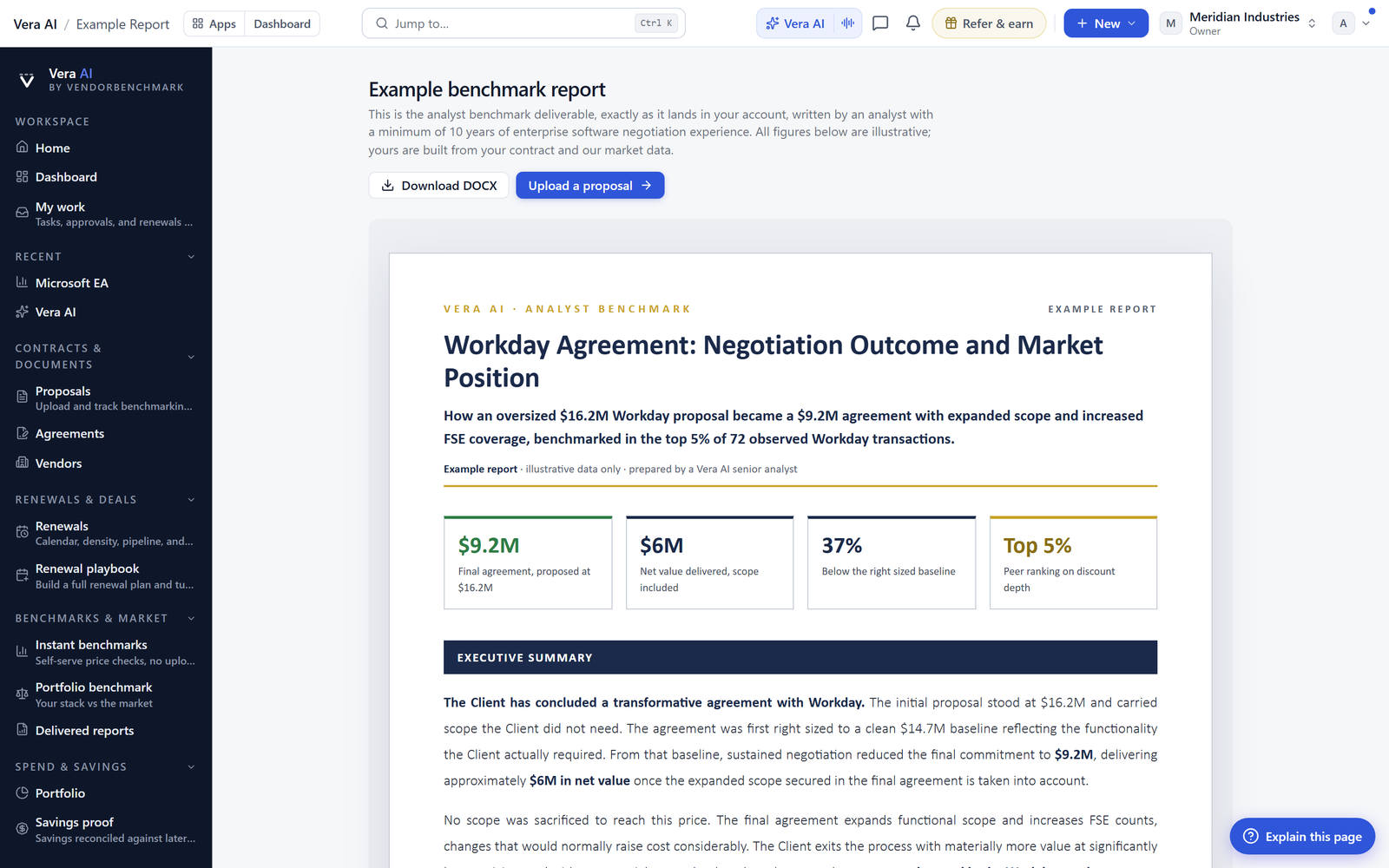
A chat answer is read once. A report is forwarded, quoted in meetings, and pasted into board papers, so its errors travel further and live longer. That is why every report the platform generates, and there are 25+ types, from benchmark narratives to negotiation briefs to portfolio reports, is held to the same standard as the chat: every figure in the narrative is grounded in stored data and citation tagged, the whole document passes the groundedness check before it renders, and the visual standard matches what a human analyst desk would ship.
The discipline shapes the writing too. The reports interpret the data rather than restating it: where the leverage is, where the risk is, what a strong outcome looks like, and what to do first. But interpretation only stands on numbers that check out, which is the whole point of doing grounding first.
Four checks before any AI number goes to a vendor
These apply to any AI tool, ours included. If a number is about to leave the building, run it through this list.
One honest limit to close on. Grounding makes the numbers trustworthy, it does not make the decisions for you. Whether to push, when to accept, and what your relationship with the vendor can bear are judgment calls, and they stay yours. The platform's job is narrower and, we think, more valuable: when you finally say a number out loud, it holds.
Fredrik has spent more than twenty years in enterprise software, with time at Oracle, IBM, SAP, and Salesforce before moving to the buy side. He structured and priced the kind of large agreements most buyers only see once or twice in a career, which taught him where the leverage sits and how far a vendor will actually move. He started VendorBenchmark to hand that knowledge to every sourcing team.
The week in enterprise software buying, in one email.
What shipped on the platform, and the pricing and licensing moves worth knowing before your next renewal. One email a week, to your work address. Unsubscribe any time.