The notes are written before you ask, and you decide who sees them
A meeting used to cost you twice, once in prep and once in write up. Second Chair now handles both ends and leaves the send decision with you.
Here is a cost that never shows up in a savings report. A vendor call takes thirty minutes on the calendar, but it takes you an hour before to remember what you already know about the account, and it takes you another forty minutes after to write down what was said before you forget it. The meeting is priced at thirty minutes. You pay closer to two hours. Do that across a portfolio of live renewals and the write up tax alone eats a working day a week.
We have talked before about every screen you work in keeping your work, and about the analyst who comes on the call with you. This update closes the loop around the meeting itself. Second Chair now handles the half hour before and the moment after, and it does one thing on purpose that we want to be explicit about: Vera cannot send anything. The send decision stays with you.
The card that asks for two lines
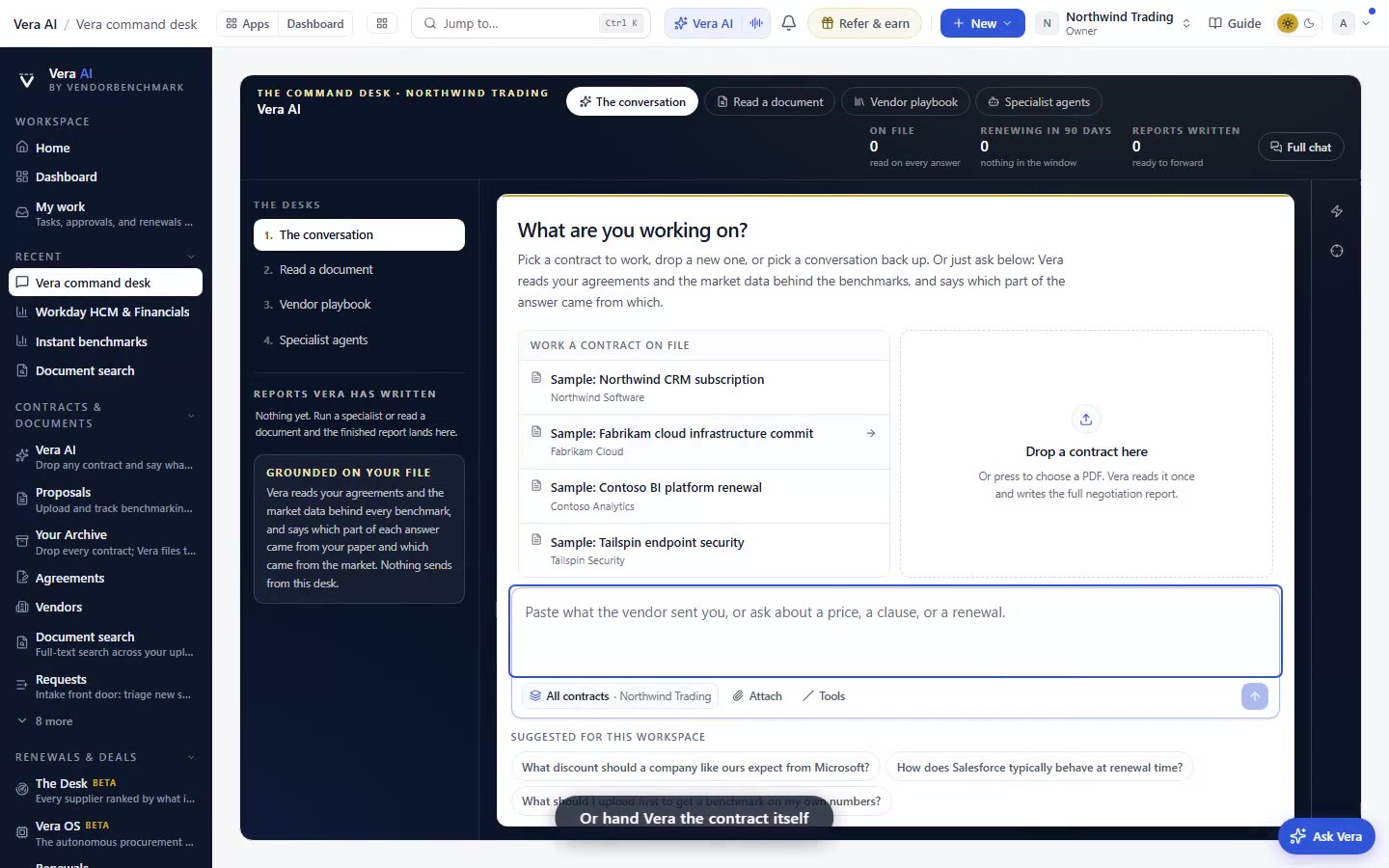
Thirty minutes before a meeting, if Vera has nothing to work from, a card appears and asks for two lines. What is this call about, and what do you want out of it. That is all. If you have no time or no answer, one press skips it and nothing is held against you. The point is not to make you fill in a form. The point is to catch the case where you would otherwise walk in cold, and to give Vera a thread to pull if you hand her one.
When the calendar invite names a vendor the house has already published on, the prep changes shape. The films and briefs about that vendor sit above the ask card, ready to read or watch. You are not searching for the dossier. It has surfaced itself because the invite told it to. This is the same instinct behind reading the vendor name off an intake ticket, applied to your own diary.
The minutes are written when you stop recording
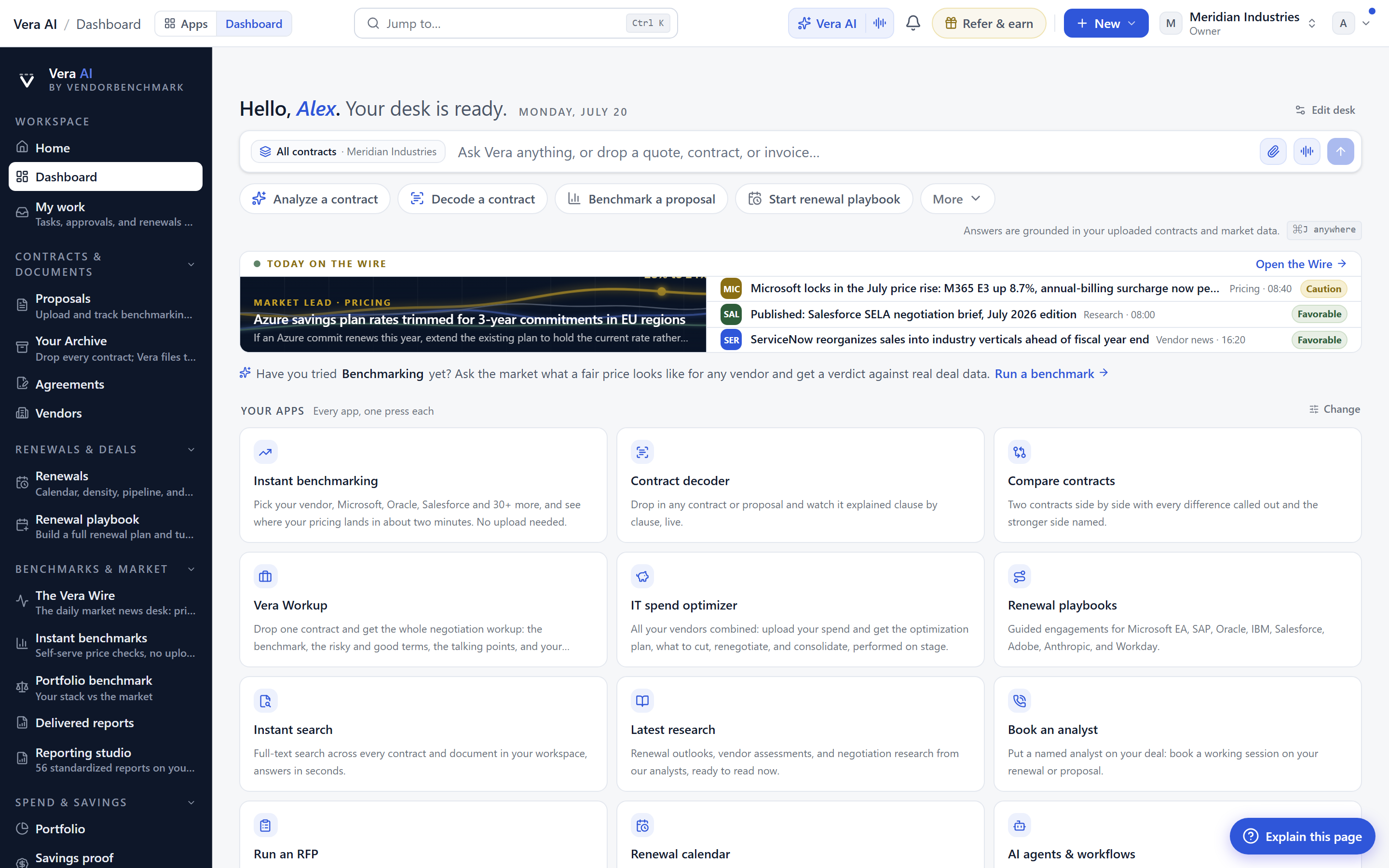
The moment you stop recording, the minutes are written. A window opens with them already drafted, alongside a send row. You tap the colleagues who should see the record, you type in anyone else who belongs on it, and replies come back to you rather than scattering into the vendor's inbox. There is no blank page and no forty minute reconstruction from memory. This is the same discipline we described in the call room, where the memo is written when you hang up, now wired to your live meetings rather than a rehearsal.
What matters here is not that a machine can transcribe. Plenty can. What matters is that the record arrives at the exact moment your memory is freshest and your motivation to write is lowest, and that it arrives already structured into decisions, commitments, and open items rather than a wall of text. You are editing a draft, not producing one.
Vera cannot send, and that is the design
Here is the deliberate limit. Vera herself cannot send anything. Not the minutes, not a summary, not a follow up. If a vendor asks her in the meeting to mail the notes around, that request is declined. This is not a missing feature. It is a boundary we built and intend to keep.
The reason is simple. The record of a negotiation is leverage, and it should never leave your side of the table on a vendor's prompt or an agent's convenience. A vendor who can get the notes distributed on their timing controls what the room remembers. By keeping the send row in your hands, the version of events that circulates is the version you approved. This is the same logic that runs through pooling leverage without exposing your numbers. The tool works for the buyer, and it declines the moves that would quietly work against you.
Where it fits, and where it does not
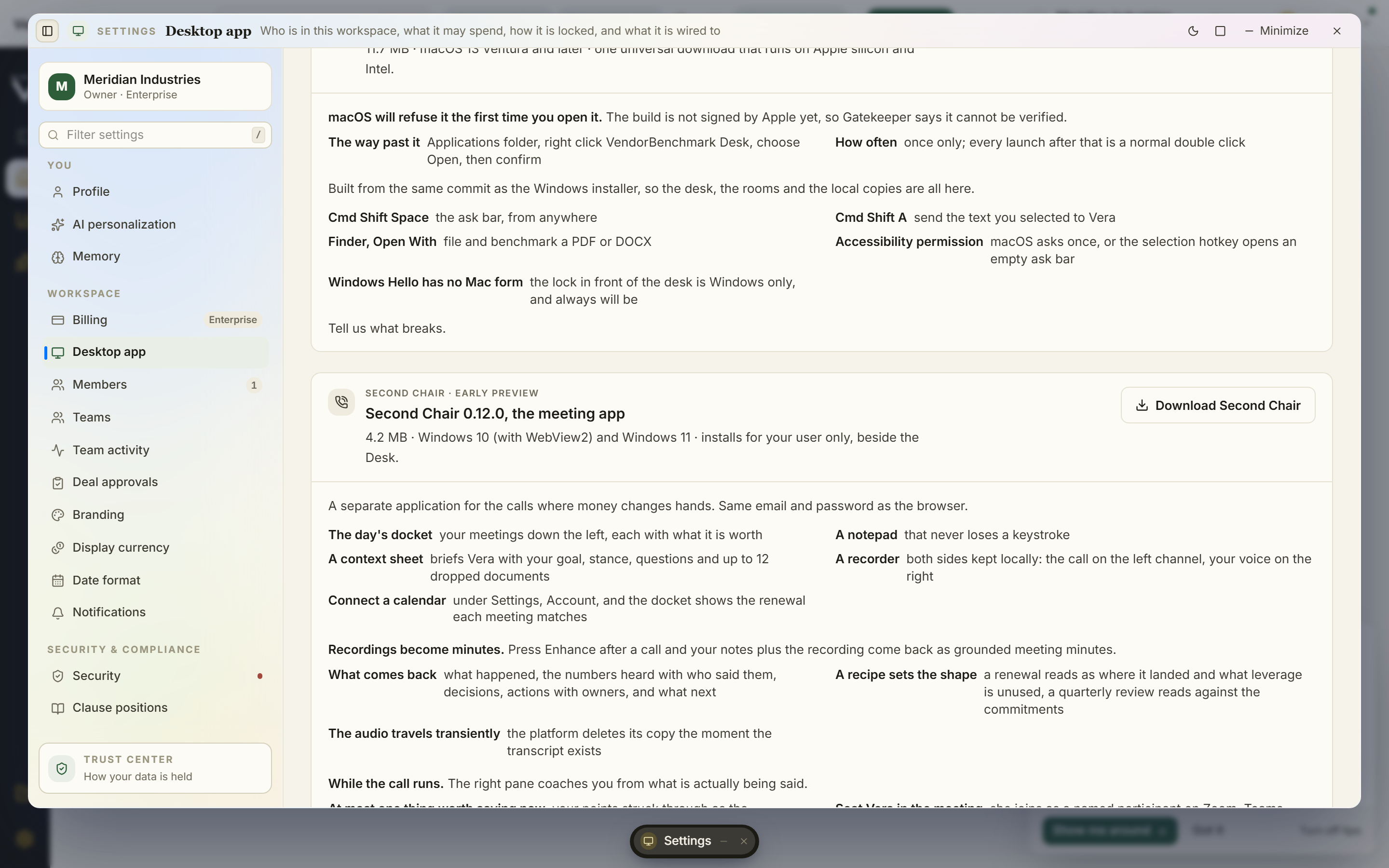
This sits alongside the rest of the desk rather than replacing any of it. The 99 background jobs still refresh your benchmarks and watch for price list moves overnight. The six specialist agents still do the deep work on contracts and diligence. What changed is the meeting itself, the one part of the workflow that used to leak time on both ends. To turn it on, you need the recording surface in place, which lives in your desktop app settings.
Be honest about the limits. The prep card only knows what the calendar tells it, so an invite that names no vendor and carries no agenda will get a generic ask, not a tailored one. The published films only exist for vendors the house has covered, which is a growing set but not every long tail supplier you meet. The minutes are as good as the audio they are drawn from, so a bad line or three people talking at once will produce gaps you have to fill. And because Vera cannot send, distribution is a human step every time. That is intentional, but it is a step, and if you skip the send row the record sits with you and no one else.
None of this replaces judgment. It replaces the friction around judgment. You still decide what the meeting was for, you still read the brief, you still choose who learns what was said. What you no longer do is spend two hours servicing a thirty minute call. Once the record is clean, feed it back into your post mortems so the next negotiation inherits what this one taught you. That is the loop, closed at both ends, with the send decision left exactly where it belongs.
Want to be updated when major licensing and pricing changes land? One analyst brief a week: the price rises, metric changes and audit campaigns that move software costs. Work email only.
Morten brings two decades of enterprise and software procurement, with stints across Oracle, IBM, SAP, and Salesforce shaping how he reads a deal. He has led sourcing through hundreds of renewals, from mid market order forms to nine figure global agreements, and learned that the buyers who win are the ones who walk in knowing the market. He built VendorBenchmark to make that pattern recognition repeatable.