The deal that only one person could carry, and the two weeks it lost
One person holds the vendor relationship and the internal narrative. They take planned leave, and the negotiation quietly parks itself until they return.
You knew the leave was coming. It was in the calendar for a month. The person carrying the renewal booked two weeks off, and everyone said the right thing about handing over. What actually happened was a fifteen minute call, a shared folder link, and a sentence that started with the important thing to know is. Then the vendor emailed a revised proposal on day three of the absence, and the whole thing sat there. Nobody else could tell whether the number was good, what had already been conceded, or what the counter was supposed to be. The deal did not collapse. It just stopped, waited, and cost you two weeks of leverage at exactly the point in the cycle where leverage matters most.
The problem is not the leave. It is the concentration.
Planned leave is the honest version of this problem. The dishonest versions are worse: the champion who leaves the company, the reorg that reassigns them, the week they are simply underwater with three other deals. In every case the failure is the same shape. One person is holding the full state of a live negotiation in their head, in their sent folder, and in a mental model nobody else shares. When they step away, the deal does not have a state anyone can read. It has an absence.
We treat this as a personnel issue, so we solve it with handover meetings. But a handover meeting is a lossy compression of weeks of context into thirty minutes, delivered by someone who is already half on holiday. The colleague covering writes down four bullet points and hopes the vendor does not do anything clever while the owner is away. This is not laziness. It is that the working record of most negotiations lives nowhere durable. It is scattered across email threads, a pricing spreadsheet with three tabs, a Slack channel, and the champion's memory of what the vendor said on a call in week two.
Why the single point of failure persists
It persists because concentrating the deal in one champion feels efficient right up until it isn't. The person who owns the relationship is fast precisely because they carry everything in context. They do not have to write anything down to move quickly, so they don't. The cost of that is invisible until they are unavailable, and by then it is too late to pay it down. The record you needed had to be built while the deal was live, not reconstructed in an emergency.
It also persists because the vendor benefits from it, quietly. A negotiation that depends on one buyer-side person is a negotiation the seller can wait out. Every stall, every gap in cover, every handover where the thread goes cold is time on the seller's side of the clock. This is the same failure mode we describe in the org brain post on knowledge that survives turnover, applied to a single live deal rather than a portfolio. The fix is the same in principle: the knowledge has to live in the working record, not the worker.
State of play as a document, not a memory
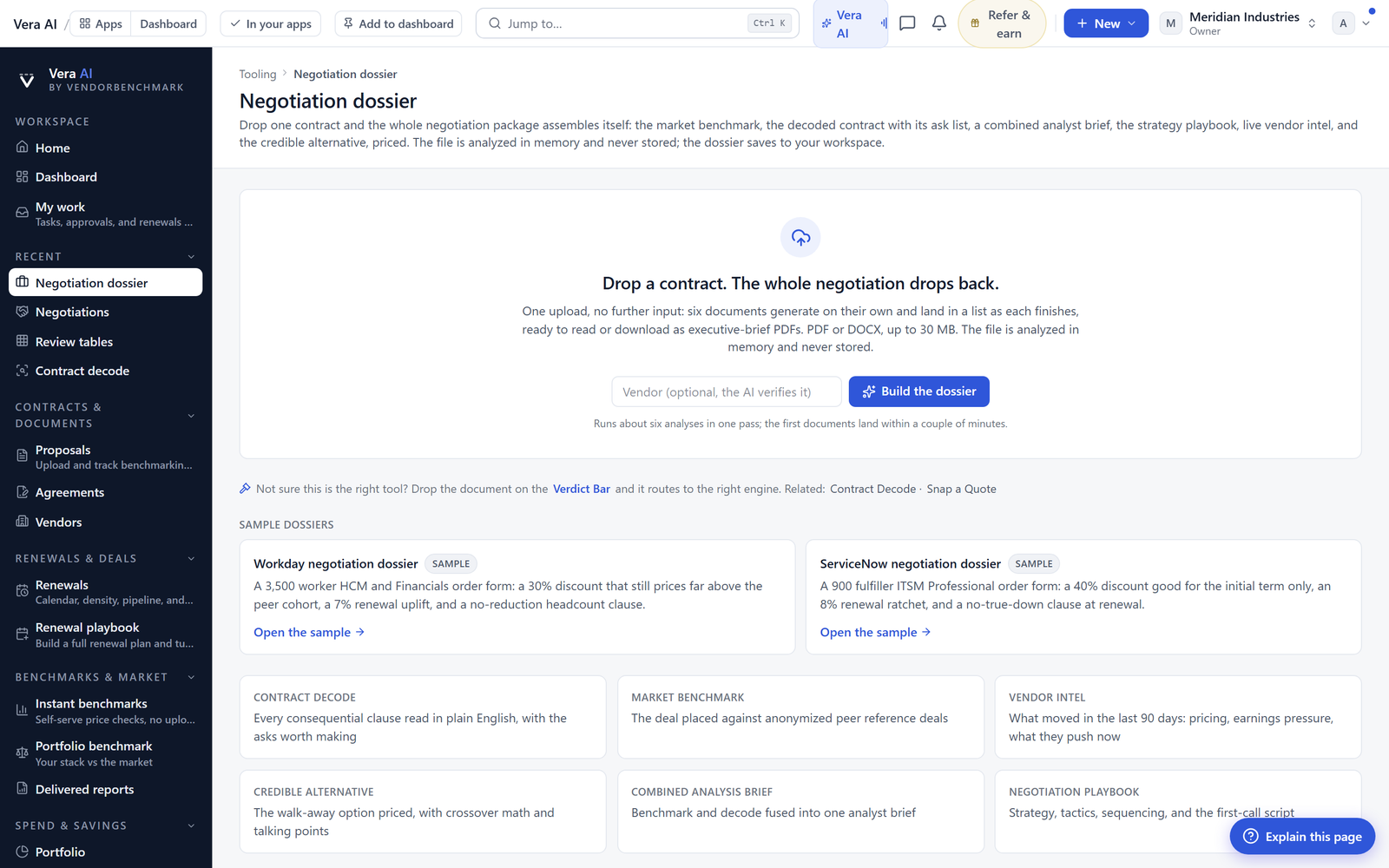
The motion that removes this is simple to describe and hard to do by hand: the deal has to hold its own state. In the platform, two artefacts do that work. The negotiation dossier is the counter offer written as a document. It records the current position, every concession made and received, the benchmark each figure is priced against, and the target you are moving toward. It is not a summary written at handover. It is the live record, updated as the deal moves, so at any moment it is already the handover.
The second artefact is the decoded quote. When the vendor sends a revised proposal, the platform translates it into like-for-like terms against comparable deals, so the covering colleague does not need to remember what the previous quote contained or interview the account manager to understand the change. They read the delta. The number is either better or worse than last time, and the dossier tells them by how much and against what.
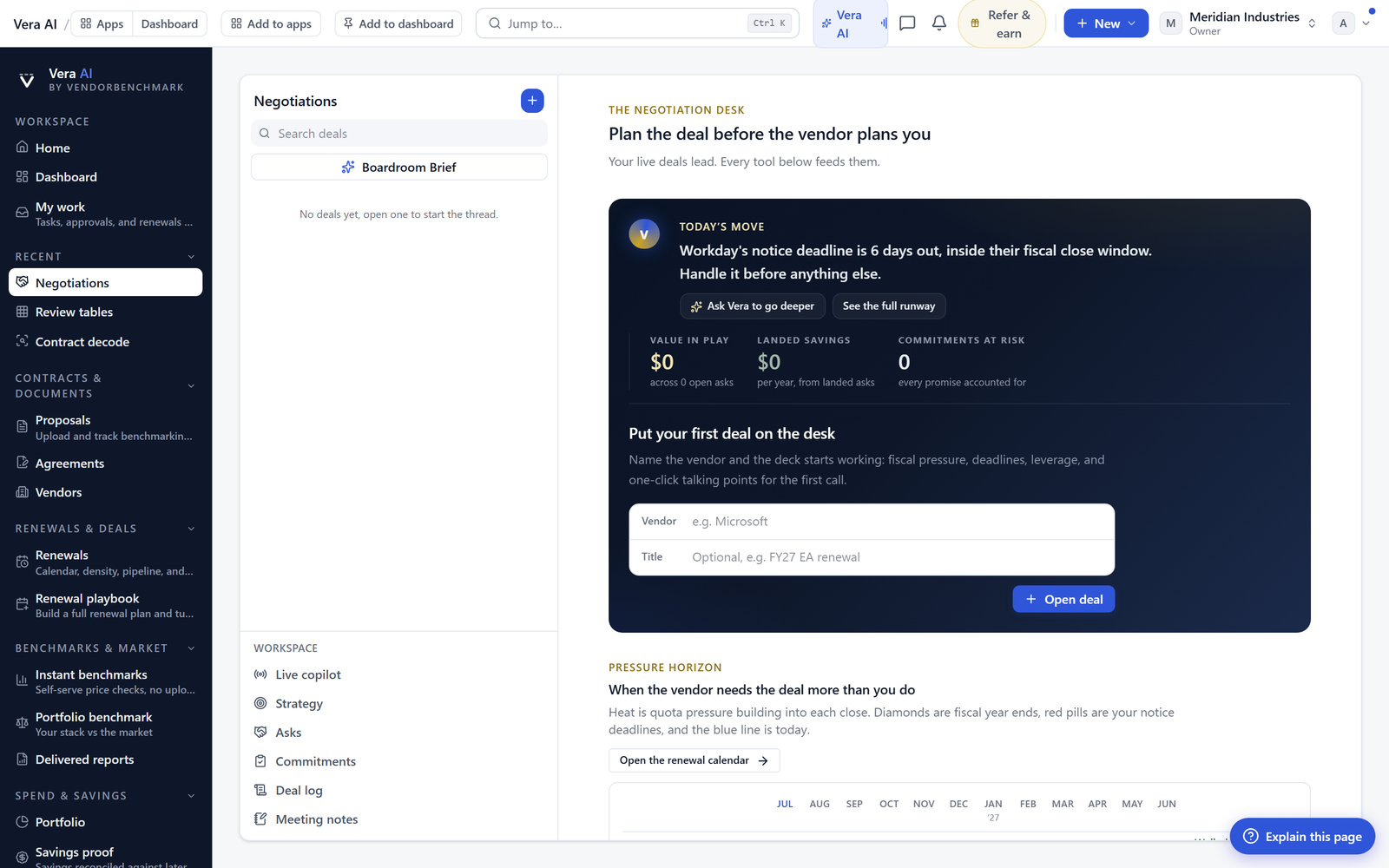
Around those two artefacts sits the negotiation war room, which holds the mandate and the landing zone. This is what makes cover safe rather than merely possible. A colleague stepping in does not have to guess how far they are allowed to move. The boundaries are written down. They can counter with confidence because the walk-away and the target are both explicit, not held in the owner's judgement.
What good cover actually looks like
Here is the sequence that replaces the frantic handover meeting. It assumes the deal was worked in the platform while the owner was present, which is the only real precondition.
What this does not solve
Be honest about the limits. The dossier holds state, but it does not hold relationship. If the value in the champion is a five year rapport with the account team, a well written record lets a colleague transact competently, not warmly. Some negotiations turn on trust that no document carries, and for those the best the platform does is keep the deal from stalling while you decide whether to wait for the owner or accept a cooler hand.
It also does not create a record that was never made. If the deal was worked entirely in email and the platform was opened for the first time the day cover started, there is nothing to read. Continuity is a habit you build while the deal is live, not a rescue you deploy when it stalls. The platform makes the habit cheap, because every screen keeps your work, but it cannot retroactively capture a month of conversations that happened elsewhere.
And it does not remove the need for judgement. The dossier tells the covering person the boundaries and the benchmark. It does not tell them whether this is the week to hold or the week to close. That call still belongs to a person. What changes is that the person making it is reading the same state the owner would have read, on time, instead of guessing from four bullet points and hoping the seller does not notice they are talking to someone new.
Want to be updated when major licensing and pricing changes land? One analyst brief a week: the price rises, metric changes and audit campaigns that move software costs. Work email only.
Morten brings two decades of enterprise and software procurement, with stints across Oracle, IBM, SAP, and Salesforce shaping how he reads a deal. He has led sourcing through hundreds of renewals, from mid market order forms to nine figure global agreements, and learned that the buyers who win are the ones who walk in knowing the market. He built VendorBenchmark to make that pattern recognition repeatable.


