The negotiation war room: mandate, concessions, and a landing zone.
Negotiations are rarely lost on arguments. They are lost on state: the concession from week two that nobody remembered in week nine, the mandate that drifted under deadline pressure, the vendor promise that lived only in a call. The war room is the per-deal workspace that keeps every offer, trade, and commitment in one thread nothing falls out of.
Watch a deal go wrong slowly and it is almost never a bad argument that kills it. It is entropy. The negotiation runs eleven weeks across email, calls, and a proposal portal. Three people on your side touch it, one goes on leave. Somewhere in week four you gave ground on payment terms to move the price, and by week nine the price has moved back but the payment terms have not. The vendor's account team, which runs deals through a CRM with stage gates and note discipline, remembers everything. Your side negotiates from an inbox.
That asymmetry of memory is worth naming precisely, because it costs more than any single tactic. The rep can cite your own words from six weeks ago. You cannot cite theirs. Every "as we discussed" lands in their favor by default, and each retelling of the deal's history bends a little toward the teller. The fix is not better negotiators. It is giving your side the same institutional memory the vendor's side has had all along.
What lives in the room
Every material deal gets its own war room, and the room holds five things.
The mandate. The target outcome, the walk away line, and the trades you are authorized to make, written before the first call and signed by the sponsor. A mandate that exists only in your head renegotiates itself every time the vendor applies pressure. A written one has to be consciously amended, which is exactly the friction you want.
The landing zone. Where the deal is expected to settle, price, term, and terms, kept current as rounds progress. The distance between the vendor's latest offer and the landing zone is the single number that tells everyone whether the deal is converging or being talked in circles.
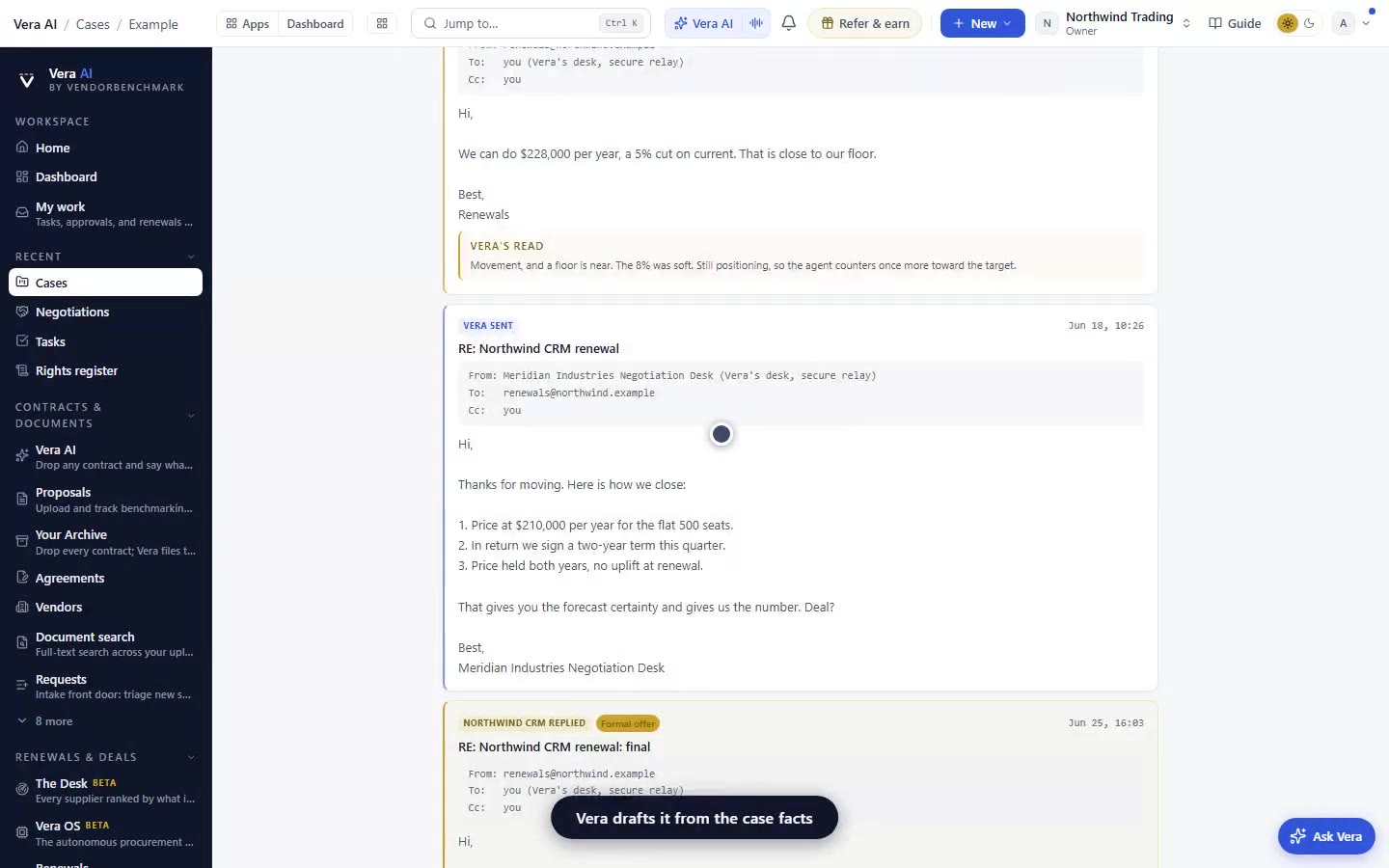
The concession ledger. Every piece of ground either side has given, dated and attributed. This is the entry that pays for the whole room: concessions are currency, and a ledger stops you paying twice for the same thing or giving value away unreciprocated. When the rep reopens a settled point, the ledger answers in one line.
The commitment log. What the vendor promised, the reference call, the roadmap feature, the services credit, captured at the moment of the promise. Verbal value evaporates at signature unless somebody wrote it down on the way.
The counter queue. The asks you have not spent yet, sequenced. Deals leak value when good asks surface at bad moments. The queue holds them until the round where they buy the most.
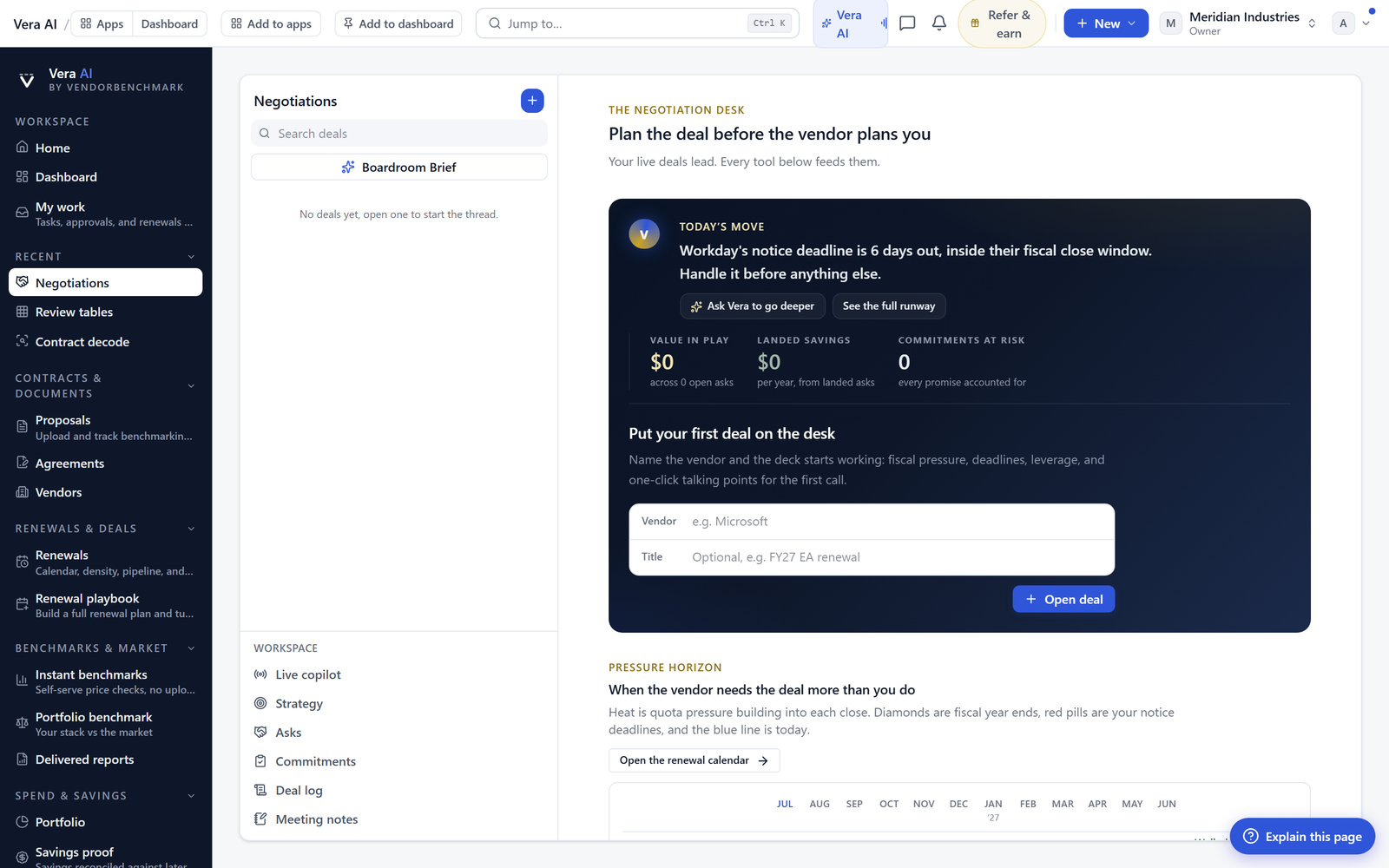
The room is staffed, not just furnished
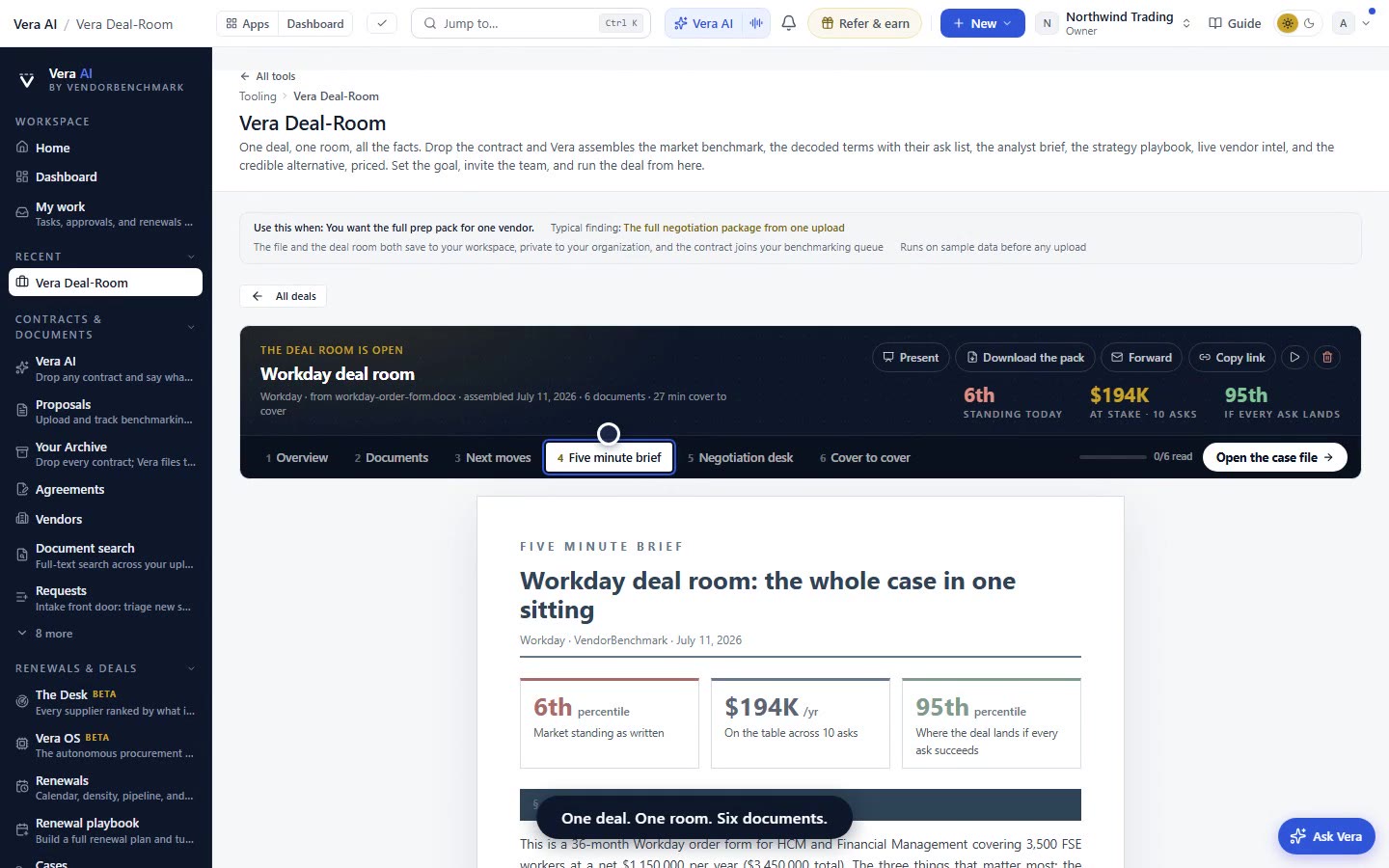
A workspace you have to maintain by hand becomes a chore by week three. This one maintains itself, because the agent desk works inside it. Forward a vendor email to the deal's address and the ghost writer classifies the tactic, logs any concession or commitment to the ledgers automatically, and drafts the reply from the room's current state, consistent with the mandate and everything your side has already said. The talking points agent preps each call from the live deal, and the executive brief agent can summarize the room for a sponsor in one page at any moment.
The room also starts full rather than empty. Open a negotiation on any renewal and the prepared position flows in: the benchmark percentile from the modelled deal cohort, the decoded contract asks, and the strategy from the dossier, so the mandate conversation with your sponsor happens over evidence instead of instinct.
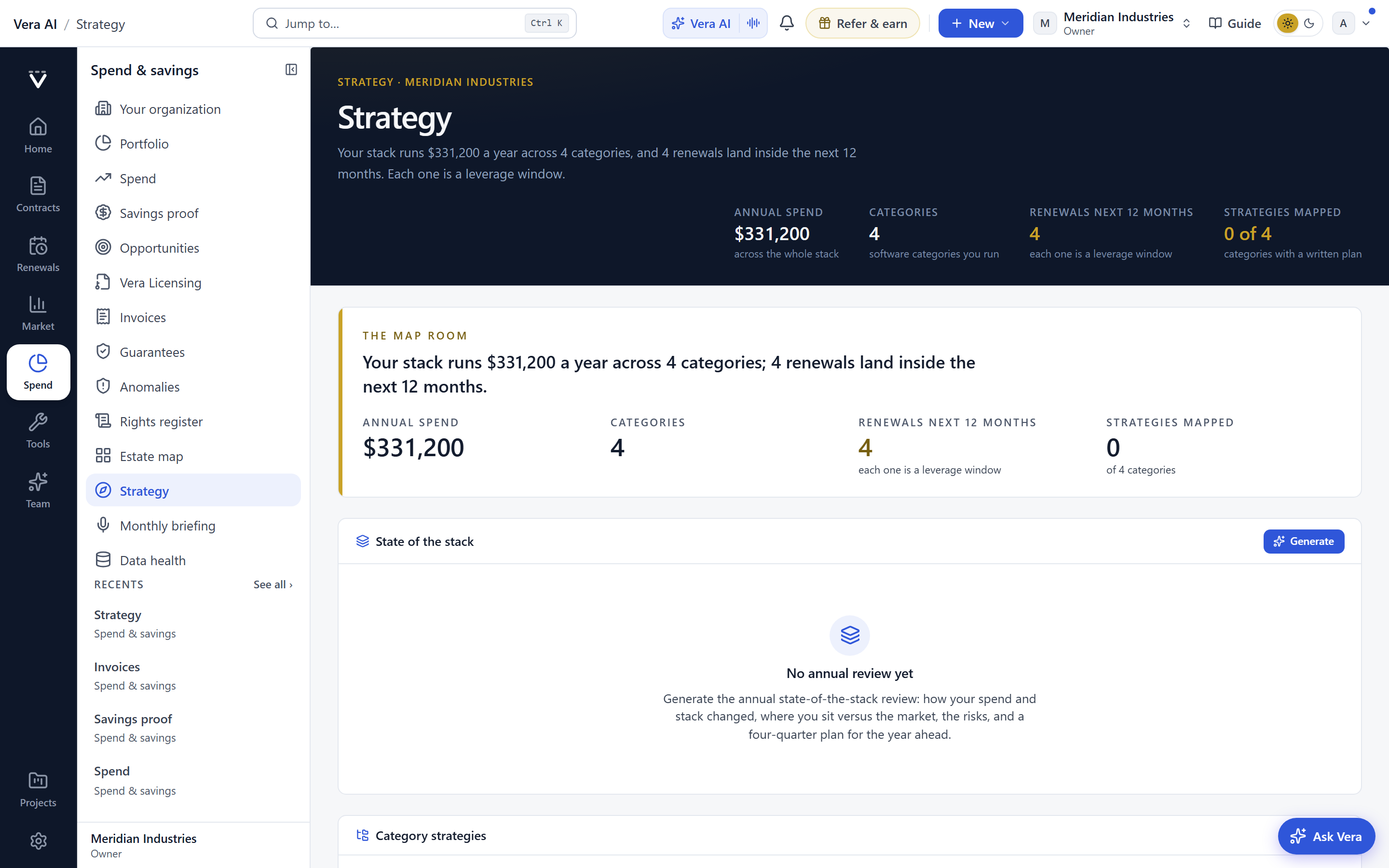
Running a deal through the room, in four disciplines
The honest limit: a war room cannot supply nerve. If the walk away was never real or the sponsor folds at the first escalation call, no ledger saves the deal. What the room guarantees is narrower and still decisive: your side negotiates with one memory, one position, and one running score, which is precisely the discipline the other side of the table has been bringing all along. Entropy stops being the vendor's silent ally, and the deal gets decided on the merits you prepared.
Fredrik has spent more than twenty years in enterprise software, with time at Oracle, IBM, SAP, and Salesforce before moving to the buy side. He structured and priced the kind of large agreements most buyers only see once or twice in a career, which taught him where the leverage sits and how far a vendor will actually move. He started VendorBenchmark to hand that knowledge to every sourcing team.
The week in enterprise software buying, in one email.
What shipped on the platform, and the pricing and licensing moves worth knowing before your next renewal. One email a week, to your work address. Unsubscribe any time.