The Room Keeps Getting Bigger and the Questions Keep Reopening
Committee sprawl scales with deal size. The fix is a fixed core team plus a consult list, not an ever-widening room.
You closed the vendor question three weeks ago. The core evaluation team agreed on the shortlist, the requirements were signed off, and the commercial range was understood. Then the deal size crossed a threshold, a VP forwarded the deck to two peers, and by the next meeting there were four new faces asking why you did not consider the option you had already ruled out in week two. Nobody is acting in bad faith. Each new executive is doing exactly what a senior person is supposed to do: interrogate a large commitment. The problem is that the room grew, and every added seat came with a reset button attached.
This is not a personality problem and it is not a discipline problem. It is a structural one, and it is predictable. The larger the number on the contract, the more executives attach themselves to the outcome, and the more voices you have, the more settled questions get reopened. If you have lived through a seven figure renewal you have watched this happen in slow motion, the same way you watch the architect pulled in late reopen everything you already settled. The mechanism is the same. The scale is worse.
Why the room grows with the number
Attachment to a decision is a function of perceived risk, and perceived risk tracks the commitment size almost linearly. A forty thousand dollar tool is delegated. A four hundred thousand dollar platform draws a director. A four million dollar consumption commitment draws the CFO, the CISO, a business unit head, and whoever owns the P and L that will absorb the overage. None of them asked to be there in the abstract. The dollar figure summoned them.
That would be manageable if the new arrivals inherited the decision as it stood. They rarely do. An executive who joins in month two does not walk in holding the same context the core team spent six weeks accumulating. They walk in with their own frame, their own scar tissue from the last bad deal, and a reasonable instinct to test the assumptions. In the absence of a written record they own, the fastest way for them to build confidence is to reopen the questions in front of them. The evaluation does not advance. It replays.
The failure mode is an ever-widening room
The instinctive response to executive interest is to widen the room. Add the VP to the standing meeting. Loop the second business unit into the thread. Invite the new CISO to the vendor demo so they feel included. This feels like consensus building. It is actually the machine that manufactures the reset. Each person you add to the decision-making body, as opposed to the consulted body, gains the standing to reopen. And because they now hold that standing, they use it, because that is what being in the room means.
There is a hard distinction here that most teams collapse under pressure. There are people who make the decision, and there are people who inform the decision. These are different lists, and the second one can be long without harm. The damage comes from promoting people from the second list to the first simply because they are senior or interested. A ten person decision body will not decide. It will negotiate with itself until the deal expires or a slot opens on the one calendar that everything waits on.
A fixed core, a consult list, and a record they cannot argue with
The counter to sprawl is not fewer stakeholders. It is a fixed core team that owns the decision and a consult list that receives briefs. The core team is small, named at the start, and does not grow when the dollar figure grows. Everyone else, however senior, is consulted. They get a brief, they respond, their input is recorded against the decision, and the decision moves. The seniority of a consulted voice does not convert into standing to reopen. It converts into a substantive answer they can trust.
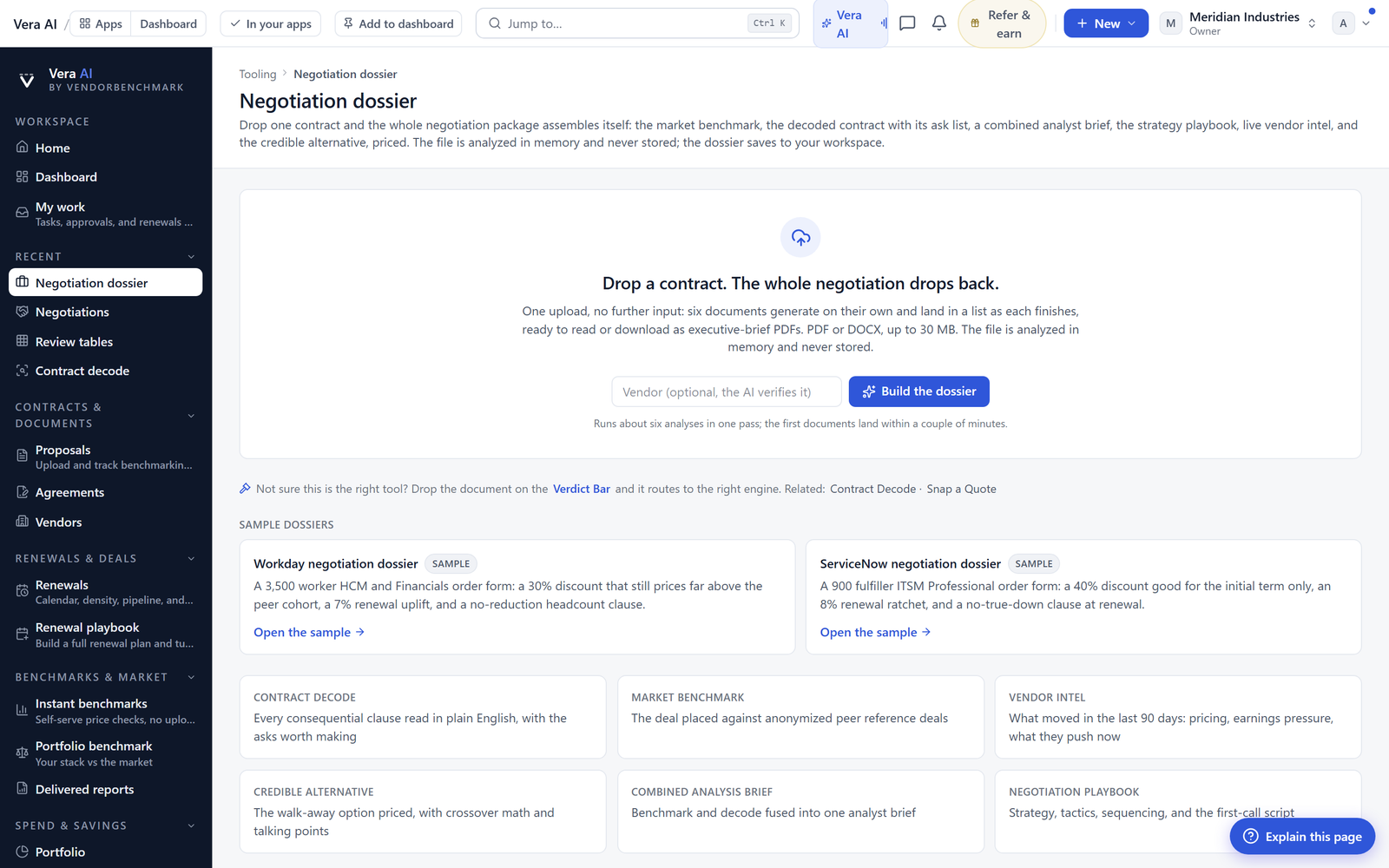
This only works if the record is good enough that an interested executive reads it and stops there. That is what the AI analyst maintains. It keeps a decision dossier the core team owns: the requirements, the shortlist and why the losers lost, the commercial range and the benchmark evidence under it, drawn from a library covering 1,483 vendors. When a new executive attaches, they do not get a meeting. They get a brief generated from that dossier, tailored to what they need to sign off on. The sign-off chain becomes a series of informed approvals rather than a series of reopenings.

Six specialist agents keep the underlying evidence current so the dossier does not go stale between meetings. When a consulted CISO asks whether the security posture was checked, the answer is already in the record with a citation, not a promise to circle back. When a business unit head questions the price, the net unit position is there, not a discount off list that means nothing. The question gets answered from the record, and the record is the thing that stops it from being asked a third time.
What actually changes in the room
That last point matters beyond a single negotiation. A dossier the core team owns becomes part of the org brain that survives turnover, so the next renewal does not re-litigate the same choices from a blank page. The reset button gets unplugged not just for this deal but for the one after it.
What this does not solve
Be honest about the boundary. A dossier and a consult list are structural tools. They stop a curious executive from reopening a settled question because the answer is already in front of them. They do not stop an executive who genuinely disagrees on the merits, and they should not. If the CFO reads the brief and concludes the commitment is wrong, that is not sprawl, that is the decision working. No system should paper over a real disagreement by routing it into a brief nobody reads.
The platform also cannot assign the core team for you. Someone with authority has to name that list and hold it steady when the dollar figure climbs and the pressure to widen the room arrives. The AI analyst keeps the record the core team owns and briefs the consulted voices, so added seniority informs the decision without restarting it. It cannot decide who sits in the small room. That call is yours, and it is the one call that determines whether everything else holds. Make it early, write it down, and let the briefs carry the rest.
Want to be updated when major licensing and pricing changes land? One analyst brief a week: the price rises, metric changes and audit campaigns that move software costs. Work email only.
Morten brings two decades of enterprise and software procurement, with stints across Oracle, IBM, SAP, and Salesforce shaping how he reads a deal. He has led sourcing through hundreds of renewals, from mid market order forms to nine figure global agreements, and learned that the buyers who win are the ones who walk in knowing the market. He built VendorBenchmark to make that pattern recognition repeatable.