The renewal your approval chain cannot clear in time
Four sign-offs, one notice window, and no room to move at the usual pace. The problem is your cycle time, not the contract. Here is how to start the chain early enough to clear it.
You knew the renewal date. It was on a spreadsheet somewhere. What you did not have was the sixty days your approval chain actually needs. Finance wanted the annualised figure and a variance against last year. IT wanted to confirm the seat count still matched the estate. The business owner was in back to back meetings. Legal had a queue. Each of them was reasonable, each took a few days, and the notice deadline sat there like a train you could see but could not reach. By the time the last sign-off landed, you were either past the window or signing under pressure that had nothing to do with the vendor and everything to do with the clock inside your own building.
The failure is internal cycle time, not the terms
When a renewal goes badly, the postmortem usually blames the terms. The uplift was too high, the true-down was refused, the bundle was rigid. Sometimes that is real. More often the terms were fine and you simply ran out of time to act on them. A vendor uplift you spotted with fifty days of runway is a negotiation. The same uplift with six days of runway is a signature. The number did not change. Your leverage did, because your approval chain never started moving.
This is the uncomfortable truth of the deal sign-off chain: it is serial by nature. Finance cannot bless a number the business has not confirmed it still needs. Legal will not redline a document whose commercial shape is still moving. Each approver waits for the one before, and each waits for context they do not have yet. The chain is not slow because people are lazy. It is slow because it starts late and starts cold.
Why the chain always starts at the deadline
The deadline is the only forcing function most organisations have. Nothing in the calendar says start the approvals eight weeks out, so nothing starts. The renewal is invisible until it is urgent, and by the time it is urgent there is no room for the chain to run at its normal, careful pace. You compress a four week sequence into four days and call the result an emergency, when it was entirely predictable ninety days earlier.
There is a second reason it persists. Each approver needs different information, and assembling that information is itself work nobody owns until the deadline forces it. Finance needs the decoded annual cost and the uplift math. IT needs the entitlement and usage picture. The business needs the renewal scope in plain language. Legal needs the auto renewal and notice clauses surfaced. If a human has to build four different briefs from one dense quote, that human starts when they are told to start, which is when the deadline arrives. We wrote about the human end of this in the sign-off that waits for a calendar that never clears.
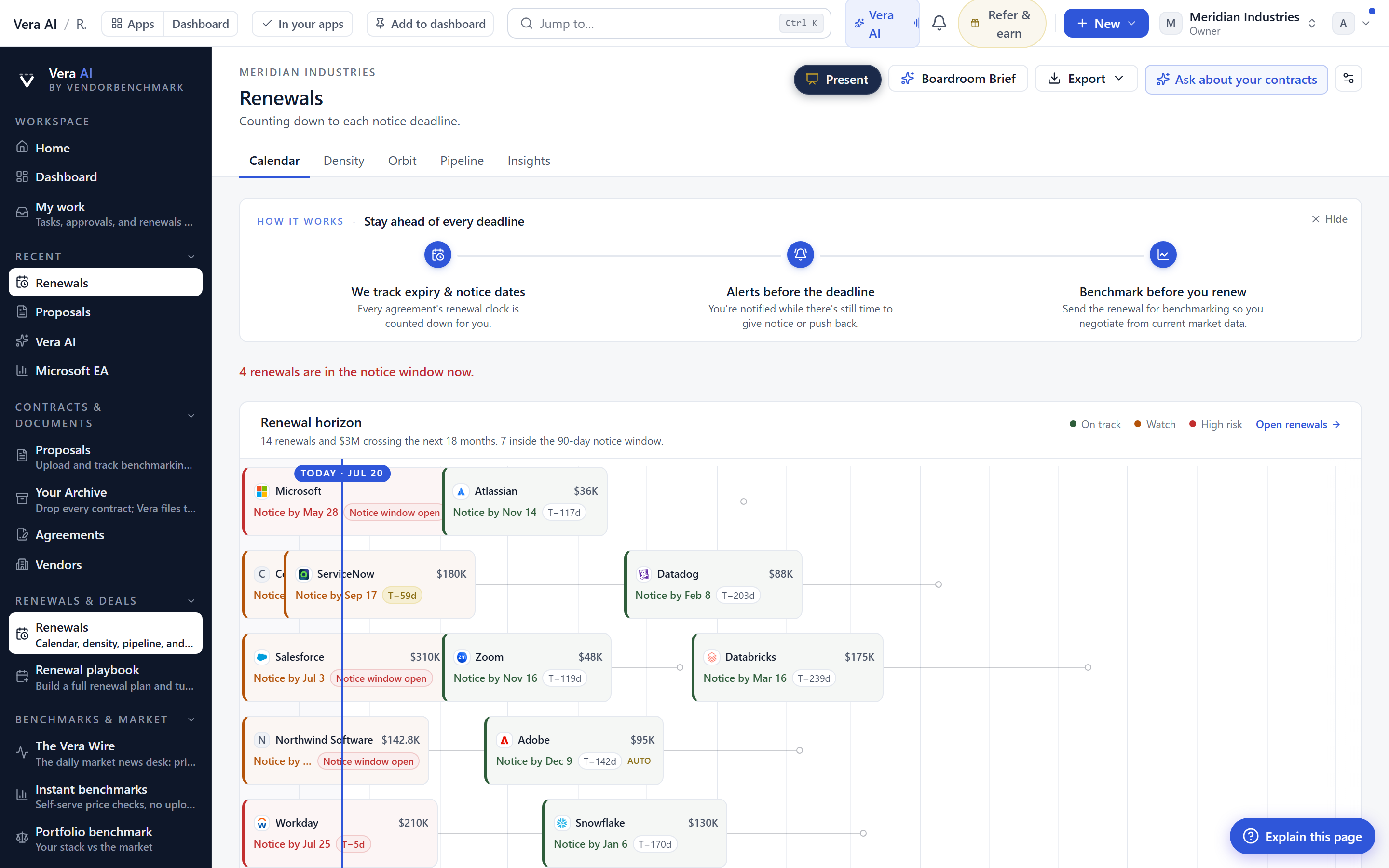
The platform motion: trigger early, route decoded
The fix is not a faster approval chain. It is an earlier one. The renewal calendar counts backward from each notice deadline and sets a trigger date that leaves the chain its full normal duration. When that date arrives, the approval sequence starts on its own. Nobody has to remember. The deadline stops being the forcing function because the calendar became one first.
Starting early only helps if the approvers get what they need when they get it. This is where the decoded quote matters. Instead of forwarding the raw renewal document and hoping four busy people read forty pages, the platform parses it once and routes the relevant view to each approver on schedule. Finance sees the annualised cost, the uplift against prior term, and the benchmark position. IT sees the entitlement and the seat math. The business owner sees the scope in plain language. Legal sees the auto renewal and notice clauses surfaced, the same decode discipline we describe in decode any contract in a minute.
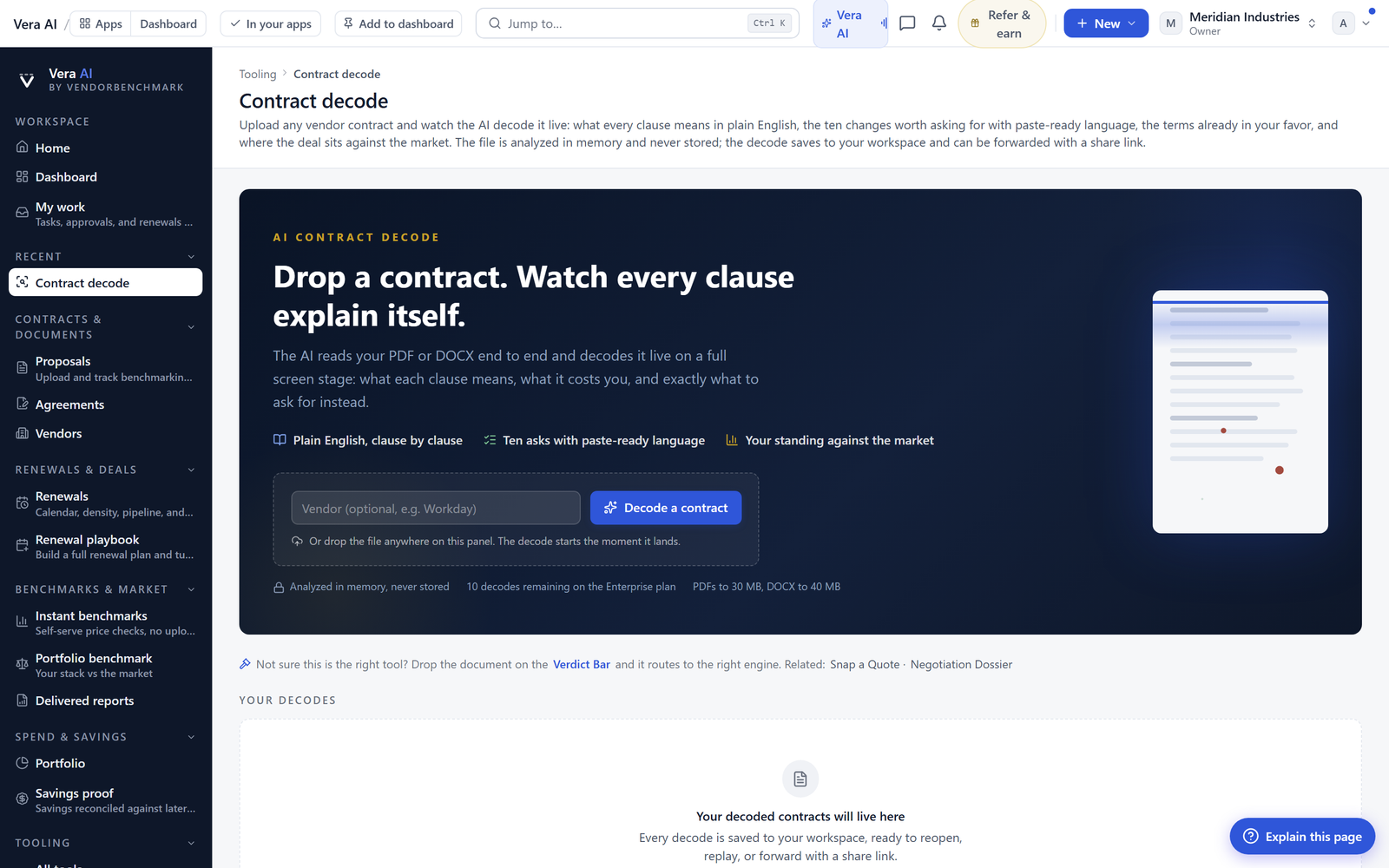
Behind this sit the platform's thirty background jobs and six specialist agents, which do the parsing, the benchmark lookup against the library of 1,483 vendors, and the scheduling so the routing lands on the right day rather than all at once. The approver does not experience any of that machinery. They experience a short, relevant brief arriving with enough runway to act on it, which is the whole point.
What changes when the chain starts on time
What this does not solve
Starting the chain early does not make a slow approver fast. If your legal queue is genuinely six weeks deep, the platform will surface the renewal six weeks out, but it cannot manufacture legal capacity you do not have. What it removes is the self inflicted compression, the part where the chain was slow only because it started late. The structural slowness that remains is yours to staff.
It also does not decide the renewal for you. The decoded quote gives each approver a clean view of cost, scope, and terms, but the judgment about whether to renew, negotiate, or walk stays with your team. And if you have already blown past a notice date, this is prevention, not cure. For that situation, read recovering from a missed notice window. The best outcome is that you never need it, because the chain started eight weeks ago while the deadline was still just a date on a calendar.
Want to be updated when major licensing and pricing changes land? One analyst brief a week: the price rises, metric changes and audit campaigns that move software costs. Work email only.
Morten brings two decades of enterprise and software procurement, with stints across Oracle, IBM, SAP, and Salesforce shaping how he reads a deal. He has led sourcing through hundreds of renewals, from mid market order forms to nine figure global agreements, and learned that the buyers who win are the ones who walk in knowing the market. He built VendorBenchmark to make that pattern recognition repeatable.


