The renewal file, redrawn
We rebuilt the single renewal file so it matches the desk around it. The same verbs, the same sections, the same four step stage, no new place to learn.
There is a small tax that every procurement buyer pays and almost never names. It is the tax of the odd screen. You work a renewal desk that behaves one way, calendar, playbooks, review tables, all built on the same grammar, and then you open a single agreement and it reads like a different product. Cards where the rest of the desk uses sections. Buttons in a place your hand has not learned. A stage that counts differently. Each time you cross that seam you slow down, not by much, but by enough, and you do it dozens of times a month. This update closes the seam. The renewal file has been redrawn to read the way the rest of the desk already reads. If you have followed the desk becoming a room you walk into, this is the last room getting the same floor plan.
The named problem is the odd screen
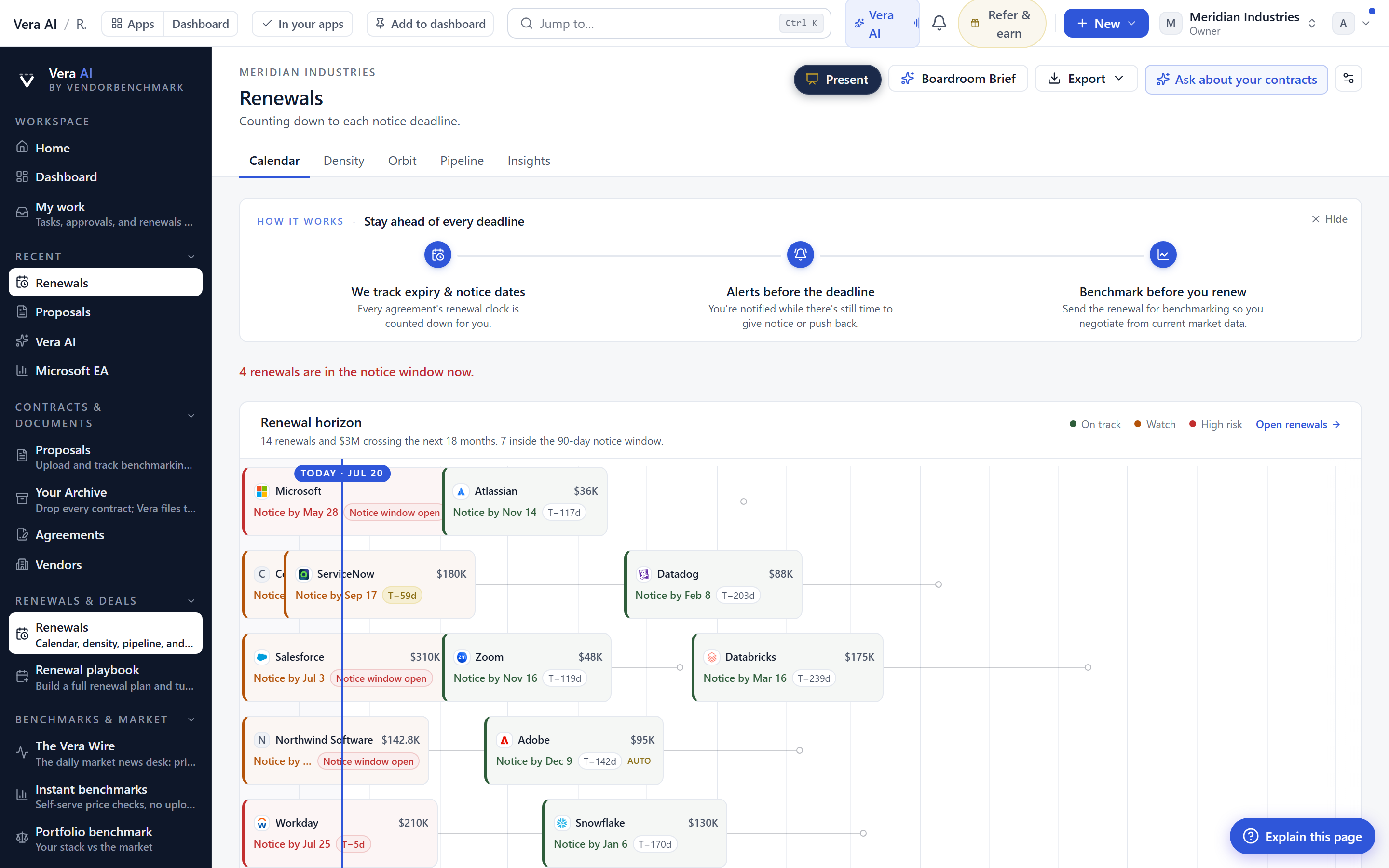
Call it context switching if you want the textbook term, but on a renewal desk it is more specific than that. It is the moment a buyer who has spent the morning in the calendar, the density heatmap, and the review tables opens one agreement to check a term, and has to reorient. Where does the paper live. Where is the playbook attached. Which tab holds the checklist. That reorientation is cheap once and expensive at volume. A procurement lead running fifteen to twenty renewals in a quarter, as an example rather than a claim, pays it every time they touch a file. The redraw removes the reorientation by making the file structurally identical to everything else on the desk. One head at the top. The File and Case tabs, with the agreement's quiet verbs sitting at their right where your hand now expects them. Sections down the page instead of a scatter of cards.
What the redrawn file actually shows
The head is the agreement in one line. Under it, the stage runs four steps across, so you read where the renewal sits without counting. The terms are a grid of facts, and each fact carries the hand that changes it, meaning you see not just the value but who or what owns the next move on it. That last part matters more than it sounds. On a renewal, half the friction is not knowing whether a term is yours to change, the vendor's to concede, or the playbook's to enforce. Naming the hand on every row removes the guess. Below the terms, the file continues as ordered facts and rows rather than decorative cards: the paper, the proposals, the playbook you have loaded, the checklist, the engage doors, the autopilot, the run, and the activity log. Each is a section you scroll to, not a widget you go looking for.
None of this is a new capability bolted on. The playbook section is the same plan you approve step by step. The proposals are the same proposals. The autopilot section is the same managed renewals hand off you could already trigger. What changed is the reading. A capability you cannot find fast is a capability you underuse, and the old card layout hid too much.
Every action is still the record's own
The rule we held to through the redraw is the one that keeps the desk honest: every action is the record's own, unchanged. The verbs at the right of the File and Case tabs are the same verbs that always drove the record. We did not add a shadow set of controls that write to a different place. When you engage a vendor from the file, it is the record engaging. When autopilot runs, it runs on the record. This sounds like a small commitment. It is the whole thing. A buyer needs to trust that what they see in the file is what is true in the system, and that acting from the file is identical to acting from anywhere else. Across the desk the specialist agents and inbox agents that do the background work, six specialist agents and ten inbox agents, all write back to this same record, so the file you read is the file they touched.
How it fits a working renewal week
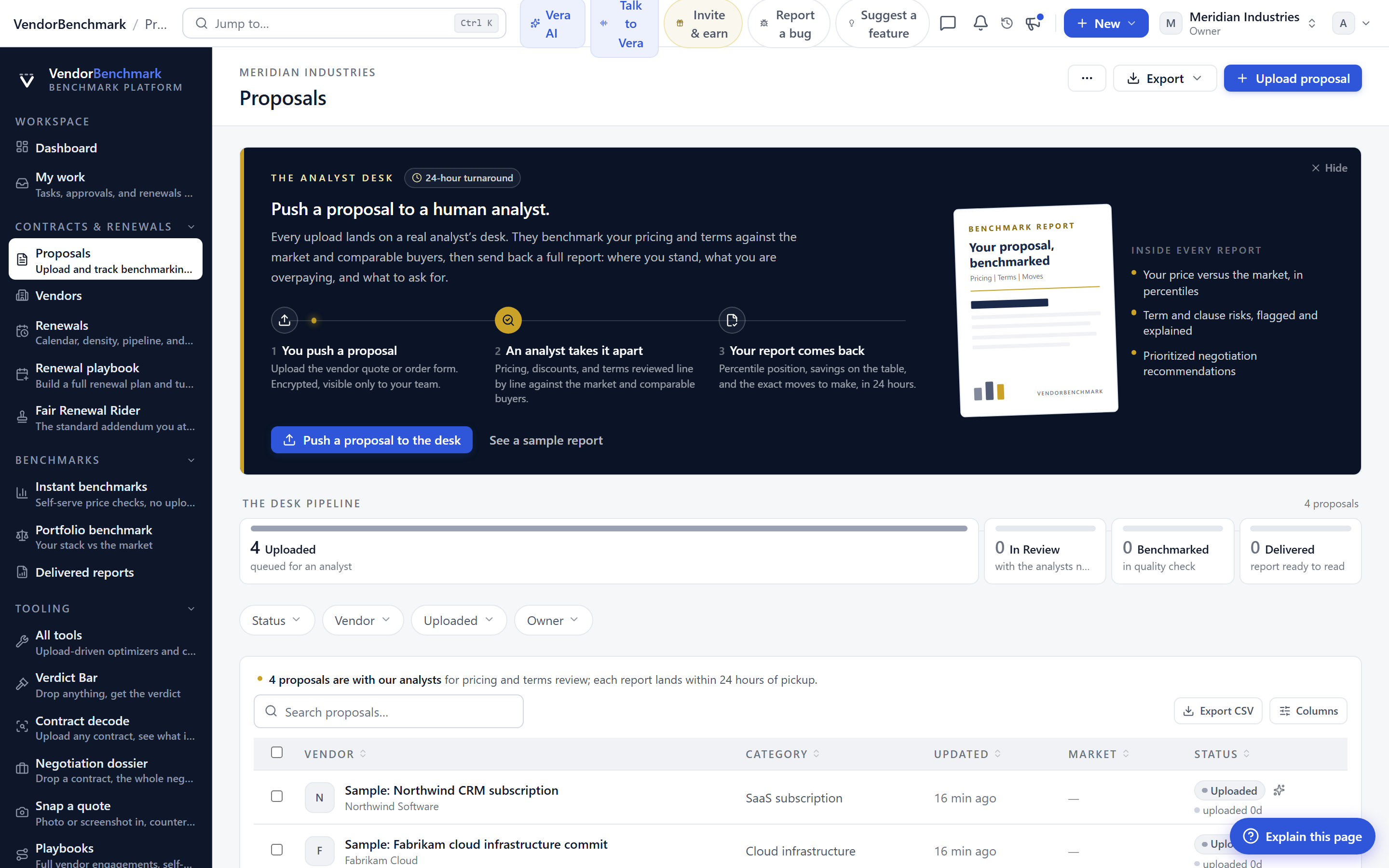
In practice the redraw pays off at the seams of your day. You start in the calendar, spot a renewal ninety days out, open it, and the file reads without a pause. You check the terms grid, see that the price uplift term is the vendor's hand to concede and the volume commitment is yours to set, and you know your next move without leaving the page. You glance at the playbook section to confirm the position, look at the activity to see what an inbox agent already logged, and you decide. If the agreement is one you would rather hand off entirely, the autopilot section is right there in the same reading order. This is the difference between a file you audit and a file you work from. If your renewal calendar is heavy this cycle, the same discipline of reading fast and acting from the record is what makes a downturn playbook survivable, because you cannot cut spend you cannot read.
The honest limits
Be clear about what this update is and is not. It is a redraw of the reading and the structure of one file. It is not new negotiation leverage, not a new data source, and not a promise that a renewal goes faster on its own. If your terms grid is thin because the underlying contract was never fully decoded, the redraw shows you thin terms cleanly, which is honest but not the same as fixing the gap. Feed the record first if you want the grid to earn its place. The redraw also does not change your commercial position; the playbook still holds the position it held, and reading it faster does not move it. Buyers new to the desk should also know the redraw assumes you have the record populated. An empty file reads as an empty file. Finally, the four step stage is a summary of where the renewal sits, not a substitute for judgement about whether that stage is the right one for the time you have. The file tells you the truth faster. Deciding what to do with the truth is still your job. That is the trade we wanted, and the one we think is right for the buyer's side of the table.
Fredrik has spent more than twenty years in enterprise software, with time at Oracle, IBM, SAP, and Salesforce before moving to the buy side. He structured and priced the kind of large agreements most buyers only see once or twice in a career, which taught him where the leverage sits and how far a vendor will actually move. He started VendorBenchmark to hand that knowledge to every sourcing team.


