Managed renewals: hand over the renewal, pay only on savings that reach an invoice.
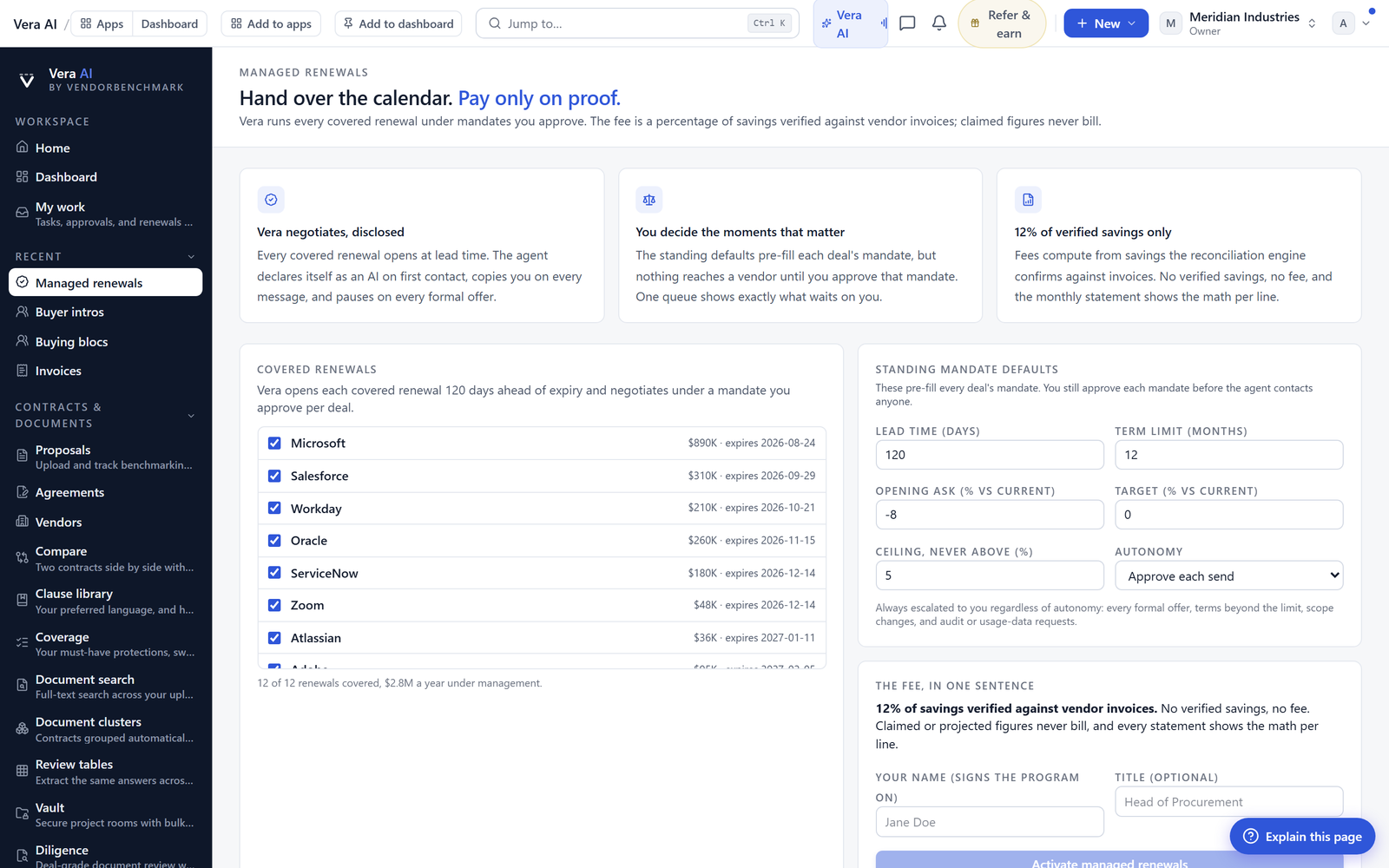
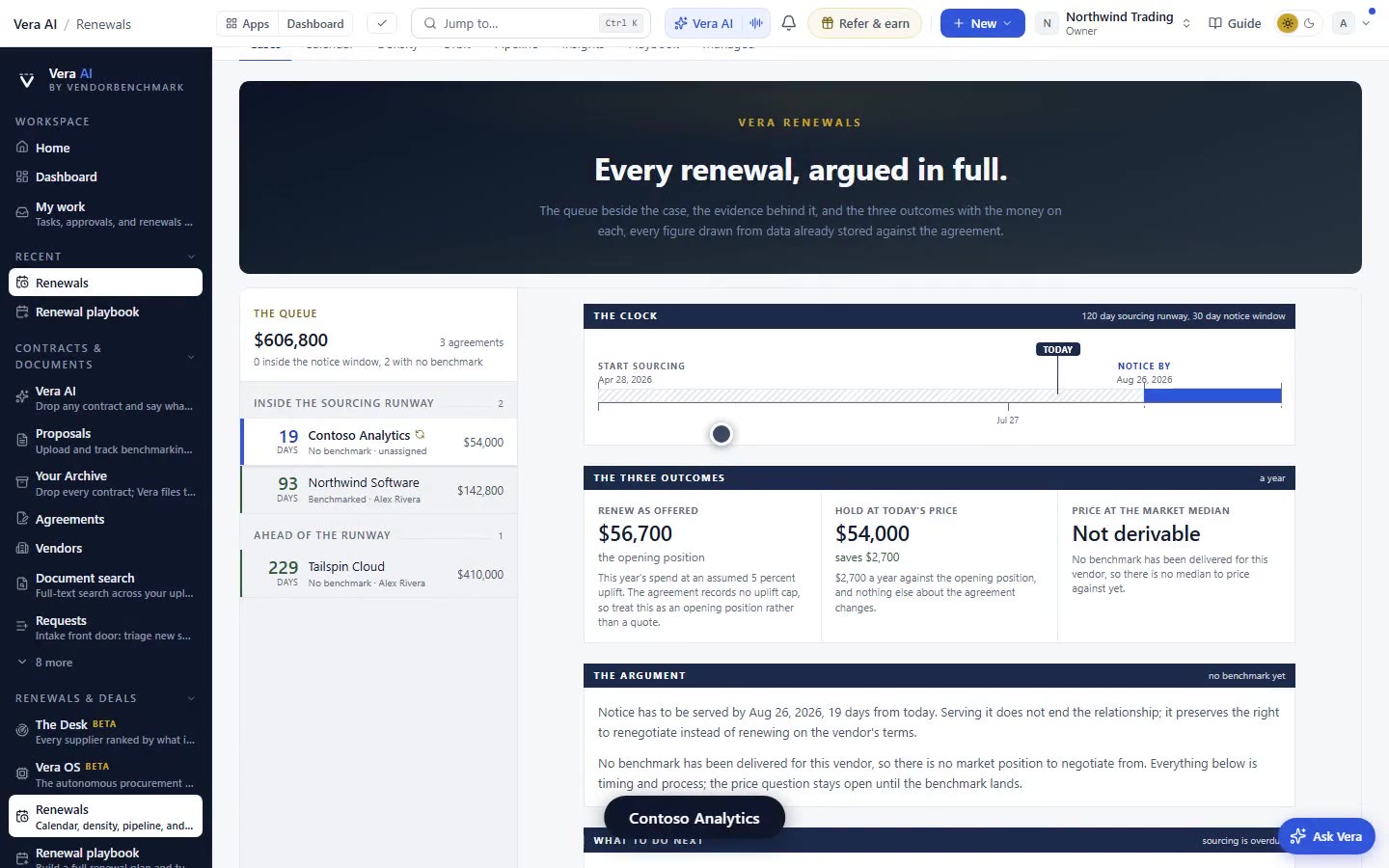
A renewal is coming and the team is underwater. So hand it over. The desk opens the negotiation at lead time, and the fee is a share of the savings, but only the savings a reconciliation engine can prove against your invoices. No verified saving, no fee.
The average enterprise runs more than 300 software vendors, and their renewals do not politely space themselves out. They arrive every week of the year, and the procurement team did not triple in size to meet them. So some renewals get the full treatment, benchmarked, prepared, negotiated hard, and the rest get a glance and a signature, because there are only so many hours. The renewals that get the glance are exactly the ones vendors count on.
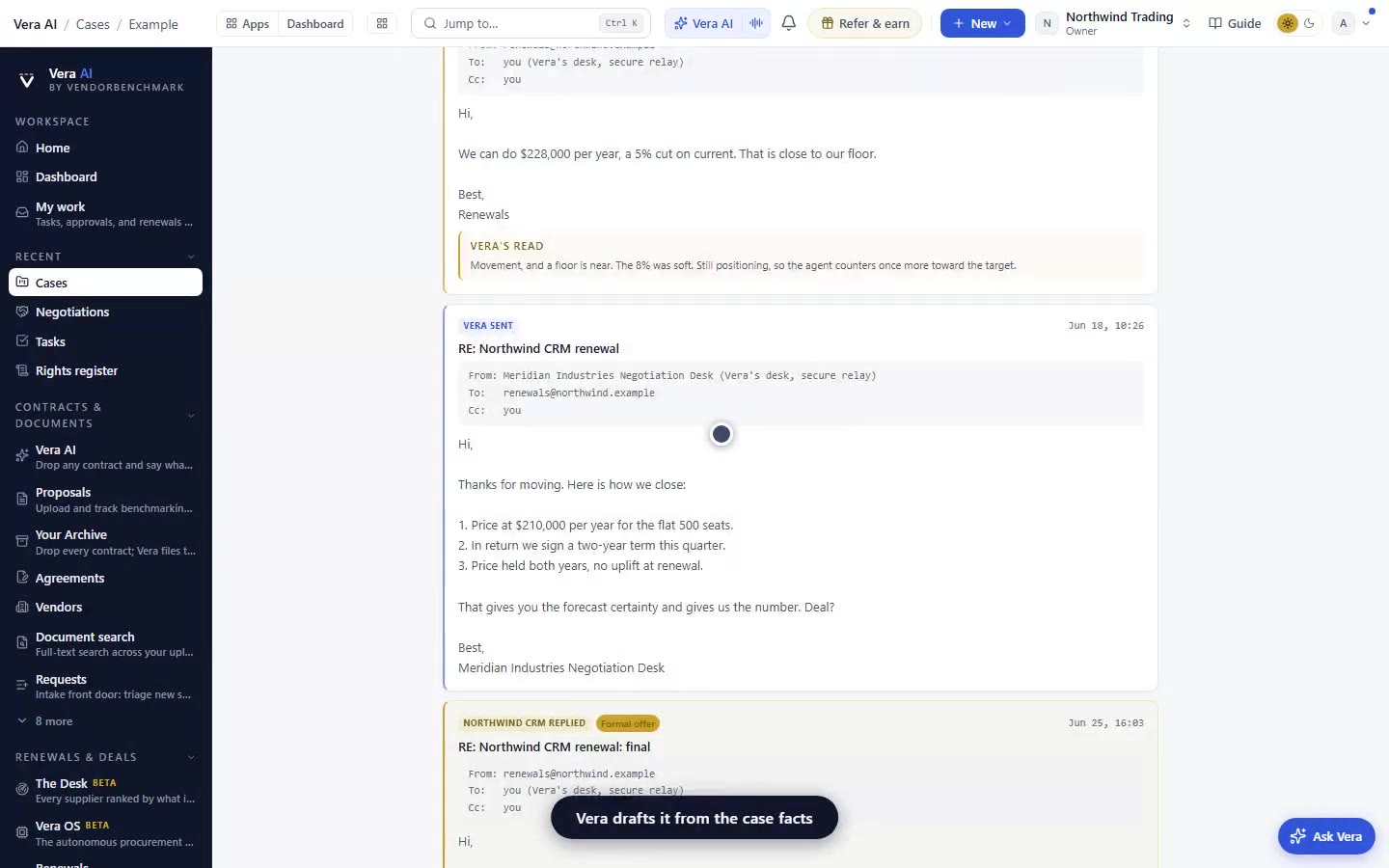
Managed renewals are the answer for the deals you cannot get to yourself: hand them to the desk. The analyst opens every covered renewal at lead time, prepares it properly, and runs the negotiation. What makes it more than an outsourcing arrangement is how it is paid for. The fee is a share of the savings, and not a share of claimed savings or projected savings, but savings a reconciliation engine has matched against the invoices that actually arrive.
The incentive is pointed the right way
Most advisory fees are paid whether or not they earn their keep. You pay for the engagement, and the outcome is somebody else's problem. Managed renewals invert that. The program fee is a fixed share of verified savings, so it only exists when you are demonstrably better off, and it scales with how much better off you are. If a covered renewal produces no saving, there is no fee on it. The desk is paid to win, not to show up.
That single design choice removes the usual anxiety about handing work to an advisor. You are not betting an upfront fee on a hope. The economics only trigger after the money is confirmed to be in your pocket, which means the incentive of the desk and the interest of the buyer point in exactly the same direction, at every renewal, without anyone having to police it.
Verified means matched to an invoice, not claimed
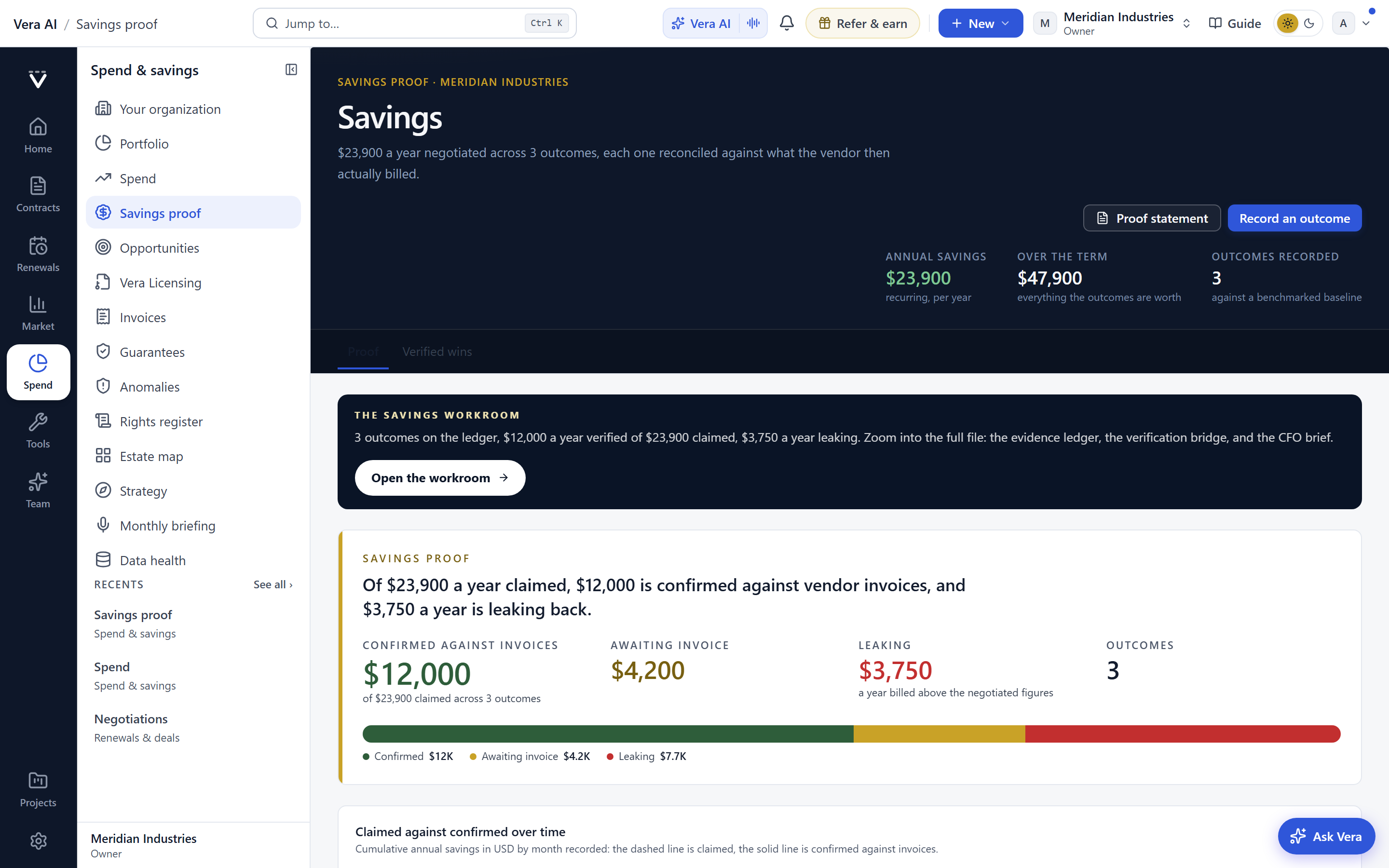
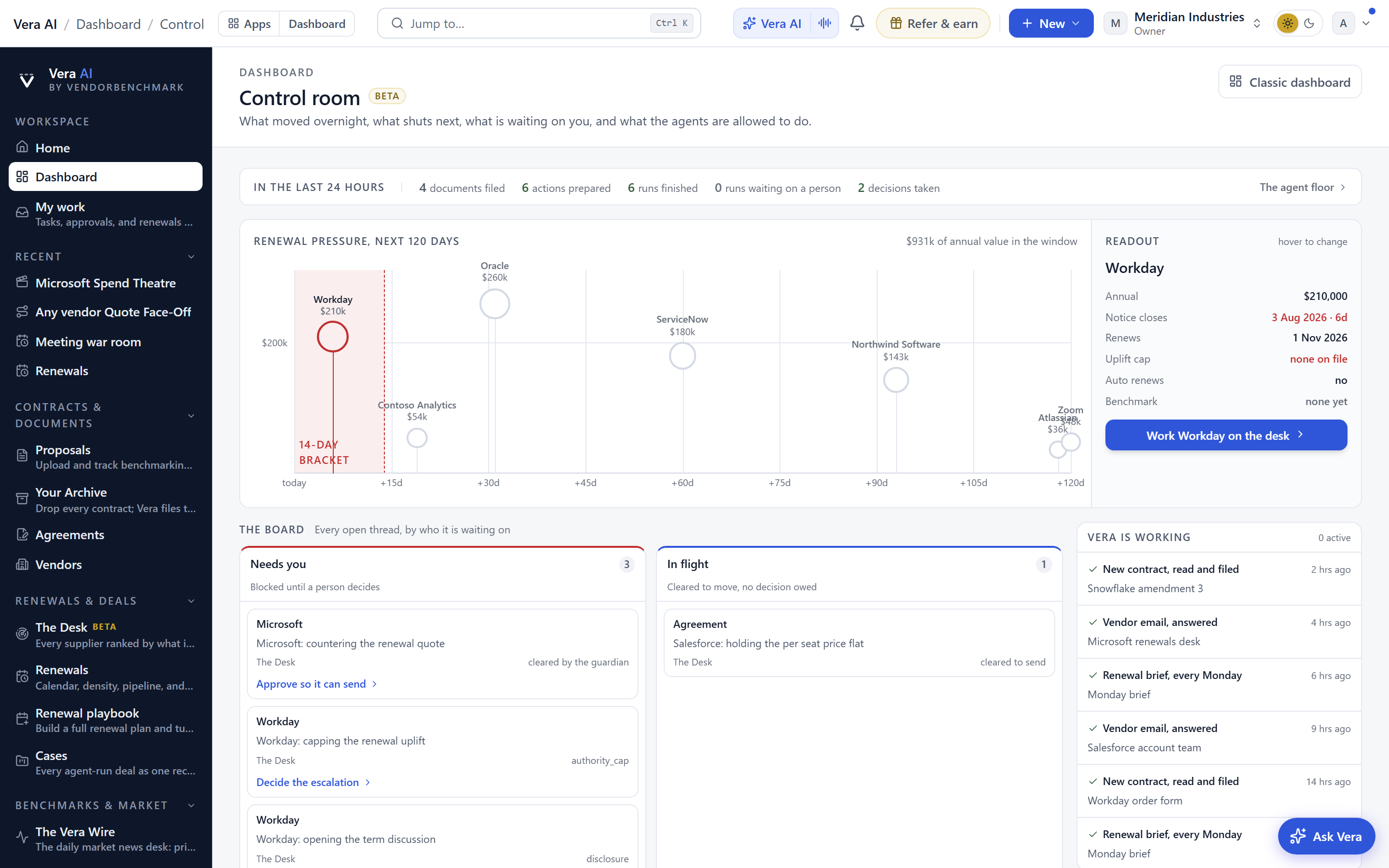
The word doing the work here is verified. It is easy for any program to announce that it saved you money. Managed renewals holds itself to a stricter standard: a saving only counts when a reconciliation confirms it against the invoices that follow the deal, and the verified amount is capped at the smaller of what was claimed and what the billing actually shows below the prior run rate. A saving that looks good in a summary but never shows up on a bill does not earn a fee.
The consequence is honest in both directions. If a reconciliation later stops confirming a saving, an accrued fee is voided rather than quietly kept. Fees already invoiced are history and stand, but nothing gets billed on a number that did not hold up. A monthly statement lays the whole ledger out, each fee traced to the specific verified saving and invoice cite behind it, so the arrangement is auditable rather than trust me.
Want to be updated when major licensing and pricing changes land? One analyst brief a week: the price rises, metric changes and audit campaigns that move software costs. Work email only.
The desk drives, but you still hold the pen
Handing over a renewal does not mean handing over control of your company's spend, and the program is deliberately built so it cannot. The standing agreement you sign pre fills the mandate for each covered deal, the walk away, the target, the terms you will accept, but it never bypasses approval. When a renewal opens, the desk prepares it and then waits: the escalation queue holds at approve the mandate until a person on your side signs off, and the actual kickoff of the negotiation stays a human act.
So the machine does the watching, the preparing, and the running, and you keep the two decisions that matter, whether to engage on a given deal and whether to accept the landing. It is autopilot with a pilot still in the seat, which is the only kind of autopilot you would trust with a seven figure renewal.
The program in four moves
A program, not a promise of magic
Managed renewals does not guarantee a saving on every deal, and some renewals are simply tight, a fair price already, a vendor with real leverage, a term you cannot move. On those, the honest outcome is a well run negotiation that confirms you were paying about the right amount, and no fee. The program is a way to get every renewal the attention it deserves, not a machine that conjures discounts from deals that have none to give.
What it changes is the arithmetic of attention. The renewals you would have waved through now get opened, prepared, and negotiated, by a desk that only gets paid when it actually saves you money, and only once that money is proven on an invoice. That is the safest possible way to hand over work: the incentive is aligned, the control stays yours, and the fee cannot exist unless you are genuinely better off.
Morten brings two decades of enterprise and software procurement, with stints across Oracle, IBM, SAP, and Salesforce shaping how he reads a deal. He has led sourcing through hundreds of renewals, from mid market order forms to nine figure global agreements, and learned that the buyers who win are the ones who walk in knowing the market. He built VendorBenchmark to make that pattern recognition repeatable.
The week in enterprise software buying, in one email.
What shipped on the platform, and the pricing and licensing moves worth knowing before your next renewal. One email a week, to your work address. Unsubscribe any time.