The renewal plan: say what you want, Vera researches it, and you approve the steps
Renewals used to start with a blank page and a due date. Now they start with a decision, and the research and the steps arrive attached to it.
There is a moment every procurement buyer knows. A renewal lands on the desk with a date attached, and the date is the only thing in it. What you want to do about the agreement, what the market says you could do, what to watch for, and the sequence of moves to get there all live in your head, or in a spreadsheet you have not opened since the last cycle. The desk knew the timing. It did not know the intent. Today that changes. Every agreement on the renewal desk now carries a want, and pressing one button fills a Plan room with what Vera found, where she found it, and the steps she proposes. This is the follow-through on the renewal calendar problem we wrote about earlier: the calendar told you when, and now the plan tells you what and how.
A want is the missing field
Start with the decision, not the paperwork. Every agreement on the renewal desk now takes one of three wants: renew as is, decline, or grow. That single choice reframes everything downstream. A renew-as-is want asks a narrow question, is the price still defensible against market. A decline want asks a harder one, what are the exit terms and switching costs. A grow want asks the widest, what does the vendor concede when you add volume. The same agreement produces a different plan depending on which want you set, because the research and the steps are shaped by the intent, not by a generic template.
Once the want is set, press Have Vera research it. The Plan room fills with what she found for that want, with this specific vendor. Each finding shows where it came from, a benchmark, a peer cohort, a term she read off your own contract. Each finding carries a what-to-watch-for note, because a favourable number is only useful if you know what would undermine it at the table. This is the same discipline as comparing what the vendor quietly changed since last year, applied forward instead of backward.
The steps sit on the same timeline as the desk
The steps Vera proposes are not a separate to-do list. They land on the same timeline as the desk's own five stages, so a proposed move to open negotiation eight weeks before the date sits exactly where eight weeks before the date is. You see the plan and the clock in one view. That matters because a step is only sound if it is sequenced against the deadline, and a good move made too late is a bad move.
You are in control of every step. Approve one, reject one, edit the wording, remove it, or add a step Vera did not propose. Each step takes a comment, so the negotiation lead and the SAM manager see your reasoning without a separate thread. And for any step, you can ask Vera how to prepare for it, which pulls the relevant benchmarks and clause positions into the answer. If the plan calls for a term you want to stop re-arguing every cycle, that is where the Fair Renewal Rider becomes a single approved step rather than a fresh fight.
Starting a renewal is a proper wizard now
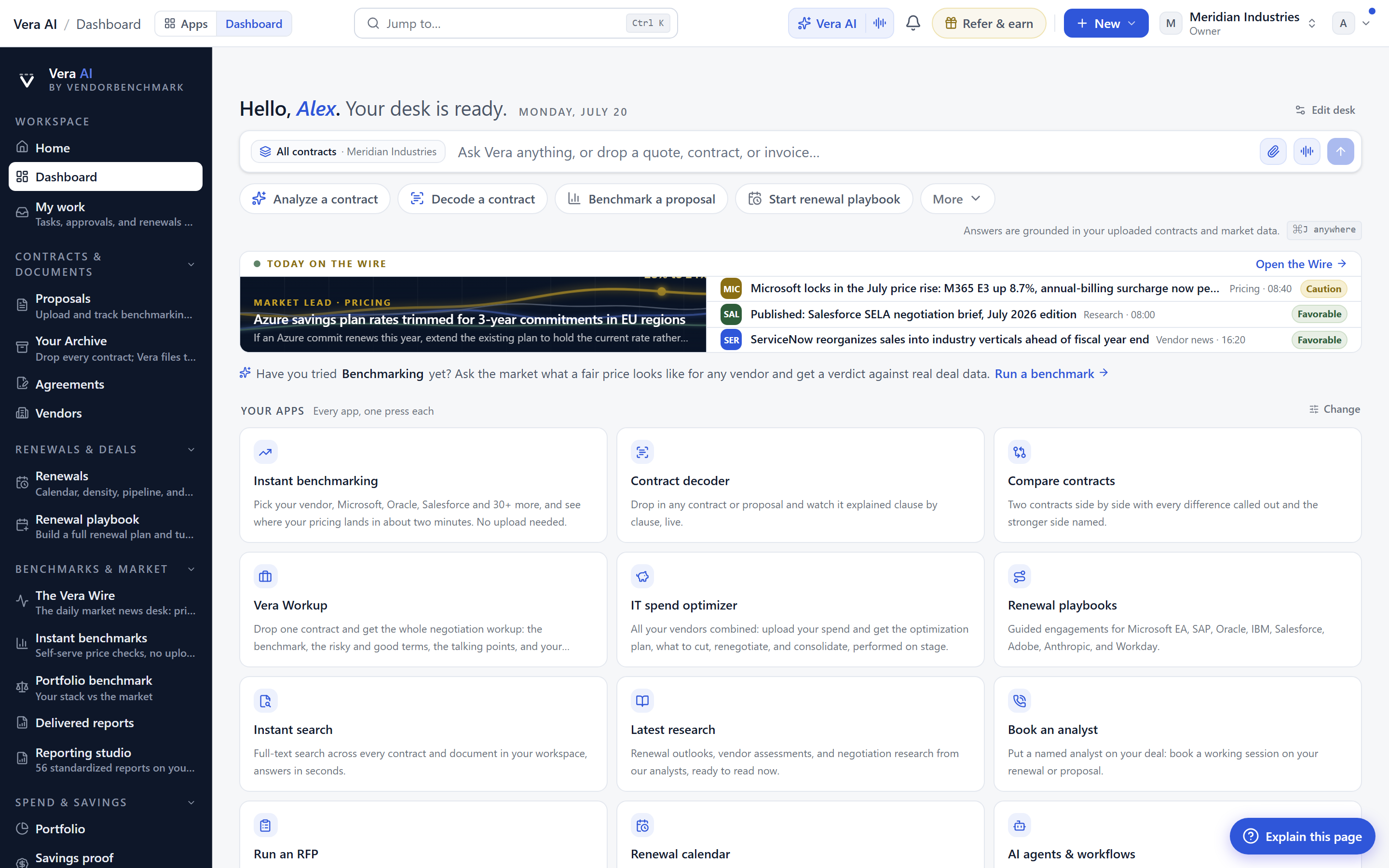
You can begin from nothing, or you can begin from a dropped contract. Drop the paper in and Vera reads the terms off it, the same decode work described in decode any contract in a minute. You check what she read, correct anything she misjudged, and then set your want. One press puts the agreement on the clock and opens the plan already populated. There is no separate step where you retype the vendor name, the value, and the renewal date into a form. The paper carries them, you confirm them, and the desk takes it from there.
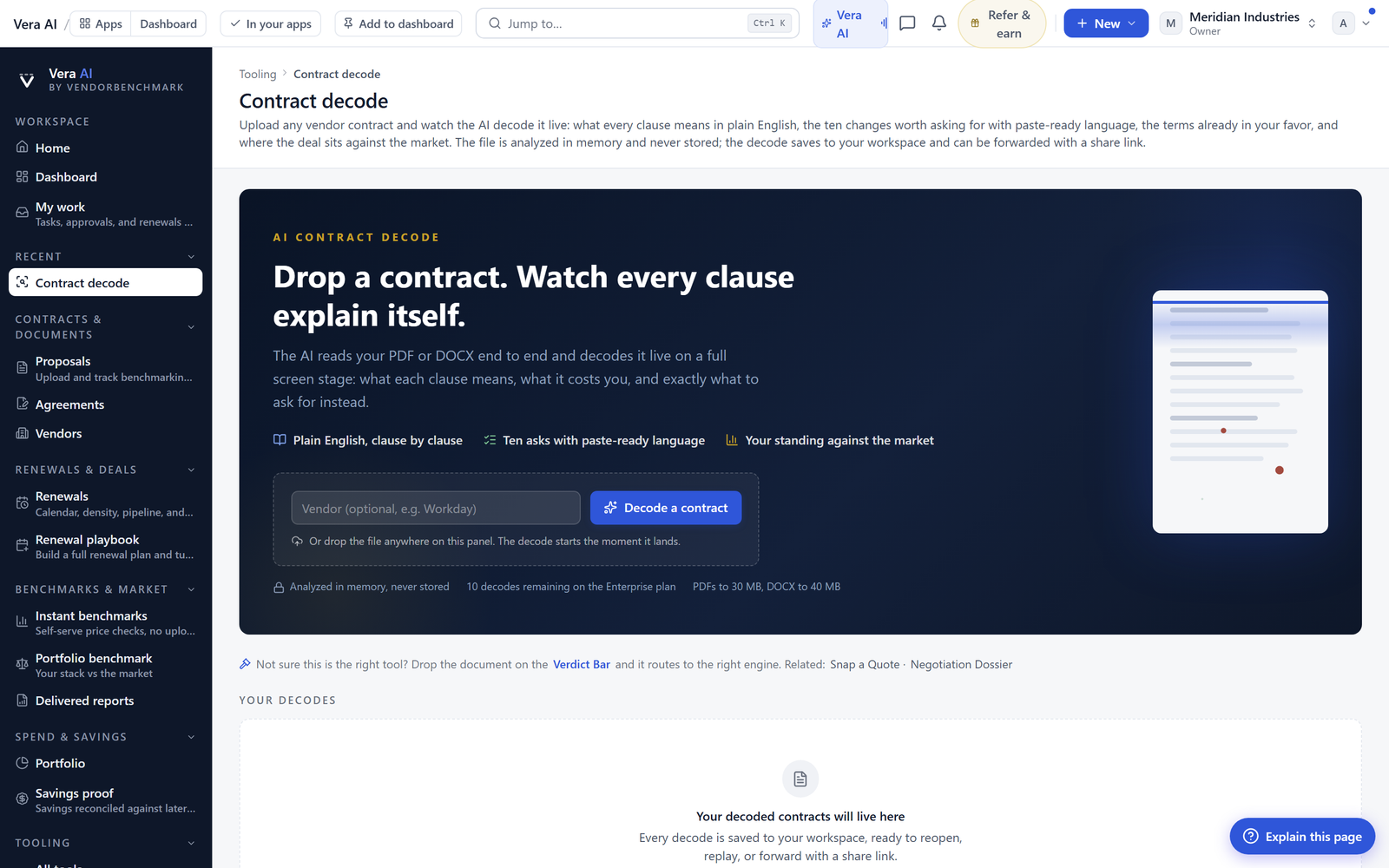
The point of the wizard is that the friction of starting is where renewals go missing. A contract that never gets entered is a renewal that auto-renews at the vendor's number. By making the start a two-minute confirm-and-decide instead of a form-filling chore, more of your estate actually lands on the desk, on the clock, with a want attached.
What changes for the buyer
Honest limits
Be clear about what this is not. Vera researches and proposes; she does not negotiate for you, and she does not press send on anything to the vendor. The steps are a plan, not an autopilot. Approving a step commits you to nothing until you or a colleague actually executes it.
The quality of the findings depends on the terms she read being right. That is exactly why the wizard makes you check them. If you skip the confirm step and a value or date was misread off a scanned page, the plan inherits that error. The check is not optional theatre, it is where you keep the research honest.
Some findings will not have a close benchmark. Where the benchmark library does not reach a niche vendor or an unusual term, Vera says so rather than inventing a number, and the finding leans on the terms from your own paper instead of market data. That is a limit worth naming, and it is better than a confident figure with nothing behind it. The plan you approve is only as strong as the evidence attached to each step, which is why we put the source on every one. Open the Plan room on a renewal you already care about, set a want, and read what she found before you decide whether to trust it.
Want to be updated when major licensing and pricing changes land? One analyst brief a week: the price rises, metric changes and audit campaigns that move software costs. Work email only.
Morten brings two decades of enterprise and software procurement, with stints across Oracle, IBM, SAP, and Salesforce shaping how he reads a deal. He has led sourcing through hundreds of renewals, from mid market order forms to nine figure global agreements, and learned that the buyers who win are the ones who walk in knowing the market. He built VendorBenchmark to make that pattern recognition repeatable.


