Finance wants the floor, the business wants it live, and the deal stalls in the middle
Finance pushes for the lowest number while the business pushes for the fastest go-live. The deal freezes between them. The fix is a common set of numbers, not another meeting.
You know the meeting because you sat in it last month. The business unit has a launch date on the roadmap and a vendor they already like, and every week of delay is a week of the roadmap slipping. Finance has a target on the line item and a mandate to hold it. Both are right, and both are pointing at the same contract. So the deal does not move. It circles. One side asks for another discount pass, the other asks why procurement is holding up a decision the business already made. You are in the middle, and the calendar keeps eating the leverage you had. This series names the sourcing problems buyers recognise, and this one is quiet, expensive, and almost never about the people in the room.
The stall is not a personality problem
It is tempting to read the standoff as friction between two stubborn leaders. It almost never is. Finance is optimising for one thing, unit cost against budget. The business is optimising for a different thing, time to value against a plan. These are two objective functions, and they do not share a denominator. When you ask the group to agree, you are asking two people to abandon the metric each is measured on. Nobody does that in a room, so the meeting produces a follow up meeting.
This is the same root cause we described in the piece on conflicting requirements from stakeholders who never met. The spec pretends the priorities agree. The deal proves they do not. A cost target and a launch date are both legitimate constraints, but stated in isolation they read as demands rather than trade offs, and demands do not negotiate against each other. Numbers do.
Why it persists week after week
The reason the stall survives is that each side is arguing without a shared unit of measure. Finance says the price is high. High compared to what? The business says the delay is costing us. Costing what, exactly, and against which alternative? Absent a common reference, each function defends its own number with conviction and no comparison, and the meeting becomes a contest of assertion. Whoever has more organisational weight wins, which is not the same as the deal being good.
The second reason is time. Every week the deal sits open, the vendor's incentive to move shrinks, because their quarter end is a fixed date and yours is not. We covered how that clock works in the note on vendor fiscal calendars. An internal disagreement that runs three weeks does not just delay a launch, it burns the exact timing pressure that would have earned Finance the discount they wanted. The two priorities are not only in tension with each other, they are jointly destroying the leverage that would have satisfied both.
A shared scorecard reconciles faster than debate
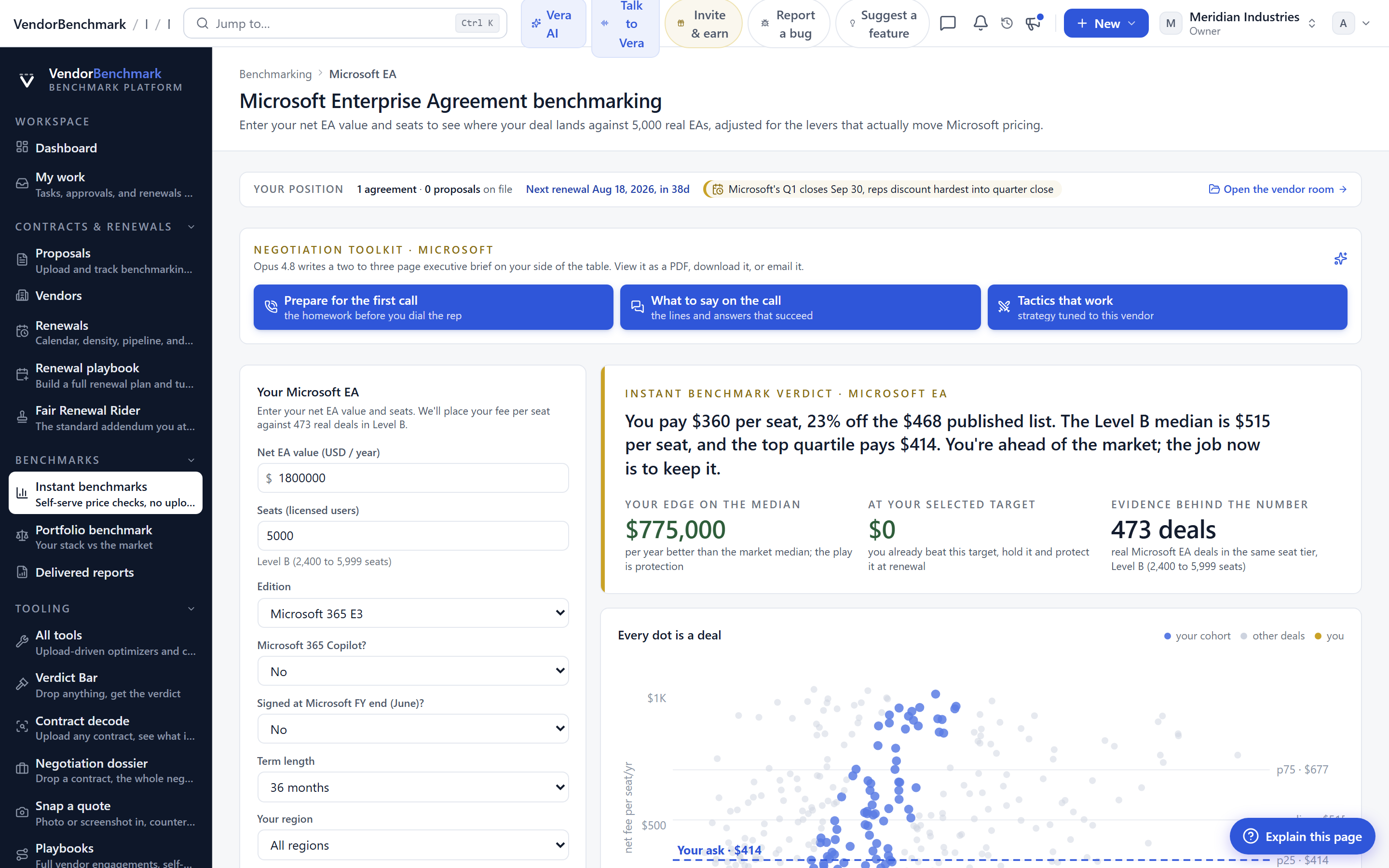
The move that dissolves the standoff is not persuasion, it is a common set of numbers both functions can point at. When the deal is framed against the market on cost and on terms at the same time, the argument changes shape. Finance can see where the price actually sits against comparable deals rather than against a feeling. The business can see which terms carry the go-live risk and what they cost to fix. Now the two are trading against one board instead of against each other.
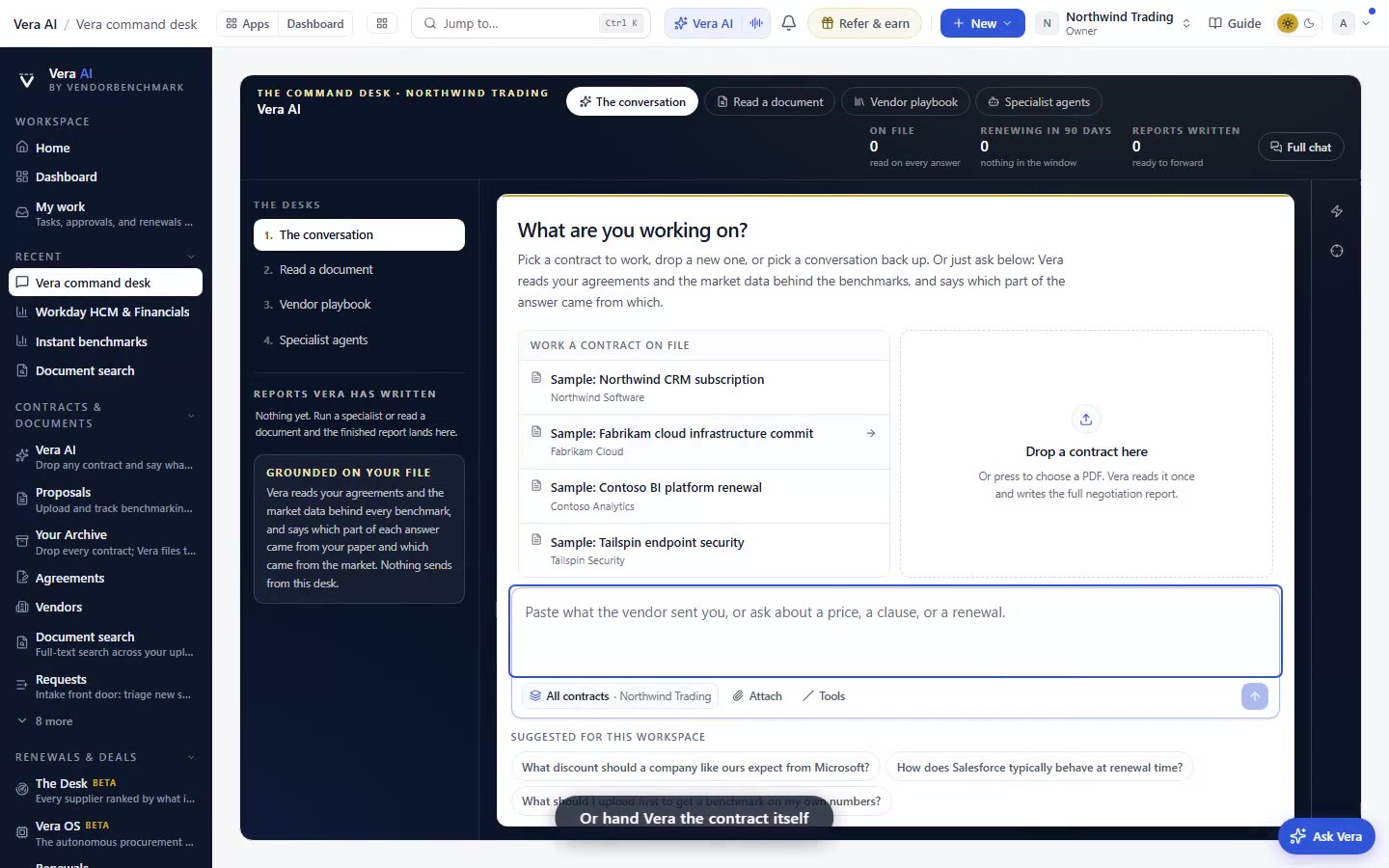
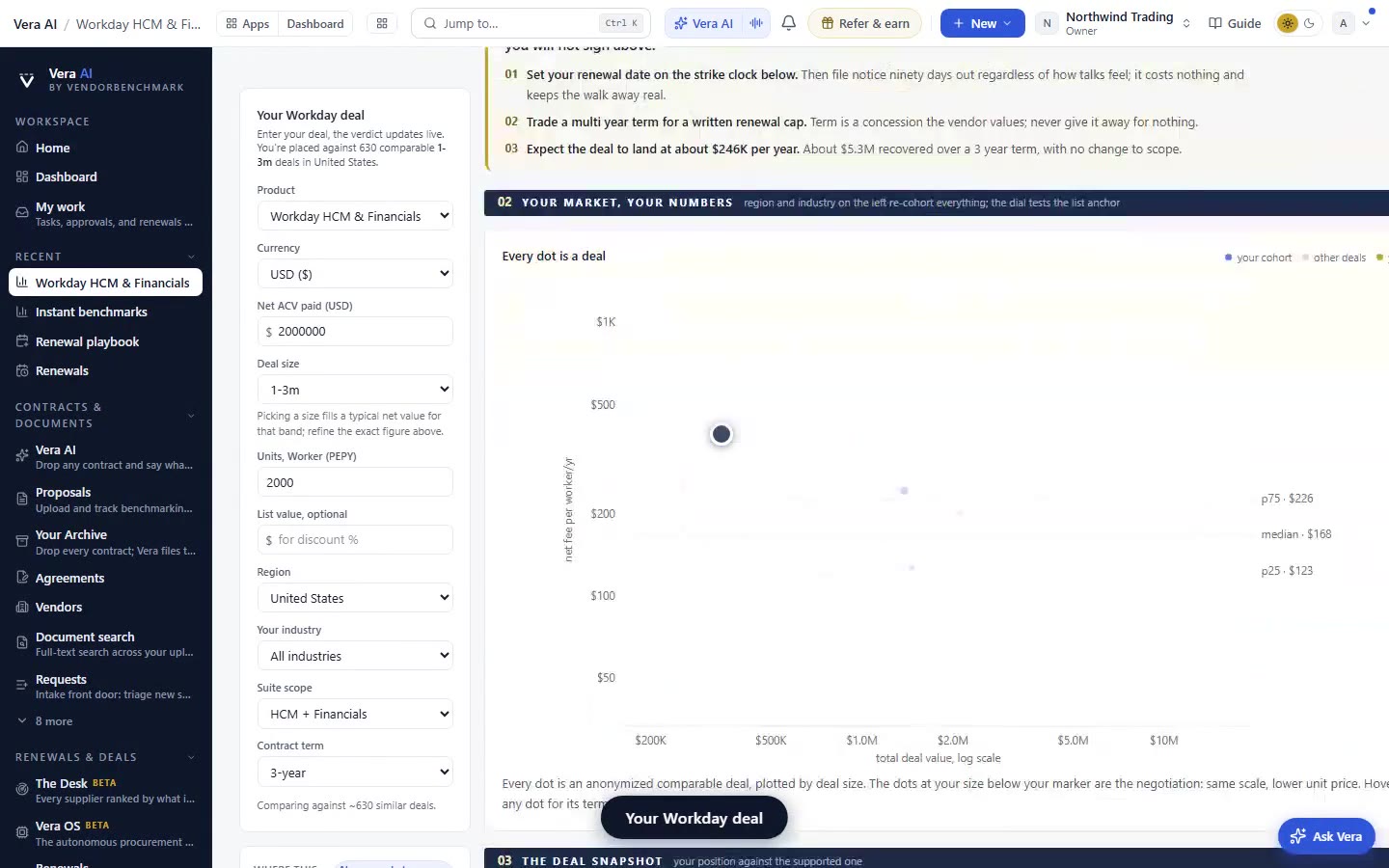
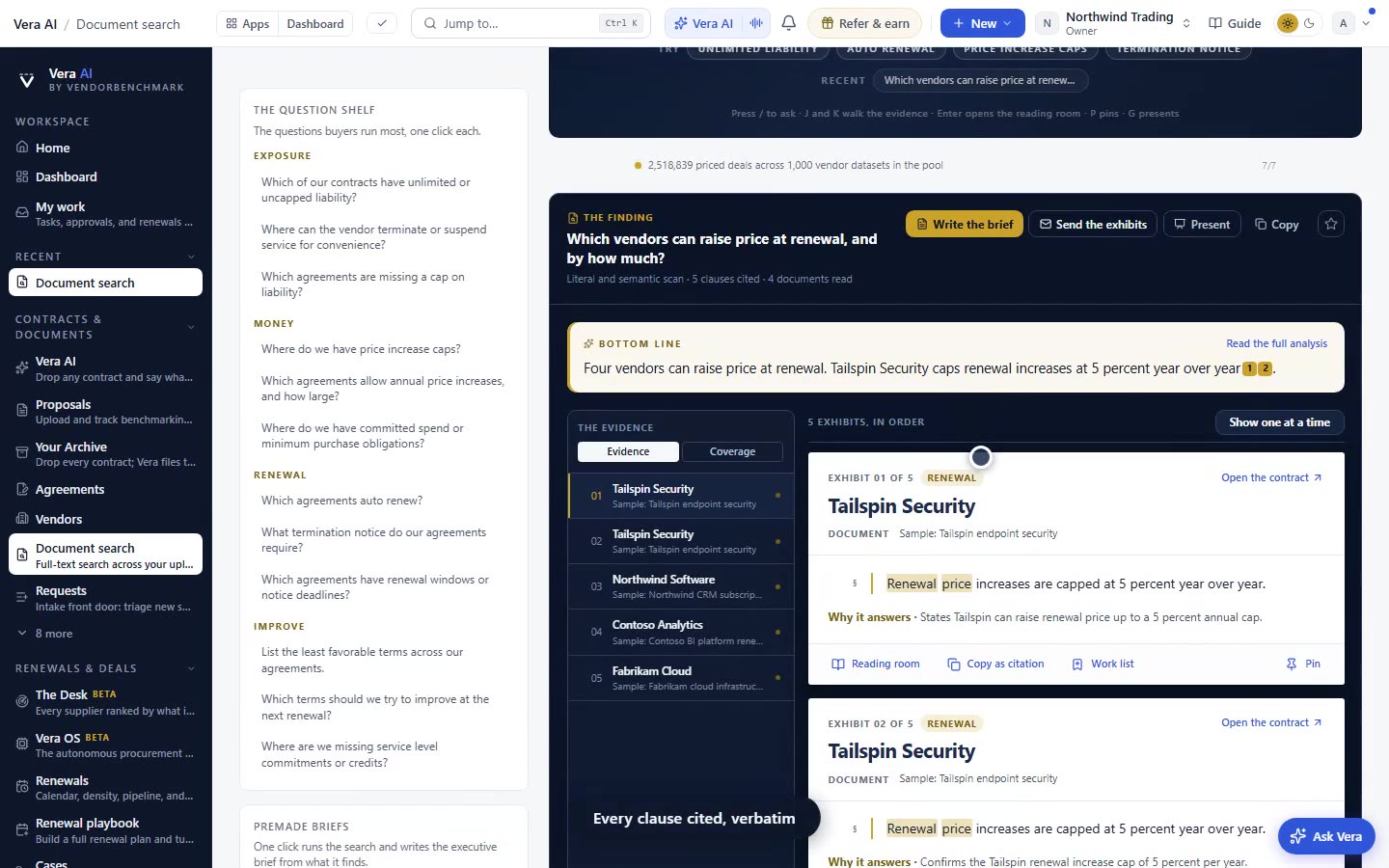
This is where the AI analyst does the work. It reads the deal, pulls the relevant comparisons from a benchmark library covering 1,483 vendors, and returns both dimensions on one view: where the cost sits in the distribution, and where the terms sit against typical positions. Six specialist agents handle the parsing, comparison, and citation so the numbers arrive with sources attached, not as opinion. The point is not that the machine decides. The point is that both sides are finally looking at the same figures.
The platform motion, step by step
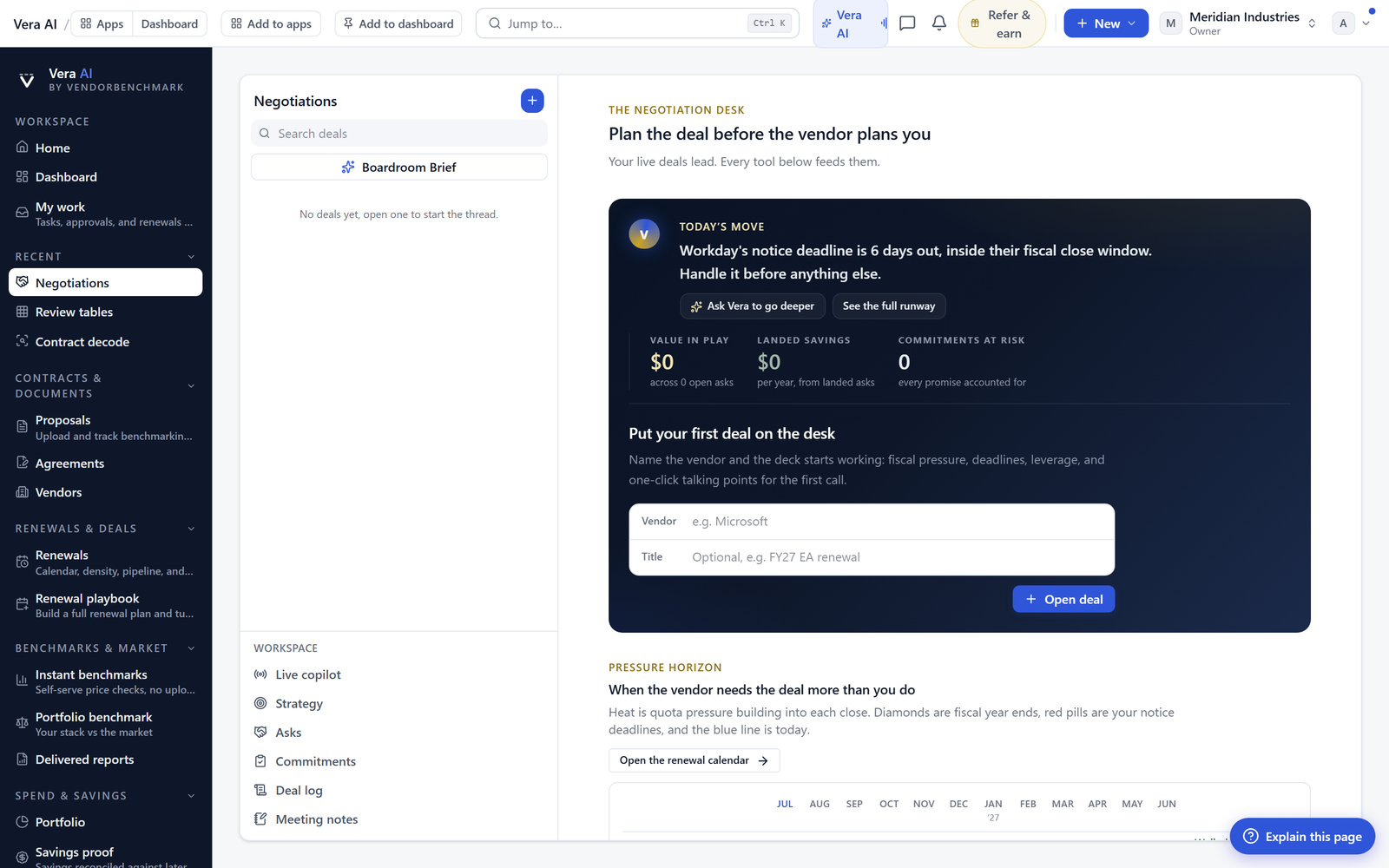
The mechanics are deliberately plain, because the value is in the shared reference and not in a clever interface. Here is the sequence that removes the stall.
What this does not solve
Be honest about the edges. A shared scorecard reconciles priorities that are genuinely reconcilable. It does not manufacture agreement where the constraints truly cannot both be met. If the budget line and the launch date are mutually impossible, the benchmark will show you that cleanly and early, which is useful, but it will not conjure a deal that does not exist. Someone still has to decide which constraint gives, and that is a leadership call, not an analytical one.
It also does not settle a disagreement about the number of seats or the scope, which is a different problem with a different fix, one we treat in the piece on agreeing the vendor then arguing the number. And the analyst gives you cited market figures, not certainty. Where the stakes are high enough to warrant it, a human review adds precision the model does not claim to have, which is exactly why we let you ask an analyst to check the work by hand. The platform's job here is narrow and real: it removes the version of the stall that is caused by two functions arguing without a common set of numbers. That version is most of them. The rest is a decision, and decisions were always going to need a person.
Want to be updated when major licensing and pricing changes land? One analyst brief a week: the price rises, metric changes and audit campaigns that move software costs. Work email only.
Morten brings two decades of enterprise and software procurement, with stints across Oracle, IBM, SAP, and Salesforce shaping how he reads a deal. He has led sourcing through hundreds of renewals, from mid market order forms to nine figure global agreements, and learned that the buyers who win are the ones who walk in knowing the market. He built VendorBenchmark to make that pattern recognition repeatable.