Timing is leverage: vendor fiscal calendars and when discounts actually move.
A rep's authority to discount is not constant through the year. It peaks in the final weeks of their fiscal quarter and year, when the quota clock is loudest. Sign the same deal then instead of mid-cycle and the number can move by points. The catch is knowing each vendor's calendar, because none of them share yours.
A sales rep's willingness to discount is not a fixed property of the deal. It moves with the calendar, and specifically with their calendar, not yours. In the middle of a fiscal quarter, with quota comfortably in sight, a rep has little reason to reach for extra discount authority. In the final days of a quarter or a fiscal year, with a number to hit and a manager watching, that same rep will fight internally for approvals they would not have bothered with weeks earlier. The deal did not change. The pressure on the person selling it did.
This is one of the most reliable and least used forms of leverage a buyer has, and it is underused for a simple reason: the vendor's fiscal calendar is rarely your fiscal calendar, and often not even the one you would guess. A vendor's year might end in January, or June, or December, and their reps live and die by those dates regardless of when your own budget year turns over. Timing a signature to the vendor's clock rather than your own is free leverage, and the only thing standing between you and it is knowing when their clock strikes.
The year-end window, and what it is worth
The mechanism is the quota cycle. Reps carry targets measured against their fiscal periods, and discount authority, the room to go beyond the standard rate, expands as those periods close. A deal signed in the final weeks of a vendor's fiscal year routinely carries several points more discount than the same deal signed mid cycle, sometimes considerably more when a rep is chasing a number and your signature is what closes their quarter. The end of the fiscal year is usually the single largest timing lever, with the end of each quarter a smaller version of the same effect.
The size of that window varies by vendor and situation, which is exactly why it should be treated as data rather than folklore. For some vendors the year-end effect is worth a handful of points, for others, particularly those run tightly for financial targets, it can run into the double digits. Knowing which vendor sits where, and how large its timing lever really is, turns a vague sense that year-end is good into a specific expectation you can plan a renewal around.
Every vendor keeps a different clock
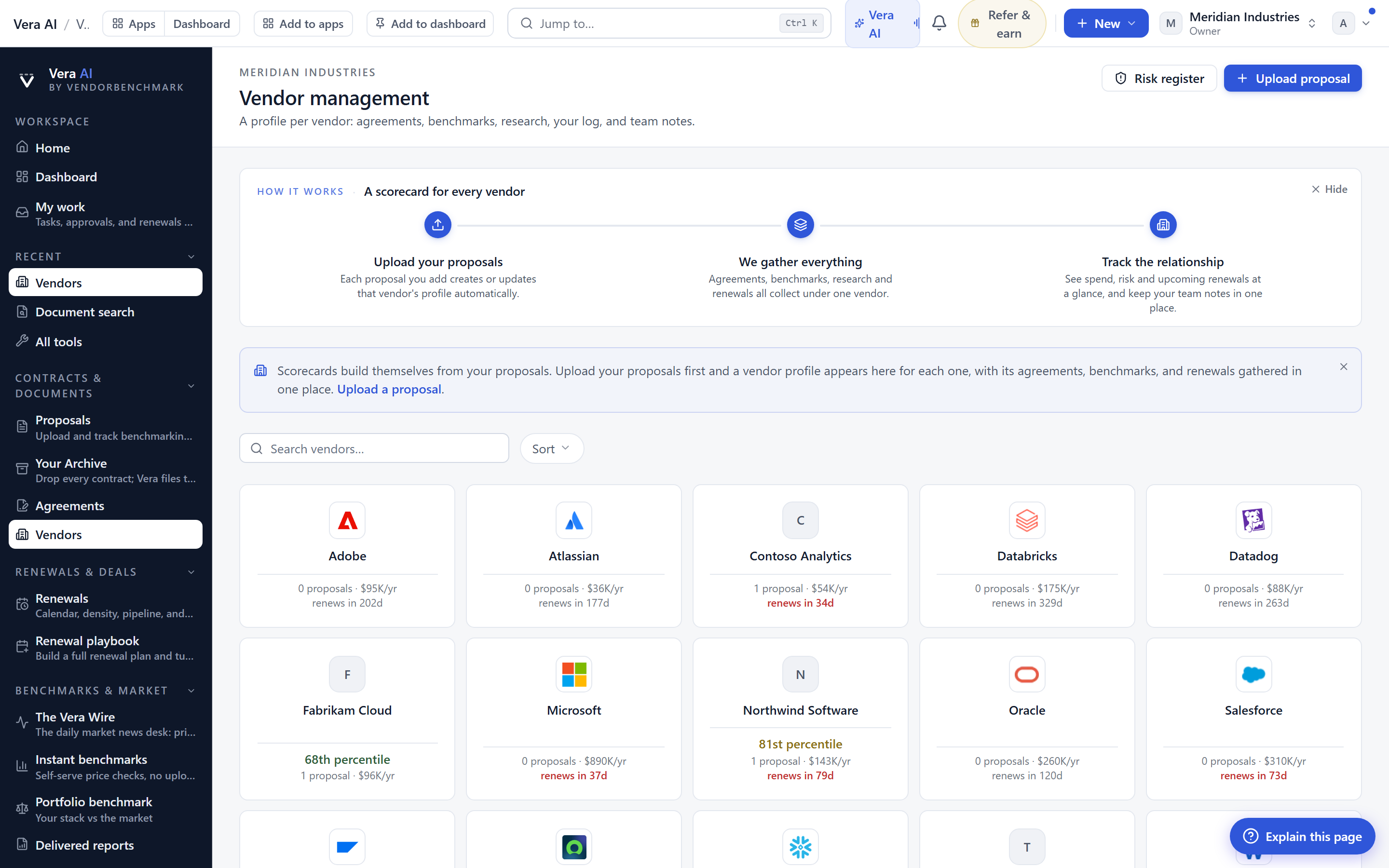
The practical difficulty is that no two vendors share a calendar, and the naive assumption that everyone closes in December is wrong often enough to be expensive. A buyer negotiating three renewals may be dealing with three different fiscal year-ends, each with its own peak pressure window, and treating them as if they all end when the calendar year does forfeits the leverage on the two that do not. The value of knowing each vendor's real fiscal calendar is that you stop guessing and start planning to their actual close.
That is why the timing lever is captured per vendor rather than as a general rule. Each vendor carries its own fiscal year-end and the discount effect of signing near it, so the advice is specific: for this vendor, the window is these weeks, and it is worth roughly this much. A renewal you might have signed whenever it happened to land becomes one you deliberately steer toward the vendor's pressure point, which costs you nothing and can be worth a great deal.
Want to be updated when major licensing and pricing changes land? One analyst brief a week: the price rises, metric changes and audit campaigns that move software costs. Work email only.
Timing is a lever, not the whole play
Timing works best in combination, not alone. Walking in at a vendor's year-end with nothing else is weaker than walking in mid cycle with a credible alternative and a benchmark, and the strongest position pairs the timing with the rest: a priced walk away, a market benchmark, and a signature the rep needs before their quarter closes. The calendar tells you when the vendor is most motivated. Your leverage tells you what to ask for while they are. Used together, the year-end window turns a good negotiating position into a closing one.
It also has to be balanced against your own constraints. Steering a renewal to a vendor's fiscal close can mean signing a little earlier or later than you otherwise would, and occasionally the operational cost of that is not worth the points. But knowing the window exists, and how much it is worth, means the trade off is a decision you make deliberately rather than an opportunity you never knew you missed. Most buyers miss it simply because nobody told them when the vendor's year ended.
Turning the vendor's calendar into leverage
A window, not a guarantee
A fiscal year-end raises the odds of a better discount, it does not promise one, and a rep who has already made quota may have less appetite to stretch than the theory suggests, while one who is far behind may be desperate at any time. The timing lever is a real and repeatable pattern, not a law, and it interacts with a dozen things the calendar cannot see, the rep's specific position, the deal's size, the competitive situation.
What knowing the calendar removes is the most common and most avoidable mistake, which is signing on your own schedule, indifferent to the vendor's, and leaving free leverage on the table. When you know each vendor's fiscal close and roughly what signing near it is worth, timing becomes a lever you can choose to pull, deliberately and in combination with the rest of your position. It is the cheapest leverage in the negotiation, and the one buyers forfeit most often, for no reason other than not knowing the date.
Morten brings two decades of enterprise and software procurement, with stints across Oracle, IBM, SAP, and Salesforce shaping how he reads a deal. He has led sourcing through hundreds of renewals, from mid market order forms to nine figure global agreements, and learned that the buyers who win are the ones who walk in knowing the market. He built VendorBenchmark to make that pattern recognition repeatable.
The week in enterprise software buying, in one email.
What shipped on the platform, and the pricing and licensing moves worth knowing before your next renewal. One email a week, to your work address. Unsubscribe any time.