The price justification finance needs at 4pm, on a deal that closed weeks ago
The pricing case should be built as the deal progresses, not reconstructed under time pressure once everyone has moved on. Here is how to make it a byproduct of the work.
It is a Thursday afternoon. The executive review is tomorrow morning. Finance sends the message you have seen a dozen times: can you justify this price by end of day. The deal in question signed three weeks ago. The working team has moved on to two other renewals. The evidence that made the case obvious in the moment, the competing quote, the peer data point, the reason you accepted a shorter term, is scattered across a Slack thread, someone's inbox, and a spreadsheet tab named final_v4. You now have four hours to rebuild a story that was clear when it was fresh and is now a small archaeology project.
This is not a finance problem or a procurement problem. It is a timing problem. The justification is demanded at the exact moment the working knowledge has decayed, and it is demanded from the one person least able to drop what they are doing. This post is about closing that gap, so the price case exists before anyone asks for it.
Why the request always arrives late
The executive review runs on a calendar that has nothing to do with the deal. It is quarterly, or it is triggered by a spend threshold, or it is scheduled the week a board pack is due. So the request lands weeks after signature by design, not by accident. There is no version of this where finance asks earlier, because finance does not know a justification will be needed until the review is scheduled.
Meanwhile the working team measures success by close, not by documentation. The moment the contract is signed, the deal stops being interesting. The person who negotiated it is now three days into the next negotiation and has no incentive to keep the last one's evidence warm. This is rational behaviour that produces an irrational outcome: the file goes cold the instant it is done, and it is asked to speak weeks later.
Reconstruction is where the number gets soft
When you rebuild a justification under time pressure, you do not rebuild the strongest version. You rebuild the version you can find. The competing quote you cannot locate quietly drops out. The peer comparison you half remember becomes an assertion instead of a citation. What was a rigorous position at signing becomes, four hours before the review, a paragraph of confident prose backed by whatever screenshots survived. Executives can smell this. A justification assembled in a hurry reads like one, and it invites exactly the follow up question you cannot answer.
There is a second, quieter cost. The number you defend today may no longer be the number the market supports. A deal that closed at the fortieth percentile in March can be at the sixtieth by autumn as the vendor's list moves. If your justification is frozen at signing and never revisited, you can walk into a review defending a price that is now merely average, and not know it. We wrote about that drift in benchmark alerts.
Assemble the case continuously, not at the end
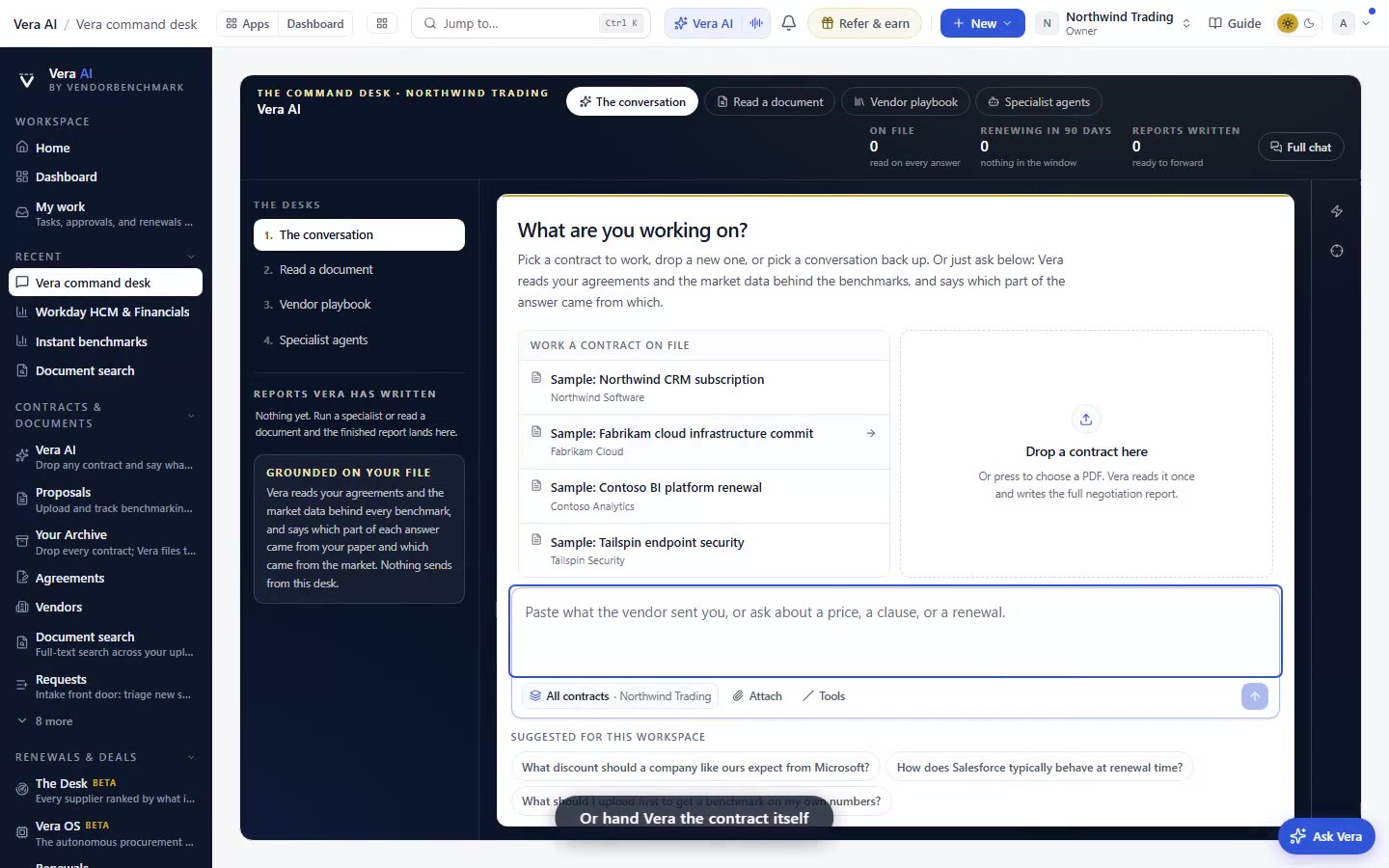
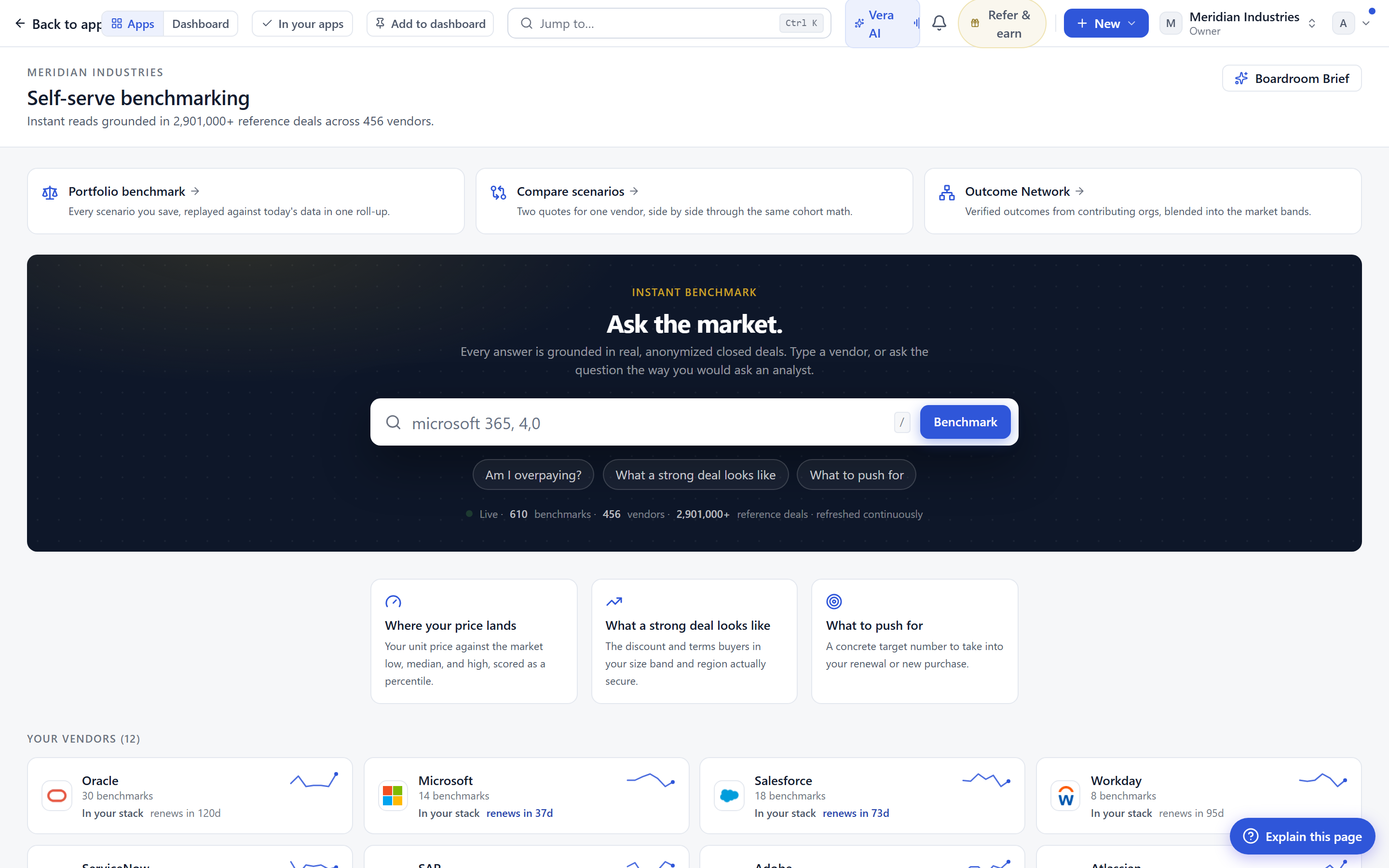
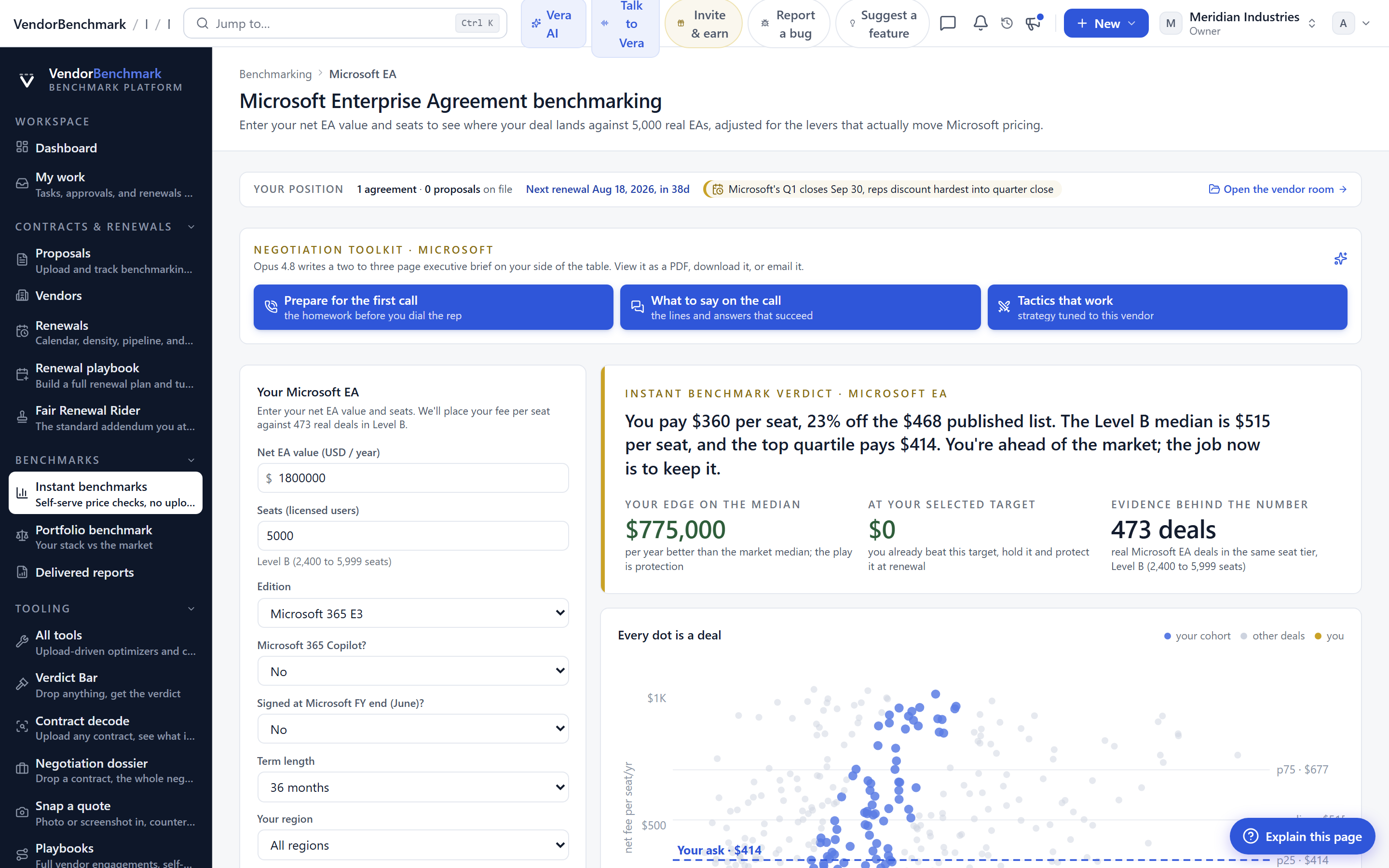
The fix is to stop treating the justification as a deliverable and start treating it as a byproduct. Every deal you benchmark leaves a percentile position behind. If that position is kept current against documented market evidence, the justification is never something you write. It is something you read off a page that already exists. The working team does not have to keep the file warm, because the platform keeps it warm for them.
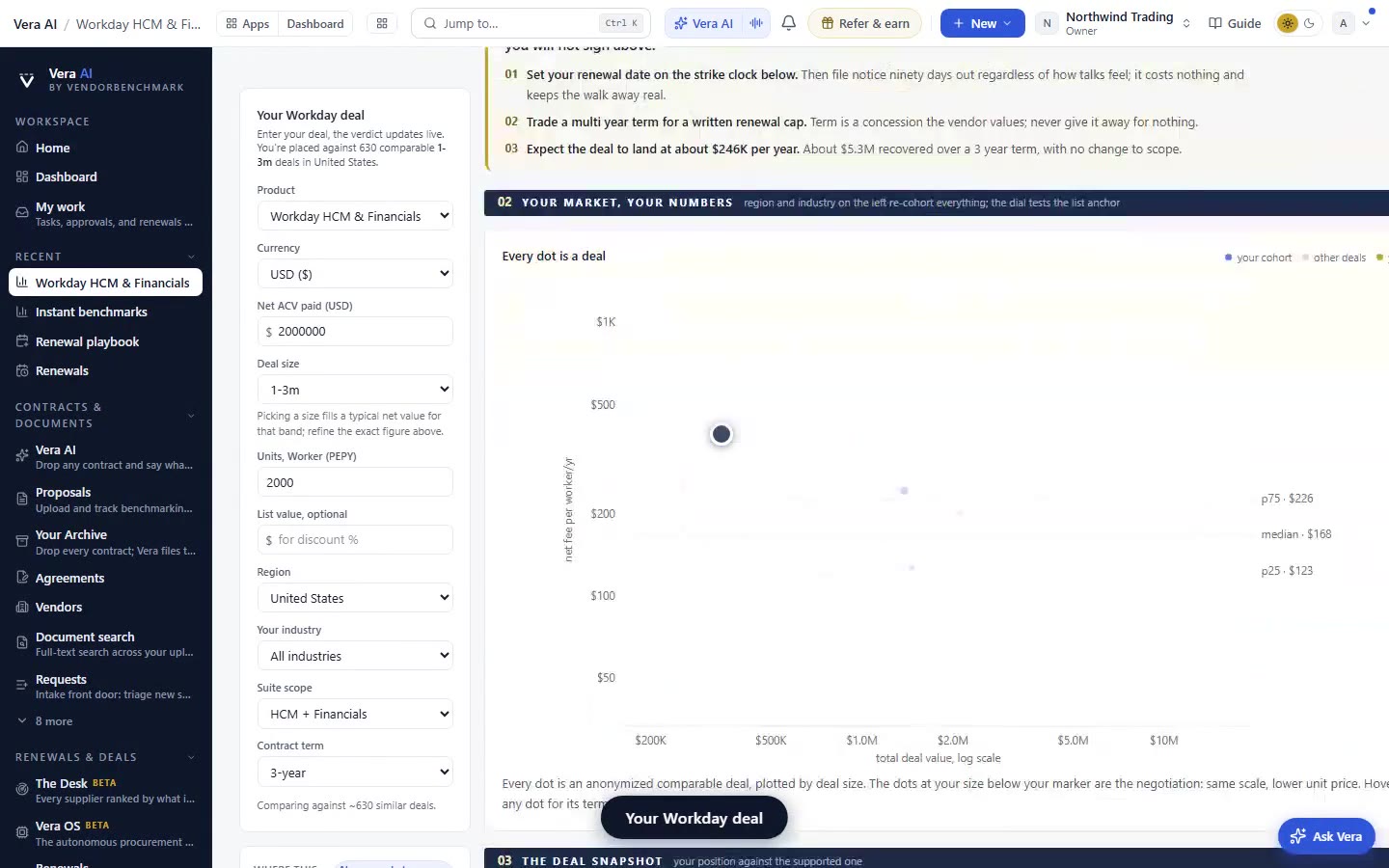
This is where benchmarking against actual outcomes matters rather than survey averages. A percentile derived from what peers really paid is defensible in a way that a vendor's own reference price or a self reported survey figure is not. We made that distinction in survey benchmarks versus closed deals. When finance asks where this price sits, the answer is a position in a distribution of verified deals, with a cohort size attached, not an opinion.
The percentile that updates itself
Because the comparison set moves, the position moves with it. A deal you saved in March is re scored against later closes without you touching it, so the number you present tomorrow is the number that is true tomorrow, not the one that was true at signing. This is the difference between a static screenshot and a living position. It also means you catch the case where a once strong deal has drifted to average before an executive catches it for you.
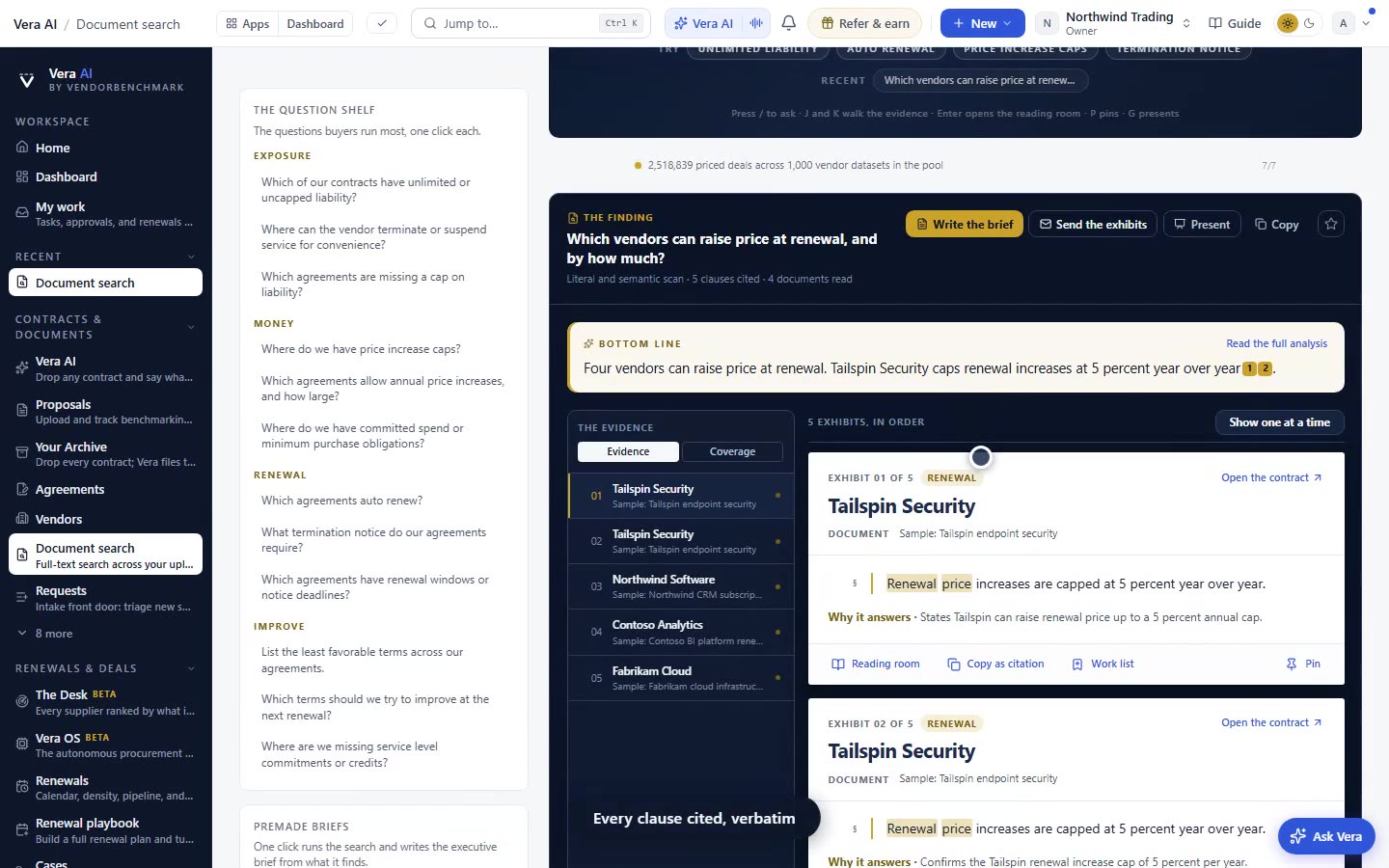
The same discipline scales past a single deal. When a review covers a category or a supplier rather than one contract, you want the position across the estate, not a hand assembled comparison per line. That is portfolio benchmarking: the same continuous case, applied to every vendor at once, so a category review is a filter rather than a fire drill.
What finance actually receives
The output that answers the 4pm request is small and specific. It states where the price sits, how many comparable deals it sits against, and how that has changed since signing. It cites, it does not assert. It fits on a page. Crucially, producing it does not require reopening the negotiation or interviewing the person who ran it. The working team stays on the current deal, and the review still gets its evidence. That separation is the whole point.
What this does not fix
A current percentile answers whether the price was competitive. It does not answer every question an executive review can raise. If the review is really about whether the software was needed at all, or whether the budget was set correctly before anyone knew the market, a benchmark position is necessary but not sufficient. That budget question is a different problem, one we treat in the budget was set before anyone knew the market price.
The platform also cannot benchmark a deal it has no comparable data for. For a genuinely novel purchase, a bespoke build or a supplier with no meaningful peer set, the cohort is thin and the honest answer is a wide range rather than a tight percentile. In those cases the summary should say so plainly. A defensible case that admits its own uncertainty is stronger in front of an executive than a false precision that unravels under one question. And no benchmark relieves you of judgement about term length, scope, and the non price concessions that a percentile does not capture. The position tells you where the price sat. The decision was still yours to make.
Want to be updated when major licensing and pricing changes land? One analyst brief a week: the price rises, metric changes and audit campaigns that move software costs. Work email only.
Morten brings two decades of enterprise and software procurement, with stints across Oracle, IBM, SAP, and Salesforce shaping how he reads a deal. He has led sourcing through hundreds of renewals, from mid market order forms to nine figure global agreements, and learned that the buyers who win are the ones who walk in knowing the market. He built VendorBenchmark to make that pattern recognition repeatable.