Benchmark alerts: when the market moves against a deal you saved in March.
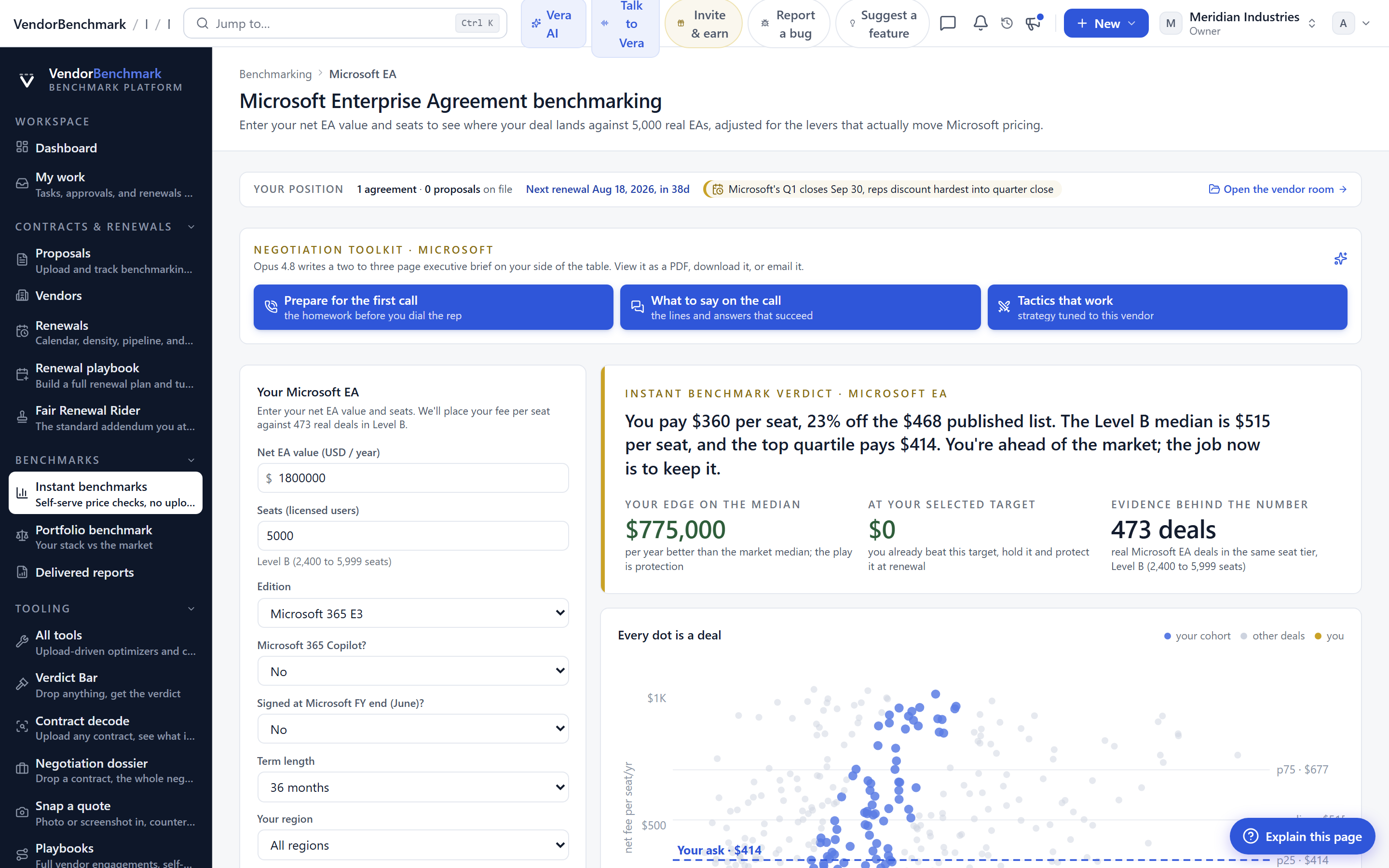
You benchmarked a renewal in March, landed a strong price, and moved on. By September the market has softened, and the deal that beat 80% of peers now beats half of them. A benchmark is a photograph of a moving market, and benchmark alerts tell you when the picture has changed under a deal you thought was done.
A benchmark feels permanent in the moment you run it. You place your renewal against the market, see that your price beats most comparable deals, feel the small satisfaction of a job done well, and file it away. But the number you captured was a photograph of a market that does not hold still. Vendors discount more deeply as competition intensifies, categories soften as they mature, and the distribution of what buyers pay drifts, sometimes slowly, sometimes fast. The strong position you locked in did not change. The market underneath it did, and a benchmark you ran once quietly goes stale.
This is the trap of one-time benchmarking. A deal that beat eighty percent of comparable buyers in March can be beating half of them by September, not because you did anything wrong, but because the market moved and nobody was watching your position against it. The number that justified the deal is now out of date, and the first you would hear of it is at the next renewal, when the vendor uses the softened market against you. Benchmark alerts exist to close that gap: to keep watching your saved positions so the market cannot move against you unnoticed.
A benchmark is a photograph, the market is a film
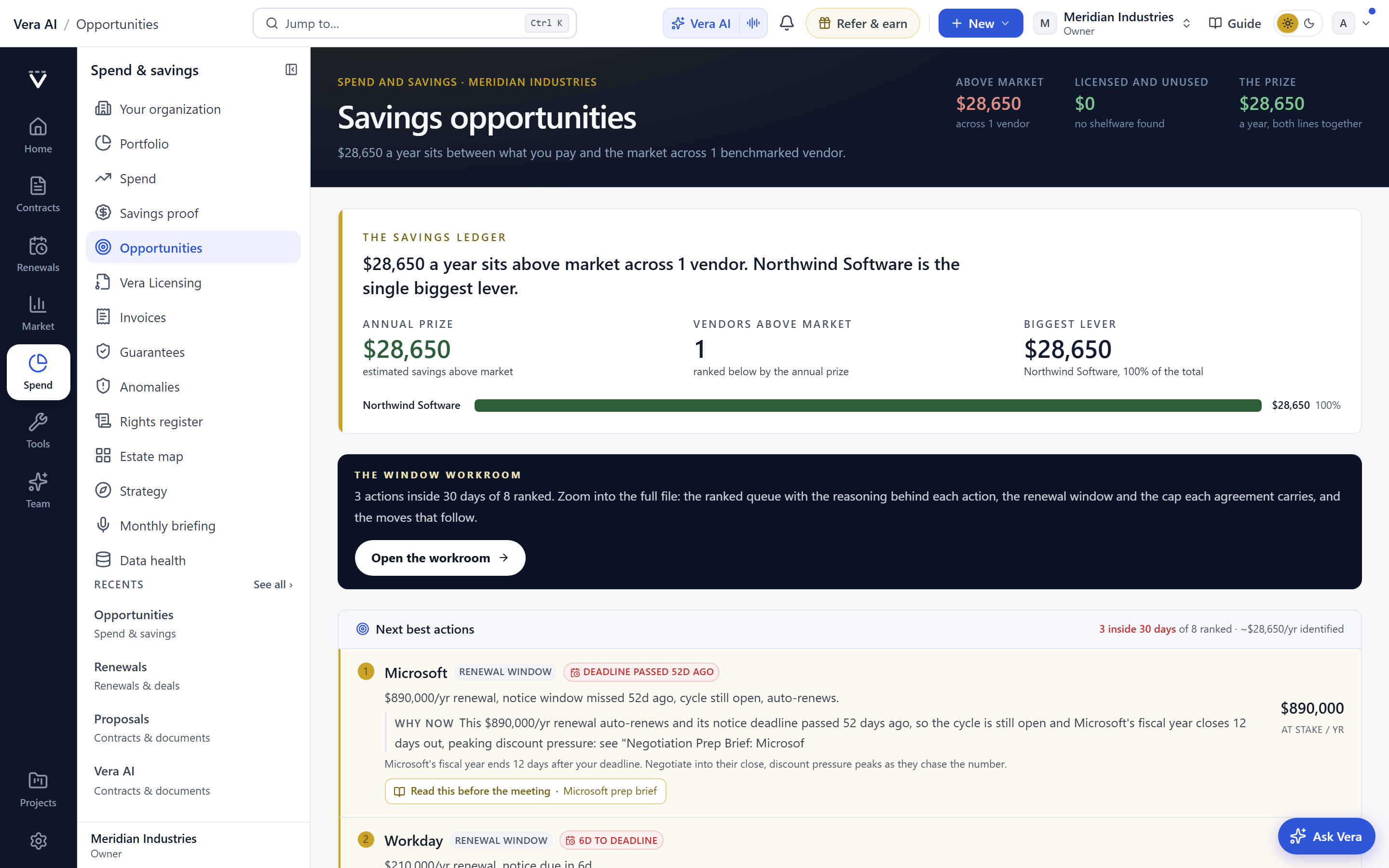
The core insight is that a benchmark and the market are two different things. The benchmark is a fixed snapshot, your price against the distribution as it was on the day you ran it. The market is a continuous process, deals closing all the time, the distribution shifting as they do. The moment you save a benchmark, the two begin to diverge, slowly at first, then meaningfully. A position that was genuinely strong drifts toward average not through any change in your contract but through the steady accumulation of newer deals closing at different levels.
Most buyers never see this drift because they benchmark at renewal and then stop looking until the next one. The years in between are exactly when the market moves, and they move blind through them. Watching the drift means treating a saved benchmark not as a conclusion but as a position to monitor, comparing it continuously against the evolving market so that the gap between the photograph and the film is measured rather than discovered too late.
Alerted when your position slips
Benchmark alerts turn that continuous comparison into a signal you actually receive. Rather than requiring you to remember to re-run a benchmark you ran months ago, the system watches your saved positions against market drift and tells you when one has moved against you, when a deal that was strong has slipped toward or past the median as the market softened. The alert is not noise about every tiny fluctuation; it fires when a position has drifted enough to matter, so what reaches you is a small number of meaningful signals rather than a constant hum.
The value is entirely in the timing. Learning that the market softened on a vendor the day before that vendor's renewal is nearly useless; learning it six months ahead is leverage. An alert that a saved position has slipped gives you the runway to prepare, to go back to the vendor early, to build the case, to time the next conversation, rather than discovering the shift when the vendor points out that everyone else is now paying less than you. The market moving against you is only a problem if you find out too late to use it.
Drift is an opportunity, not just a warning
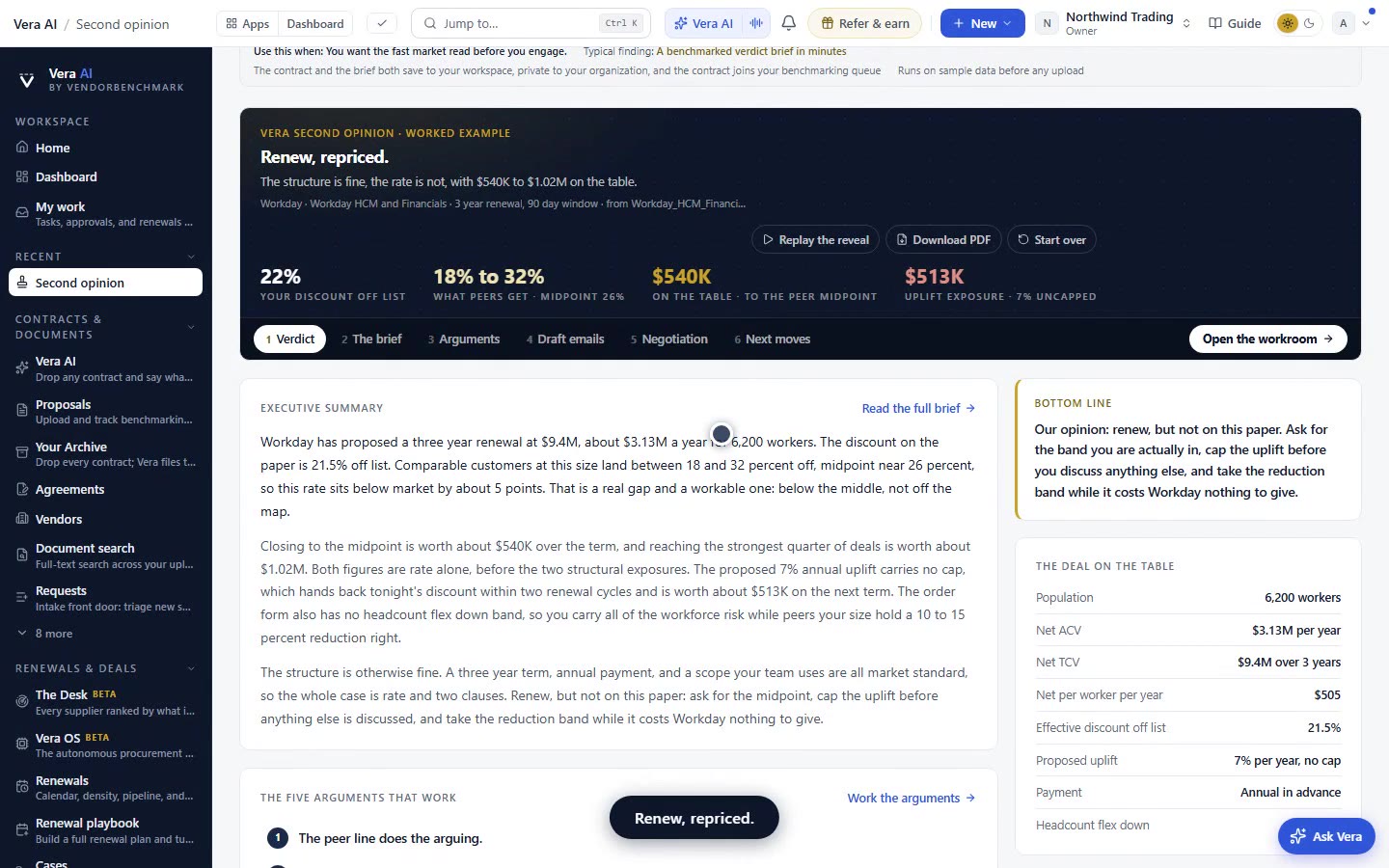
It is easy to read a benchmark alert as bad news, your good deal is no longer as good, but the more useful framing is that it is an opportunity surfaced early. A market that has softened against your position is a market where a renegotiation, a mid-term conversation, or simply a well-prepared renewal can recover the gap. The alert is not telling you that you lost; it is telling you that the market has created room you can go and claim, months before the renewal would have forced the issue.
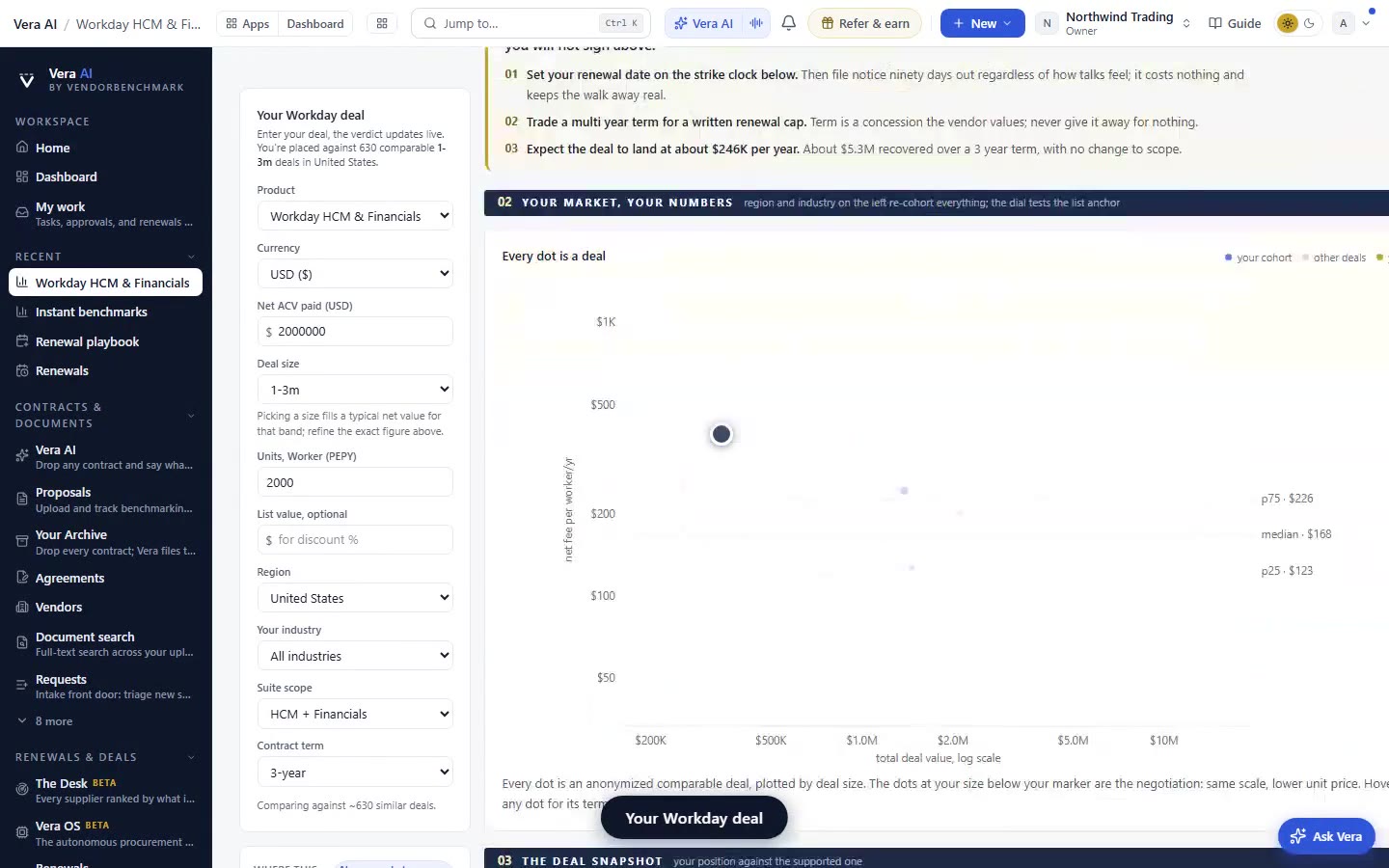
This turns benchmarking from a defensive, point-in-time exercise into a continuous source of proactive moves. Instead of benchmarking to justify a deal you already did, you benchmark to hold a position, and the alerts feed a running queue of vendors where the market has moved enough to be worth a conversation. Over a portfolio of hundreds of vendors, that steady stream of "the market softened here, worth revisiting" is a meaningful source of savings that one-time benchmarking, by its nature, can never surface, because it stops looking the moment the deal is signed.
Why saved benchmarks need alerts
Drift is a signal, not a mandate
A benchmark alert tells you the market has moved; it does not tell you that renegotiating is always worth it. Reopening a deal has costs, in effort, in goodwill, and sometimes in stability, and a modest drift on a vendor you are otherwise happy with may not be worth acting on. The alert surfaces the opportunity and prices the gap; whether the gap is large enough to justify the move is a judgment that weighs more than the number alone.
What it removes is the blindness that let good deals decay unnoticed. Benchmarking once and filing the result meant the market could soften under every position you held and you would never know until it was used against you. Watching your saved benchmarks for drift, and being told when one slips, turns benchmarking into something continuous and proactive, so that when the market moves against you, you are the one who notices first, with time to decide what to do about it.
Morten brings two decades of enterprise and software procurement, with stints across Oracle, IBM, SAP, and Salesforce shaping how he reads a deal. He has led sourcing through hundreds of renewals, from mid market order forms to nine figure global agreements, and learned that the buyers who win are the ones who walk in knowing the market. He built VendorBenchmark to make that pattern recognition repeatable.
The week in enterprise software buying, in one email.
What shipped on the platform, and the pricing and licensing moves worth knowing before your next renewal. One email a week, to your work address. Unsubscribe any time.