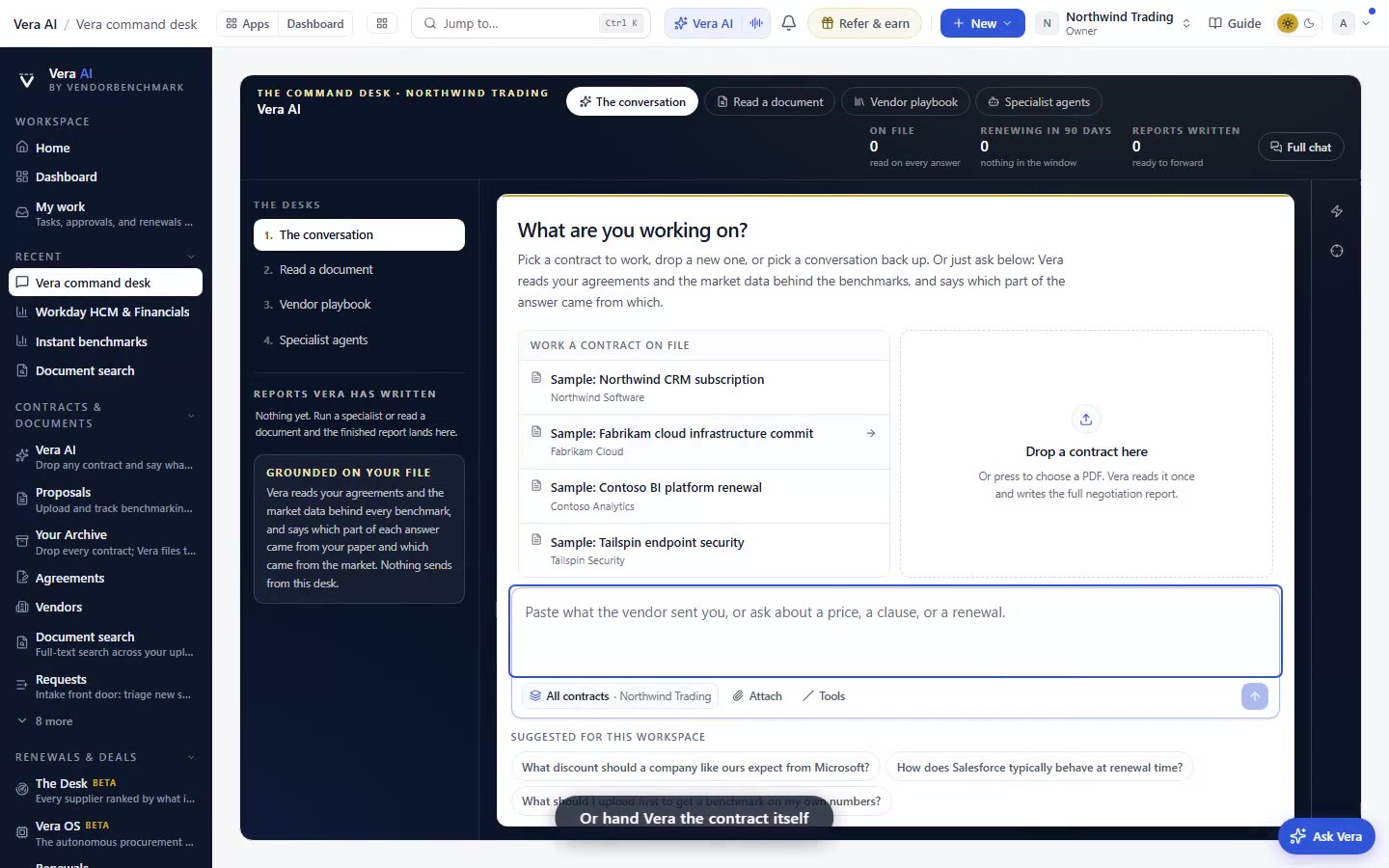
The budget number was approved before anyone checked what the deal actually closes at
A budget invented without evidence is a fiction that anchors your whole negotiation. Replace it with a market range from documented market evidence before the requirement is finalised.
Here is the meeting you sat in last month. A business owner needed a tool, finance asked for a number, and someone typed a figure into the intake form. Maybe it came from last year's spend plus a percentage. Maybe it came from a vendor's own indicative quote. Maybe it came from a colleague who bought something adjacent two years ago. Whatever the source, that figure got approved, and the moment it was approved it became the anchor for everything that followed. The negotiation you are now running is anchored to a number nobody benchmarked.
This is the quiet failure mode of sourcing. Not the loud one where a deal blows up, but the slow one where you negotiate hard against a target that was invented, hit it, and never learn you paid 20 percent over market because you had nothing real to compare against. A budget set without benchmarks is doing one of two things to you, and both are expensive.
Why the invented budget survives approval
The budget number gets invented because the intake process demands a number before anyone has the evidence to produce one. Finance cannot open a purchase order against a blank field. So the field gets filled, and the organisation treats a placeholder as a decision. This is the same structural problem we described in the plan was finished before procurement saw it, except here it is the money, not the spec, that hardens before anyone tested it.
It persists because the two failure modes are invisible at the moment they happen. If the invented budget is too high, you negotiate down to it, declare victory, and file the saving against a fiction. Nobody sees the money left on the table because the reference point was fake. If the invented budget is too low, the vendor cannot meet it at the scope you asked for, so the fight shifts to scope. Features get cut, terms get worse, and the requirement quietly shrinks to fit a number that was never real in the first place.
The two ways a fake budget costs you
The overshoot case is the more common one, and the harder to detect. Say the intake budget was set at 400,000 for illustration, and the deal closes at 360,000. That looks like a 40,000 saving. But if comparable deals at your size and term actually close nearer 300,000, you overpaid by roughly 60,000 while reporting a win. The anchor did its job. It just anchored you to the wrong place. This is why we keep insisting that discount off list is a trap. A percentage off an invented number is still a number about nothing.
The undershoot case is louder but at least honest. When the budget is below market, the vendor pushes back, and the conversation becomes a scope negotiation instead of a price negotiation. That is not always bad, because trimming scope you do not need is real value. But when it happens by accident, driven by a budget nobody validated, you cut capability you actually wanted because a placeholder said you could not afford it.
Replacing the guess with a range before the requirement locks
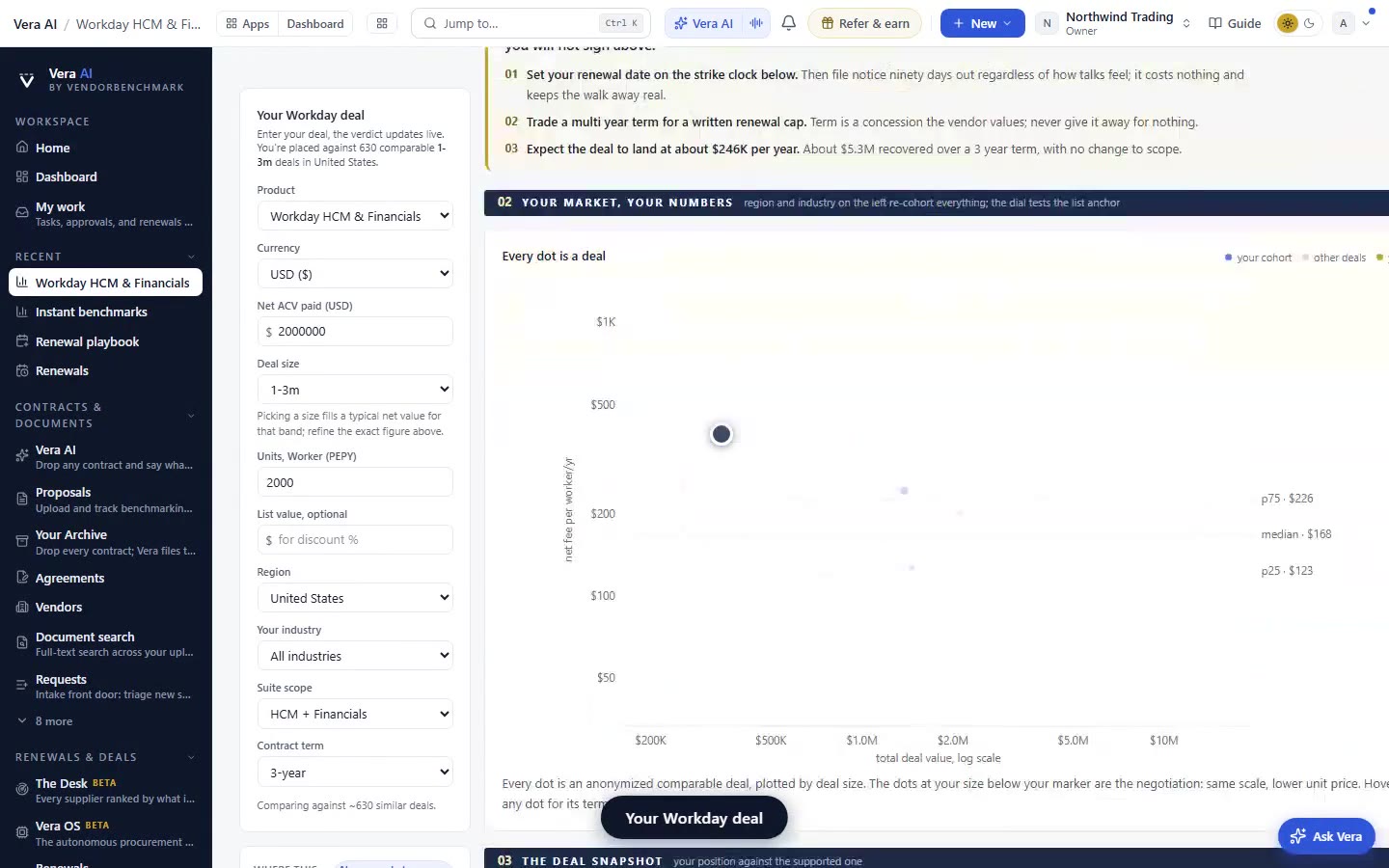
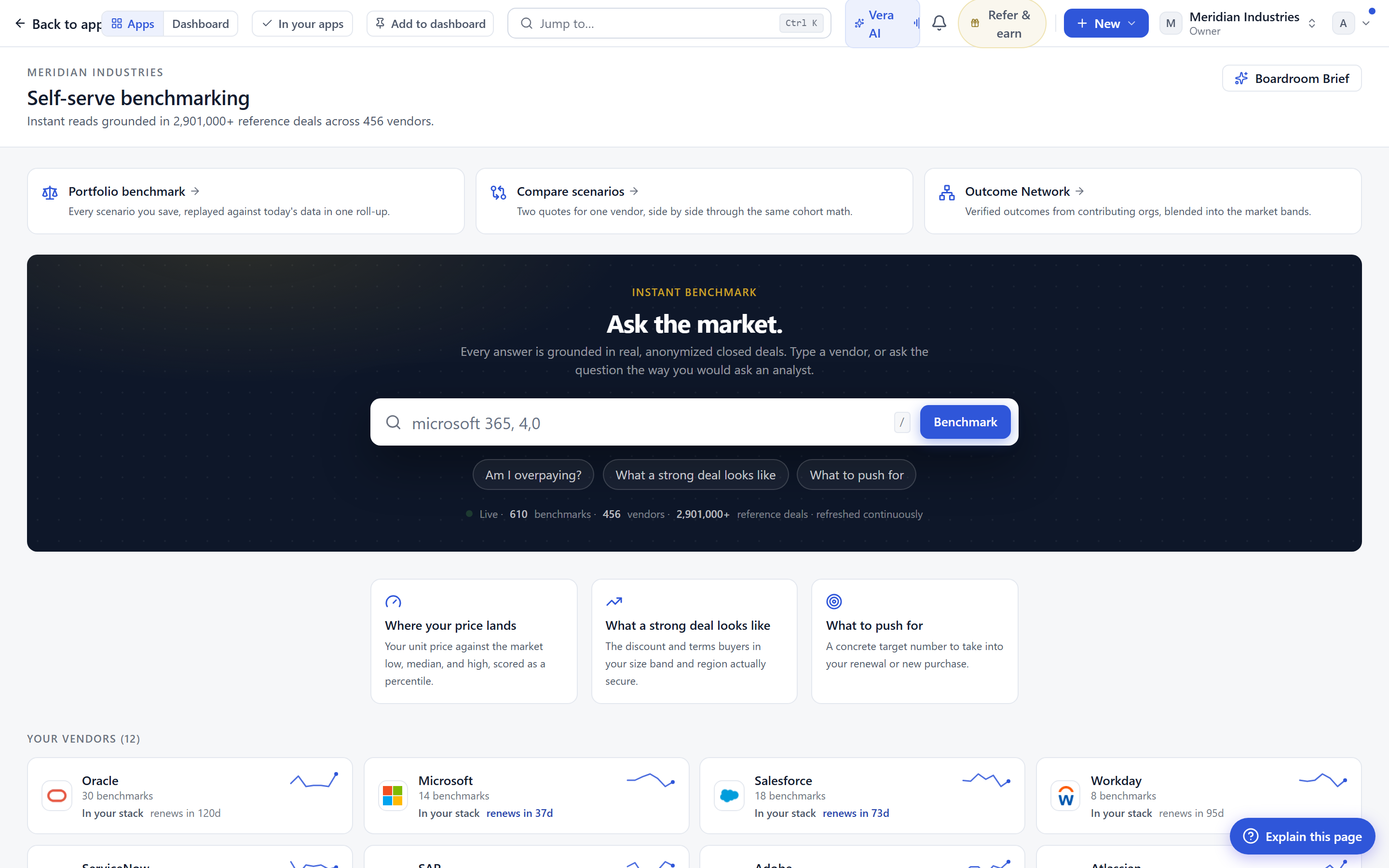
The platform motion is deliberately upstream. Before the requirement is finalised, you price it against a benchmark drawn from documented market evidence, not survey self-reports. That distinction matters more than it sounds, and we made the full case in survey benchmarks flatter everyone. A survey tells you what people say they paid. A closed transaction tells you what a comparable buyer actually agreed to. Only one of those is a defensible anchor.
What you get back is not a single point but a range with percentiles. If you have not internalised what a percentile position means for your negotiation, how to read a percentile is worth ten minutes, because the whole method here depends on treating the market as a distribution rather than a target. The invented budget was a point. The benchmark is a spread, and your job is to place the requirement inside it on purpose.
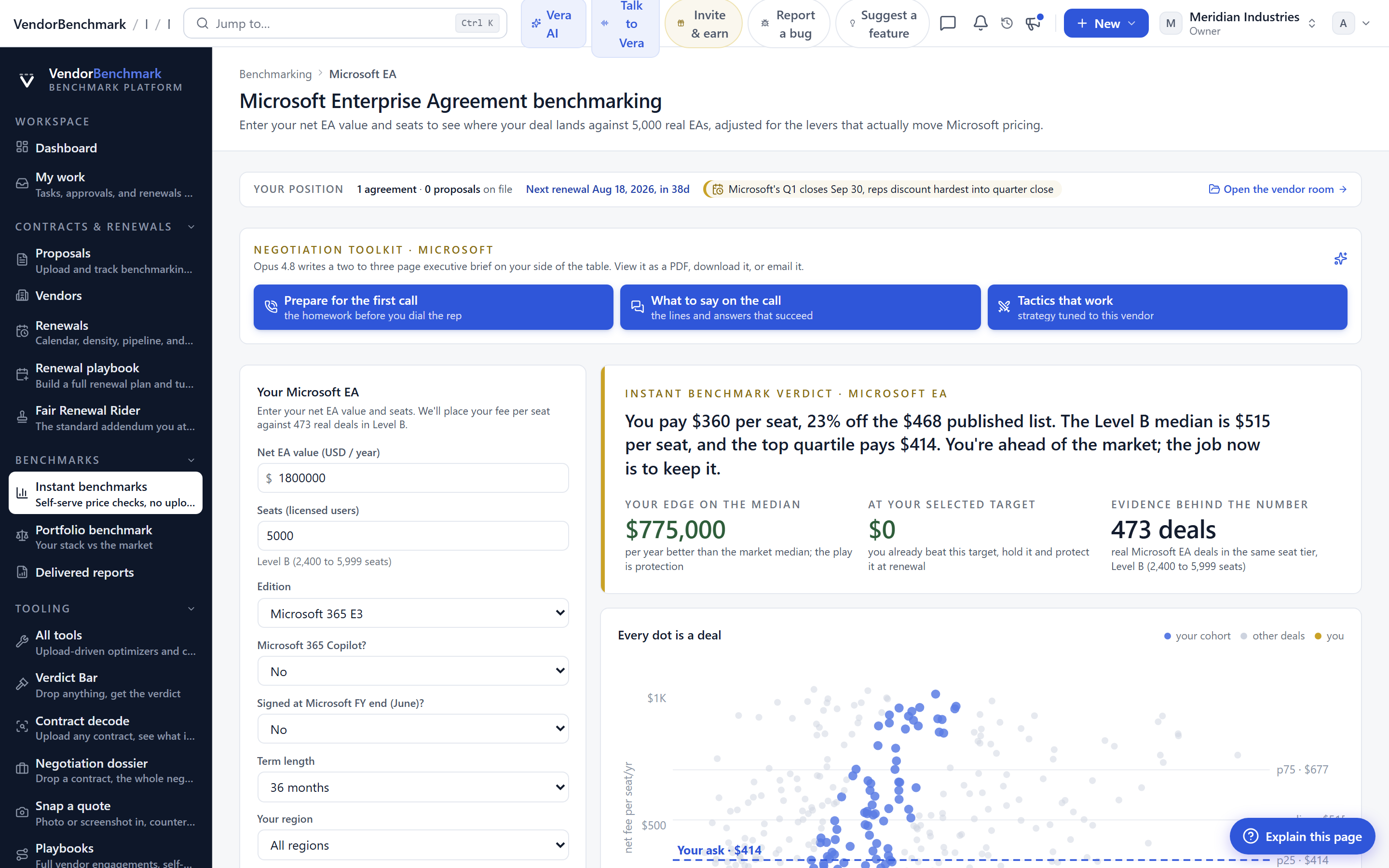
With the range in hand, the intake conversation inverts. Instead of finance asking you to justify a number, you hand finance a market band and a recommended position inside it. The approved budget becomes a decision made against evidence, which means the negotiation that follows is anchored to something real. When the vendor quotes high, you are not arguing from a placeholder, you are showing them where comparable buyers landed.
What this does to the negotiation that follows
A budget set from a benchmark changes the shape of the whole engagement. Your target is defensible, so you hold it under pressure. Your walk-away is grounded, so you know when a scope trade is genuinely worth taking versus when you are just being squeezed. And when the deal closes, you can measure the outcome against a real market range instead of against the fiction you started with. That last point compounds. Every deal priced this way makes the next one sharper, which is the argument behind our downturn playbook for cutting spend without cutting capability.
What benchmarking does not fix
Be honest about the edges. A benchmark tells you where comparable deals close, but it cannot tell you that you need the product, or that the scope you specified is the right scope. If the requirement itself is bloated, a perfect price on the wrong bundle is still waste. Benchmarking prices what you are buying, it does not decide whether you should buy it.
It also cannot fully account for the parts of a deal that are not price. Terms, support levels, migration cost, and lock-in all move the true value of an agreement, and two deals at the same net unit price can differ sharply once you read the fine print. The benchmark anchors the number. The contract work still has to happen, and a strong price attached to weak terms is a fragile win.
And a range is a distribution, not a guarantee. Your specific deal can land outside the typical band for legitimate reasons, unusual volume, an atypical term length, a genuinely differentiated requirement. The benchmark makes those cases visible and forces you to justify them, which is the point. It does not remove your judgement. It just makes sure your judgement is exercised against reality instead of against a number someone typed into an intake form because the field would not let them leave it blank.
Want to be updated when major licensing and pricing changes land? One analyst brief a week: the price rises, metric changes and audit campaigns that move software costs. Work email only.
Morten brings two decades of enterprise and software procurement, with stints across Oracle, IBM, SAP, and Salesforce shaping how he reads a deal. He has led sourcing through hundreds of renewals, from mid market order forms to nine figure global agreements, and learned that the buyers who win are the ones who walk in knowing the market. He built VendorBenchmark to make that pattern recognition repeatable.