The paper is redlined: the decode now marks up the document itself
The decode no longer sits next to the contract. It marks the contract. Strikeouts on the page, replacement wording in the margin, and a note on every mark.
There is a familiar gap in the buyer's day. You read a decode, you understand which clauses are hostile, and then you open a second window to actually do something about it. The findings live in one document and the contract lives in another, and you become the bridge between them. You copy a concern, you find the paragraph it refers to, you draft a counter, you keep a running list of what you have handled and what you have not. The analysis was fast. The transcription of that analysis onto the paper was not. This update closes that gap. When you open a decode now, the paper itself is redlined. The document carries the marks.
The named problem: analysis that stops one step short
We have written before that the answers sit on the paper, and that the decode reads on the page with your next steps beside it. Both were about removing the second window. But there was still a residual chore. Knowing that a clause is off market is one thing. Turning that knowledge into a tracked change the vendor's counsel will actually read is another. That last step, the drafting of replacement language and the mechanical marking of the document, was still yours. For a mid sized MSA that is an afternoon of careful, low leverage work. It is the kind of task that gets skipped when the quarter is busy, which means known problems ship into signed contracts because nobody had the hour to redline them.
The point of a decode was never to produce a reading. It was to change the paper. So the decode now produces the changed paper.
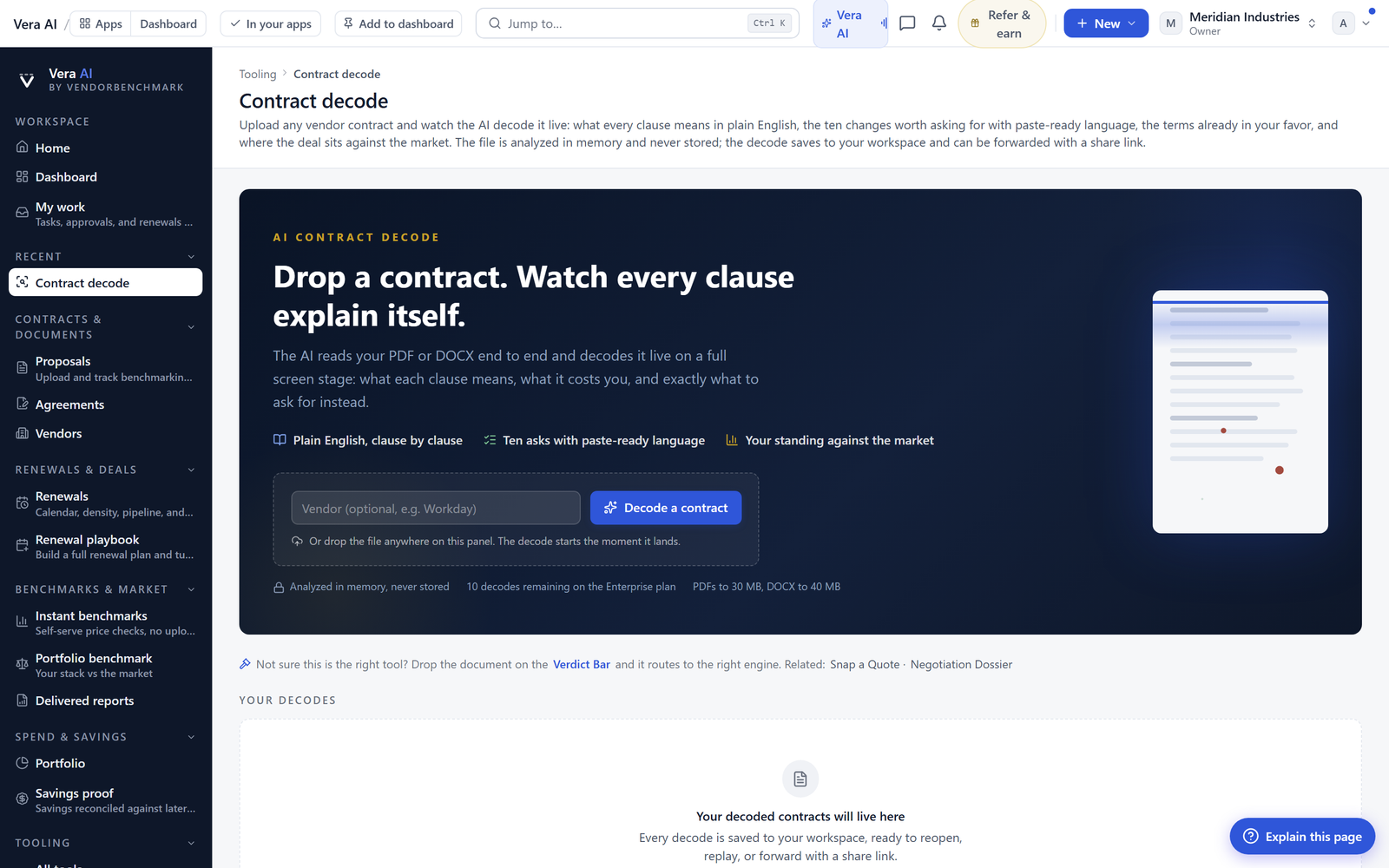
How the marks behave: proposed until you accept
Every mark on the page is a proposal, not a decision. The ask is struck through, the replacement language sits beside it, and the mark stays in a proposed state until you act on it. You accept the ones you want. You disregard the ones you do not, and they leave no trace on the exported file. This matters because the buyer, not the tool, owns the position. The decode reads the benchmark library against the paper and suggests where the language drifts from market, but the judgement about which fights to pick is yours. A strikeout you never accept is simply advice you declined.
You can also add your own. Select any passage and mark it, and your redline joins the proposed ones with the same behaviour. That is the important detail for anyone who has a real playbook. The model will catch the well known traps, but you know your organisation's particular scars, the indemnity carve out that burned you last year, the data residency line your security team insists on. Those go in by selection, and they export in the same format as everything else. If you maintain positions centrally, the clause library that argues your playbook is where those preferred phrasings live, and the redlines draw on them.
What you hand back: the redlined file with a note on every mark
When you are done, the tool hands you the redlined file. Not a summary of changes, not a list of recommendations, the actual document with the same strikeouts you saw on screen and a note on every mark explaining why it is there. That note is the part that changes negotiations. Vendor counsel reads a redline faster when each change carries its reason, because the argument is already made in the margin. This is the same instinct behind challenging the vendor paper in its own margins, extended so the whole decode produces one clean file rather than a set of notes you assemble yourself.
The file is standard tracked changes. It opens in the tools your legal team already uses. Nothing about the handoff assumes the vendor runs VendorBenchmark. You send the paper back the way you always have, except this time the markup took twenty minutes instead of an afternoon and every mark is defensible.
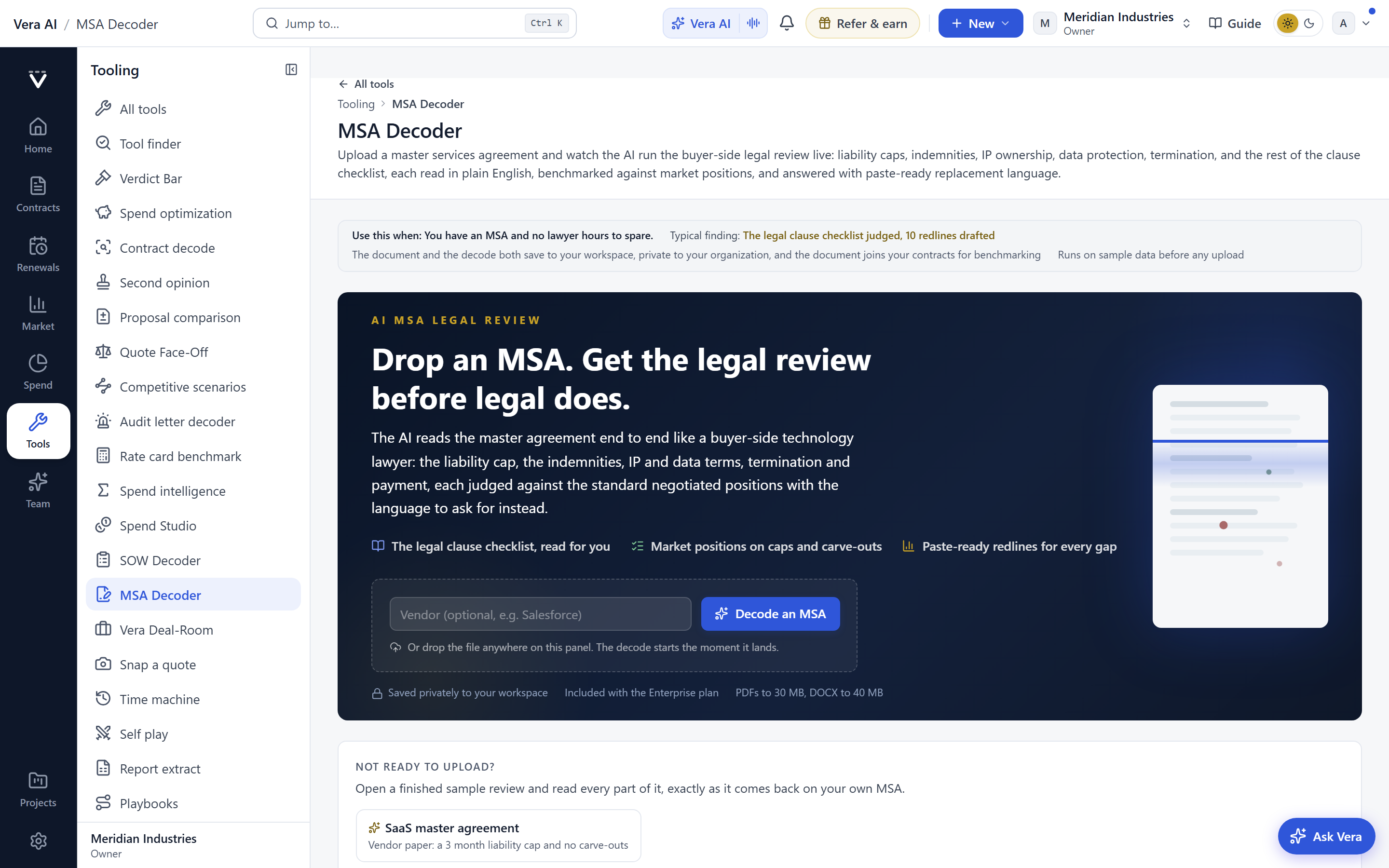
The same behaviour across three agents
The Contract agent, the SOW agent, and the MSA agent all work this way now. That consistency is deliberate. A statement of work has different pressure points than a master agreement, milestone acceptance and change control versus limitation of liability and renewal mechanics, but the mechanic of interacting with the paper should not change depending on which document you opened. Strike, propose, accept or disregard, add your own, export. The muscle memory is the same across all three, which is what makes it usable under deadline. These three sit among the six specialist agents on the platform, and the redline behaviour is now their shared default.
The honest limits
Three things this feature does not do, stated plainly. First, it does not know your organisation's private thresholds unless you tell it. The replacement language is benchmarked to market, but market is not the same as your risk appetite. A clause can be at the median and still be wrong for you, and the tool will not catch that automatically. The add your own path exists precisely because the model cannot read your internal policy.
Second, it proposes wording, it does not practise law. The notes explain the commercial reasoning behind each mark. They are not legal advice and they do not replace review by counsel on anything material. Treat the redlined file as a strong first draft that gets your legal team to the substance faster, not as a signed off position. On a large or unusual agreement, the human review still happens. The feature moves where the effort goes, from mechanical markup toward judgement.
Third, it works on the paper in front of it. If the vendor sends a version with clauses buried in an appendix or referenced in a separate document, the decode marks what it can see. As with every upload that gets the two minute read, completeness depends on giving the agents the complete document set. Give it the whole paper and it redlines the whole paper. Give it a fragment and you get a fragment back.
None of these limits are new. They are the standing boundaries of any tool that reads contracts. What has changed is the distance between reading a problem and acting on it. That distance was an afternoon. Now it is the length of your attention span. For a procurement function that signs dozens of papers a quarter, that is the difference between redlining everything and redlining only what you had time for.
Fredrik has spent more than twenty years in enterprise software, with time at Oracle, IBM, SAP, and Salesforce before moving to the buy side. He structured and priced the kind of large agreements most buyers only see once or twice in a career, which taught him where the leverage sits and how far a vendor will actually move. He started VendorBenchmark to hand that knowledge to every sourcing team.


