Your position, in writing: the clause library that argues your playbook.
Most contract AI gives every company on earth the same generic review. Your legal team does not want generic. It wants its own position, its own fallback wording, and its own walk away, applied the same way on every deal. That is what a clause library is for.
Ask a general purpose AI to review a contract and it will give you a competent, generic opinion: this liability cap is low, this indemnity is one sided, you might want to negotiate the auto renewal. All true. All the same advice it would give any company reviewing any contract. And none of it knows the one thing that matters most, which is what your organization has already decided it will and will not accept.
Real legal teams do not improvise position by position on every deal. They have a playbook: the clause we must have, the wording we prefer, the fallback we will live with, and the point past which we walk. The problem has always been getting that playbook applied consistently, on the four hundredth contract as carefully as the first, by every reviewer and every tool. A clause library is that playbook, written down once and enforced everywhere.
A position, not an opinion
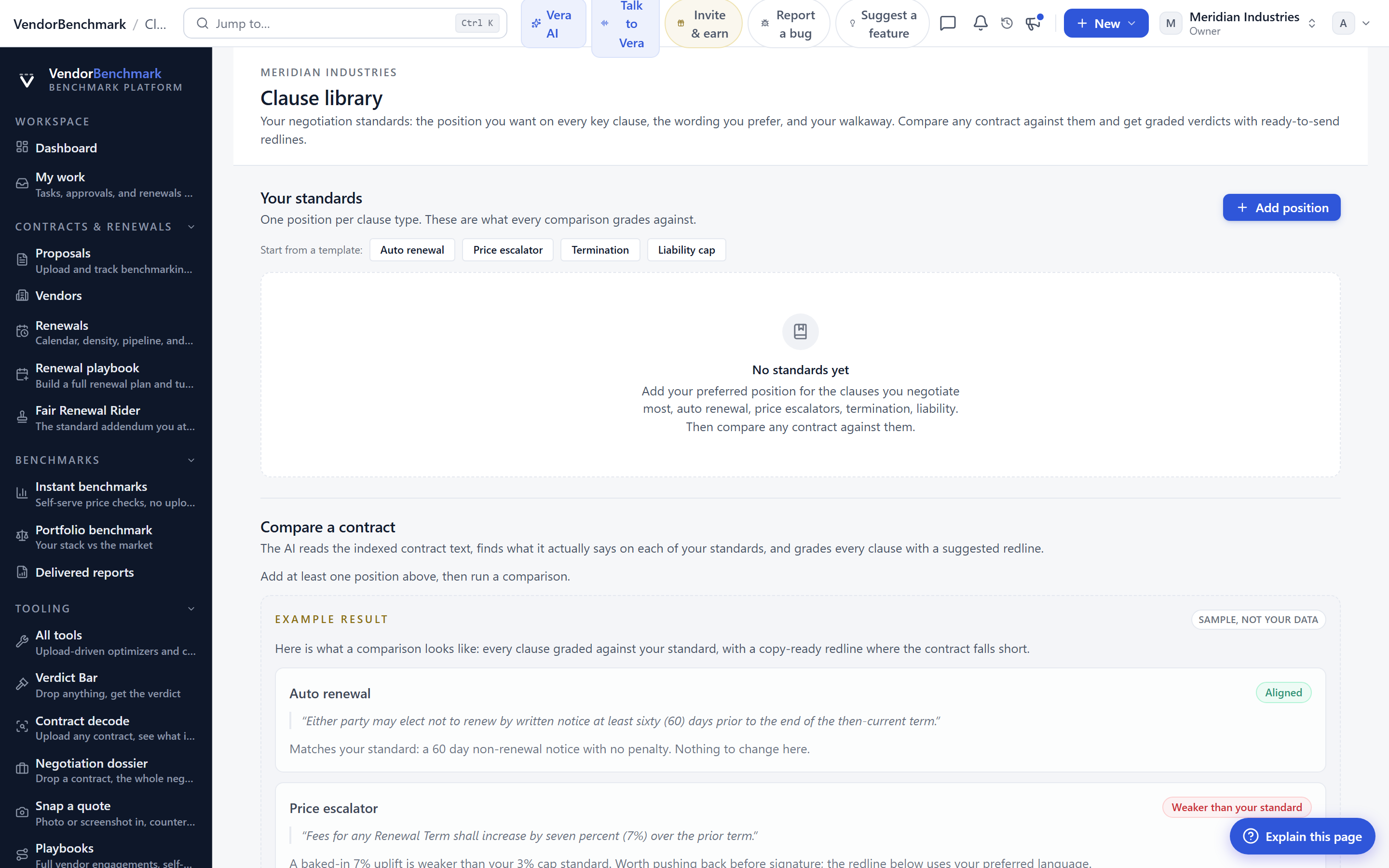
Each entry in the library is a clause position, and it holds more than a preference. It carries whether the clause is a must have, the preferred language you want in the contract, the fallback language you will accept if pushed, the point at which you walk away, and the rationale that explains why. The platform ships a starter library of twenty one VendorBenchmark positions covering the clauses that decide most software deals, liability, indemnity, price protection, data, termination, so you are editing a real playbook rather than staring at a blank page.
The shift is from opinion to instruction. A generic reviewer tells you a clause is weak. A clause position tells the reviewer what your company considers acceptable, what wording to propose instead, and when the answer is simply no. It turns scattered institutional knowledge, the things your best negotiator carries in their head, into a resource the whole team and every engine can draw on.
Every engine argues from the same book
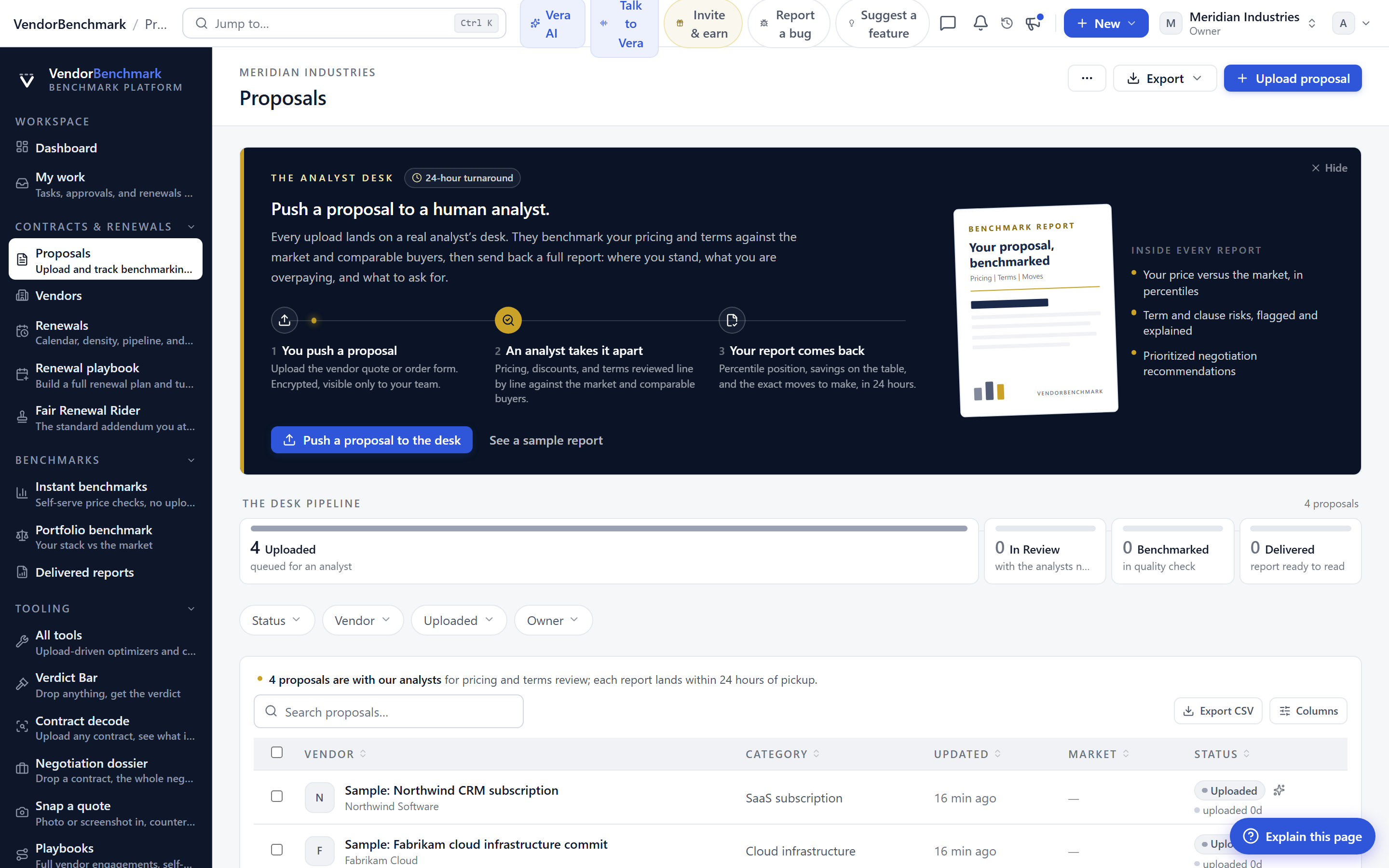
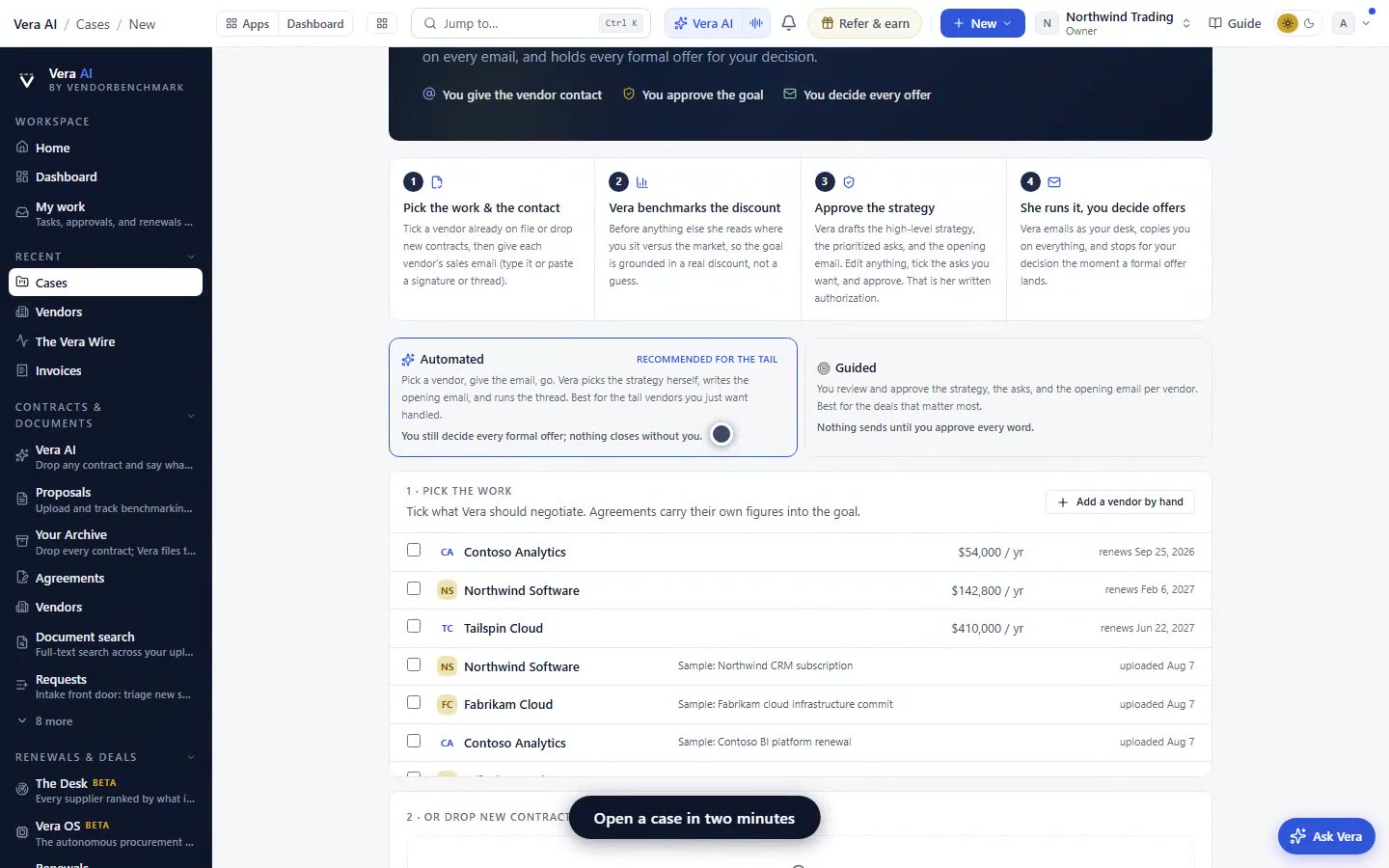
A playbook that only humans read is a playbook that gets skipped under deadline. So the clause library feeds the AI directly. Every contract review engine loads your positions before it runs: the proposal scanner flags deviations against your standard, the redline drafter proposes your pre-approved wording verbatim rather than inventing new phrasing, and the counter offer composer argues from your fallback ladder instead of generic best practice.
This is the difference between advice and representation. The AI stops telling you what a reasonable company might want and starts arguing what your company has already decided it wants, in your own words. When it proposes replacement language, that language is the wording your legal team pre-approved, so a redline can go out without a fresh legal review of every sentence.
The gaps you did not know you had
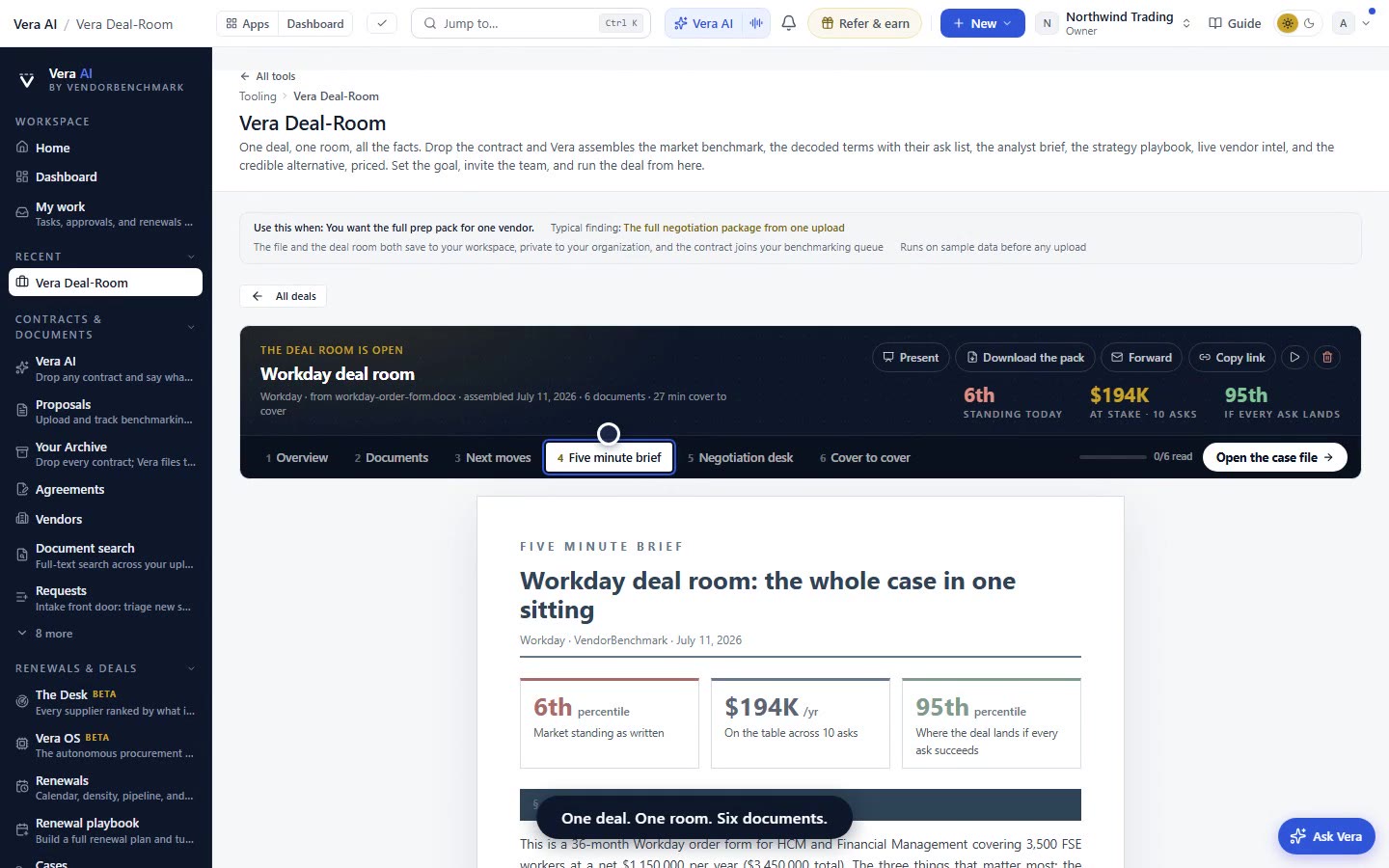
Once your positions are written down, a new question becomes answerable: which of our existing contracts fall short of them? The must have coverage grid runs your library against the whole estate, contracts down the side, positions across the top, and marks where a required protection is missing. A liability cap you insist on in new deals but never checked for in the ones you already signed shows up as a row of red.
That grid is where the playbook pays off retroactively. It turns "we have standards" into "here are the eleven live contracts that do not meet them," which is a list you can actually work, prioritized before the next renewal opens each one back up.
Four fields that change every review
The library holds the line, a lawyer draws it
A clause library does not replace legal judgment, and it does not write your positions for you. The starter set is a sensible default, but the value comes from your team encoding what your organization actually requires, which is a legal decision, not a software one. Garbage positions in, generic review out.
What it does is make good judgment repeatable. The position your best negotiator would have taken gets taken on every deal, by every reviewer and every engine, in your own approved words. The line stays where your lawyers drew it, and it stops moving just because it was a Friday and nobody had time to check.
Morten brings two decades of enterprise and software procurement, with stints across Oracle, IBM, SAP, and Salesforce shaping how he reads a deal. He has led sourcing through hundreds of renewals, from mid market order forms to nine figure global agreements, and learned that the buyers who win are the ones who walk in knowing the market. He built VendorBenchmark to make that pattern recognition repeatable.
The week in enterprise software buying, in one email.
What shipped on the platform, and the pricing and licensing moves worth knowing before your next renewal. One email a week, to your work address. Unsubscribe any time.