The AI redline: challenge the vendor paper in its own margins.
A contract review that produces a memo produces homework. A review that produces a redline produces a document you can send back. Here is how AI reads the vendor paper, anchors every objection to the exact clause, and returns tracked changes in your own approved wording.
There is a meaningful difference between a contract review and a contract redline, and it is the difference between advice and action. A review is a memo: here are the clauses we do not love, here is roughly why, good luck. Someone still has to open the document, find each clause, decide the new wording, and mark it up. A redline skips all of that. It is the vendor's own document, marked with what you want changed, in your words, ready to send back. One is homework. The other is a move.
Most contract AI stops at the memo, because producing a real redline is harder. It requires reading the actual paper, not a summary, pointing at the exact language rather than paraphrasing it, and proposing replacement wording precise enough to stand as a legal edit. That is the bar the AI redline is built to clear.
Every objection anchored to the exact words
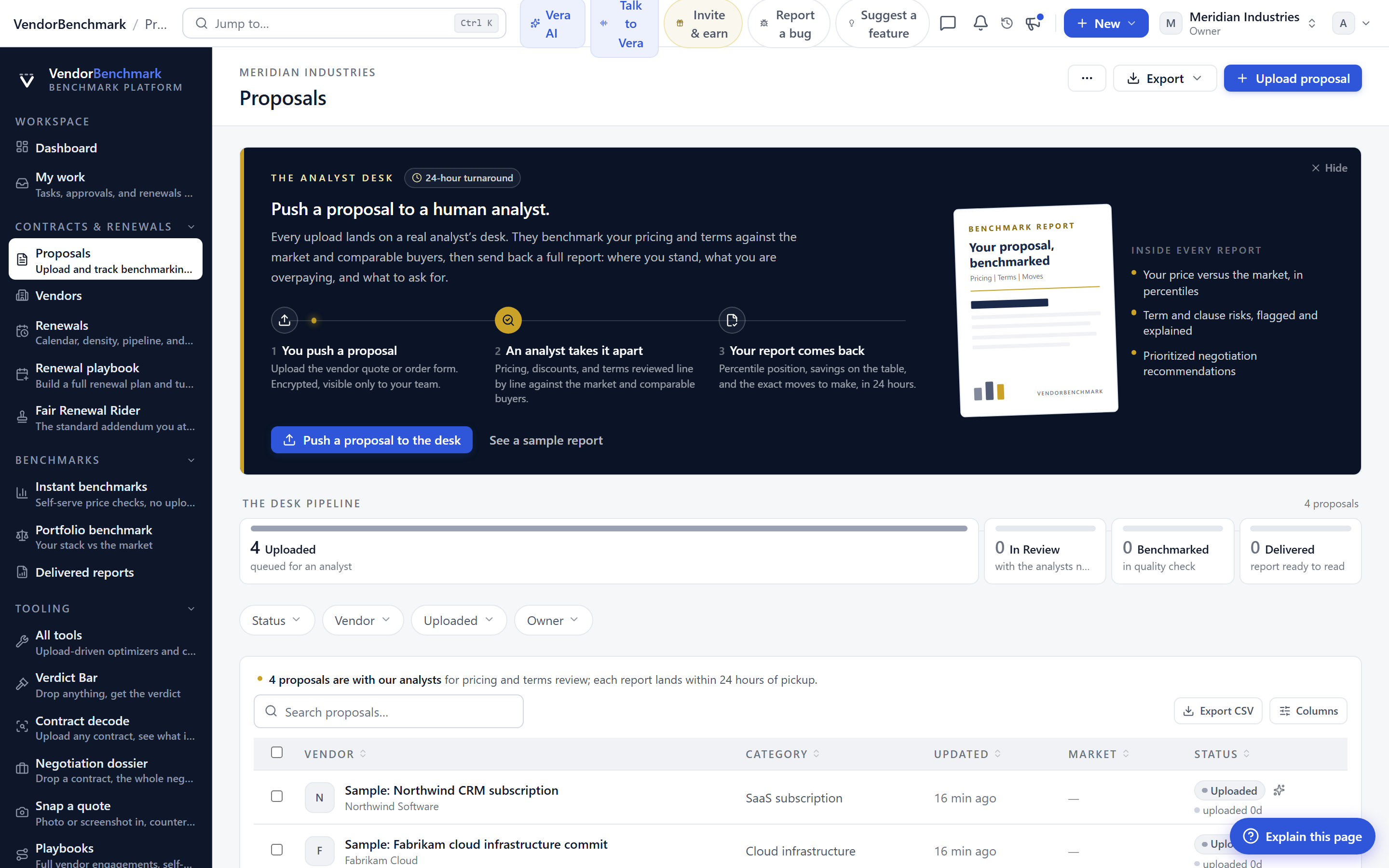
The review reads the vendor's contract and returns findings, and the discipline is that every finding carries a verbatim quote of the offending clause and the page it sits on. Not "the liability section is weak," but the precise sentence, lifted exactly, located in the document. In the PDF viewer those quotes are matched against the page and highlighted in place, colored by severity, and linked both ways with the findings panel, so a finding and the words that triggered it are never more than a click apart.
Anchoring to the exact words is what makes the objection unarguable. A vendor can wave away a general concern about risk. It is much harder to wave away their own sentence, quoted back to them, with a specific problem attached. The review turns a vague unease into a list of exact places in the paper where your position and theirs diverge.
Redlined in your words, not generic ones
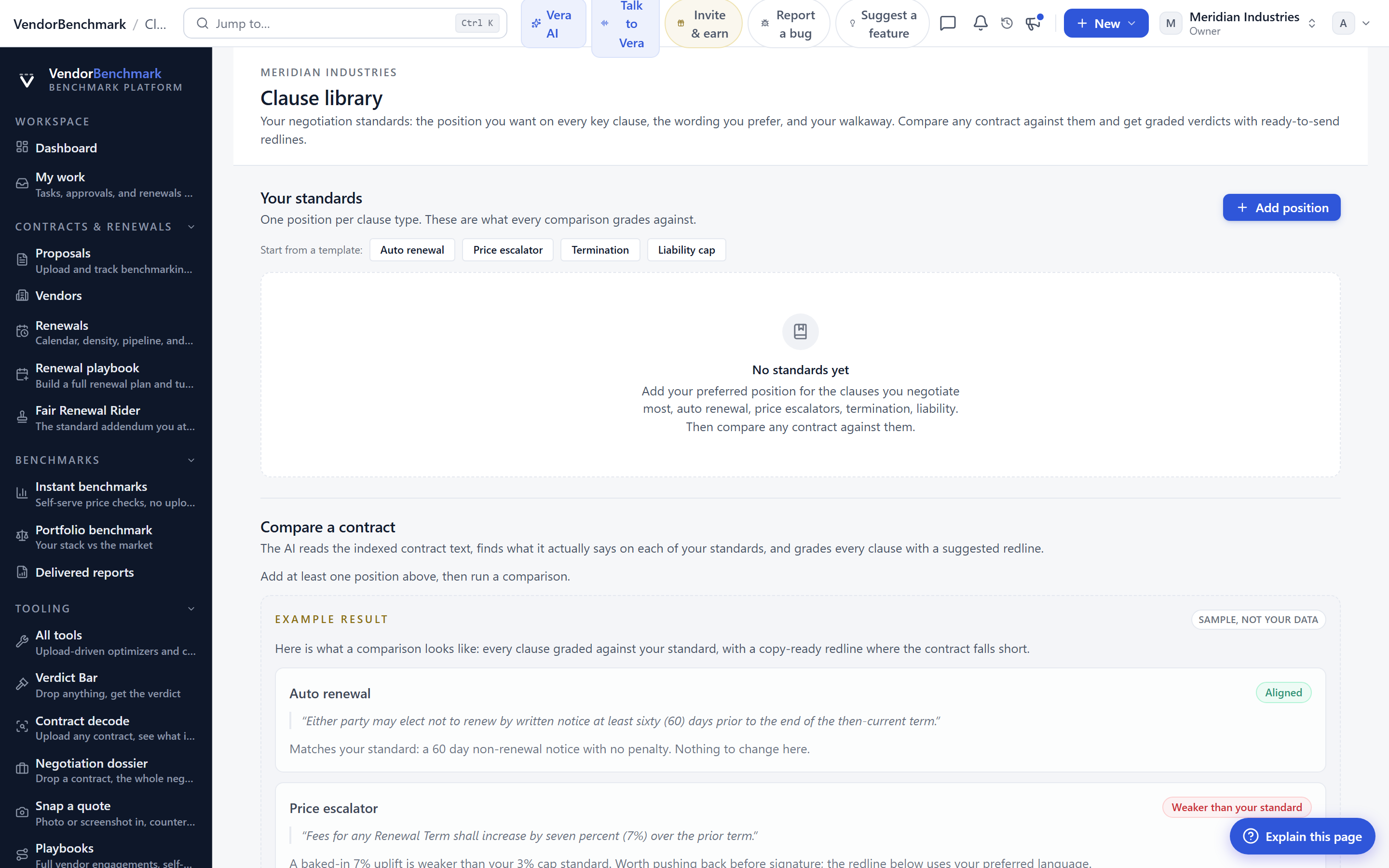
A finding tells you a clause is a problem. A redline tells the vendor what you want instead, and this is where the review draws on your clause library. When a finding maps to a position you have pre-approved, the proposed change is your standard wording, inserted verbatim, rather than a fresh sentence the AI improvised. The objection is not "make this more balanced," it is your exact fallback language, dropped into their paper.
For a Word contract, that comes back as a proper tracked changes document: deletions and insertions marked the way a lawyer would mark them, so the vendor opens a file they can accept or reject clause by clause, with margin comments where a rewrite is not clean. It is the vendor's own document, edited, not a separate list of demands they have to reconcile against it by hand.
Want to be updated when major licensing and pricing changes land? One analyst brief a week: the price rises, metric changes and audit campaigns that move software costs. Work email only.
Fast first, thorough underneath
A redline is only useful if it arrives while you are still reading the contract, so the review runs in two passes at once. A fast pass returns a preliminary read almost immediately, enough to start triaging, while a deeper pass works underneath and replaces it with the thorough version. You are not staring at a spinner, and you are not trading depth for speed. You get a quick answer now and a careful one moments later.
The whole thing runs as a background job, so a long contract does not tie up your screen, and reopening the review joins the work already in flight rather than starting it again. Findings can be filtered by severity, dismissed, or marked actioned, so a second reviewer picks up exactly where the first left off instead of re triaging the pile.
From memo to marked-up document
The redline drafts, counsel signs
An AI redline is a first draft with your fingerprints on it, not a substitute for legal review. It marks up the paper using positions your team defined and language your team approved, which is precisely why it is fast to check: you are reviewing whether the machine applied your playbook correctly, not whether an unfamiliar opinion is any good. A clause the AI cannot cleanly rewrite it flags for a human rather than guessing.
What changes is where the lawyer's time goes. Instead of spending the first hours finding the problems and drafting the edits, counsel spends them judging edits already drafted in the firm's own language. The tedious part is done, anchored, and marked. The judgment, which was always the point, is where the human attention lands.
Fredrik has spent more than twenty years in enterprise software, with time at Oracle, IBM, SAP, and Salesforce before moving to the buy side. He structured and priced the kind of large agreements most buyers only see once or twice in a career, which taught him where the leverage sits and how far a vendor will actually move. He started VendorBenchmark to hand that knowledge to every sourcing team.
The week in enterprise software buying, in one email.
What shipped on the platform, and the pricing and licensing moves worth knowing before your next renewal. One email a week, to your work address. Unsubscribe any time.