Every upload gets the two minute read
The first read used to fire once per organization. Now it fires on every real contract you add, at no cost to your decode allowance.
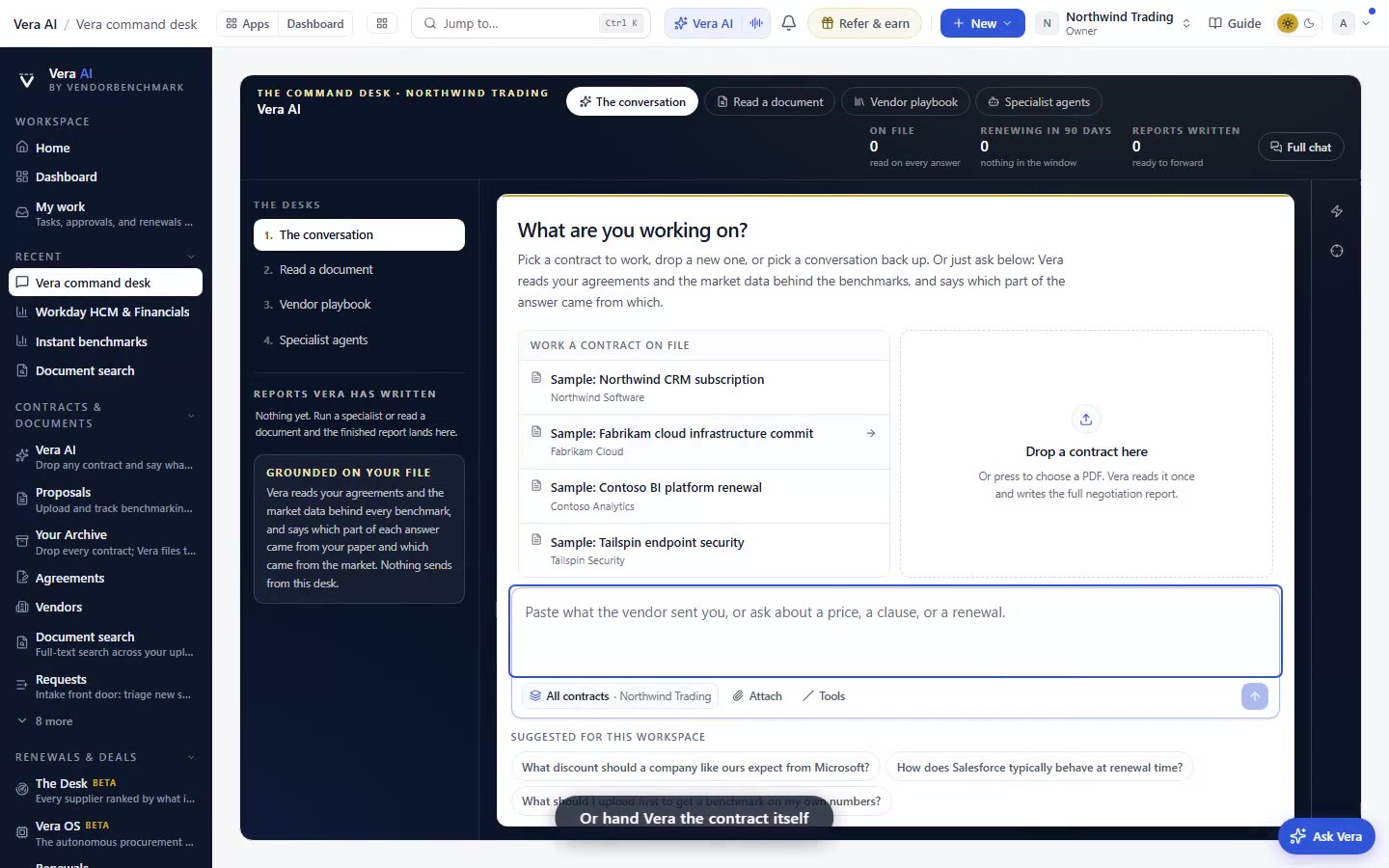
Here is a problem most procurement teams have quietly accepted. You upload a contract, the record lands in the system, and then you sit down to read it yourself. The first read we ship, the two minute read that tells you where the paper stands against market and where the money is, used to run only once per organization, on the very first upload. Every contract after that opened cold. You were back to reading forty pages of vendor paper with a highlighter, which is exactly the job you bought a benchmarking platform to shrink. We changed that. The first read now runs on every real contract you add.
The named problem: the cold record page
Call it the cold record page. You drop a new MSA or order form into the estate, the file processes, and you get a tidy record with parties, dates, and a document viewer. What you do not get, until you go and ask for it, is a point of view. Is this renewal five points over market or five points under? Is the auto-renewal window sixty days or ninety, and have you already missed it? Where are the dollars actually sitting? Historically only the first document your organization ever uploaded got that treatment automatically. Everything after it waited for you to spend a decode, or waited for you to read it by hand. That is a workflow gap, and it showed up as the same twenty minute manual triage repeated per contract, per week, per buyer.
We wrote about the shape of this read before in the decode reads on the page, with your next steps beside it. The mechanism was solid. The coverage was the issue. It ran once and then stopped working for you.
What the two minute read actually contains
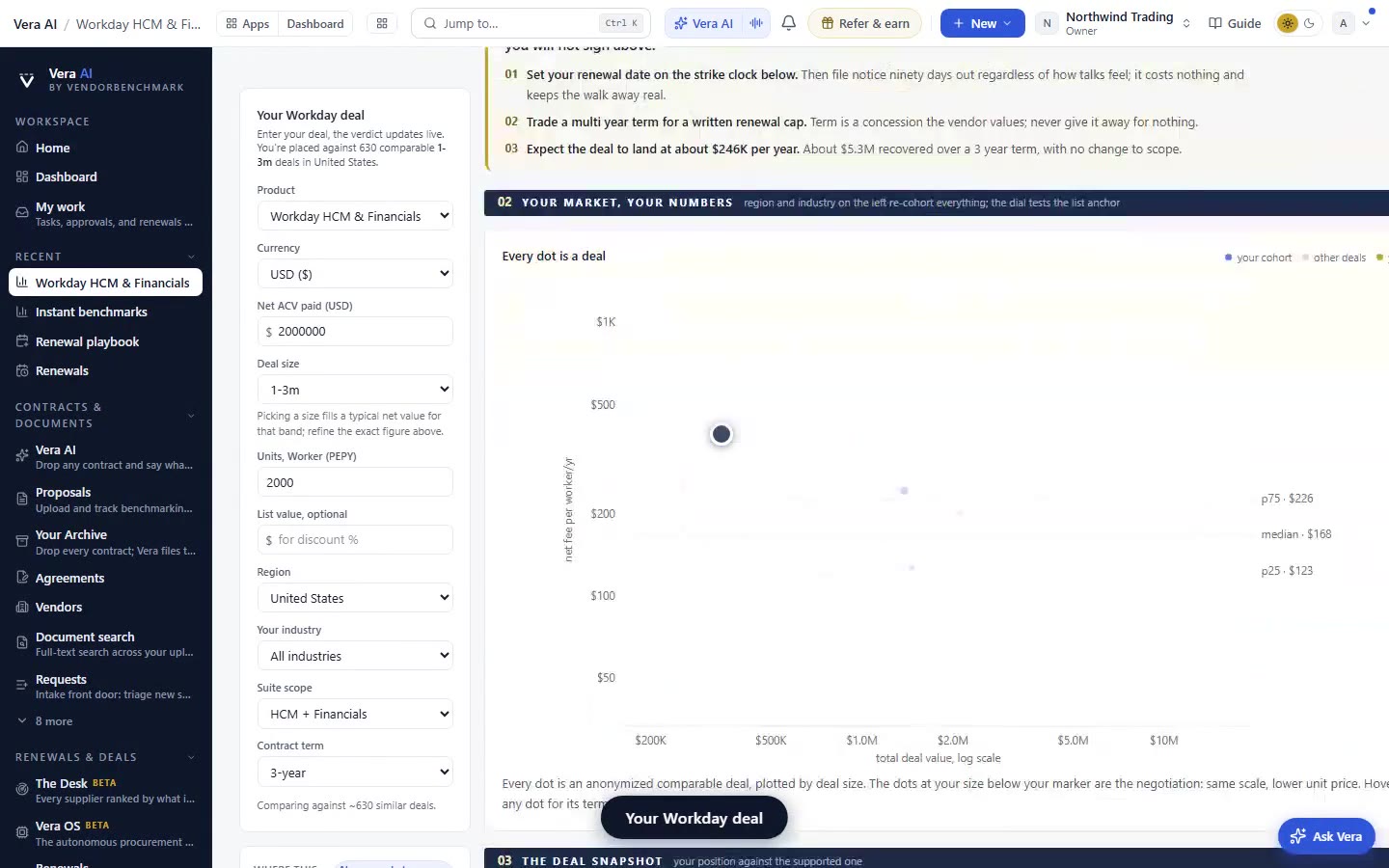
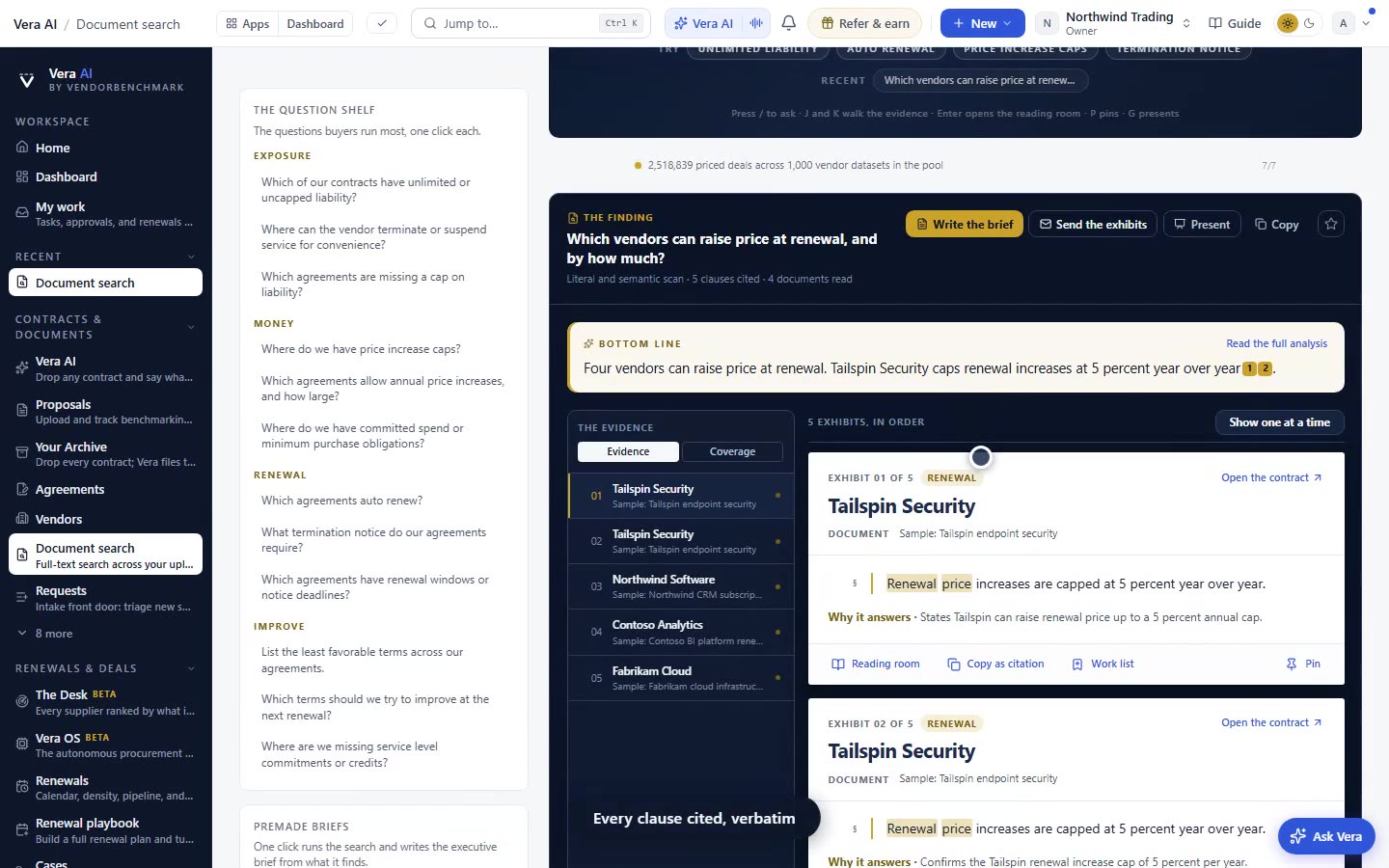
The read is not a summary and it is not a chat answer. It is a positioned reading. Four things arrive on the record page. First, market standing, which places the deal against comparable transactions so you know whether the number in front of you is aggressive, fair, or a gift to the vendor. Second, dollars on the table, the specific line items where the gap between this paper and market is measurable in money. Third, the fixes worth making, ranked so you are not chasing a two hundred dollar clause while a fifty thousand dollar uplift cap sits unchallenged. Fourth, the reading itself, in plain language, on the page, not buried in a file.
If you have read our note on why AI reports beat AI answers, this is the same principle applied at the moment of upload. You get a deliverable, not a prompt box. The read draws on the same benchmark spine as the rest of the platform, so the market standing is not a guess, it is a percentile position against comparable deals.
It no longer costs you a decode
This is the part your plan owner will care about. The included first read no longer spends your decode allowance. Previously, if you wanted a positioned read on the second contract onward, you spent a decode to get it. Now the automatic first read is on the house for every real contract you add, and your decode allowance is reserved for the deeper work you choose to run. That matters because it removes the small internal accounting friction that made buyers skip the read to save the credit. When the read is free and automatic, it becomes the default, and the default is where the value compounds. The mechanics of how a decode files the contract and queues the deeper work are covered in decodes keep the document, file the contract, and queue the benchmark.
How it fits the workflow
The sequence is deliberately dull, which is the point. You go to /contracts/new, drop the paper, and carry on with your day. About two minutes later the record page carries the read. You do not schedule anything, you do not open a chat, you do not pick a report type. For teams running renewal cycles, this means every contract that lands in the estate is pre triaged before a human touches it, which changes how you approach the calendar. If the auto-renewal window is the thing that keeps catching you, the read now flags it on arrival rather than at the moment you finally open the file, and you can pair that with the discipline in the auto-renewal clause: the trap, the window, and the fix.
The honest limits
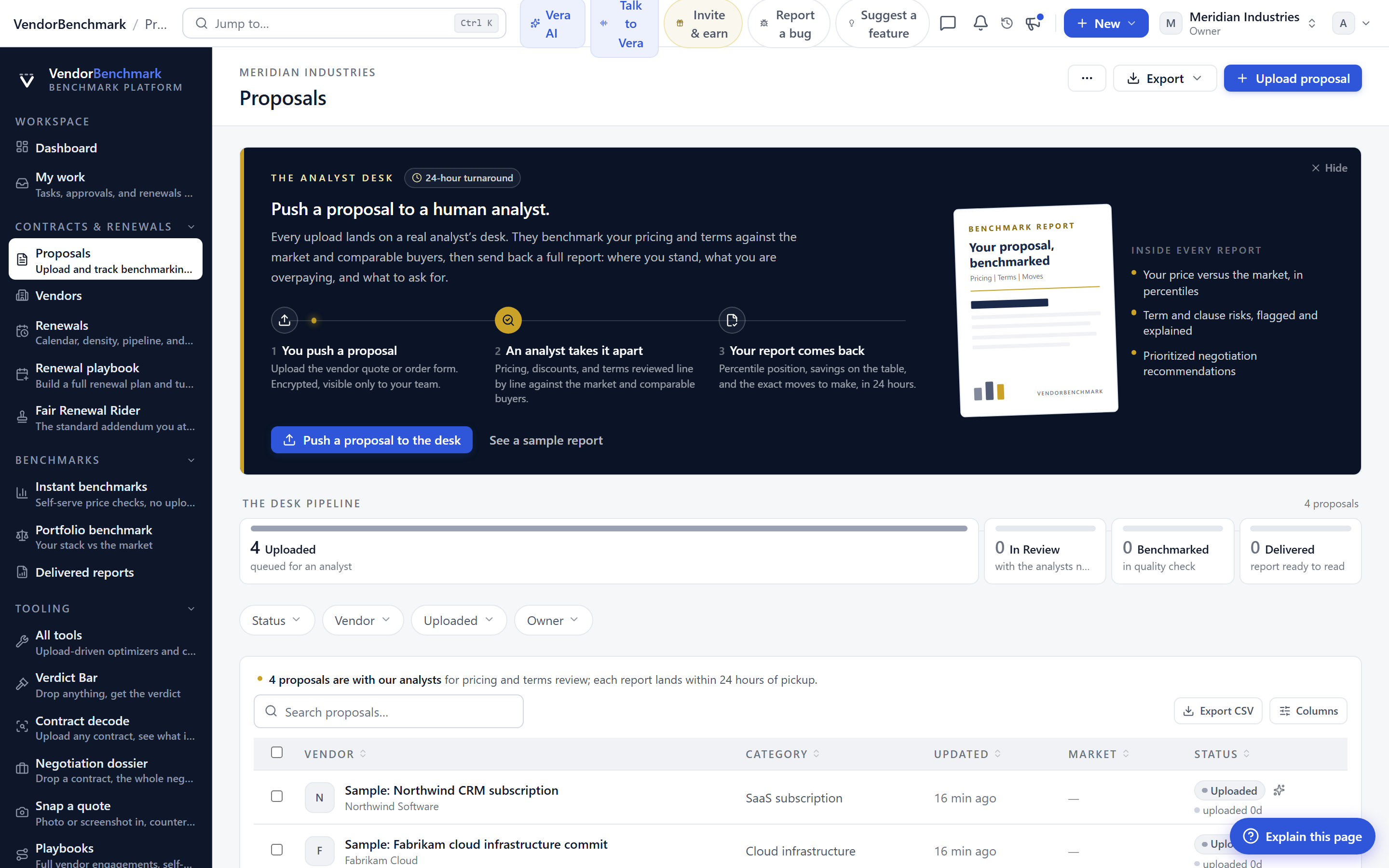
Two things you should hold in mind. First, the two minute read is a first read, not the final word. It positions the deal and points at the money, but the deeper analyst benchmark, the one with the full percentile detail and the comparable cohort, is still being assembled per contract. We do not hide this. The record page now states the delivery date we committed to for that deeper benchmark and shows how the build is tracking against it, so you are never guessing whether the full analysis is coming or when. If it slips, you will see that it slipped. Second, the read only fires on real contracts. A blank template, a duplicate, or a document that does not parse as a contract will not trigger it, by design, because a positioned read on non contract paper would be noise. If the read has not arrived after a few minutes, that is usually the reason, and it is worth checking what you actually uploaded before assuming a fault.
The point of this change is small and specific. You should never again open a contract record page cold. The read is there, it cost you nothing, and it tells you where you stand before you have read a single clause yourself. That is the two minute read, now working on every upload instead of once.
Want to be updated when major licensing and pricing changes land? One analyst brief a week: the price rises, metric changes and audit campaigns that move software costs. Work email only.
Morten brings two decades of enterprise and software procurement, with stints across Oracle, IBM, SAP, and Salesforce shaping how he reads a deal. He has led sourcing through hundreds of renewals, from mid market order forms to nine figure global agreements, and learned that the buyers who win are the ones who walk in knowing the market. He built VendorBenchmark to make that pattern recognition repeatable.