300 vendors, 52 weeks, one team: the renewal calendar problem.
Software budgets rarely die in negotiations. They die in calendars: the notice window that closed quietly, the auto renewal nobody owned, the uplift that compounded because the renewal arrived before the preparation did. Here is the math of the problem, and the shape of a desk that solves it.
Do the arithmetic once and the problem stops being abstract. An enterprise with 300 software vendors and mostly annual terms faces roughly six renewals every week of the year. Each one carries a notice window, typically 30, 60, or 90 days before the term ends, and each window is a one way door. Miss it and the contract renews itself, usually at an uplift the vendor chose, and your negotiating leverage for the next twelve months evaporates before anyone in procurement knew there was a decision to make.
Vendors understand this arithmetic perfectly. Auto renewal clauses, quiet notice periods, and uplift language are not accidents of drafting, they are a revenue strategy that monetizes your calendar chaos. A 7 percent automatic uplift on a contract nobody renegotiates compounds to more than 22 percent over three years, and it never had to survive a single conversation.
The traditional answer is a spreadsheet and heroics. The spreadsheet is stale the week after it is built, ownership lives in people's heads, and the heroics burn out the one person who cares. The problem is not discipline. It is that a weekly, deadline driven workload is being managed with annual review tools.
First, see every deadline in one place
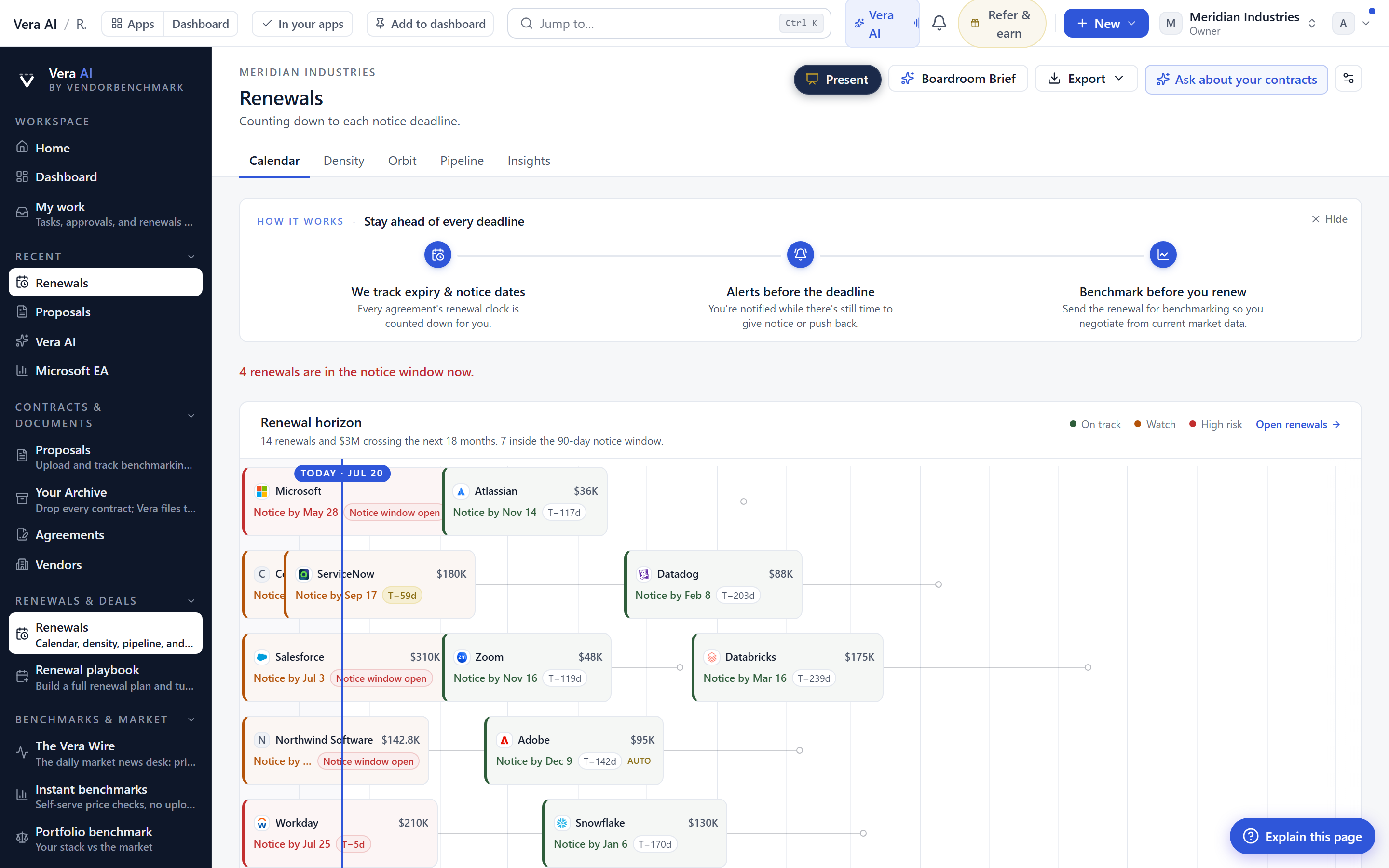
The fix starts with visibility that does not depend on anyone's memory. When contracts land in VendorBenchmark, the AI reads the term, the notice window, and the renewal mechanics out of the documents themselves, and the renewal calendar assembles itself: every deadline for the next 18 months, who owns each one, and a countdown to the date that actually matters, which is the notice deadline, not the end date.
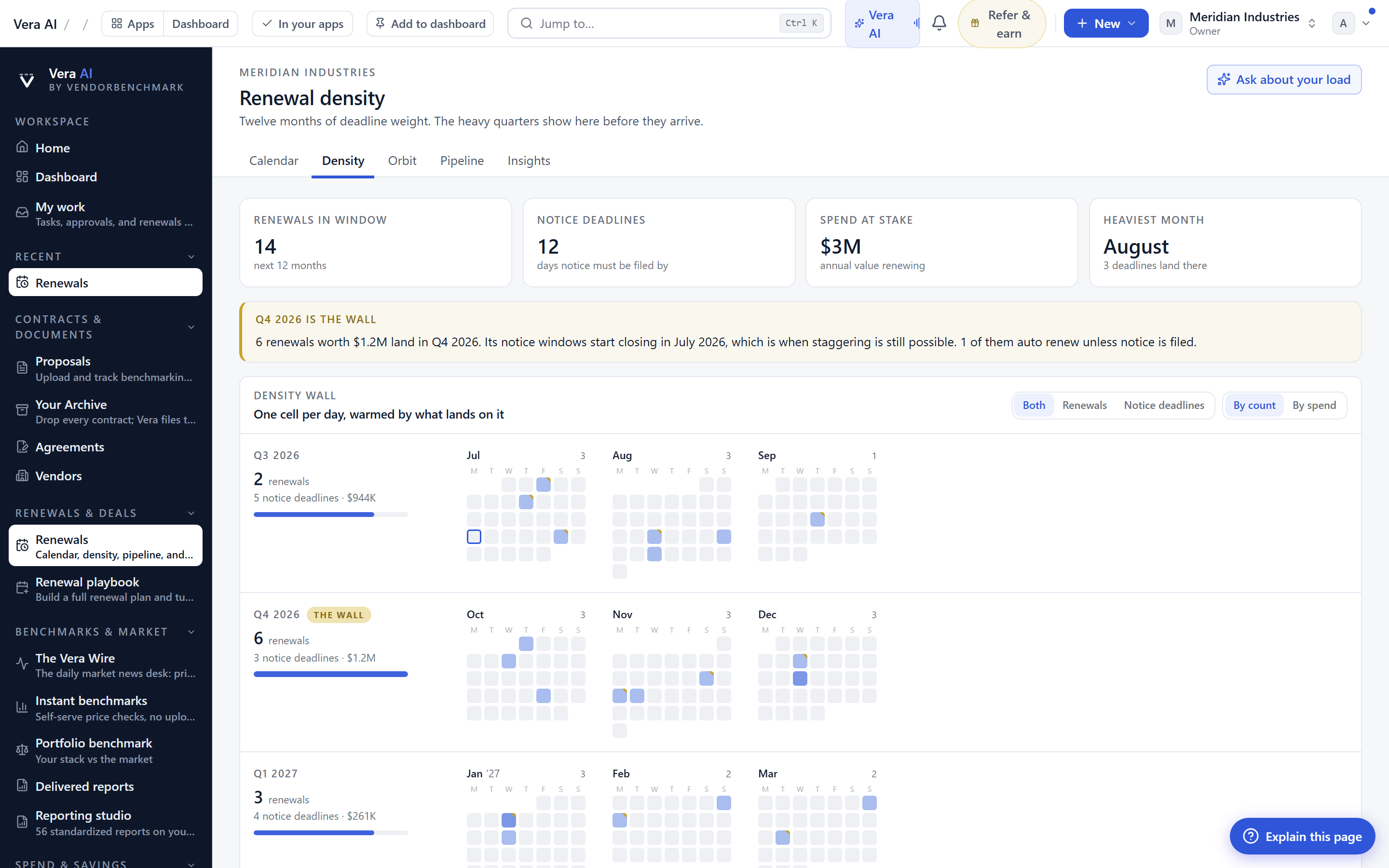
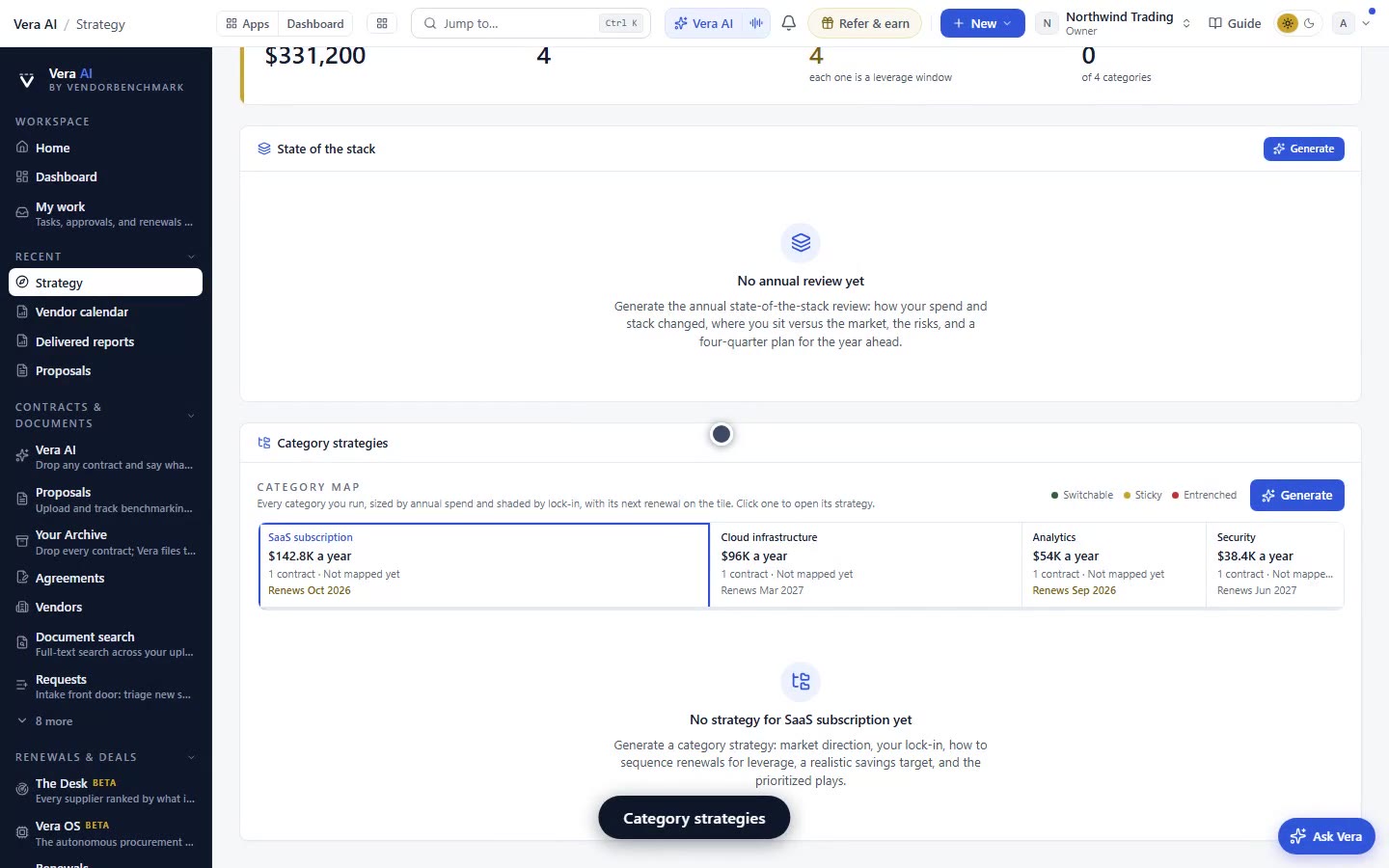
Density is the part spreadsheets never show. Renewals cluster, usually around year end and fiscal quarter boundaries, and a quarter with eleven renewals needs different staffing than a quarter with three. The density view lays the whole horizon out so you can see the pile ups months before they arrive, re-time what can be moved, and decide early which deals deserve the full treatment.
Then make preparation cheap enough to do every time
Visibility alone does not save money. The renewals that leak value are the middle of the book: too small for a war room, too large to wave through. Historically they got waved through anyway, because preparing properly cost a week per deal. This is exactly the work AI agents are built for.
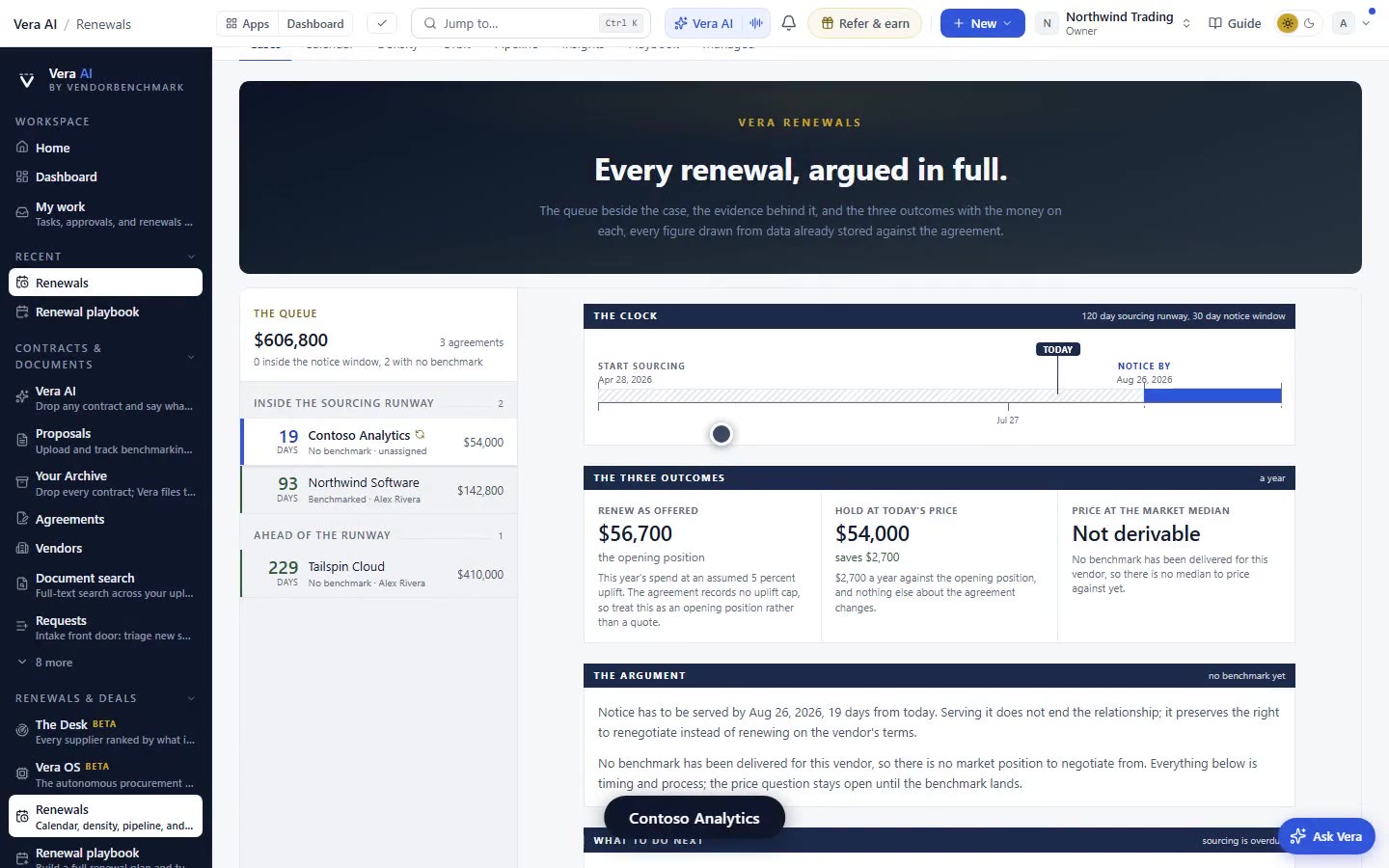
For each approaching renewal, the agents assemble the position before you have opened the file: a benchmark of the current price against the comparable deal cohort, the uplift language and notice mechanics quoted from your own contract, usage signals from your connected systems, and a negotiation brief with the asks worth making. Ninety nine background jobs keep watch in the meantime, so the Monday briefing tells you which renewals moved, which vendors changed their list prices, and which invoices stopped matching the contract. The preparation that used to cost a week costs a review.
And for the rest, take it off your desk entirely
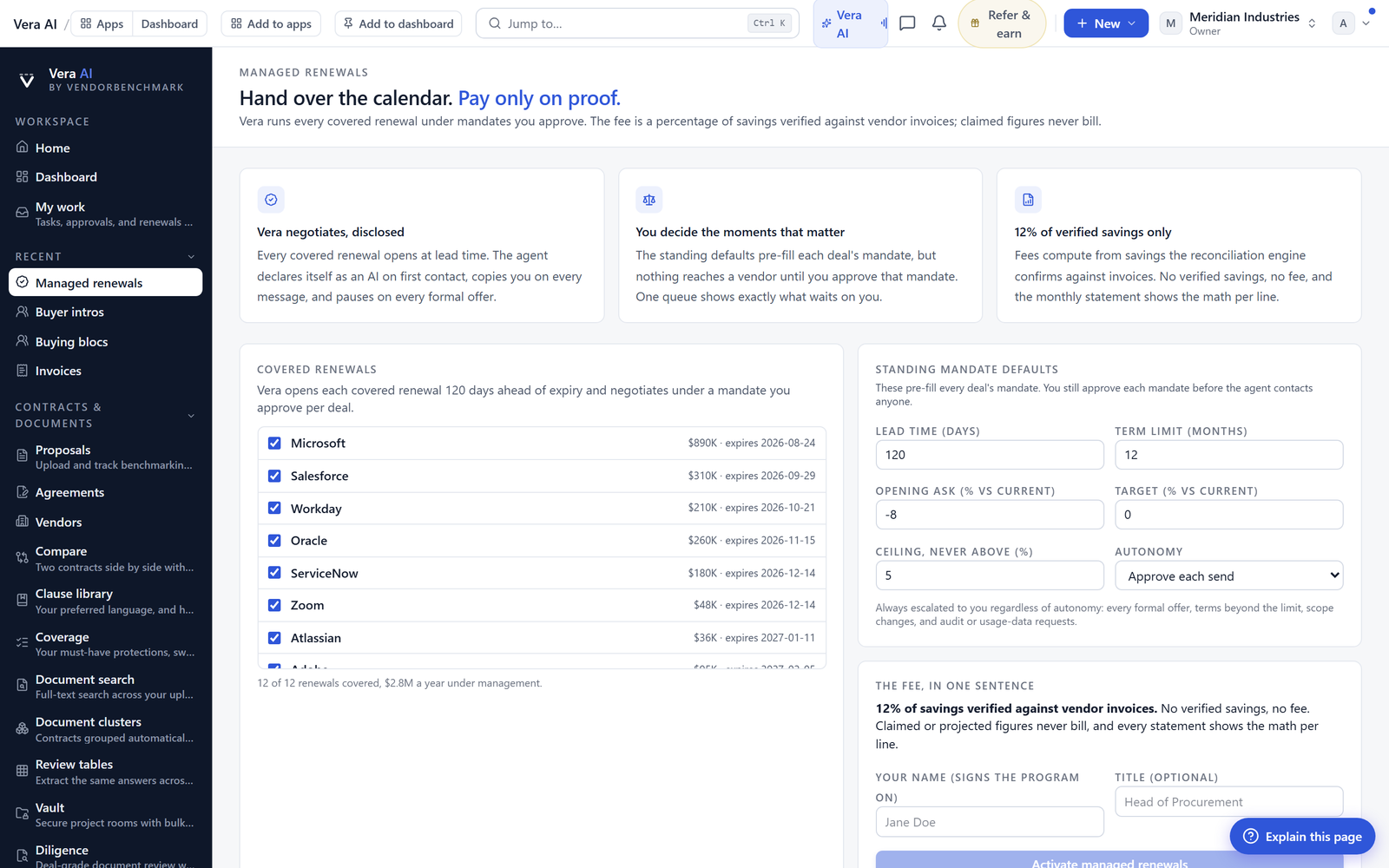
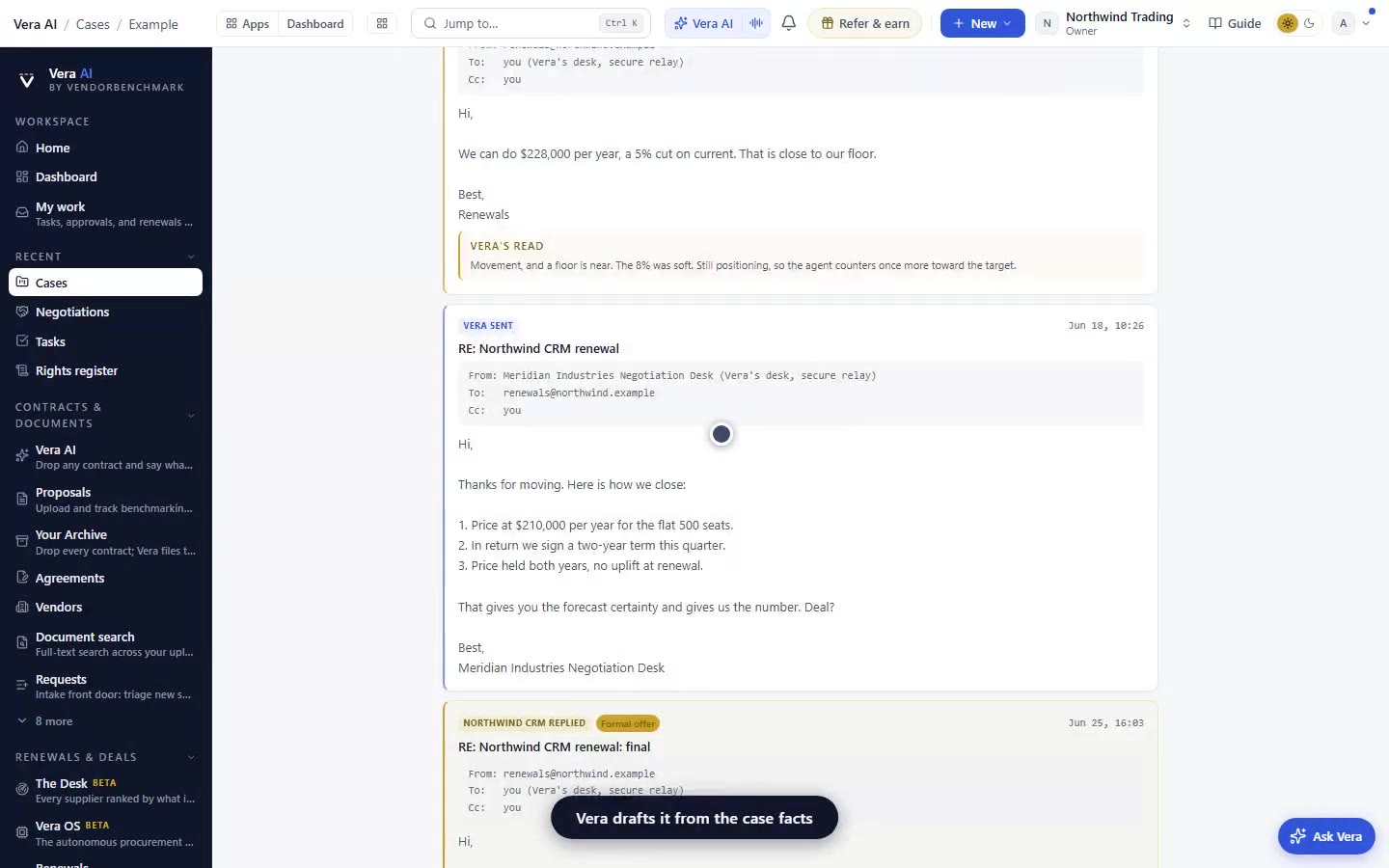
Some renewals are still not worth your team's hours even at the reduced cost. For those there is Managed Renewals: hand the renewal to the desk and Vera runs it end to end, sweeps, preparation, vendor correspondence, and escalation to a human analyst when the deal turns hard. The pricing is the honest part: fees apply only on savings your own invoices later confirm. If the renewal lands with no verified saving, it costs nothing.
What changes when the calendar is handled
The renewal calendar is the least glamorous part of software procurement and the most reliably expensive one. Fixing it is not a negotiation skill problem. It is an infrastructure problem, and infrastructure is now available.
Morten brings two decades of enterprise and software procurement, with stints across Oracle, IBM, SAP, and Salesforce shaping how he reads a deal. He has led sourcing through hundreds of renewals, from mid market order forms to nine figure global agreements, and learned that the buyers who win are the ones who walk in knowing the market. He built VendorBenchmark to make that pattern recognition repeatable.
The week in enterprise software buying, in one email.
What shipped on the platform, and the pricing and licensing moves worth knowing before your next renewal. One email a week, to your work address. Unsubscribe any time.