Three teams, three vendor calls, three different answers
Fragmented vendor engagement burns the group's scarcest resource and manufactures the contradictions you spend the next week untangling. Here is how to run one session instead.
Look at last month's calendar. Security booked a forty five minute call to walk the vendor's tenant isolation and SOC 2 scope. Finance booked its own session on pricing tiers and payment terms. The business unit that actually wants the tool booked a demo, and someone from architecture squeezed in a fourth call about the integration surface. Four sessions, four sets of notes, four partial pictures. And when the committee finally sat down together, the answers did not line up. The security team heard the data stays in region. Finance heard something about a US failover. Nobody wrote down which one is true. That gap became a week of email trying to reconcile it.
The scarcest resource is not budget, it is the vendor's attention and yours
Every function believes its own questions justify a dedicated session, and each is right in isolation. Security cannot approve on the strength of a sales demo. Finance cannot model spend from a security walkthrough. The business will not sit through a data residency deep dive. So each books its own slot, and the total calendar load multiplies by the number of functions rather than the number of vendors.
The cost is not just hours. When four separate conversations happen with four separate vendor contacts, the answers drift. The account executive gives finance a rosier read on discount flexibility than the solutions engineer gives architecture. The security contact scopes something the sales contact never mentions. You end up with conflicting inputs from people who never met, except now the conflict is coming from the vendor's own bench too.
Why the fragmentation persists even when everyone hates it
People know this is wasteful. It persists because there is no shared surface for the questions. Security keeps its checklist in a control document. Finance keeps its model in a spreadsheet. The business keeps its requirements in a slide deck. There is no single place where the group's open questions live, so there is no way to see that three of them overlap and two of them contradict each other before the vendor is ever contacted.
The second reason is sequencing. Security's questions often surface late, after the business has already run its demo, which is exactly the pattern that leaves you with a spec where compliance was never in the intake. By the time security has its list ready, the business has moved on, so security books a fresh call rather than reopening a closed one. Each late arrival adds a session instead of joining one.
The platform motion: one list in, one set of answers out
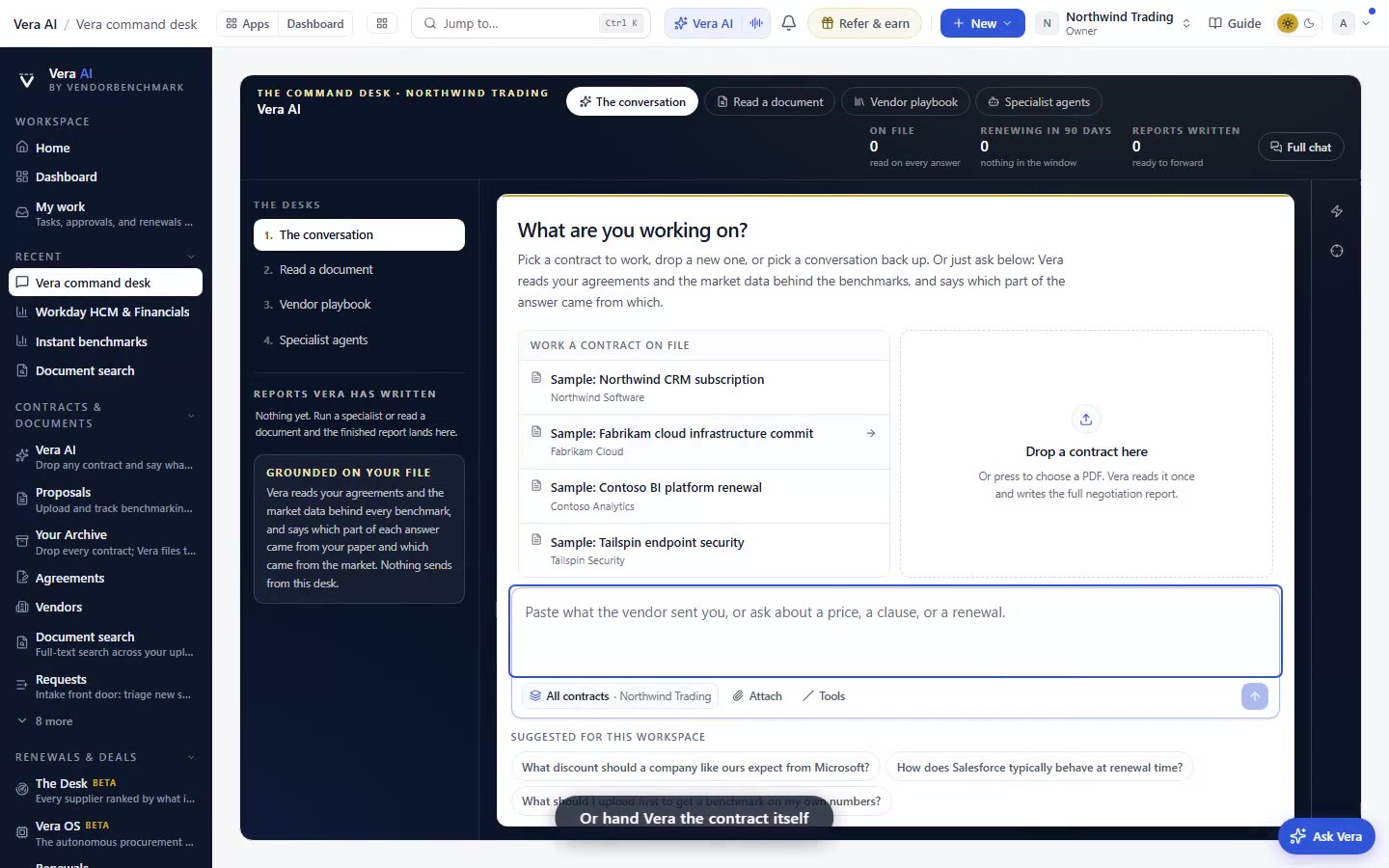
Vera reads what each function has already written. Security's control requirements, finance's pricing questions, the business's feature list, architecture's integration concerns. She consolidates them into a single vendor-facing list, drops the duplicates, and flags where two functions are asking about the same thing in different words. What the vendor receives is one document, not four inboxes worth of separate asks.
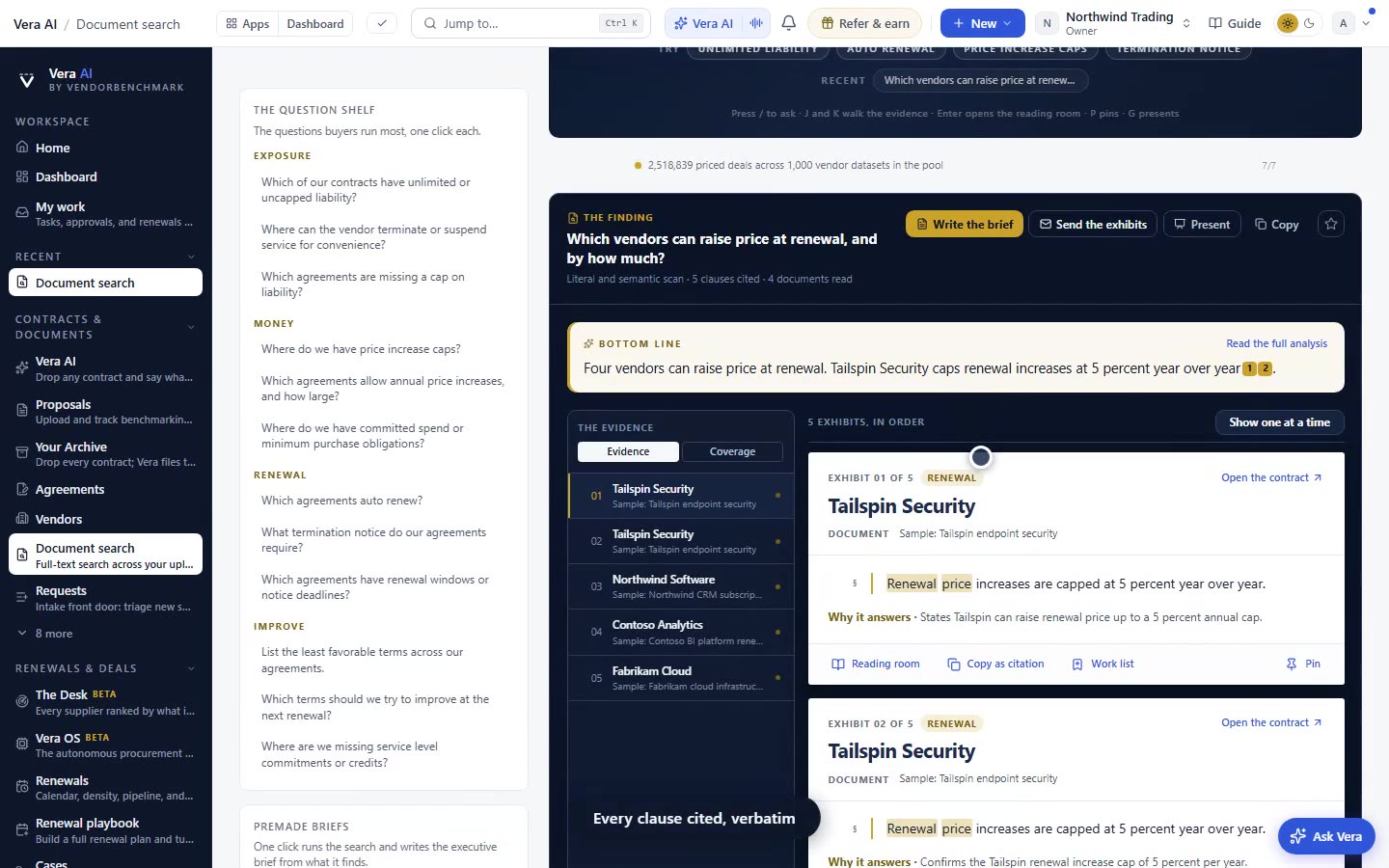
When the answers come back, they go to everyone. The security team sees the pricing context. Finance sees the residency answer that used to live only in security's notes. The single answer to a single question is the same answer for the whole committee, which is the point. You are not reconciling four accounts of the same call afterward because there was only one call.
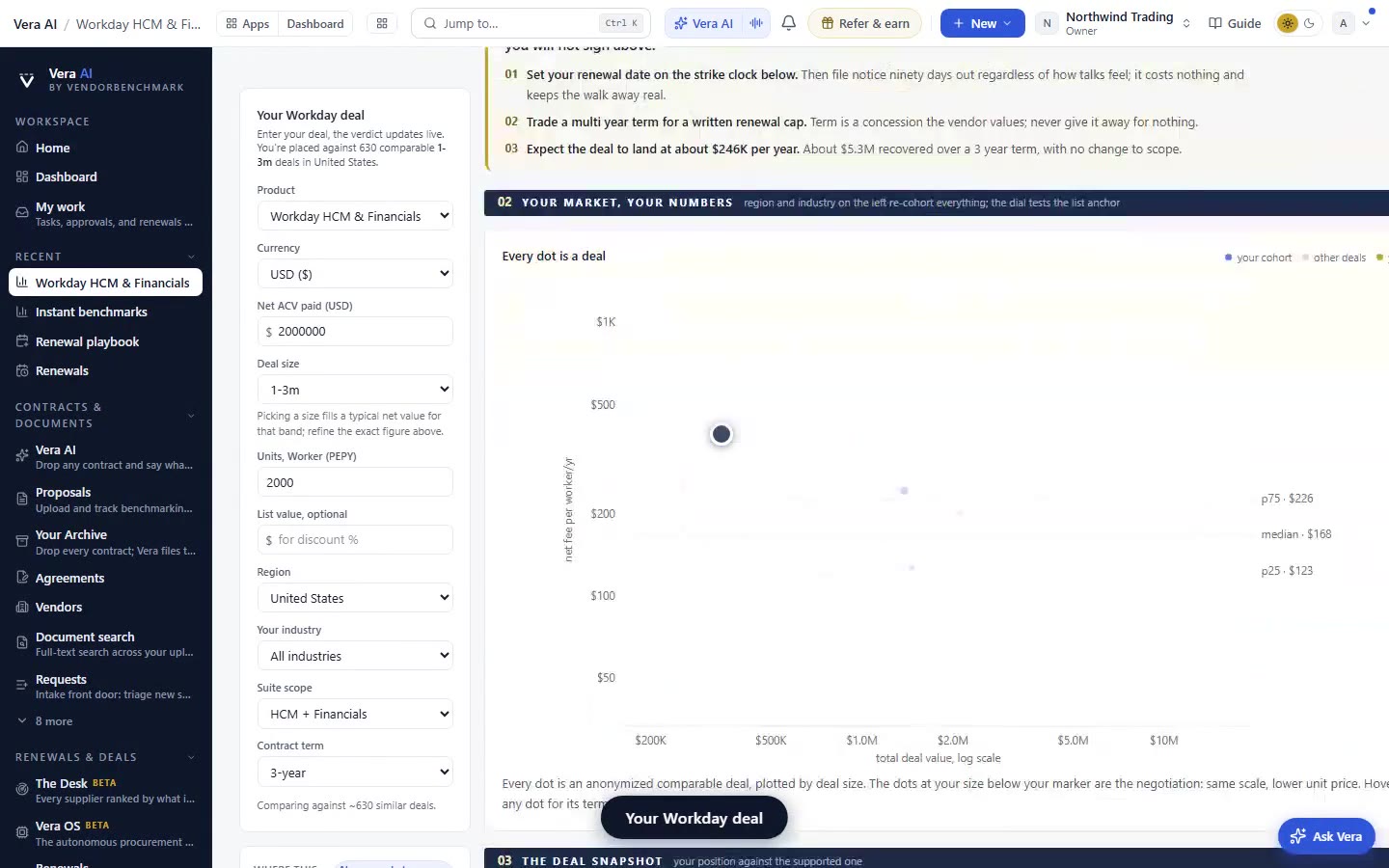
This matters most where the answers feed downstream models. Finance cannot build a 24 month forecast finance can actually budget from if the pricing it heard differs from the pricing security's call surfaced in passing. When the answer set is single and shared, the forecast, the security sign off, and the business case all draw from the same source.
What the shared answer set unlocks next
Once the answers live in one place, the committee's downstream arguments get shorter. The classic one, where everyone agrees on the tool but not the seat count, is usually a symptom of finance and the business having heard different things about entitlement and pricing. A single answer set removes the disagreement at its root because both functions are reading the same line.
What this does not solve
Consolidating the questions does not make the vendor answer them honestly. If the account executive dodges the residency question, a single list surfaces the dodge faster, but it cannot compel a straight answer. That is still your negotiation to run.
It also does not remove the need for a specialist to actually read the security response. Vera routes the answer to the right function, but the security team still has to judge whether the SOC 2 scope covers what you deploy. The tool ends the calendar sprawl and the answer drift. It does not replace the expert reading the answer. And if your functions have genuinely different goals rather than just different questions, consolidation exposes that faster but does not resolve it. For the deeper version of that problem, you still ask the meetings what was actually said and negotiate the requirements out in the open. What you get back is the week you used to lose reconciling four calls that should have been one.
Want to be updated when major licensing and pricing changes land? One analyst brief a week: the price rises, metric changes and audit campaigns that move software costs. Work email only.
Morten brings two decades of enterprise and software procurement, with stints across Oracle, IBM, SAP, and Salesforce shaping how he reads a deal. He has led sourcing through hundreds of renewals, from mid market order forms to nine figure global agreements, and learned that the buyers who win are the ones who walk in knowing the market. He built VendorBenchmark to make that pattern recognition repeatable.