The offer expired while you argued about whether it was fair
A committee can agree the price is worth debating and still lose the deal, because the debate outlasts the offer. The fix is not faster arguing. It is an instant read on whether the number is any good.
Picture last month. A vendor sent a quote with a discount that expired at the end of the quarter, nine days out. The number looked plausible, so it went to the committee. One person wanted to know if the uplift was defensible. Someone else wanted a comparison to what a peer paid. A third asked finance to model two-year versus three-year. Every question was reasonable. Every question took two or three days to answer. By the time the group was ready to say yes, the quarter had closed, the discount had reset, and the rep was very sorry but the desk could not honour the old terms. You did not lose that deal to a bad price. You lost it to a slow verdict on a fair one.
We spend a lot of energy in this series on approval chains, because slow sign-off is the obvious deal killer. But there is a quieter one sitting next to it. The committee cannot approve what it cannot judge, and judging whether a price is competitive is itself a process. When that process runs longer than the offer window, the outcome is identical to a stalled approval. The leverage is gone either way.
Why the price debate always outruns the clock
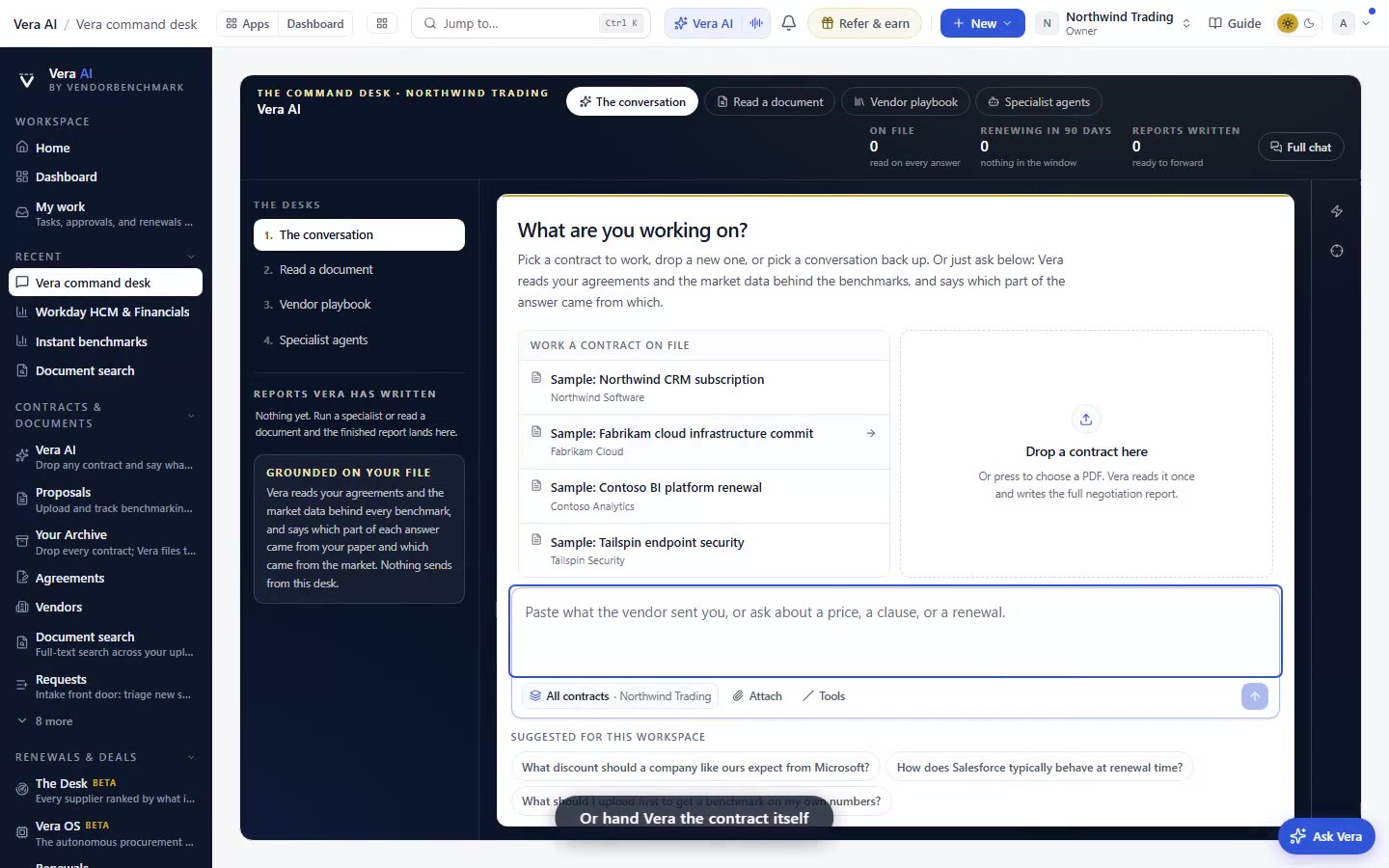
The reason is structural, not a failing of any particular team. A quote arrives as a single number attached to a countdown. To decide whether that number is good, a buyer needs context the quote deliberately does not carry: what similar organisations pay, where this offer sits in the distribution, whether the discount is generous or ordinary, whether the uplift clause is standard. Assembling that context by hand is real work. It means digging through old contracts, emailing peers who may not reply, and asking the vendor's own AE to confirm they are being fair, which is not a reliable source.
So the committee does the only thing it can. It debates in the absence of evidence. And debate without evidence is slow by design, because there is nothing to converge on. Each participant argues from intuition, and intuitions do not settle quickly. Meanwhile the countdown does not pause for deliberation. This is the same failure mode we described in the post about agreeing on the vendor and then arguing about the count: agreement on the thing does not produce agreement on the number, and the number is where the days go.
The problem persists because nobody owns the read
There is a second reason this keeps happening. In most organisations, no single person is responsible for the price read, so it becomes everyone's part-time job. Procurement pulls comparable contracts. Finance models the term structure. A technical lead sanity-checks scope. Each contributes a fragment, on their own schedule, and the fragments have to be reassembled before anyone can vote. The reassembly is where the calendar disappears.
The offer window, by contrast, has exactly one owner, and it is the vendor. The vendor sets the expiry to compress your decision, and quarter and fiscal-year boundaries are chosen precisely because they create urgency. If you want to understand why those dates land where they do, our note on vendor fiscal calendars is the map. The asymmetry is the whole game: they own a fast clock, you own a slow verdict.
An instant verdict, not a faster argument
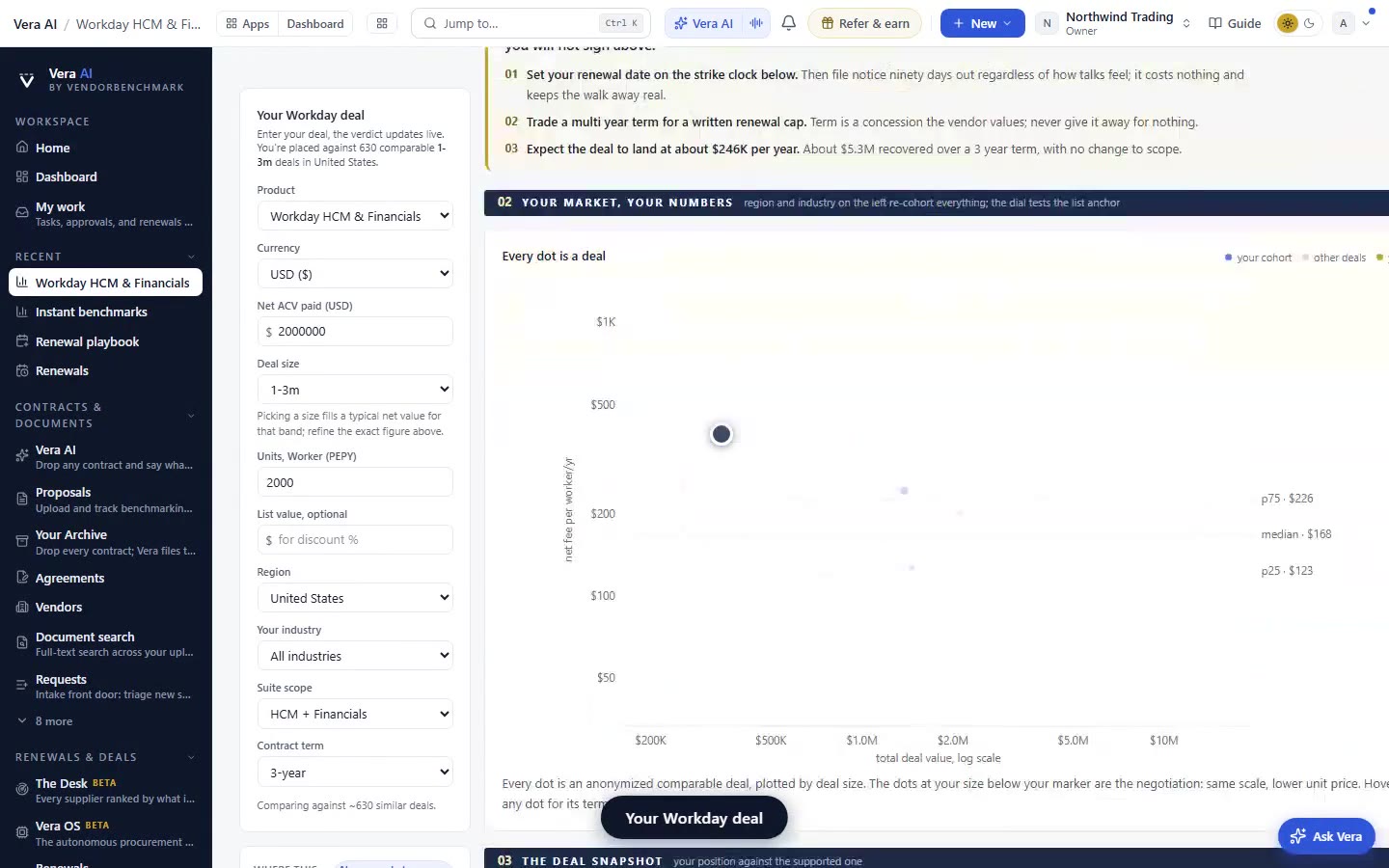
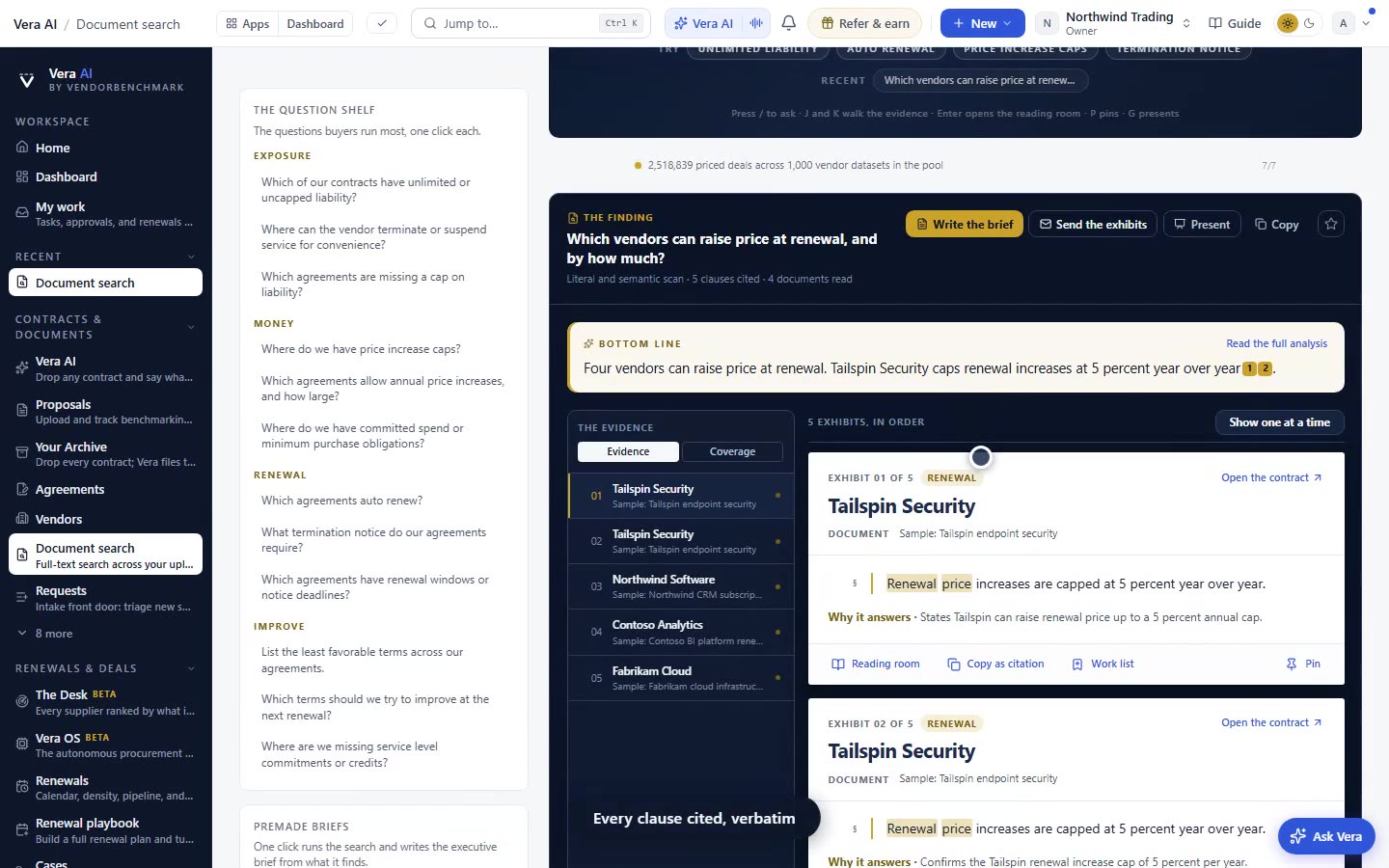
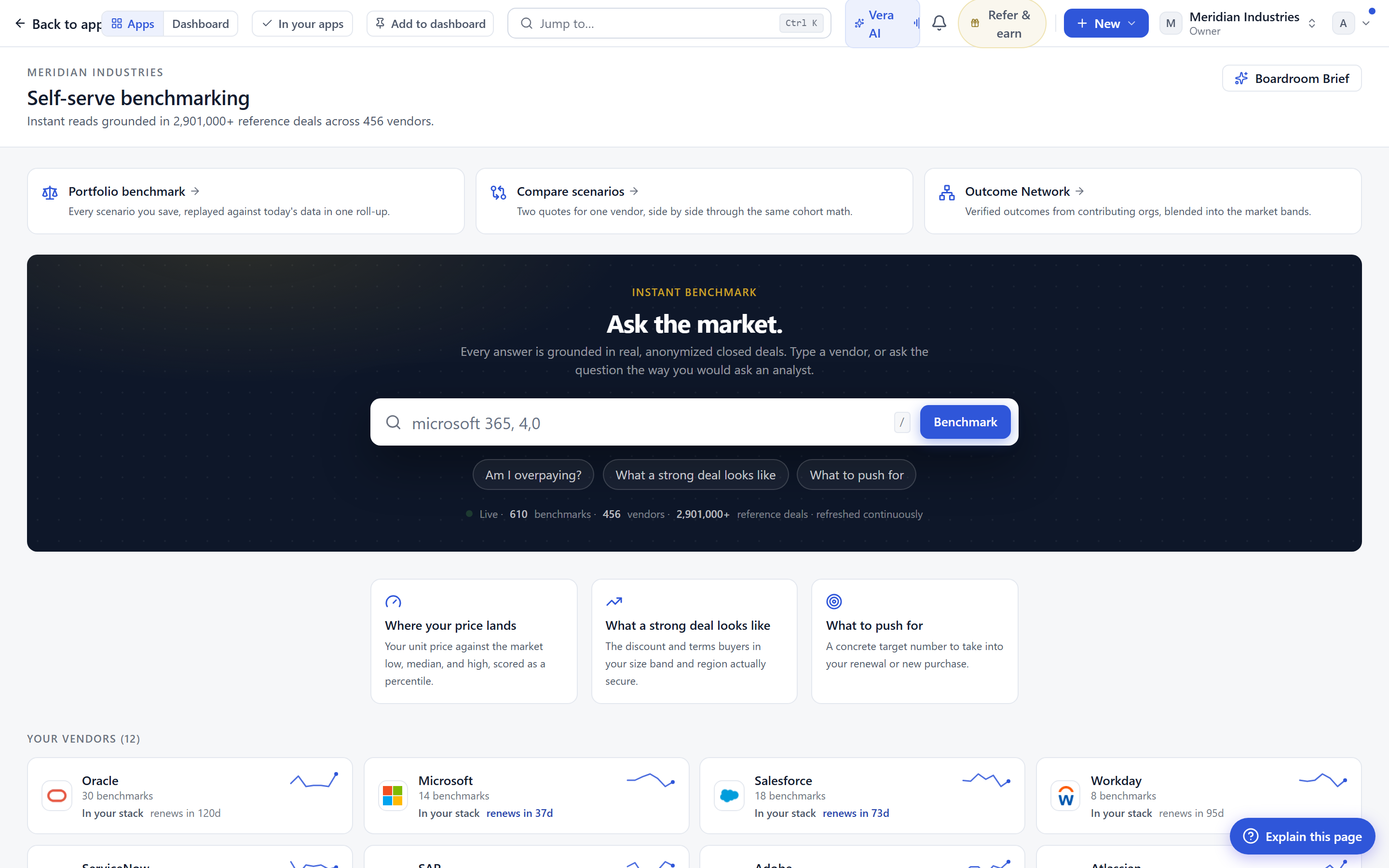
The fix is not to argue faster. It is to replace the argument with a lookup. When the price question is a lookup against documented evidence, the committee stops debating intuitions and starts reacting to a position. A benchmark that says the offer sits at the 40th percentile of the market gives the group something concrete to converge on, and convergence is fast. Someone may still want a better number, but now the question is precise and answerable inside the window rather than open-ended and slow.
The single-benchmark view is where the read becomes a decision. Percentile bars show exactly where the offer falls, and the underlying comparables are cited, so the read survives challenge. If a committee member asks where the number comes from, the answer is on the screen, not in a promise to follow up. That is the difference between a verdict and an opinion, and it is what lets the group commit before the discount resets.
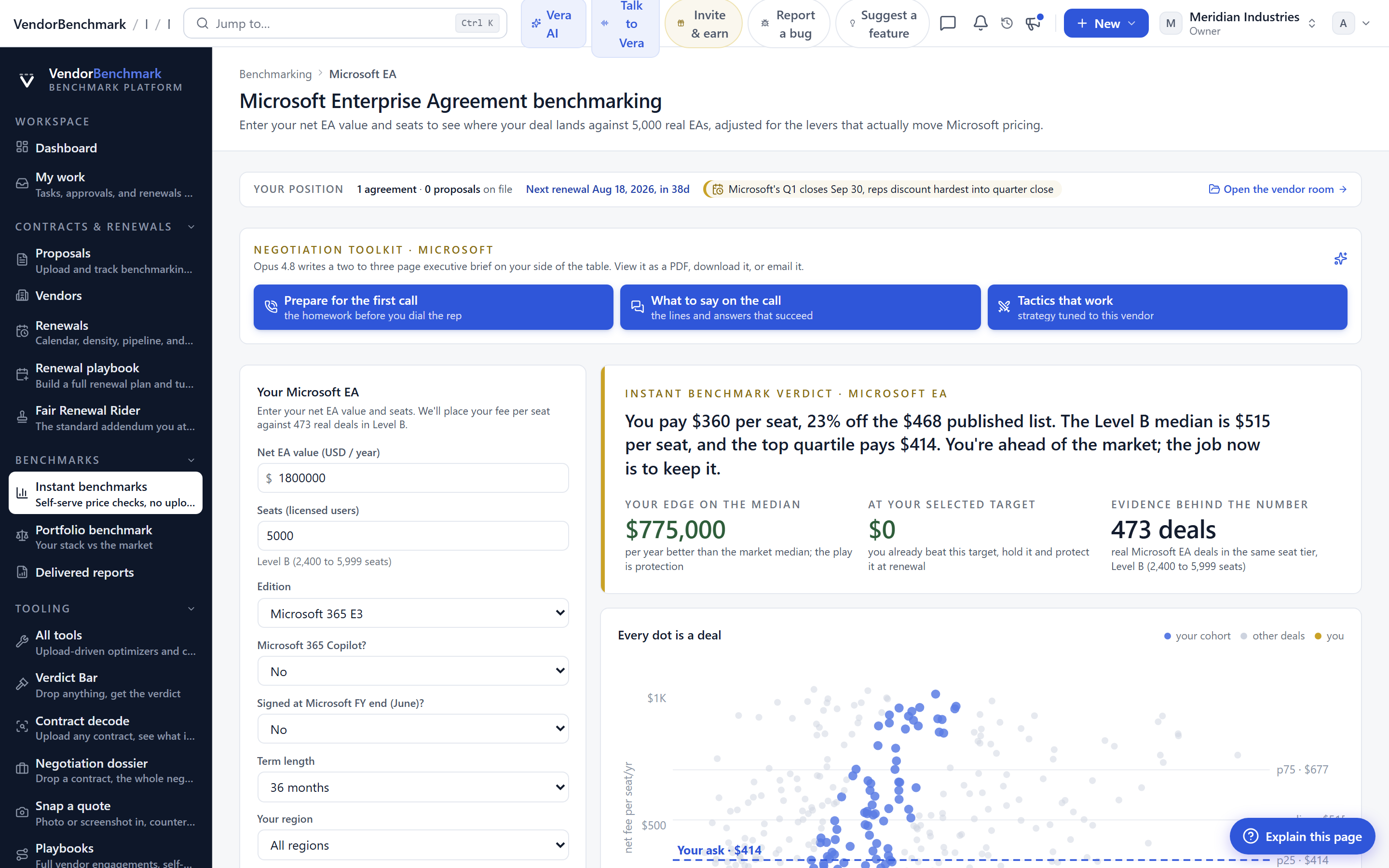
You do not always need the full library open to get the read. When you are on the phone with the AE and they float a number, you can check it live rather than promising to get back to them, which is the whole point of checking the number on the call. And when the deal is not yours yet, a free price check gives the same verdict without an account. The mechanism is the same throughout: replace deliberation with evidence, and the clock stops being the enemy.
What changes when the read is instant
What this does not solve
An instant verdict tells you whether a price is competitive. It does not tell you whether the purchase is wise. If the requirement is wrong, if you are buying seats you will not use or a tier you do not need, a benchmark showing a strong price will only help you overpay for the wrong thing efficiently. The read is about price quality, not purchase quality, and those are different questions.
It also does not remove the human decision. Benchmark evidence tells the committee where the offer sits; it does not tell them how much risk to accept, how strategic the vendor is, or whether to walk. A price at the 60th percentile might be acceptable for a vendor you cannot replace and unacceptable for one you can. That judgment stays with the people. What changes is that they now make it with evidence in hand and time on the clock, rather than arguing in the dark until the offer expires.
And a benchmark is a snapshot of the market at the moment you take it. Markets move, and a read that was strong in March can be ordinary by autumn. That drift is worth watching deliberately rather than rediscovering at renewal, which is what benchmark alerts are for. The instant verdict solves the speed problem. Staying current is a separate discipline, and an honest one to keep.
Fredrik has spent more than twenty years in enterprise software, with time at Oracle, IBM, SAP, and Salesforce before moving to the buy side. He structured and priced the kind of large agreements most buyers only see once or twice in a career, which taught him where the leverage sits and how far a vendor will actually move. He started VendorBenchmark to hand that knowledge to every sourcing team.