The free price check: sanity-check a vendor quote with no account.
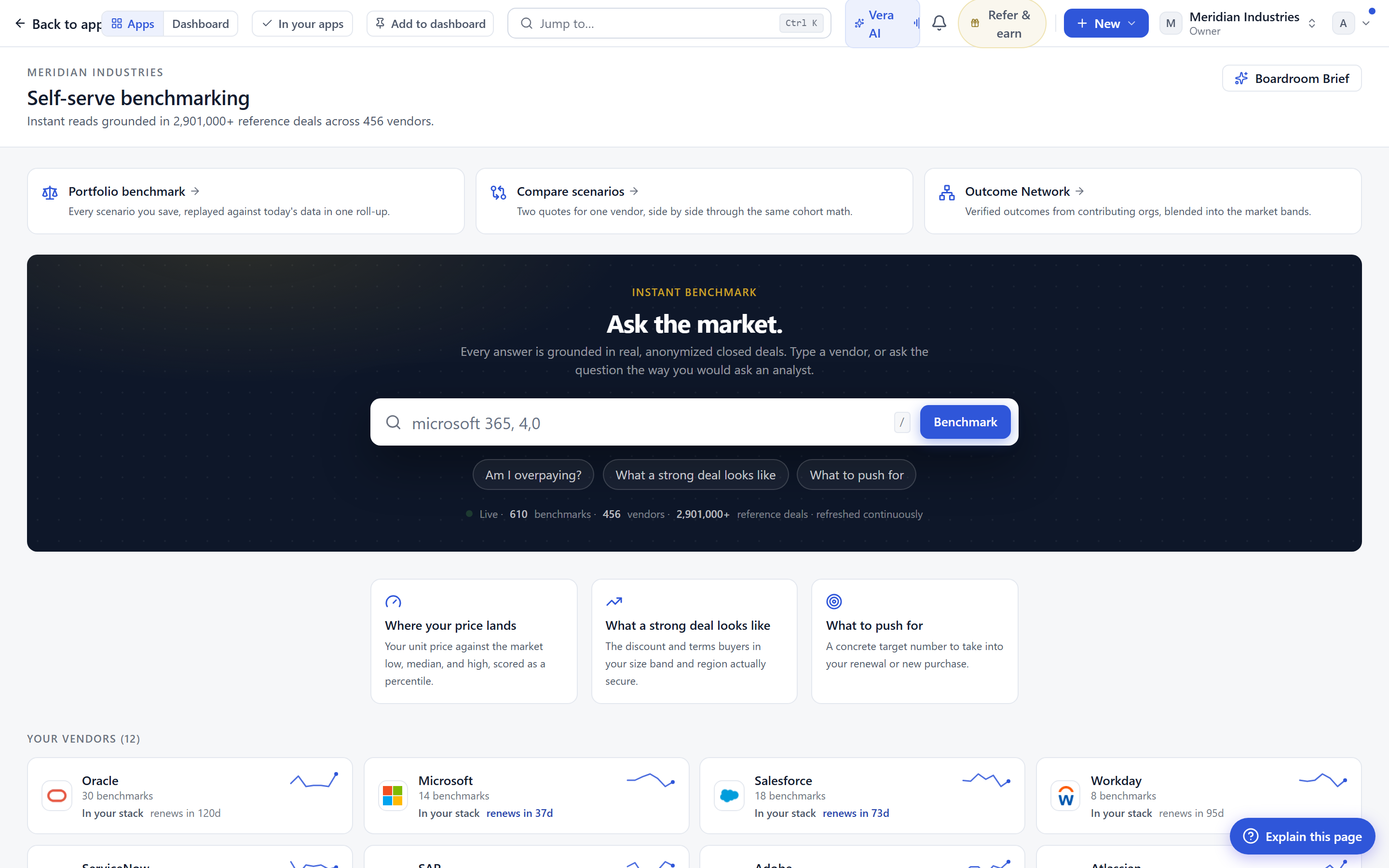
Sometimes you do not want a platform, a login, or a sales call. You have a quote in your hand and one question: is this a fair price? For the flagship vendors, the free price check answers it in a moment, from a SKU and a seat count, against where comparable deals land.
Most of the time, a buyer facing a vendor quote does not need a full engagement. They need a gut check. Is this number roughly fair, or is it the kind of number that should make me push back before I go any further? That question comes up constantly, in the moment a quote lands, and the honest answer usually available is a shrug or a half-remembered figure from the last deal. A platform, a trial, and a sales conversation are the wrong weight of response to a question you want answered in the next two minutes.
The free price check is built for exactly that moment. For twenty of the flagship enterprise vendors, there is a public page where you pick the product, enter your seat count and the unit price you were quoted, and immediately see where that price sits against modelled deal cohorts. No account, no login, no call. It is the front door to the whole approach, a single honest answer to the single most common question a buyer has, given away because the answer is worth having whether or not you ever become a customer.
A SKU, a seat count, and a real answer
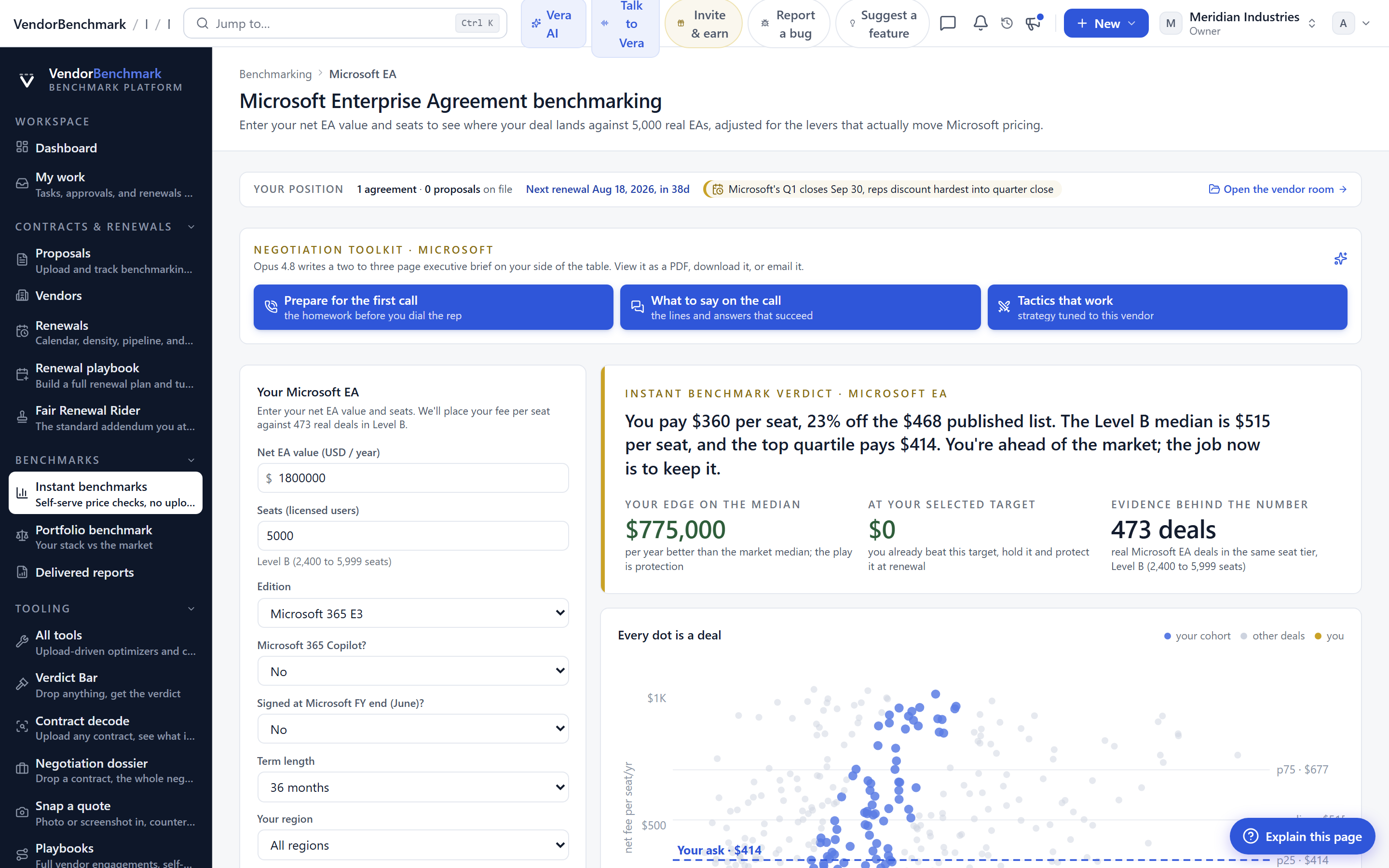
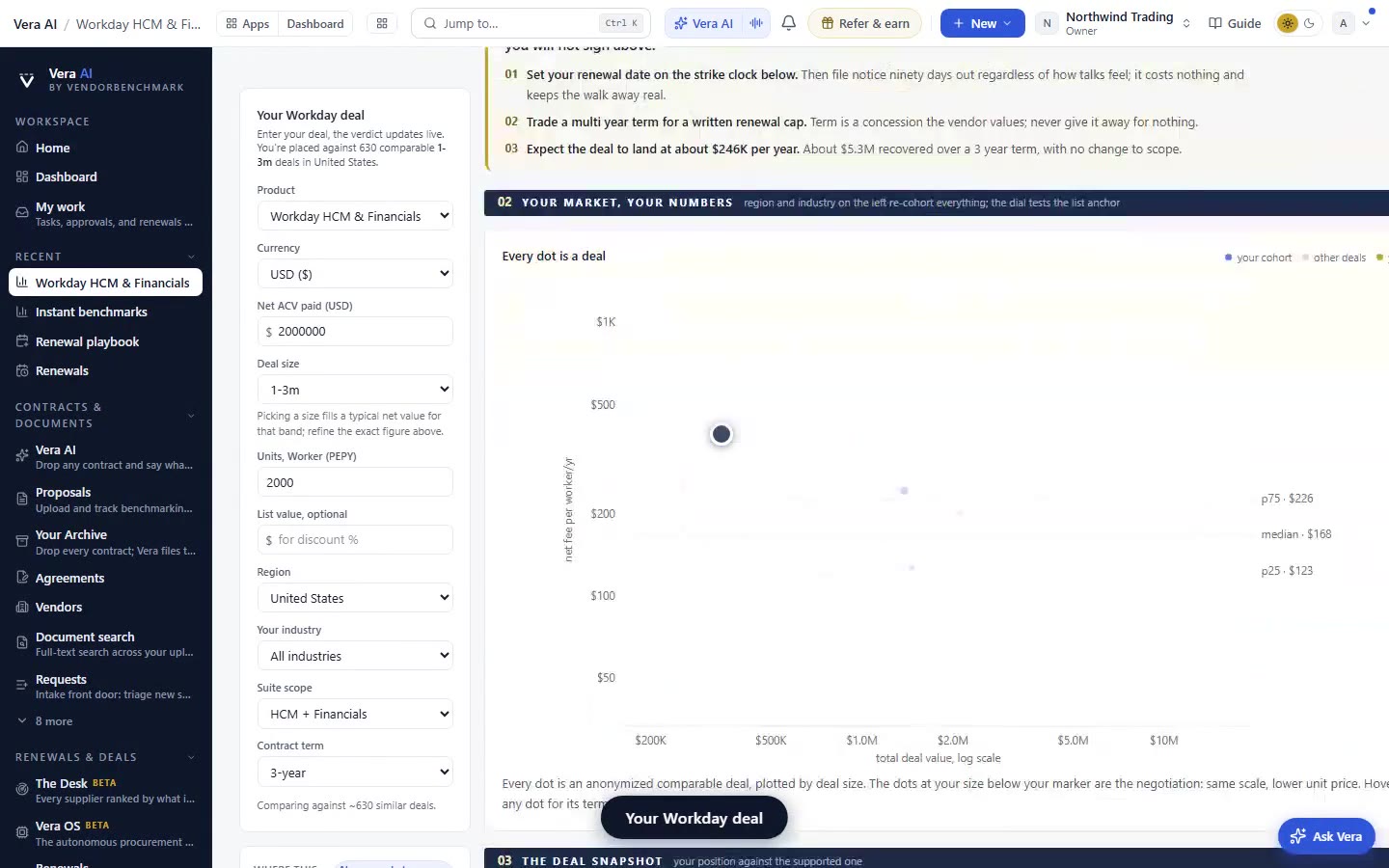
The interaction is deliberately trivial. Choose the specific product or edition from a short list, enter how many units you are buying and the per-unit price on your quote, and the check places you against the distribution of comparable deal cohorts. The result is not a vague sense of good or bad. It is your rank, a market low, median, and high per unit, and the dollar gap between your price and the median, shown on a simple dial with a plain verdict. In one screen you learn whether your quote is a strong price, an average one, or one you should be arguing about.
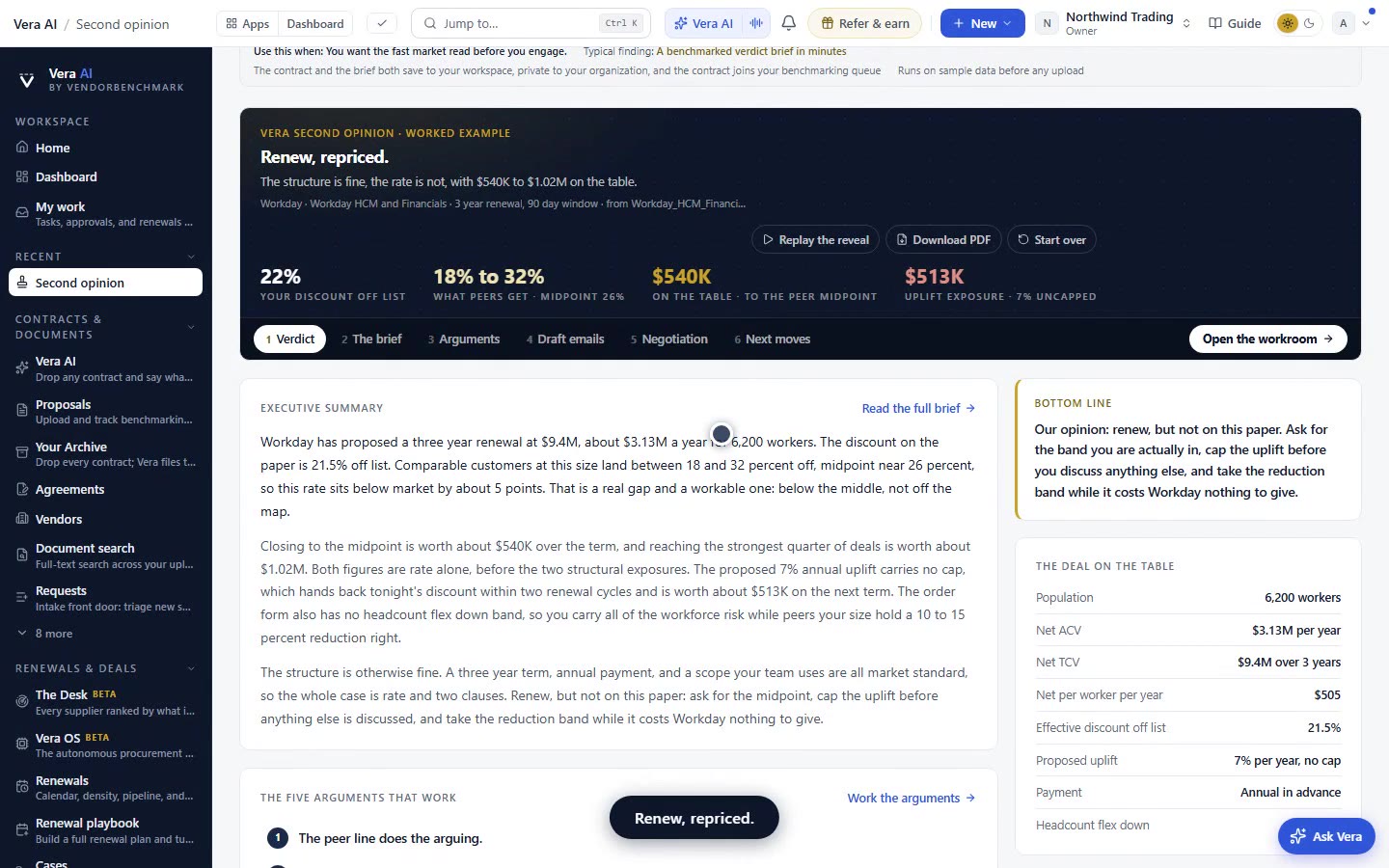
It also carries one grounded insight, a short read on your specific result, because a number without interpretation is only half useful. The whole thing is aggregates only: you never see another buyer's deal, and no individual transaction is exposed, only the shape of the market your price falls into. It is the same benchmarking discipline the full platform runs on, distilled down to the one question and the one answer that fit in a public page.
It refuses to answer when it cannot answer honestly
The most important feature of the free price check is the one that says no. A public tool that always returns a confident number would be worse than useless, it would be misleading, because not every input can be benchmarked honestly. So the check refuses in the cases where an answer would not be defensible: a seat count outside the range the data covers, a price so far outside the observed band that it suggests a different deal structure, a cohort too thin to support a real comparison. In those cases it says plainly that it cannot give you a reliable read, rather than inventing one.
That restraint is a deliberate honesty gate, and it extends to which vendors even appear. A vendor is only listed where the underlying dataset is genuinely defensible on a simple per-unit dial, and vendors whose data does not calibrate cleanly are left off rather than shipped with a shaky number. A public price check that occasionally admits it cannot help you is far more trustworthy than one that always has an answer, because the whole value of the thing is that when it does give you a number, you can believe it.
The front door, not the whole house
The free check is intentionally narrow, and that is its role. It answers one question, is this price fair, for a curated set of vendors, and it does not try to be the negotiation, the contract review, or the renewal plan. It is the front door: the fastest possible way to get a real, grounded read on a quote, which for many people is all they need in that moment, and for some is the thing that shows them the full approach is worth a closer look.
When you do want to go further, the path is there. If the check tells you a quote is well above market, the natural next step is to understand why and what to do about it, and that is where the deeper benchmarking, the negotiation tools, and the playbooks pick up. But there is no obligation to walk through that door. The price check earns its place by being genuinely useful on its own, a free, honest answer to the most common question in software buying, given without asking for anything first.
What a free price check gives you
A sanity check, not the full picture
A per-unit price check is a fast read, not a complete analysis. It looks at the unit price you enter and cannot see the parts of your deal that live elsewhere, the term, the bundle, the support scope, the concessions traded around the number. A quote that looks high on the dial might be reasonable once the whole structure is understood, and one that looks fair might hide a poor term. The check tells you whether the headline unit price is in the right neighbourhood, which is genuinely useful and deliberately limited.
What it removes is the excuse for flying blind on the most basic question. Before the free price check, sanity-checking a quote meant either trusting a memory or standing up a whole engagement, so most quotes went unchecked. A grounded, honest, no-account answer to "are we overpaying?" means that question always has a real answer within reach, which is exactly where a good negotiation starts, with a number you can trust about the number in front of you.
Morten brings two decades of enterprise and software procurement, with stints across Oracle, IBM, SAP, and Salesforce shaping how he reads a deal. He has led sourcing through hundreds of renewals, from mid market order forms to nine figure global agreements, and learned that the buyers who win are the ones who walk in knowing the market. He built VendorBenchmark to make that pattern recognition repeatable.
The week in enterprise software buying, in one email.
What shipped on the platform, and the pricing and licensing moves worth knowing before your next renewal. One email a week, to your work address. Unsubscribe any time.