The Renewal Library: two pages per vendor on how their renewal actually behaves
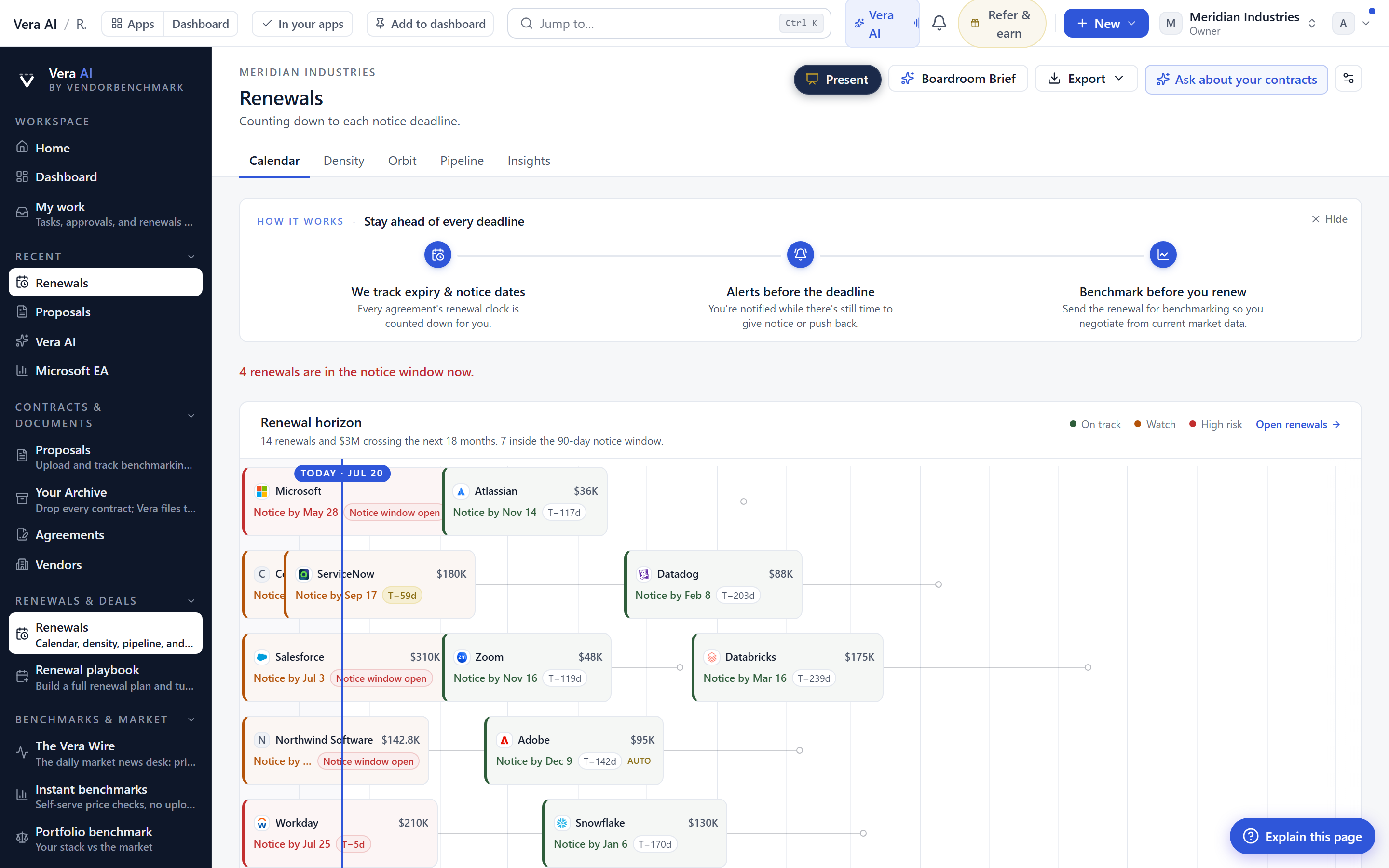
The research shelf answers questions about a vendor. The Renewal Library answers one thing only: how this vendor's renewal behaves when you have a date in front of you.
There is a specific moment in a procurement calendar that our research shelf was never built for. Not the moment you are evaluating a category, or pricing a new bid, or writing a business case. The moment where a renewal date is thirty, sixty, ninety days out, the incumbent is already assuming the number holds, and the only question that matters is what happens if you push. Most buyers answer that question late, from memory, and from whatever the account team has trained them to expect. The Renewal Library is our answer to that moment. It sits beside the research shelf, and it does one job.
The problem is not information, it is posture
When a renewal lands, you rarely lack facts about the vendor. You have the contract, the invoices, maybe a benchmark. What you lack is a settled read on how much room actually exists, and whether the room is on rate, on scope, or on terms. That read is the difference between a productive quarter and a wasted one. Chasing a rate cut from a vendor whose rate is structurally fixed burns political capital you needed for the true, and cost, and renewal cap. Accepting a flat renewal from a vendor who would have moved on a competitive event leaves money on the table you will not see again for a year.
So every guide in the library opens with the honest answer first, the posture. Open means a competitive event moves the price, and you should run one. Conditional means the room opens against a trigger such as growth or term, so you find the trigger and pull it. Limited means little movement on rate, so you stop arguing rate and win the scope and the terms instead. Closed means the rate is structurally fixed and the argument belongs elsewhere, at renewal cap, at exit rights, at the true, and cost of the next tier. The posture is not a mood. It is the thing that tells you where to spend the next sixty days.
Two pages, four questions, in the same order every time
The value of a library is that every shelf is the same shape. Under the posture, each guide answers four questions in a fixed order. First, how to prepare, counted back month by month, so if your date is in ninety days you know what to have done by day sixty and by day thirty. Second, whether there is room to renegotiate and what your options are, stated plainly rather than as a wishlist. Third, the credible alternatives and where each one bites, because an alternative that costs more to switch to than it saves is not leverage, it is a bluff the vendor will call. Fourth, where the vendor's leverage sits, with the specific thing that removes it.
Because the four questions never move, you stop re-learning the format for each vendor and start comparing the substance. A guide that says the leverage sits in a data-egress cost pairs naturally with our work on measuring switching costs before the vendor prices them for you. A guide whose alternative section names a specific third bidder connects to the argument in pricing the third bidder you should quote anyway. The library does not replace those; it points you at them at the moment they are useful.
A guide per product line, because a suite does not renew as one thing
A publisher that sells several things gets a guide per product line. This matters more than it sounds. A payroll suite and a co-employment arrangement carry the same logo and renew on completely different physics. One moves on headcount tiers and a competitive RFP; the other is anchored to a service model where the rate is close to fixed and the room is in the wrap. Treating them as one vendor with one posture is how buyers get surprised. So the library splits them, gives each its own posture, and lets the shelf filter accordingly.
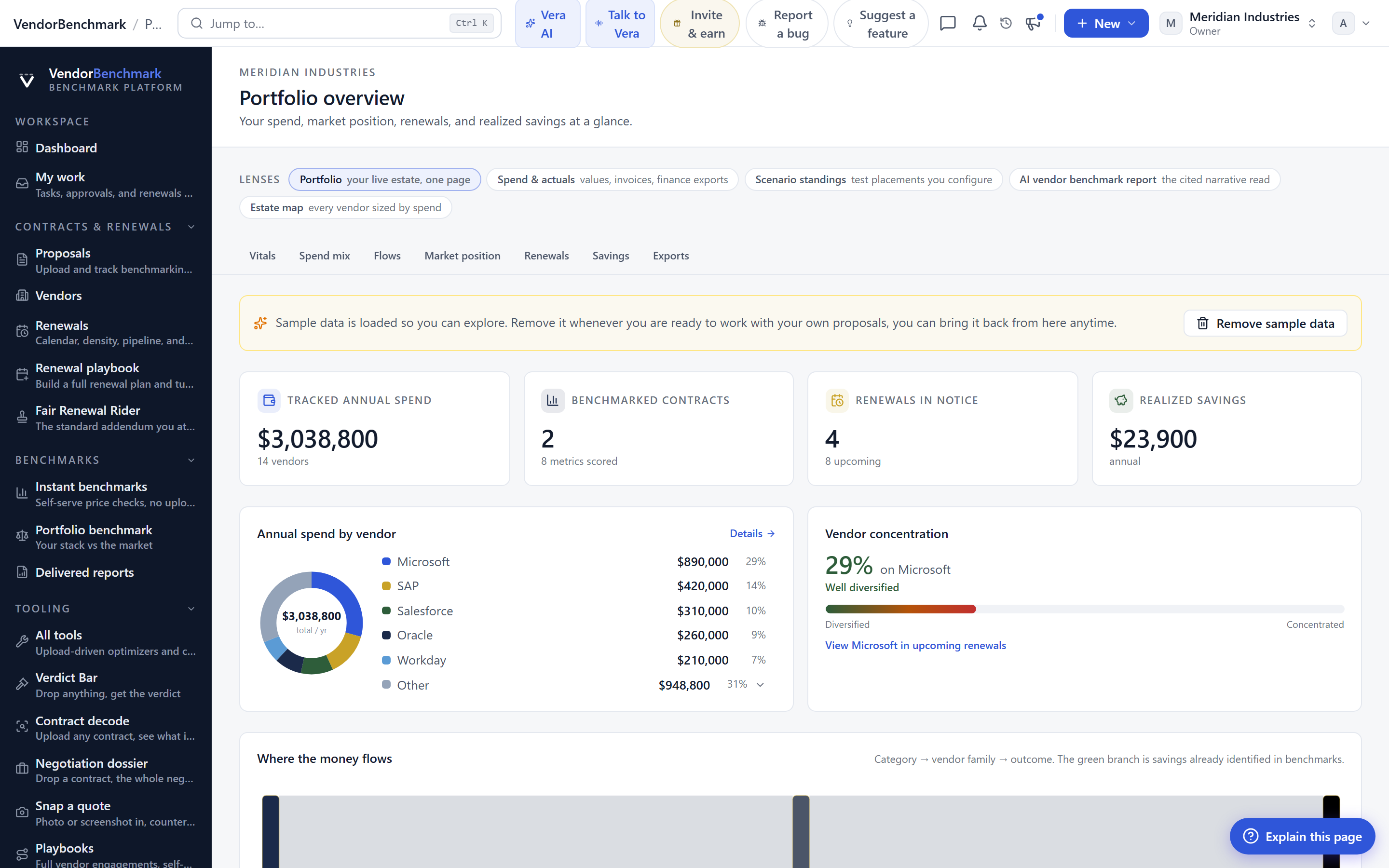
The shelf filters on the posture and marks the vendors you hold, so you can triage a quarter of renewals in a single pass. Show me the Open postures with dates inside ninety days, and you have your competitive-event candidates. Show me the Closed ones, and you know where not to waste a quarter arguing rate. If several buyers face the same vendor, the shelf also feeds the logic behind pooling leverage without exposing your numbers, because a shared posture read is the honest starting point for a bloc.
What changes for you
Honest limits
The Renewal Library is a starting position, not a settlement. A posture is our read of how the vendor's renewal generally behaves, drawn from patterns across comparable deals; your specific account can sit off the pattern because of a legacy contract clause, a strategic dependency the vendor knows about, or a relationship that has already been spent. The library will not know what was said in your last QBR unless you tell it, which is what asking your meetings what was said is for.
It also does not read your paper for you. The guide will tell you the argument belongs at the renewal cap or the exit rights; whether your contract actually gives you those is a question for the decode, not the library. And a posture can change when a vendor changes its list, which is why we pair it with catching a price-list change the week it happens. Treat the two pages as the map. The territory is still your negotiation, and it still needs you in the room.
Want to be updated when major licensing and pricing changes land? One analyst brief a week: the price rises, metric changes and audit campaigns that move software costs. Work email only.
Morten brings two decades of enterprise and software procurement, with stints across Oracle, IBM, SAP, and Salesforce shaping how he reads a deal. He has led sourcing through hundreds of renewals, from mid market order forms to nine figure global agreements, and learned that the buyers who win are the ones who walk in knowing the market. He built VendorBenchmark to make that pattern recognition repeatable.


