Terms Watch: catching a price list change the week it happens.
The worst way to learn a vendor raised its list price is to read it in your renewal quote, months later, framed as normal. Terms Watch reads the price book so you do not have to, diffs every change, and prices it against your own estate before the quote ever arrives.
Enterprise software vendors change their published prices more often than buyers realise, and they rarely send an announcement. A list price ticks up, a SKU is repackaged, a discount tier quietly narrows. The change sits in the price book for months, and the first time most buyers encounter it is in a renewal quote, where it arrives already baked into the number and framed as the way things simply are now.
That timing is not an accident. A price increase you learn about at renewal is a price increase you have no time to plan around. A price increase you learn about the week it happens is a data point you can carry into the negotiation nine months later, on your terms. Terms Watch exists to move that discovery from the renewal to the moment of the change.
The price book, diffed on every refresh
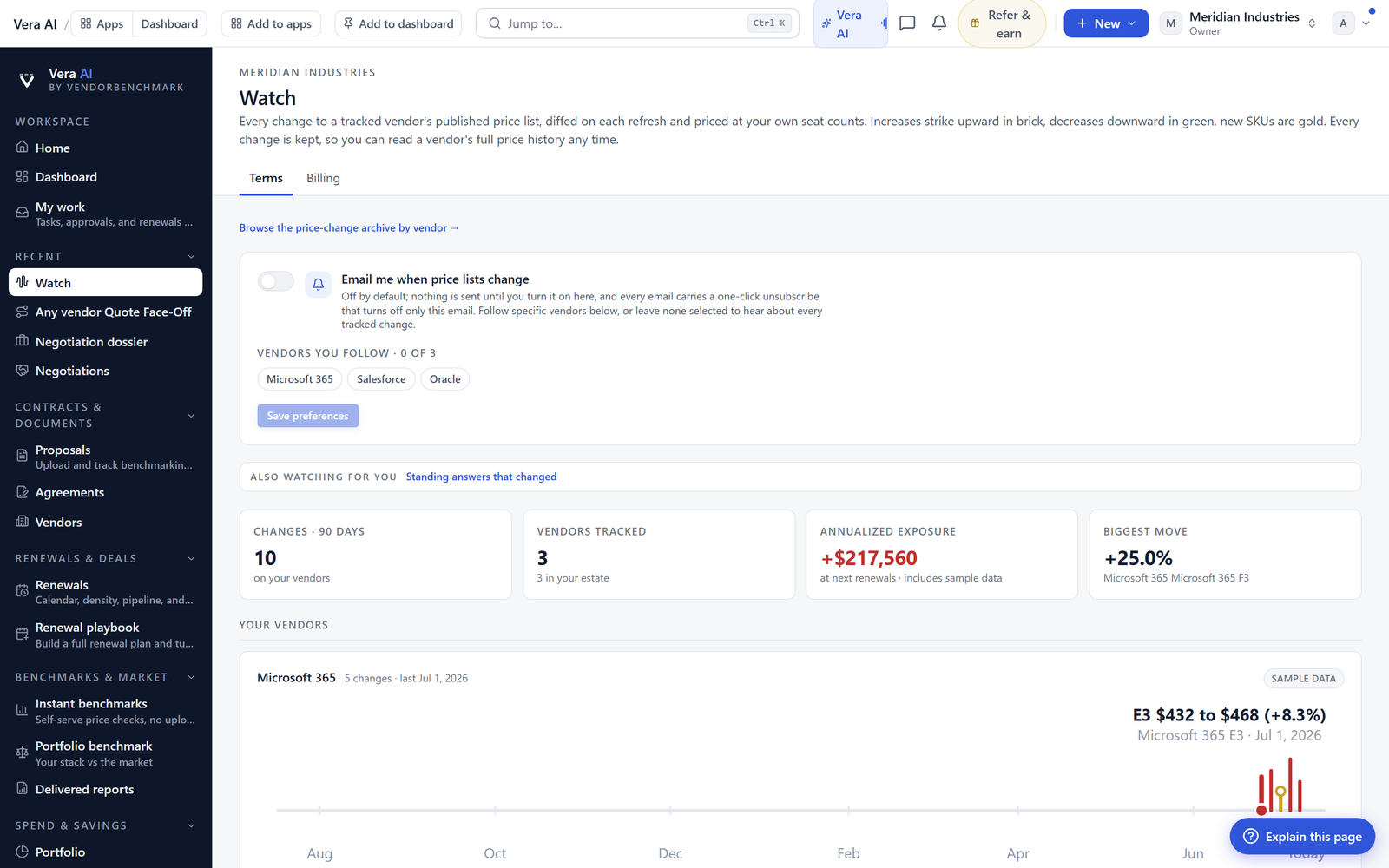
Terms Watch treats vendor price lists the way a version control system treats code. Every time the price book refreshes, it compares the new state against the last one and records exactly what moved: which SKU, from what to what, and how the discount structure shifted. A change is not a rumour or an analyst's guess. It is a diff, with a before and an after, drawn from the published source.
The discipline that keeps this honest is in how it starts. The first time the system sees a vendor, it records a baseline and raises nothing, because a fresh view of a price book is not a change, and a tool that fabricated a wave of alerts on day one would be worthless. Only genuine movement against an established baseline counts. An unchanged refresh is a silent no event, not a notification.
Priced at your seat count, not in the abstract
A list price rising three percent is a fact about the market. What you actually need to know is what it means for you, and that depends entirely on how many of that SKU you hold. So Terms Watch does not stop at the diff. It prices each change against your own estate, applying the movement to your seat count, and surfaces the result as an annual exposure figure. A quiet repackaging becomes a dollar number on your desk the week it happens.
The pricing is careful about what it claims. Where the exposure is grounded in a real per SKU position from your license data, it counts toward the aggregate. Where it can only fall back to a rough seat assumption, the panel says so, and that softer estimate is kept out of the headline total rather than allowed to inflate it. The number you see summed at the top is the one built from positions you actually hold.
A seismograph, and three honest sentences
The changes render as a per vendor seismograph, a running record of how much a vendor's pricing has moved and when, so a pattern of steady creep is as visible as a single jump. A vendor that nudges its list up quietly every quarter has nowhere to hide once the movements are plotted in one place.
Each material change also carries a short written note, three sentences at most: what changed, why it likely changed, and what to do about it. That note passes the same grounding check as everything else on the platform, and an ungrounded one is dropped rather than shown. You get an analyst's read on the change, not an auto generated paragraph of filler, and never a claim the data cannot support.
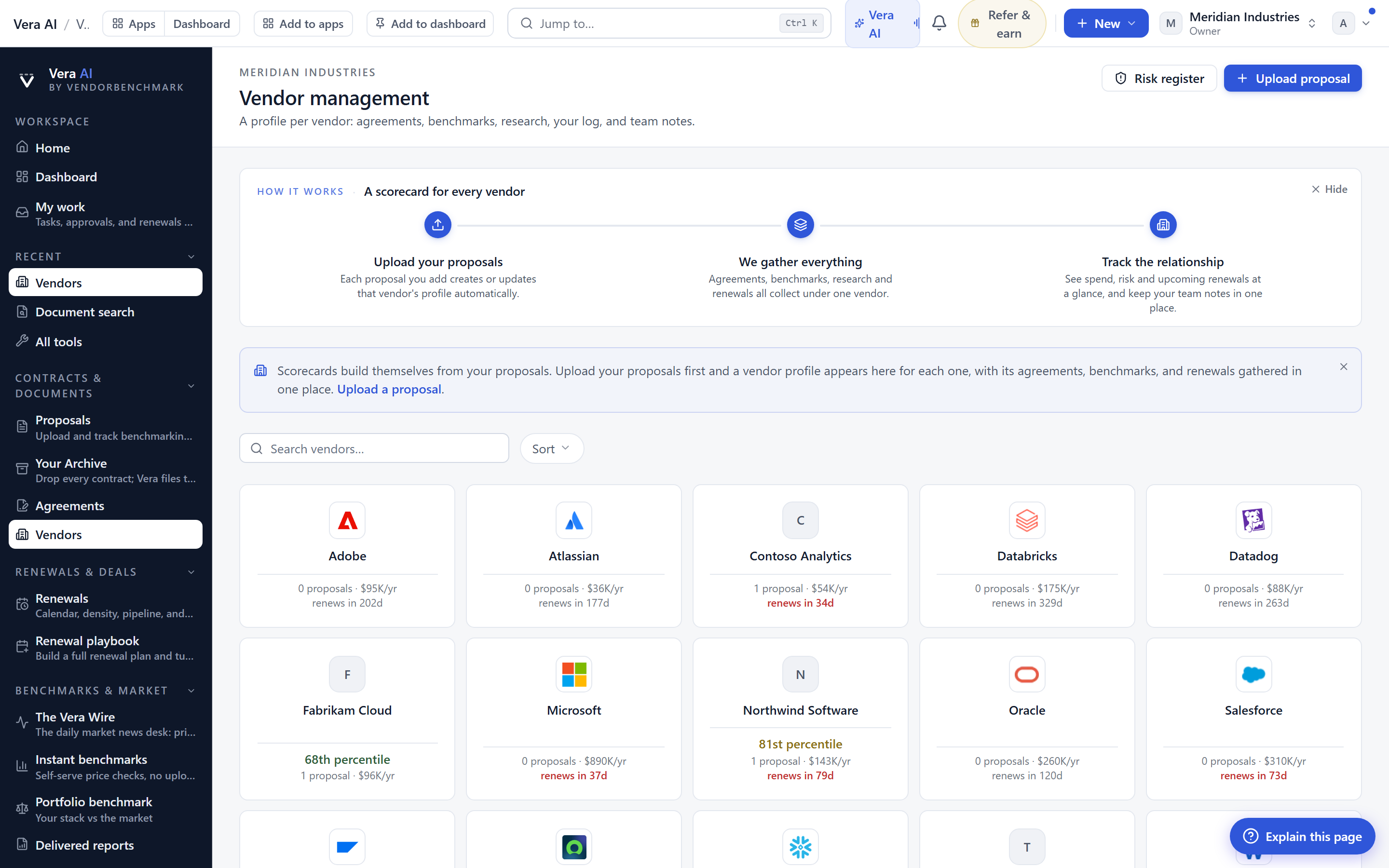
What watching the price book buys you
A watch, not a veto
Terms Watch tells you a list price moved and what it would cost you. It does not stop the vendor from moving it, and a list change is not the same as your negotiated price changing, which is exactly why the lead time matters. What you do with the warning, raise it now, bank it for the renewal, or right size ahead of it, is still a decision for a person.
But knowing beats not knowing, and knowing early beats knowing late. The vendor has always watched your usage in real time. Watching their price book in real time is the buyer finally holding the same kind of instrument, pointed the other way.
Fredrik has spent more than twenty years in enterprise software, with time at Oracle, IBM, SAP, and Salesforce before moving to the buy side. He structured and priced the kind of large agreements most buyers only see once or twice in a career, which taught him where the leverage sits and how far a vendor will actually move. He started VendorBenchmark to hand that knowledge to every sourcing team.
The week in enterprise software buying, in one email.
What shipped on the platform, and the pricing and licensing moves worth knowing before your next renewal. One email a week, to your work address. Unsubscribe any time.