Google Cloud commits: the third bidder you should price anyway.
You are on AWS or Azure and you are not going to move. Fine. Price a Google Cloud commit anyway, as a real, costed alternative, because a renewal negotiated against a credible third bidder is a different negotiation, even when you never intend to switch.
Cloud renewals suffer from a specific weakness on the buyer's side: the incumbent knows you are not going anywhere. Once your workloads are running on AWS or Azure, the switching cost is real, the migration is daunting, and the account team prices your commitment renewal with the quiet confidence of a supplier who knows the alternative is theoretical. A discount ask with no credible alternative behind it is a request for a favor, and it is treated as one.
The move that changes this is not to actually migrate; it is to price the third bidder. Google Cloud, as the third of the three hyperscalers, is a genuine competitor whose commitment discounts you can model against your own workload, whether or not you have any intention of moving to it. A costed Google Cloud commit turns your renewal from a one-supplier conversation into a competitive one, because your incumbent now has to price against a specific number rather than against your reluctance. The third bidder earns its keep entirely at the negotiating table, without a single workload changing homes.
A priced alternative beats a vague threat
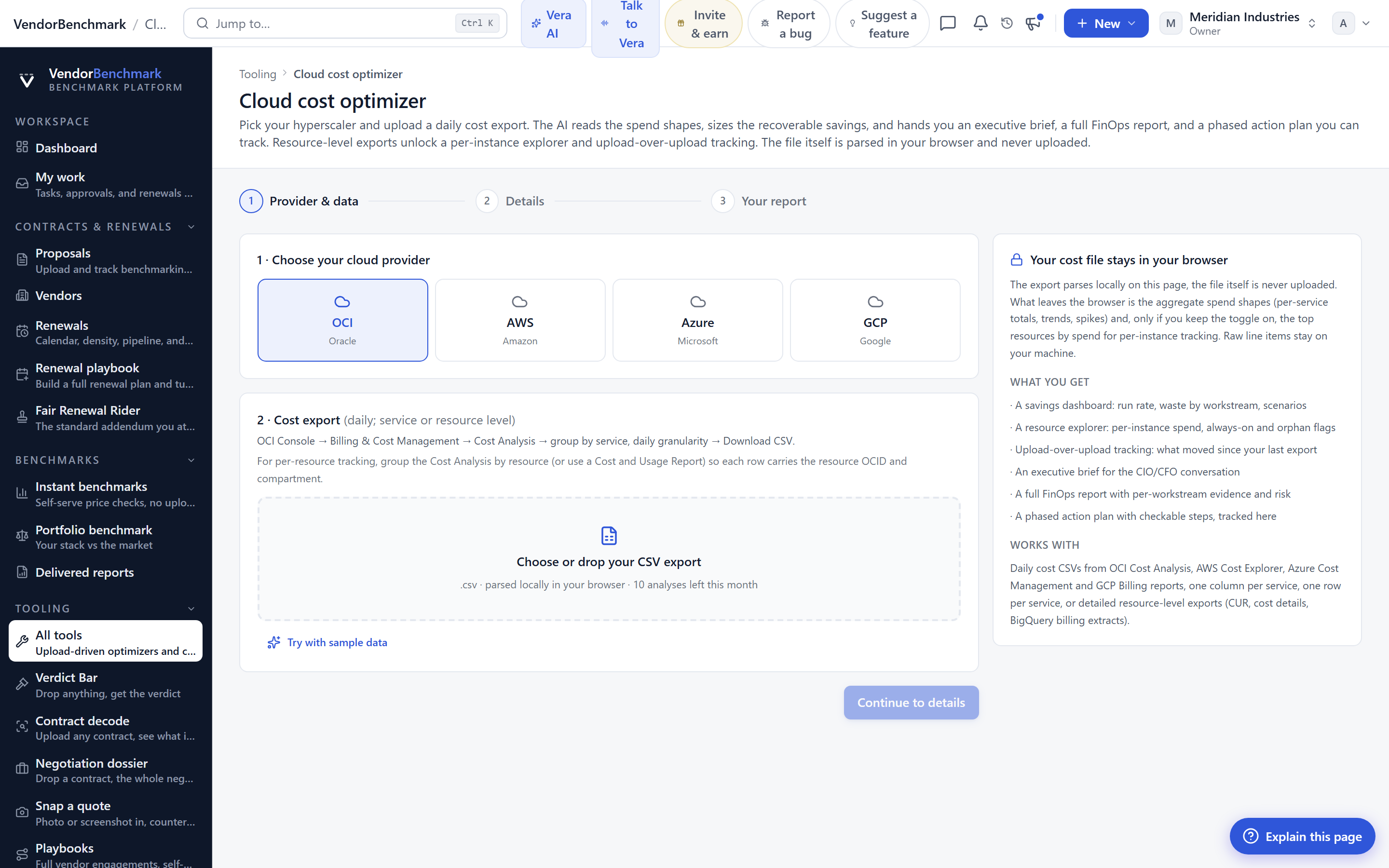
Every buyer knows to say "we are looking at Google Cloud." Every account team knows it means nothing, because it is a vague threat with no economics behind it. What has weight is a specific, credible number: at your actual usage, a Google Cloud commitment at their published rates and realistic discounting would cost this, versus your incumbent's renewal at that. The difference between the two is the gap your incumbent has to justify, and it is a very different thing to defend a price against a modeled competitor than against a customer's general unhappiness.
Pricing the alternative properly means running your real workload through it, not gesturing at a competitor's marketing. Take your actual run rate and cost profile and model what the equivalent commitment on Google Cloud would look like, including their committed-use discounting, so the alternative is grounded in your usage rather than a headline rate. A modeled third bidder built from your own numbers is a document you can put on the table, and a document is leverage in a way a threat never is.
What the third bidder actually does to the deal
The value of a priced third bidder is not that you will act on it, it is what its existence does to the incumbent's calculus. An account team pricing a renewal against a customer with no alternative optimizes for margin; the same team pricing against a customer holding a credible, costed competitor optimizes for retention, and those produce different numbers. You do not have to threaten to leave. You have to make it clear, with numbers, that leaving has been costed and is not absurd, and the incumbent adjusts because they now have to.
This works precisely because the incumbent cannot be sure you are bluffing when the alternative is real and specific. A vague mention is easy to dismiss; a workload-level model of a Google Cloud commit, with a real number attached, forces the account team to consider that this customer has done the work and might actually move a portion of spend, or the next project, or the growth. The uncertainty you introduce is the leverage. The third bidder does not have to win the deal; it has to be credible enough that the incumbent negotiates as if it might.
Where a partial move is genuinely credible
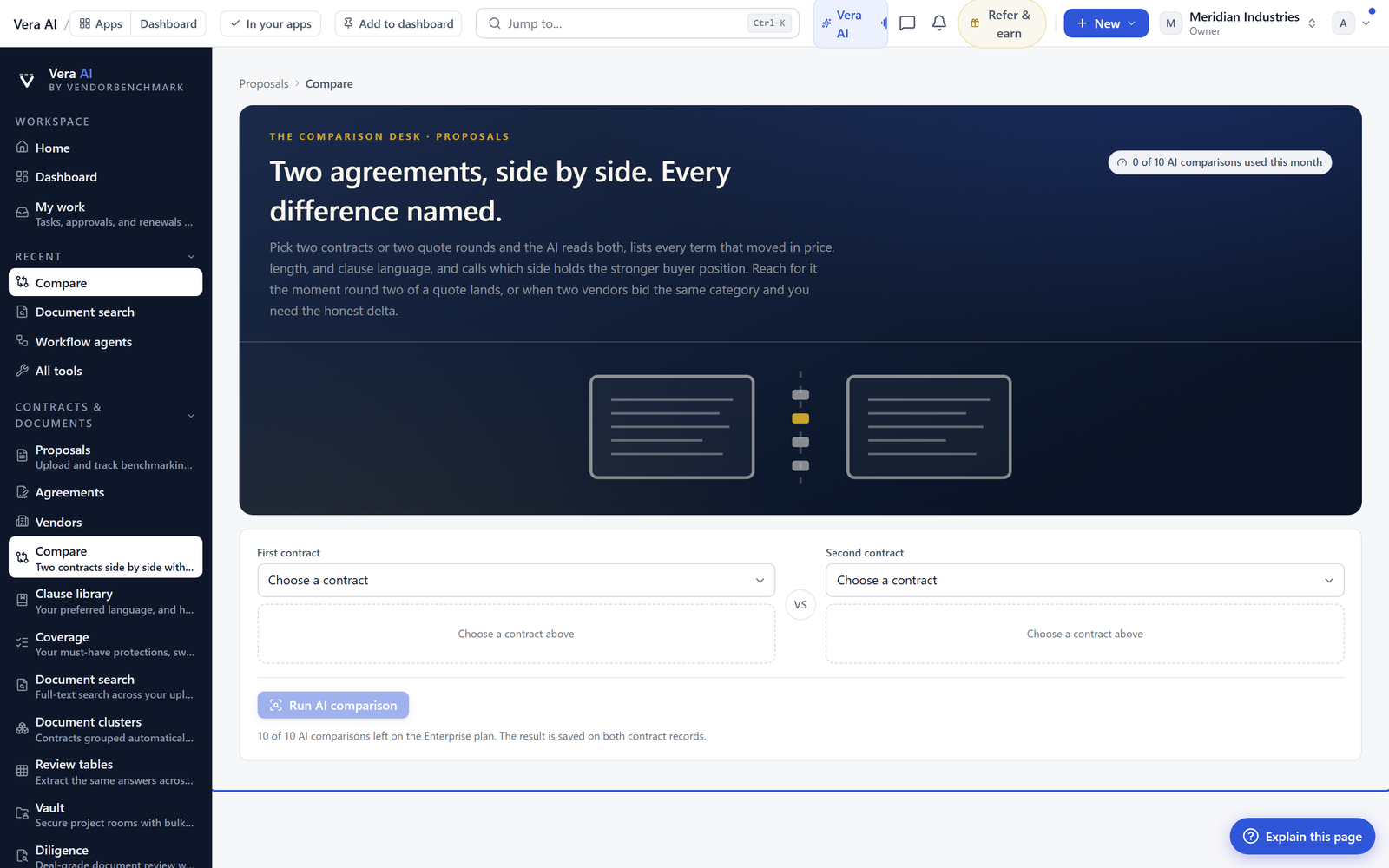
The third bidder is most powerful where it is most believable, and cloud gives you natural places to make it real without a wholesale migration. A specific new project, a particular data or AI workload where Google Cloud has genuine strengths, a discrete environment that could run anywhere, each is a credible candidate for a partial move, and a partial move is a far more plausible threat than a full one. Pricing the third bidder for a specific, movable slice of your estate makes the alternative concrete rather than hypothetical, and concrete is what the incumbent respects.
This also protects you from the bluff being called. If you anchor your leverage on a full migration you have no intention of doing, a sharp account team may test it, and a bluff exposed is worse than none. Anchoring it on a genuinely movable workload means the threat is one you could actually execute, which makes it both more credible and safer to hold. The point of the third bidder is a stronger renewal on the estate you are keeping, and the way to get it is an alternative real enough that you would not be embarrassed to be held to it.
Pricing an alternative you may never take
A lever, not a bluff to overplay
A third bidder is leverage, and leverage overplayed becomes a liability. If you brandish a Google Cloud model you have not really thought through, a competent account team will find the holes, and a credible alternative that collapses under one question does more harm than staying quiet. The model has to be honest about migration reality and real about which workloads could actually move, or it is a bluff dressed up as analysis.
What pricing the third bidder removes is the worst position in a cloud renewal, which is having no alternative at all and negotiating on hope. You may have every intention of staying with your incumbent, and that is fine; the point is to stay on terms shaped by a real alternative rather than by your own captivity. A costed third bidder, held with discipline and anchored on something you could actually do, is how a locked-in customer negotiates like one who has a choice, because on paper, they do.
Morten brings two decades of enterprise and software procurement, with stints across Oracle, IBM, SAP, and Salesforce shaping how he reads a deal. He has led sourcing through hundreds of renewals, from mid market order forms to nine figure global agreements, and learned that the buyers who win are the ones who walk in knowing the market. He built VendorBenchmark to make that pattern recognition repeatable.
The week in enterprise software buying, in one email.
What shipped on the platform, and the pricing and licensing moves worth knowing before your next renewal. One email a week, to your work address. Unsubscribe any time.