The auto-renewal clause: the trap, the window, and the fix.
Auto-renewal reads like a convenience: nobody wants service interrupted over paperwork. In practice it is a revenue strategy that converts your inattention into the vendor's easiest money, one year at a time, at an uplift you never discussed. Here is how the trap works, and the three layers that dismantle it.
The anatomy of the trap is three sentences that rarely sit next to each other in the contract. Somewhere in the term section: the agreement renews automatically for successive one year periods. Somewhere else: either party may decline renewal with written notice at least 60 or 90 days before the term ends. And in the fees section, the quiet third partner: renewal pricing at the vendor's then-current rates, or a stated uplift, or nothing at all, which in practice means whatever the invoice says.
Assembled, the machine works like this. The end date everyone remembers is not the date that matters. The real deadline is the notice cutoff months earlier, and it passes silently. Once it does, the contract has renewed itself at a price you never negotiated, and every conversation you have afterward is a favor the vendor may grant, not a right you hold. A 7 percent automatic uplift that never faces a negotiation compounds to more than 22 percent over three years. Multiply by the share of your 300 vendor estate that renews this way and the trap stops being a legal curiosity and becomes a budget line.
None of this requires bad faith. Vendors default to evergreen terms because buyers accept them, notice windows drift long because nobody pushes back, and renewal desks are staffed on the correct assumption that most customers will miss the date. The trap persists because it is nobody's job to watch 300 windows. So make it something's job instead.
See every window before it closes
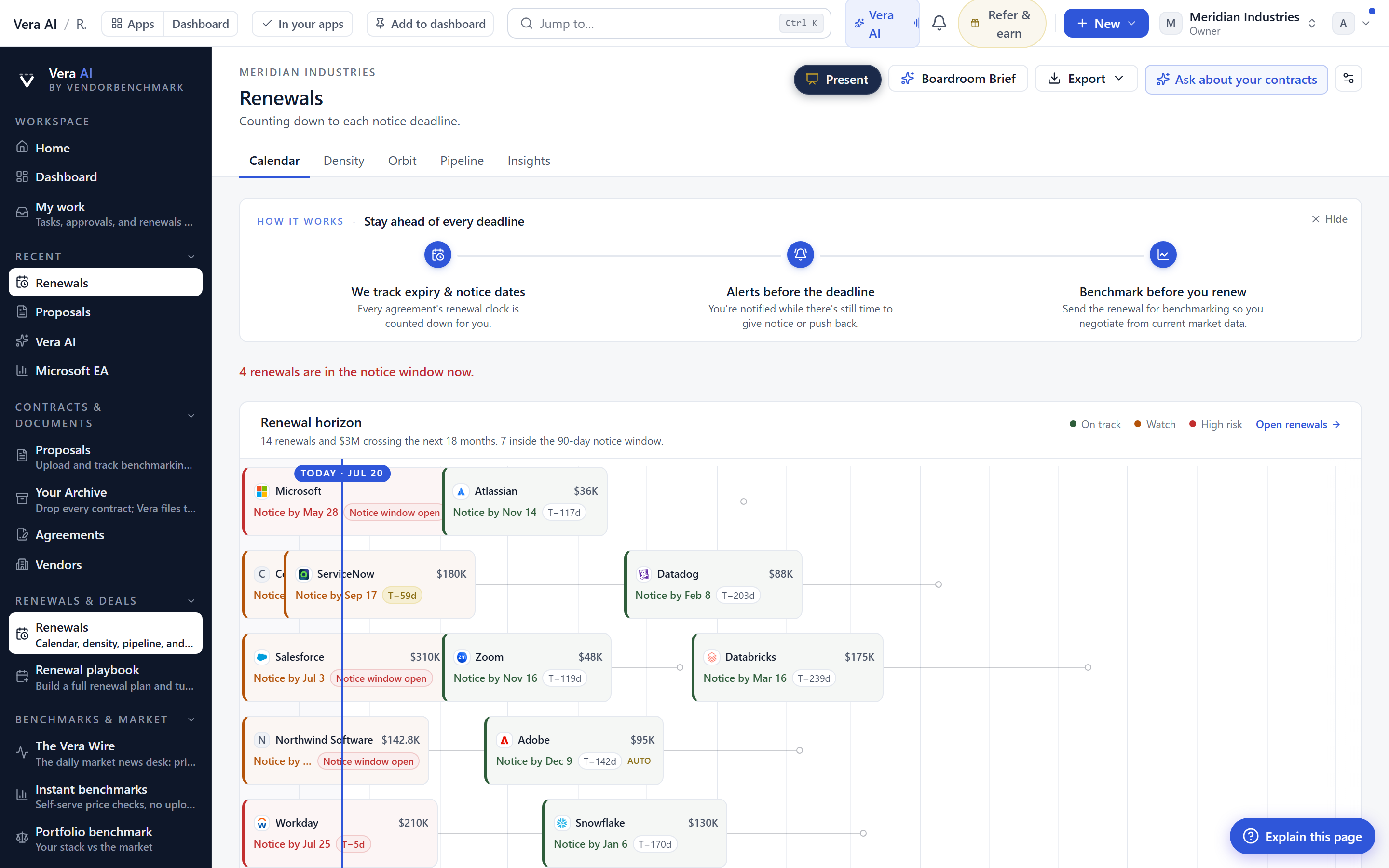
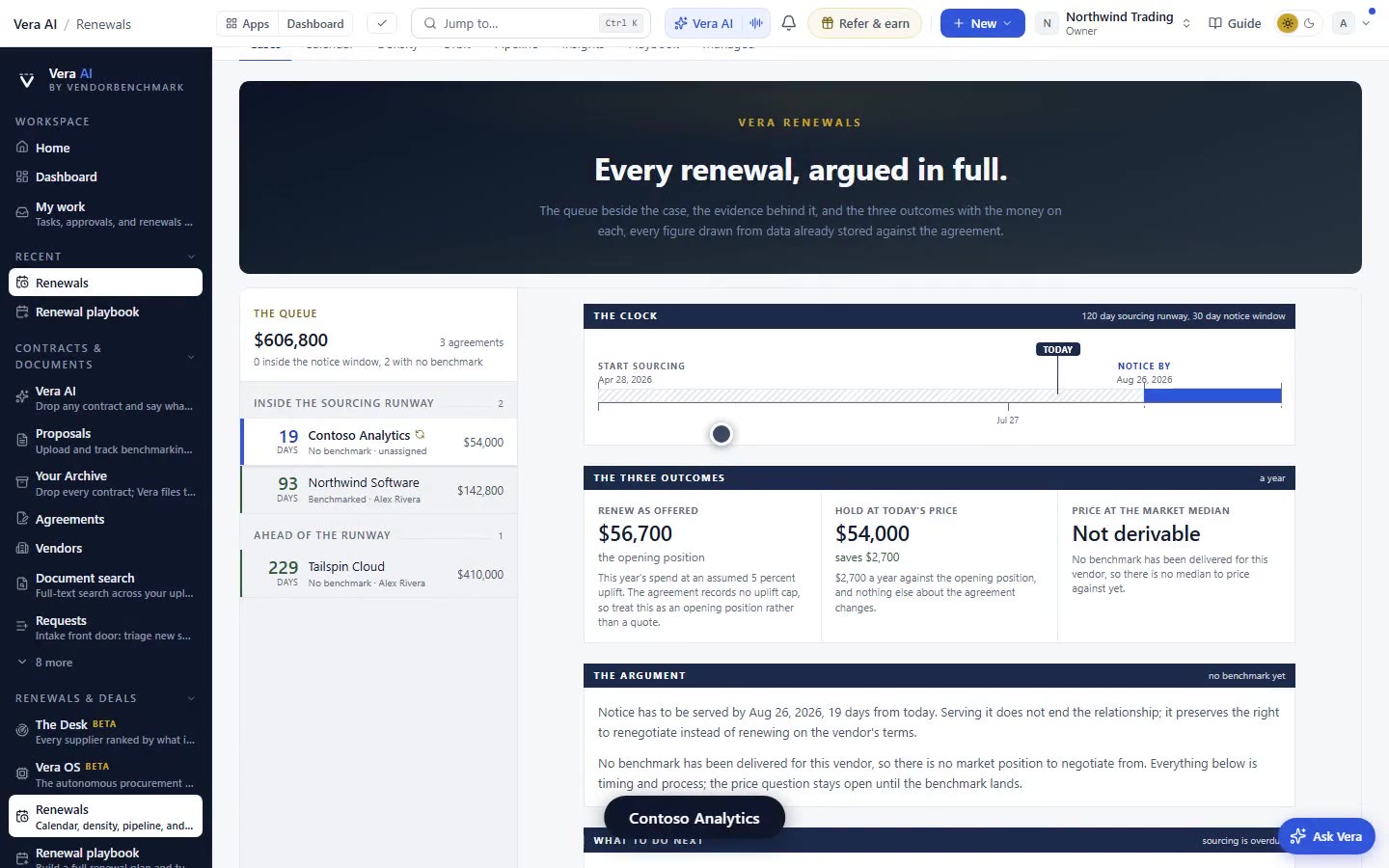
The first layer is mechanical visibility. When contracts land in the workspace, the AI reads out the renewal mechanics, the auto-renewal language, the notice period, and who must act, and the renewal board builds itself around the date that actually matters: the notice cutoff, not the end date. Countdowns escalate as windows approach, every renewal has an owner, and the background jobs never have a week where they forgot to check. The evergreen clause keeps existing, but its power source, your inattention, is unplugged.
Want to be updated when major licensing and pricing changes land? One analyst brief a week: the price rises, metric changes and audit campaigns that move software costs. Work email only.
Know which contracts carry the trap, estate-wide
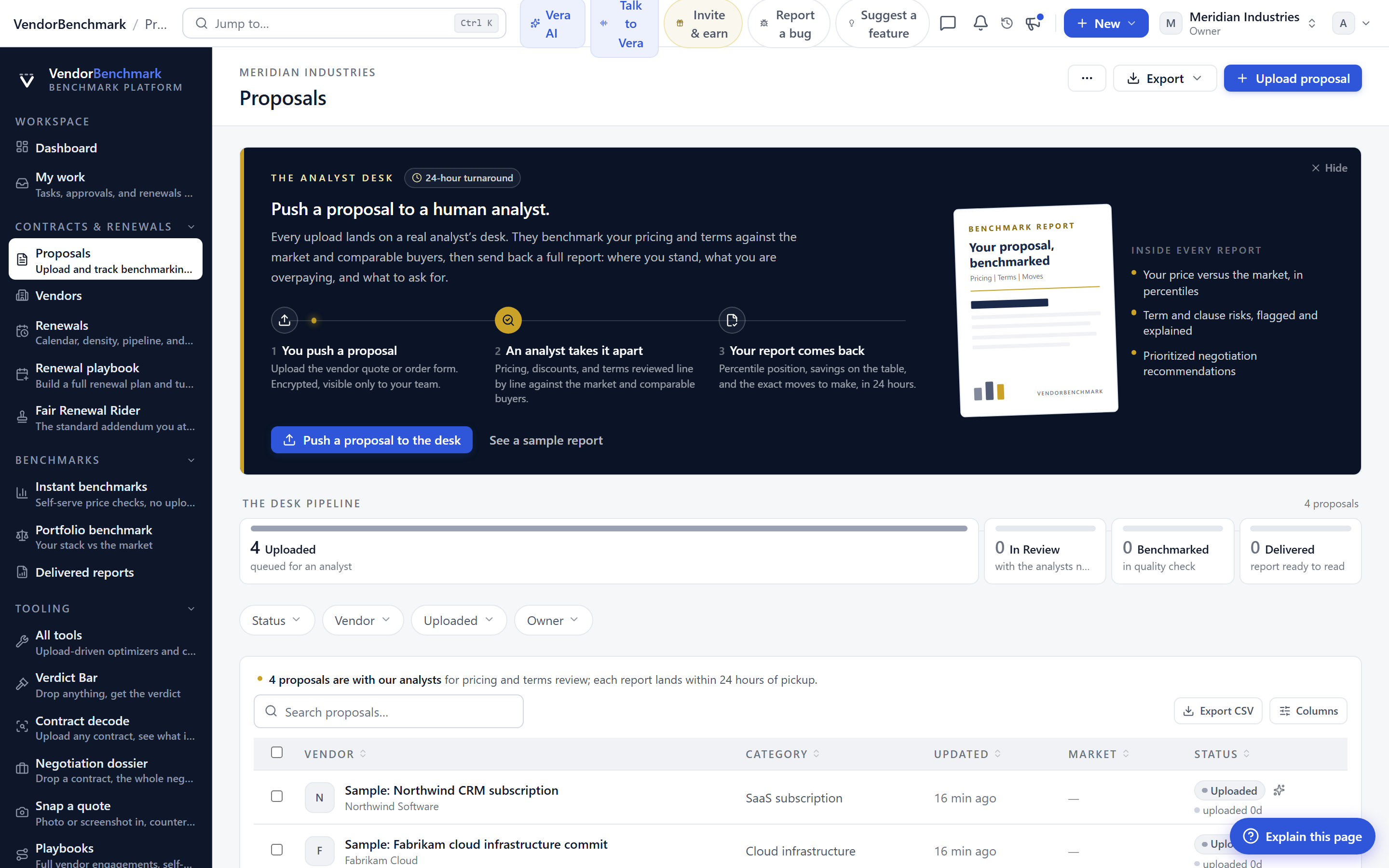
The second layer is knowing where you are exposed. Every decoded contract gets its renewal mechanics flagged: evergreen or fixed, the notice length, the price language attached to renewal, and whether the uplift is capped. Across the estate, the coverage grid turns that into a single view, which agreements auto-renew with an uncapped price, which have notice windows longer than 60 days, which quietly renew for multi-year periods. Review tables let you ask the question across 500 contracts at once and export the answer. What was invisible clause by clause becomes a ranked to-do list.
Do this once and the pattern that emerges is usually the same: the trap is concentrated in the mid-tier vendors, the $30K to $300K agreements that never got legal review on the way in. Those are exactly the renewals worth converting to fixed terms or capped uplifts at the next window, and now you know which windows those are.
Change the paper, not just the calendar
Watching windows treats the symptom. The durable fix is contract language, and each notice window you catch is the negotiating moment to install it. Four asks, in descending order of how often vendors grant them.
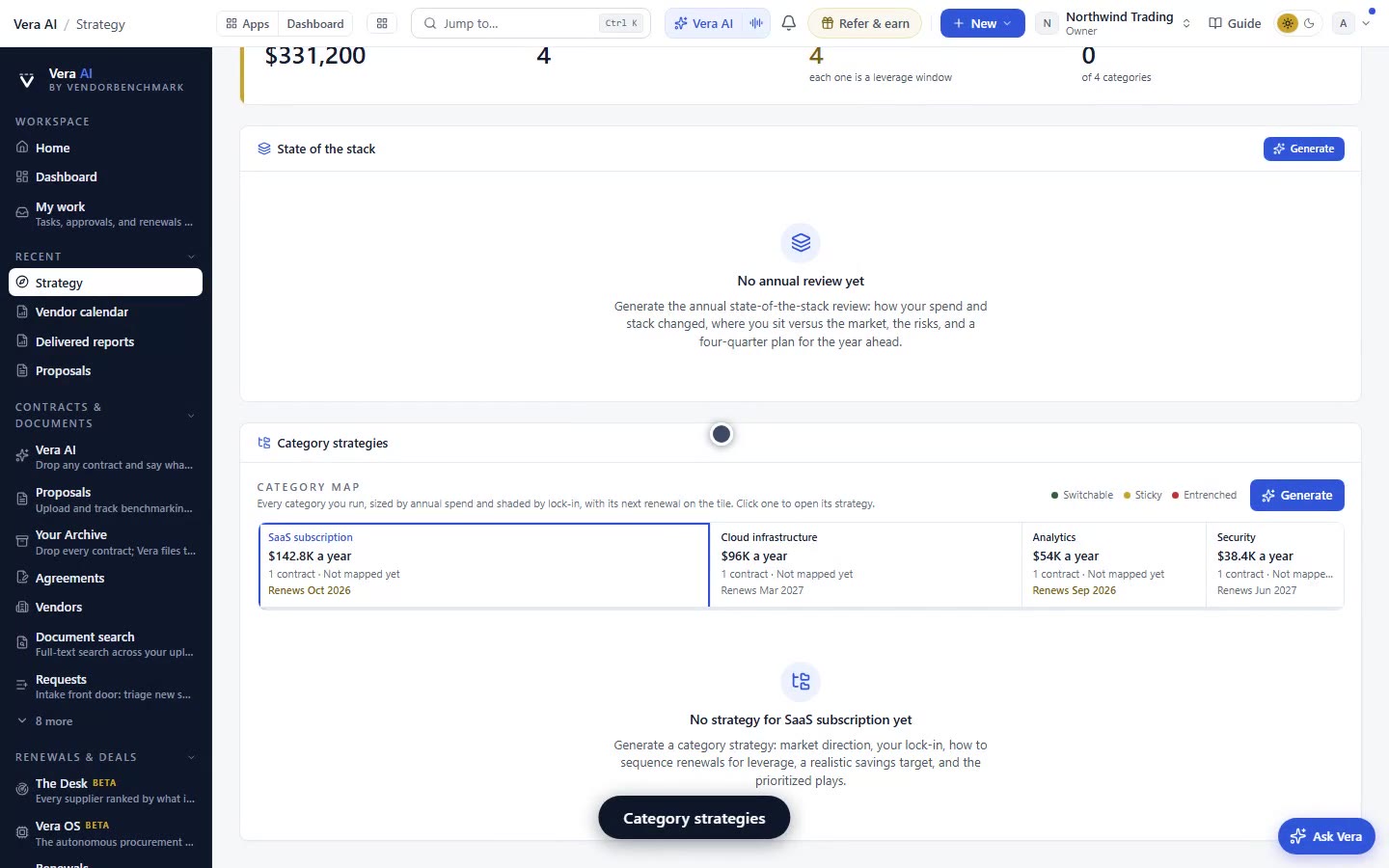
You do not have to draft any of this from scratch. The clause library holds your pre-approved renewal language and pushes it into every AI review, and the Fair Renewal Rider packages the whole posture, uplift cap, benchmark repricing, notice discipline, as a versioned addendum that merges into any renewal as tracked changes. The decoder's paste-ready asks close the loop for one-off pushback on a live quote.
The honest note is that layer three takes cycles: language changes at renewal, and a 300 vendor estate renews over a year or more. Which is the point of the layers. The calendar protects you today, the coverage grid tells you where to aim, and the paper hardens one window at a time until the trap has nowhere left to live.
Fredrik has spent more than twenty years in enterprise software, with time at Oracle, IBM, SAP, and Salesforce before moving to the buy side. He structured and priced the kind of large agreements most buyers only see once or twice in a career, which taught him where the leverage sits and how far a vendor will actually move. He started VendorBenchmark to hand that knowledge to every sourcing team.
The week in enterprise software buying, in one email.
What shipped on the platform, and the pricing and licensing moves worth knowing before your next renewal. One email a week, to your work address. Unsubscribe any time.