Billing watch: the invoice checked against the contract, every day.
Nobody reads the invoice. It arrives, the total looks about right, it gets approved, and the overcharge rides along quietly for a year. Billing watch reads every line against your entitlements and the market, daily, and has the correction drafted before you notice the gap.
The invoice is where negotiated savings quietly leak back out. A team spends weeks getting a good price, signs a clean contract, and then the bills arrive month after month and nobody checks whether they match the deal that was struck. The total looks plausible, the approver is busy, and it gets paid. An overcharge that would have been obvious against the contract rides along invisibly, because the contract and the invoice live in different systems and no one ever holds them up against each other.
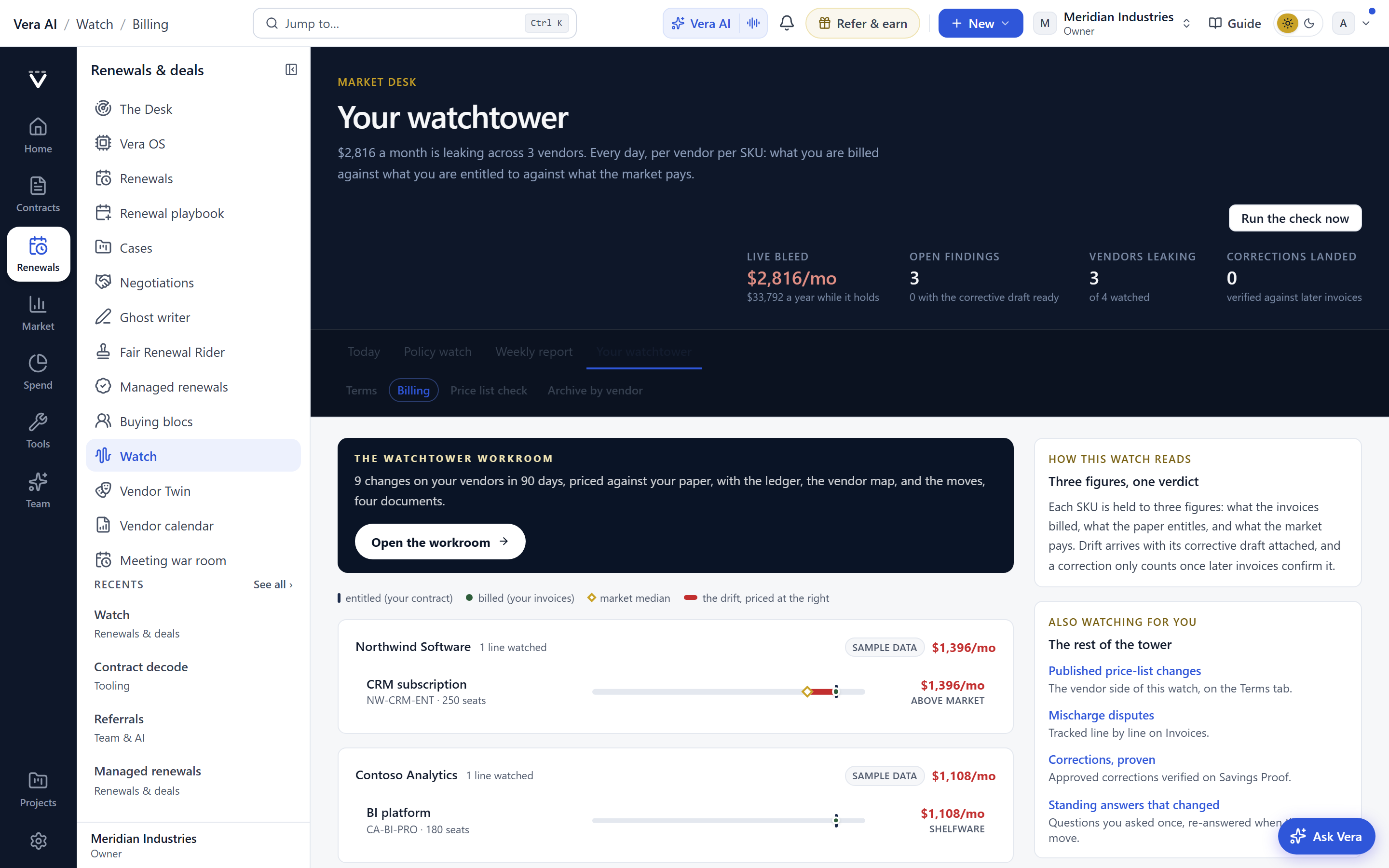
Billing watch is the standing check nobody has time to run by hand. Every day it compares what you are billed against what you are entitled to and against what the market pays, per vendor and per SKU, and when the three do not agree it says so, with the correction already drafted.
Three numbers that should agree, and often do not
Every line on an invoice is really a claim about three numbers that ought to line up. What you are billed. What your contract entitles you to, at the rate and quantity you agreed. And what the wider market pays for the same thing. When those three agree, the line is clean. When they diverge, the shape of the gap tells you which problem you have.
Billed above entitled is a mischarge, the vendor billing more than your own contract allows, and it is the clearest kind of error to challenge because the evidence is the agreement you both signed. Entitled above market is overpricing, where the contract is being honored but the deal itself sits above where it should. And entitled far above what you actually use is shelfware, capacity you are paying for and not deploying. One daily comparison, three distinct leaks, each with a different fix.
The correction, drafted before you ask
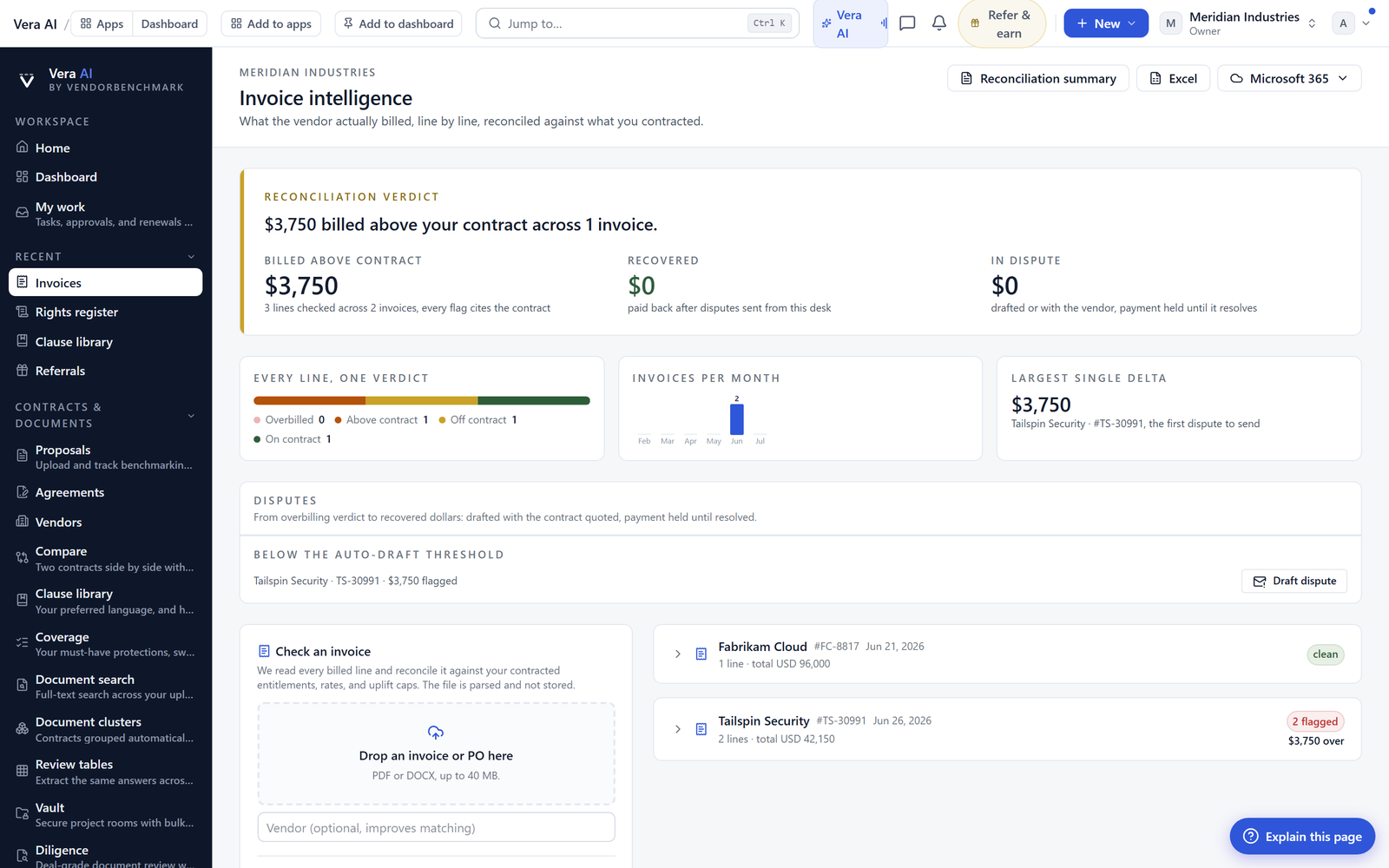
Finding a leak is only half the work. The other half is the letter, the dispute, the plan, the thing that actually recovers the money, and that is usually where a busy team runs out of road. So billing watch does not stop at the finding. A mischarge routes straight into a billing dispute, drafted against the specific invoice lines that prove it. An overpriced or shelfware finding comes with a corrective letter or a right sizing plan, composed and ready to send, grounded in the evidence.
Every finding carries its receipts: the exact invoice line ids, a verbatim citation, and the market cohort behind the comparison. So the correction is not a vague complaint that the bill seems high. It is a specific claim, tied to specific lines, with the numbers attached, which is the only kind of correction a vendor actually acts on.
Want to be updated when major licensing and pricing changes land? One analyst brief a week: the price rises, metric changes and audit campaigns that move software costs. Work email only.
Honest by design, so the alerts stay trusted
A daily monitor lives or dies on precision, because a watchdog that cries wolf gets muted, and a muted watchdog catches nothing. So the honesty rules are built in. A finding you review and reject keeps its reason and is never raised again, so the same false positive cannot nag you twice. A finding that stops reproducing on later invoices resolves itself with a note, rather than lingering as a stale alarm. And a saving you approve is filed as a record that later gets reconciled against the invoices that actually arrive, so a claimed recovery has to prove itself real.
That last loop matters most. It is easy for any tool to claim it found savings. Billing watch holds its own findings to account by checking them against the bills that follow, so the number it reports is the number that actually landed, not the number it hoped for.
What a daily check catches
It drafts the correction, you send it
Billing watch finds the gap, names it, and writes the first draft of the fix. It does not send the dispute or renegotiate the rate on your behalf, and a flagged line still needs a person to confirm it is a genuine error rather than an agreed exception the data did not know about. The market comparison is grounded in modelled cohorts, but it is a benchmark, not a guarantee of what you could achieve.
What it changes is that the check happens at all, every day, on every line, without anyone finding the time. The overcharge that used to ride along for a year gets caught in a week, with the correction already written. The invoice stops being the place your savings quietly disappear and becomes the place you keep them.
Fredrik has spent more than twenty years in enterprise software, with time at Oracle, IBM, SAP, and Salesforce before moving to the buy side. He structured and priced the kind of large agreements most buyers only see once or twice in a career, which taught him where the leverage sits and how far a vendor will actually move. He started VendorBenchmark to hand that knowledge to every sourcing team.
The week in enterprise software buying, in one email.
What shipped on the platform, and the pricing and licensing moves worth knowing before your next renewal. One email a week, to your work address. Unsubscribe any time.