Datadog and the observability bill: taming per-host sprawl and the commit cliff.
Observability is the bill that grows while you are not looking. Every host, every module, every custom metric and ingested log adds a little, and usage past the commit falls off an on-demand cliff. The fix is to read the bill line by line, benchmark the rate, and right-size before you sign.
Observability platforms have a pricing model that is almost designed to surprise you, and the surprise is always upward. The bill is assembled from many small meters, per host, per module, per million custom metrics, per gigabyte of logs ingested, per span, and each one grows quietly with the estate it is watching. Engineers add a monitor, spin up hosts, turn on another module, and every one of those reasonable technical decisions adds to a bill that nobody is watching as closely as the systems it monitors. By renewal, the number has grown in a dozen small ways that were individually invisible.
The renewal itself then adds a second trap: the commitment, and the cliff on the other side of it. You commit to a level of spend for a discount, and usage above that commit is billed at full on-demand rates that erase the discount you were promised. An observability estate that grows past its commit, which growing estates do, tips off the cliff into penalty pricing. Taming this bill means doing two things most teams never get to: reading it line by line to see where it actually goes, and sizing the commit so realistic growth does not push you over the edge.
Read the bill line by line
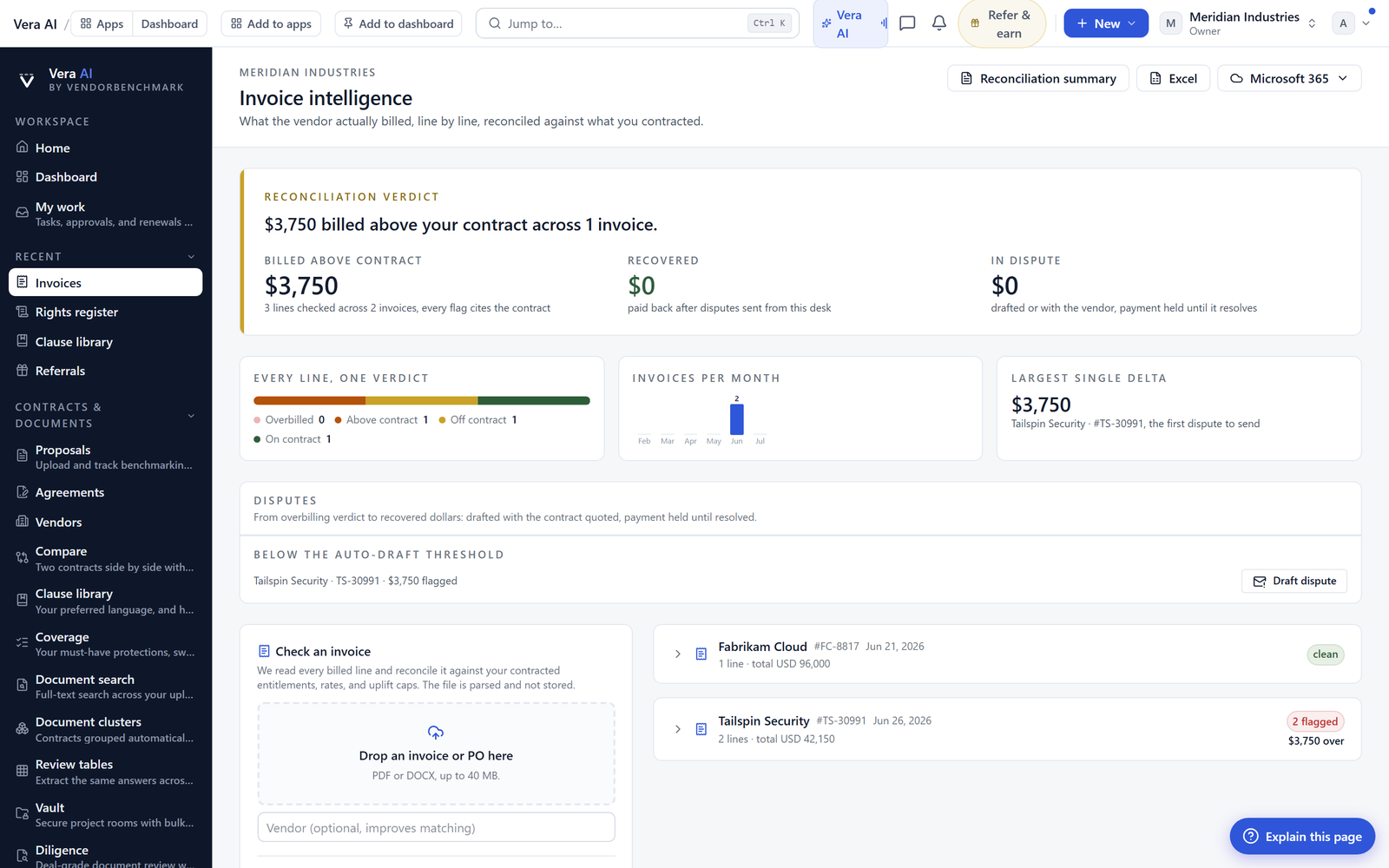
The first move against an observability bill is to stop treating it as a single number and read it as the many meters it actually is. Line-item intelligence takes the invoice apart and reconciles each line against what you are entitled to and what you were billed before, flagging the ones that moved: a per-host charge that jumped, a module you are paying for but barely using, custom metric volume that quietly doubled, log ingestion running above plan. Each anomaly comes with the dollar delta, so the sprawl stops being a vague sense that the bill is high and becomes a list of specific, priced lines.
That line-level read is what makes the bill negotiable and controllable. A lump-sum observability bill is impossible to argue with and impossible to optimize, because you cannot see what is driving it. Broken into its meters, with the movers flagged, you can see that a large slice of the growth came from a handful of high-cardinality custom metrics or a log firehose nobody turned down, which are engineering decisions you can revisit, not fixed costs you have to renew. The invoice becomes a map of where the money went rather than a bill you pay and forget.
Benchmark the rate, not just the total
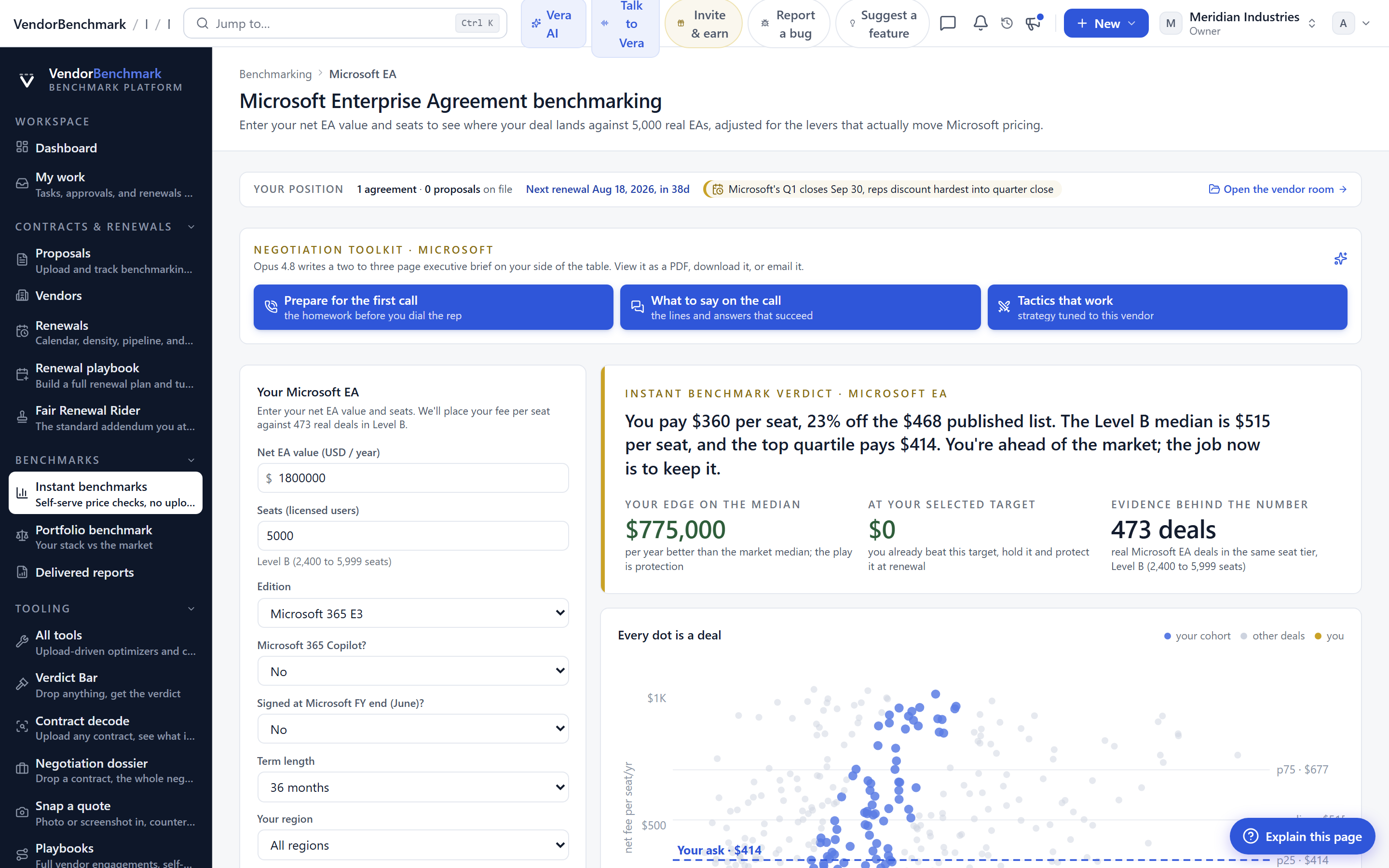
Reading your own bill tells you where the money goes; benchmarking tells you whether the rate you pay for it is fair. Observability pricing varies widely by deal size and negotiation, and the per-host and per-module rates on your contract sit somewhere in a distribution of what comparable buyers actually pay. Placing your effective rates against that distribution turns "the bill feels expensive" into "our per-host rate is above where comparable estates land," which is a benchmarked position you can take into the renewal rather than a complaint.
The rate matters more on observability than on many categories precisely because the volume is so elastic. A per-unit rate a few points above market compounds fast when the units multiply across a growing estate, so a rate you accepted as reasonable at a smaller scale becomes a significant overpayment at a larger one. Benchmarking the unit economics, not just glancing at the total, is what catches that, and it is what tells you whether the renewal conversation should be about the rate, the volume, the commit structure, or all three.
Want to be updated when major licensing and pricing changes land? One analyst brief a week: the price rises, metric changes and audit campaigns that move software costs. Work email only.
Right-size the commit, mind the cliff
With the bill understood and the rate benchmarked, the commit can be sized properly, and the whole game is the cliff. Commit too low and you forfeit the discount on the usage you know is coming; commit too high and you prepay for capacity you may optimize away, and the observability world is full of teams that over-committed on a growth projection and then spent the term trying to grow into a number they no longer needed. The right commit sits in a band: high enough to earn the rate on your realistic, benchmarked run rate, low enough that normal growth does not immediately tip you over, and structured so that the overage terms are not punitive.
This is where reading the bill pays off a second time. Because you have taken the invoice apart, you know which parts of the growth are structural and which are cleanable, so you can commit against a run rate you have already trimmed rather than the inflated one the vendor would prefer to size from. Right-sizing before you commit, cutting the log firehose, dropping the unused module, capping the runaway metric, means you sign a smaller, more accurate commitment, which is both cheaper now and far less likely to strand you above or below it later.
Before the observability renewal
The bill is technical before it is commercial
Much of an observability bill is driven by engineering choices, and the commercial team cannot fix it alone. Whether a custom metric is worth its cost, whether a log stream should be sampled, whether a module is earning its keep, these are decisions the engineers who added them have to make, and a benchmark on the rate does not tell you whether the usage itself is justified. Taming the bill is a joint effort between the people who negotiate it and the people who generate it.
What reading and benchmarking the bill removes is the blindness. An observability bill left as a lump sum grows unexamined until renewal, when it is too late and too tangled to do anything but absorb the increase. Broken into meters, benchmarked on rate, and cleaned before the commit, it becomes a bill you actually manage, sized to a run rate you trimmed and a rate you verified, which is the difference between renewing observability and being renewed by it.
Fredrik has spent more than twenty years in enterprise software, with time at Oracle, IBM, SAP, and Salesforce before moving to the buy side. He structured and priced the kind of large agreements most buyers only see once or twice in a career, which taught him where the leverage sits and how far a vendor will actually move. He started VendorBenchmark to hand that knowledge to every sourcing team.
The week in enterprise software buying, in one email.
What shipped on the platform, and the pricing and licensing moves worth knowing before your next renewal. One email a week, to your work address. Unsubscribe any time.