From spend list to savings plan: twenty moves, ranked.
Everybody has a spend report. Almost nobody has a plan. Here is how the platform turns your top vendors and renewal dates into a ranked list of about twenty moves, each with an owner, a window, and a number attached.
Ask a procurement team where the savings are and you will usually get one of two answers. Either a confident story about the one big renewal everyone is watching, or an honest shrug at a spend report with four hundred lines on it. Both are symptoms of the same gap. A list of what you spend is not a plan for what to do about it.
The report tells you Salesforce is your third largest line. It does not tell you that you are eleven points off market, that the renewal is in October, and that this specific fact makes it a better first move than the larger vendor you are not overpaying and cannot touch until next year. Turning spend into savings means ranking the estate by where the money actually is and when you can go get it.
Rank by opportunity, not by size
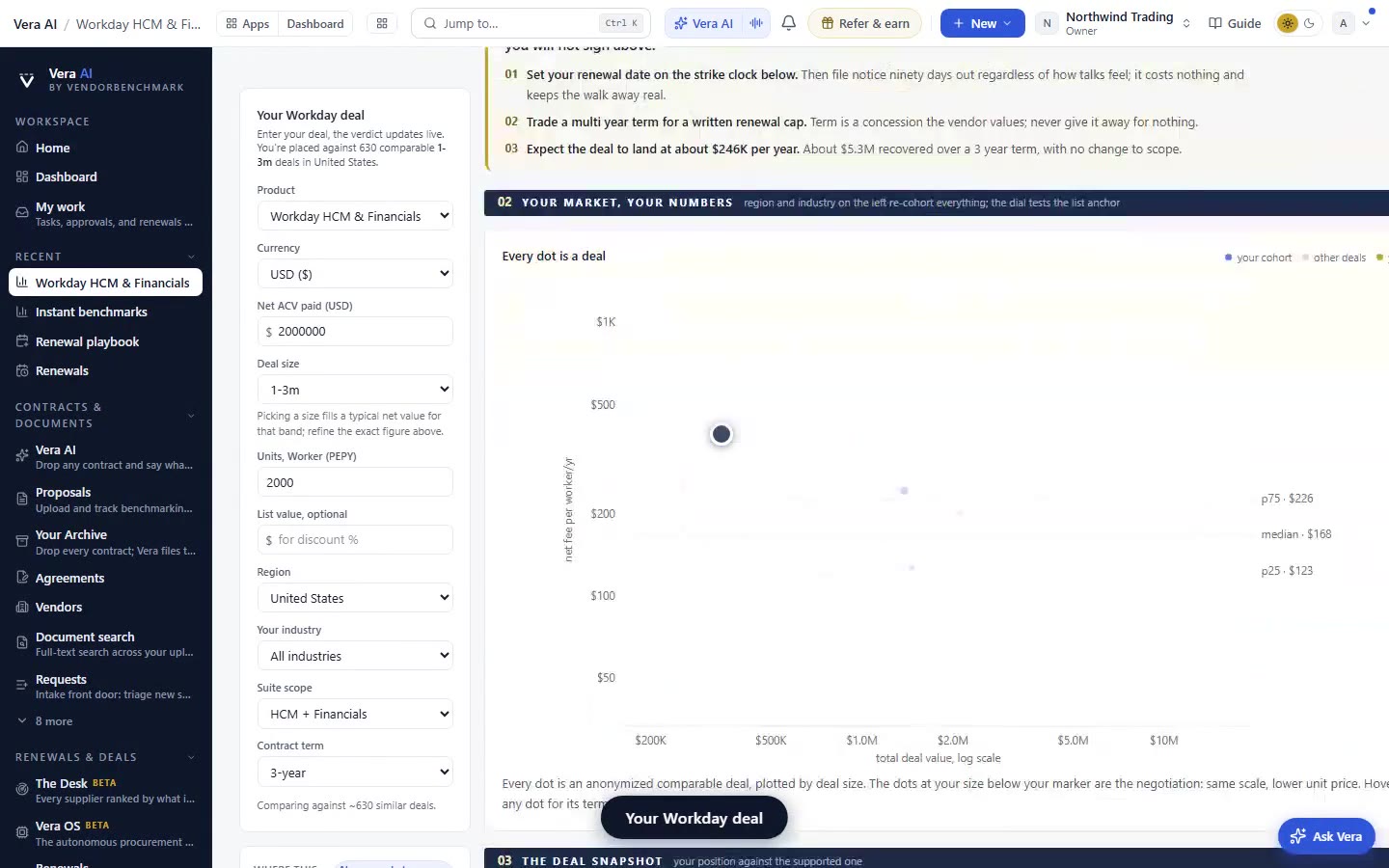
The biggest line is rarely the best move. A vendor you already negotiated hard has little left to give, however large it looms. A mid sized contract sitting fifteen points above the market, with a renewal ninety days out, is where an afternoon of work pays for the quarter. Spend optimization scores every vendor on three things at once: how much you spend, how far your unit price sits from comparable deal cohorts, and how soon the renewal gives you a real lever.
That combination is the whole trick. Distance from market tells you the prize. Spend tells you the size of it. Renewal timing tells you whether the prize is reachable this year or just annoying to look at. Sorted together, the estate stops being a wall of numbers and becomes a queue.
It also quietly kills the two failure modes teams fall into. The first is chasing the biggest logo out of instinct, then discovering there is nothing left to negotiate. The second is death by analysis, forty tabs open, no move made, the renewal passing while everyone studies. A ranked queue answers the only question that was ever really blocking the work: not "where could we save," which is everywhere and nowhere, but "what do we do first."
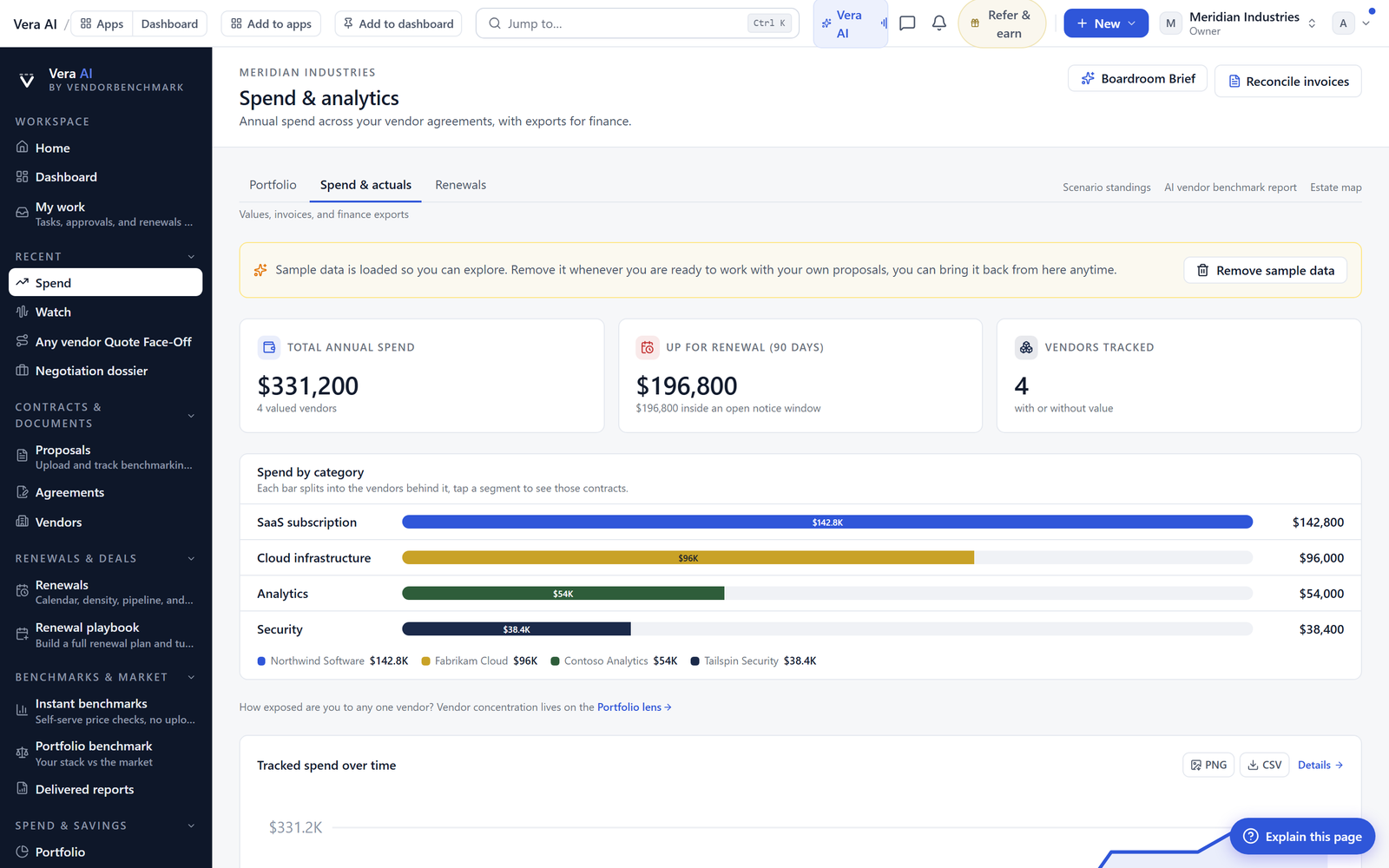
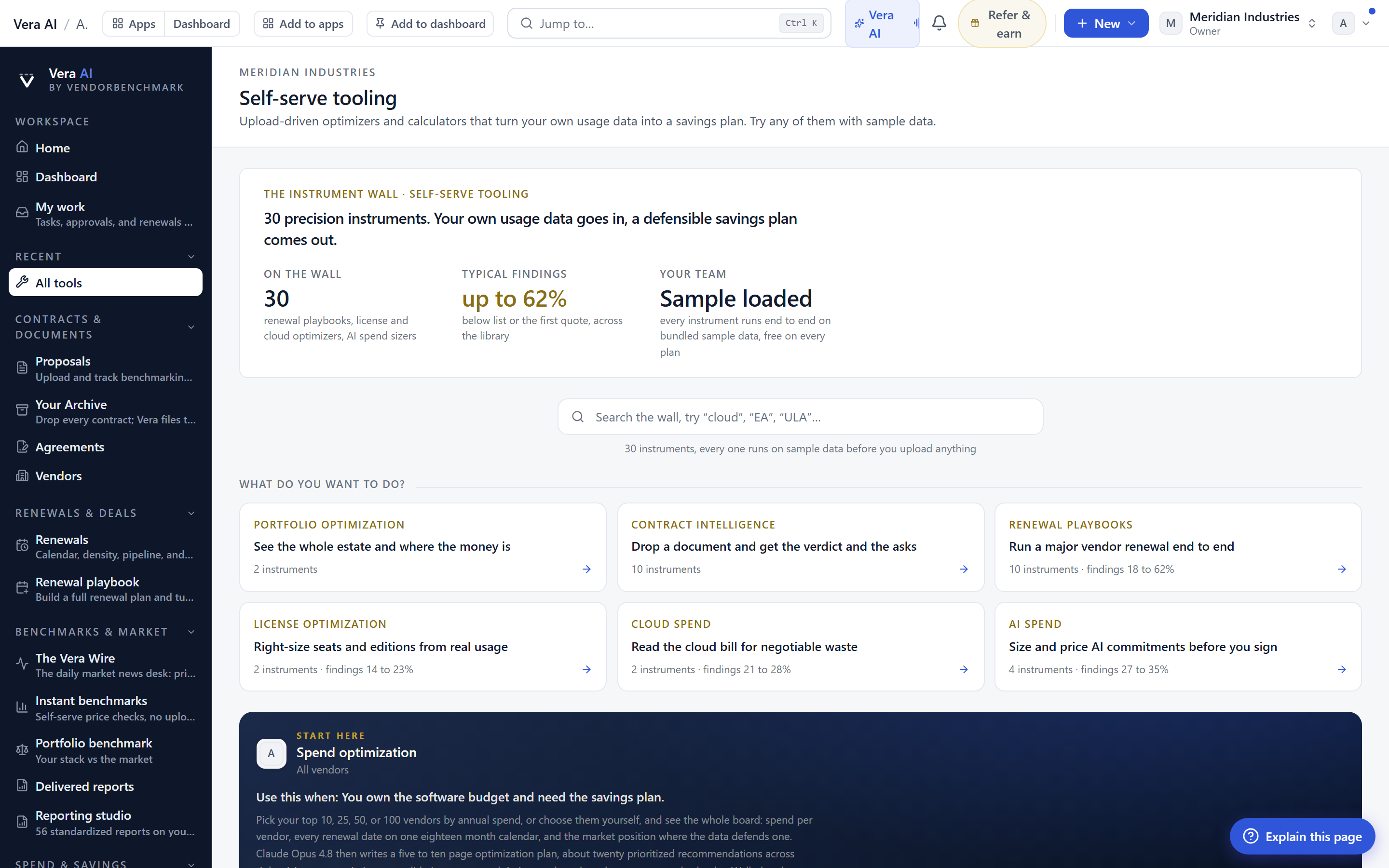
Feed in one billing export or connect the source, and the ranking builds itself against the benchmark library covering 1,471 vendors. You are not eyeballing a spreadsheet and trusting your gut about which vendor "feels expensive." You are looking at the estate ordered by where a negotiation would actually move a number.
The plan is about twenty moves, not four hundred
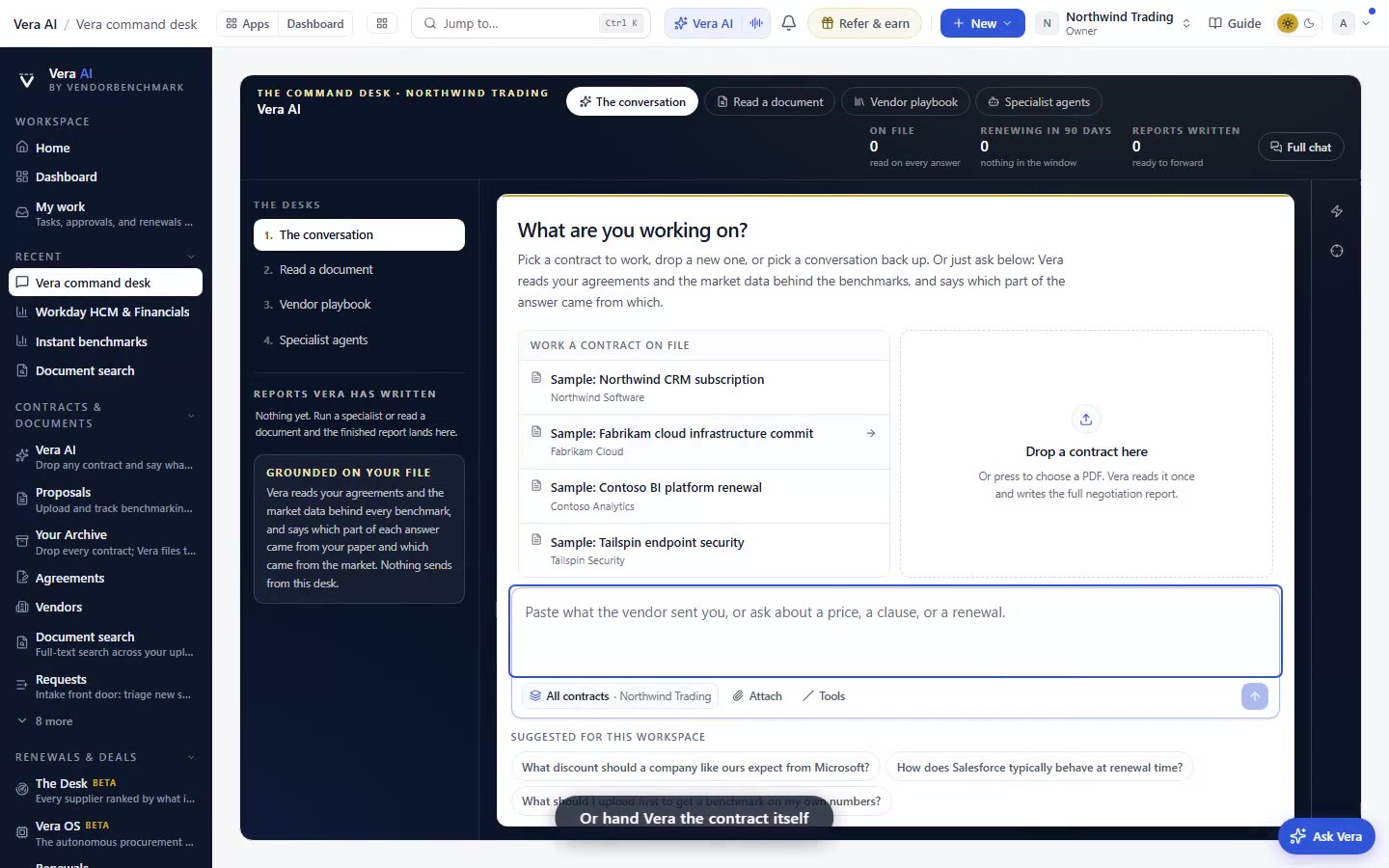
From that ranking, the platform writes a plan of roughly twenty prioritized recommendations. Not four hundred, because a list nobody can execute is the same as no list. Each recommendation is concrete: the vendor, the specific move, right size the seat count, challenge the uplift, consolidate two overlapping tools, tender third party support, the estimated value, and the window to act in.
A plan that a team can actually work through is worth more than a perfect analysis nobody has time to read. Twenty moves with owners and dates is a quarter of real work. The four hundred line report it came from is just evidence.
Sequencing is what makes the plan survive contact with the calendar. A move against a vendor whose renewal is fourteen months out is a good idea with nowhere to go yet, because the lever does not exist until the contract opens. So the plan orders itself by renewal window, surfacing the vendors you can actually act on this quarter and parking the rest until their moment arrives. The team works a live queue, not a wish list, and every item reaches the top exactly when it can be won.
Want to be updated when major licensing and pricing changes land? One analyst brief a week: the price rises, metric changes and audit campaigns that move software costs. Work email only.
From export to plan in four steps
A plan is a starting line, not a guarantee
The estimates are grounded in real comparable deals, not a vendor's aspirational discount chart, but they are still estimates. A renewal is a negotiation, and the number you land depends on leverage, timing, and the alternative you are willing to name. The plan tells you where to spend your effort. It does not spend it for you.
What it removes is the paralysis of the four hundred line report. Instead of staring at everything, the team works the twenty moves that matter, in the order the calendar allows, with a number to aim at on each. Savings stop being a year end surprise and become a backlog you burn down.
Fredrik has spent more than twenty years in enterprise software, with time at Oracle, IBM, SAP, and Salesforce before moving to the buy side. He structured and priced the kind of large agreements most buyers only see once or twice in a career, which taught him where the leverage sits and how far a vendor will actually move. He started VendorBenchmark to hand that knowledge to every sourcing team.
The week in enterprise software buying, in one email.
What shipped on the platform, and the pricing and licensing moves worth knowing before your next renewal. One email a week, to your work address. Unsubscribe any time.