From first login to first saved deal: the first two weeks.
Every platform is bought on a demo and judged on the first two weeks. A blank account with a hundred features is not a fast start, it is a maze. Here is how the first fortnight is designed to go, from empty workspace to a loaded estate and a first deal you have actually saved.
The demo is not where a platform wins or loses. The first two weeks are. A tool can look extraordinary in a scripted walkthrough and still die quietly in a new account, because the buyer logs in on Monday, sees a blank workspace and a navigation bar full of features they have no reason to click yet, and closes the tab. Capability is not the same as momentum, and a hundred powerful features with no obvious first step is a maze, not a head start.
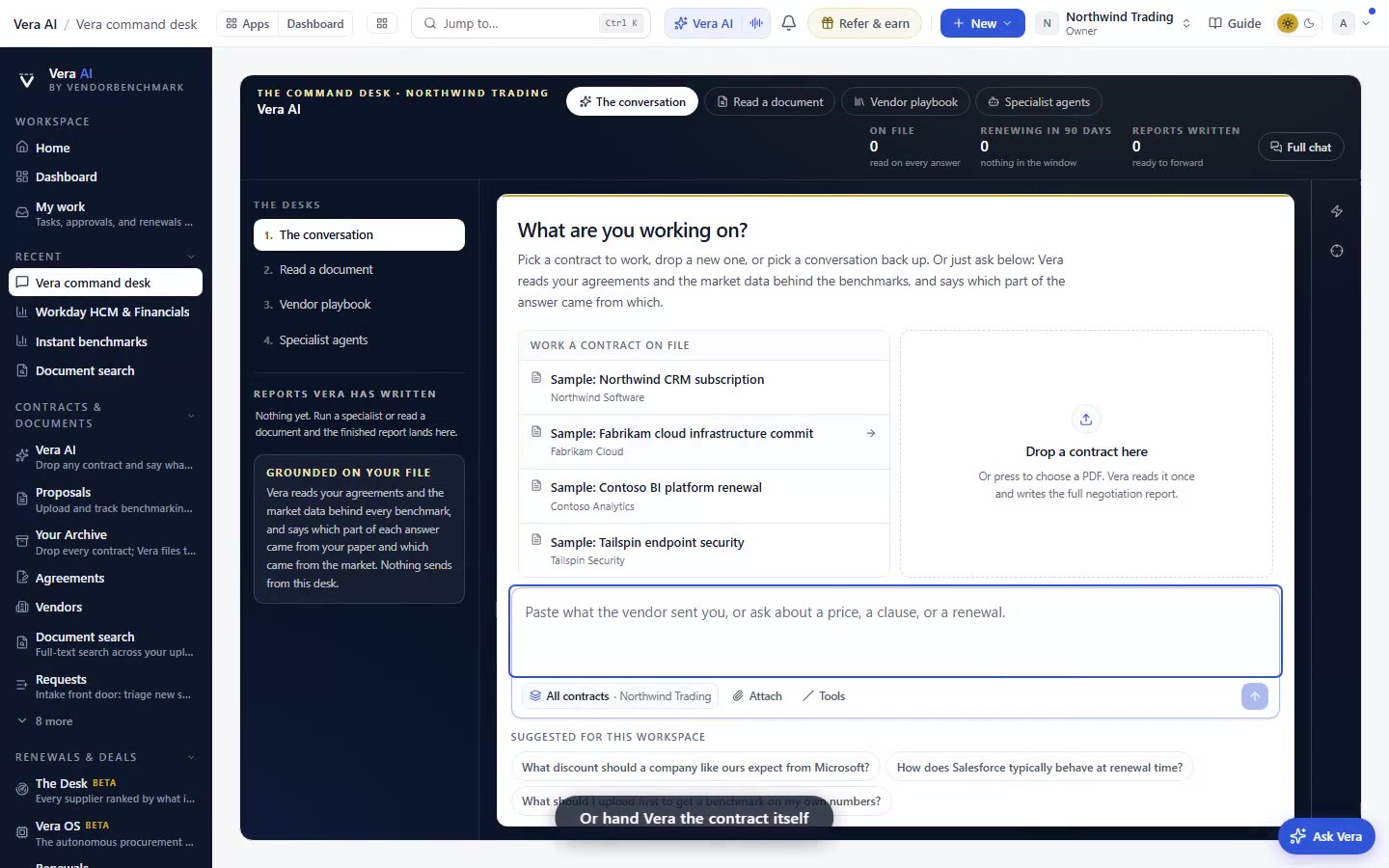
So the getting started experience is designed as a course, not a feature tour. It does not try to show you everything. It picks a path suited to why you are here and walks you down it, one lesson at a time, until you have done the things that actually make the platform stick: loaded your estate, run your first benchmark, and saved your first deal. The goal of week one is not to learn the product. It is to get a real answer out of it.
A path chosen for why you came
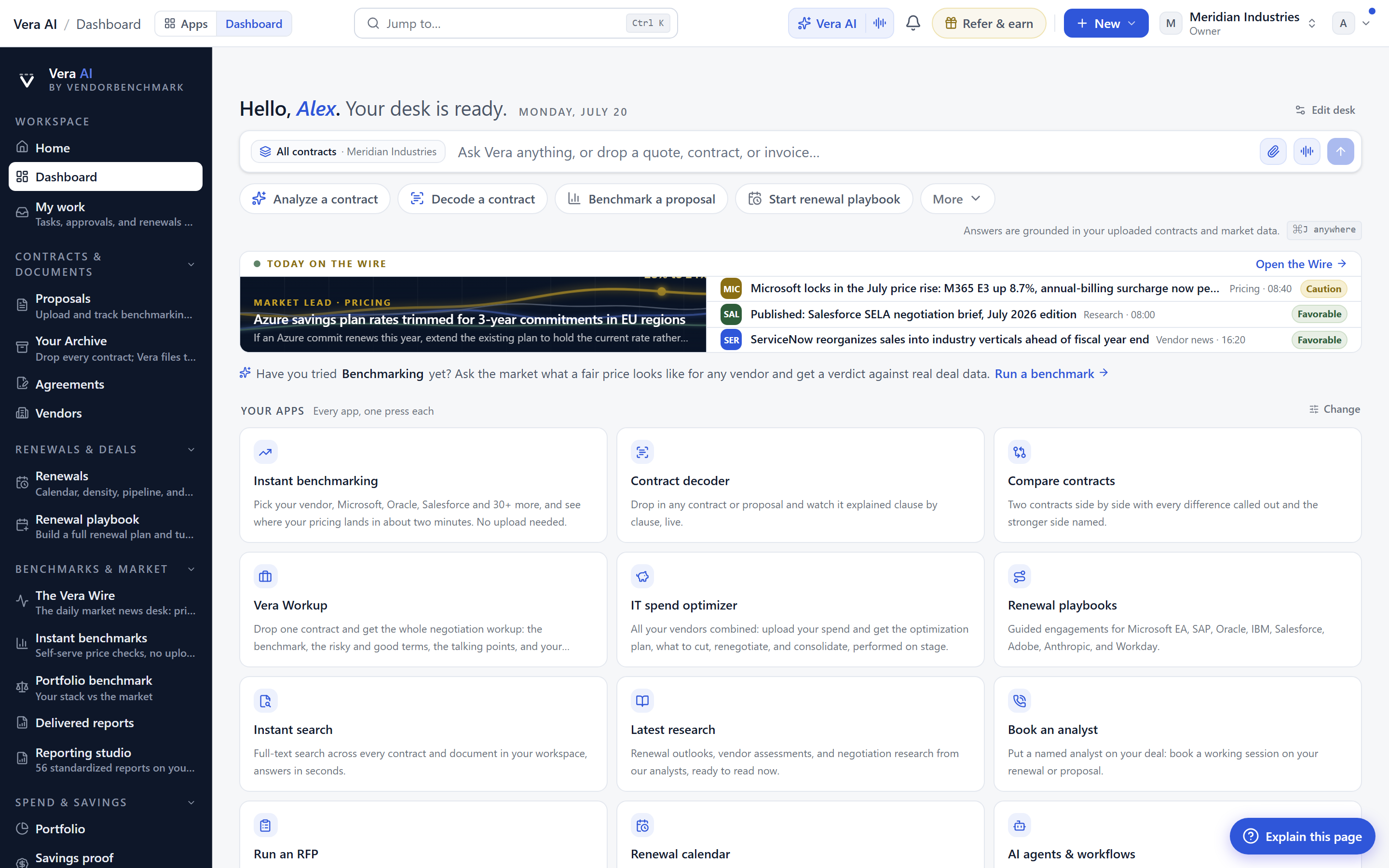
The course starts by asking, rather than assuming. There are a few doors, and they map to genuinely different goals: sanity check a single vendor quote, understand one contract, connect your data, or run the full platform. Choosing the full platform opens a short questionnaire, your role, the vendors you care about, and the jobs you want to do, and from those answers it composes a personal track. A CFO who cares about overpayment and a legal lead who cares about contract risk do not get the same first week, because they should not.
That personalisation does real work beyond feeling tailored. Naming your vendors stars them on your dashboard and calendar, so the estate starts populated rather than empty. Naming your interests orders the lessons around what you actually want, so the first thing you do is the first thing you cared about. The blank account problem is solved by making the account not blank the moment you have answered a few questions.
Load the estate, get the first real answer
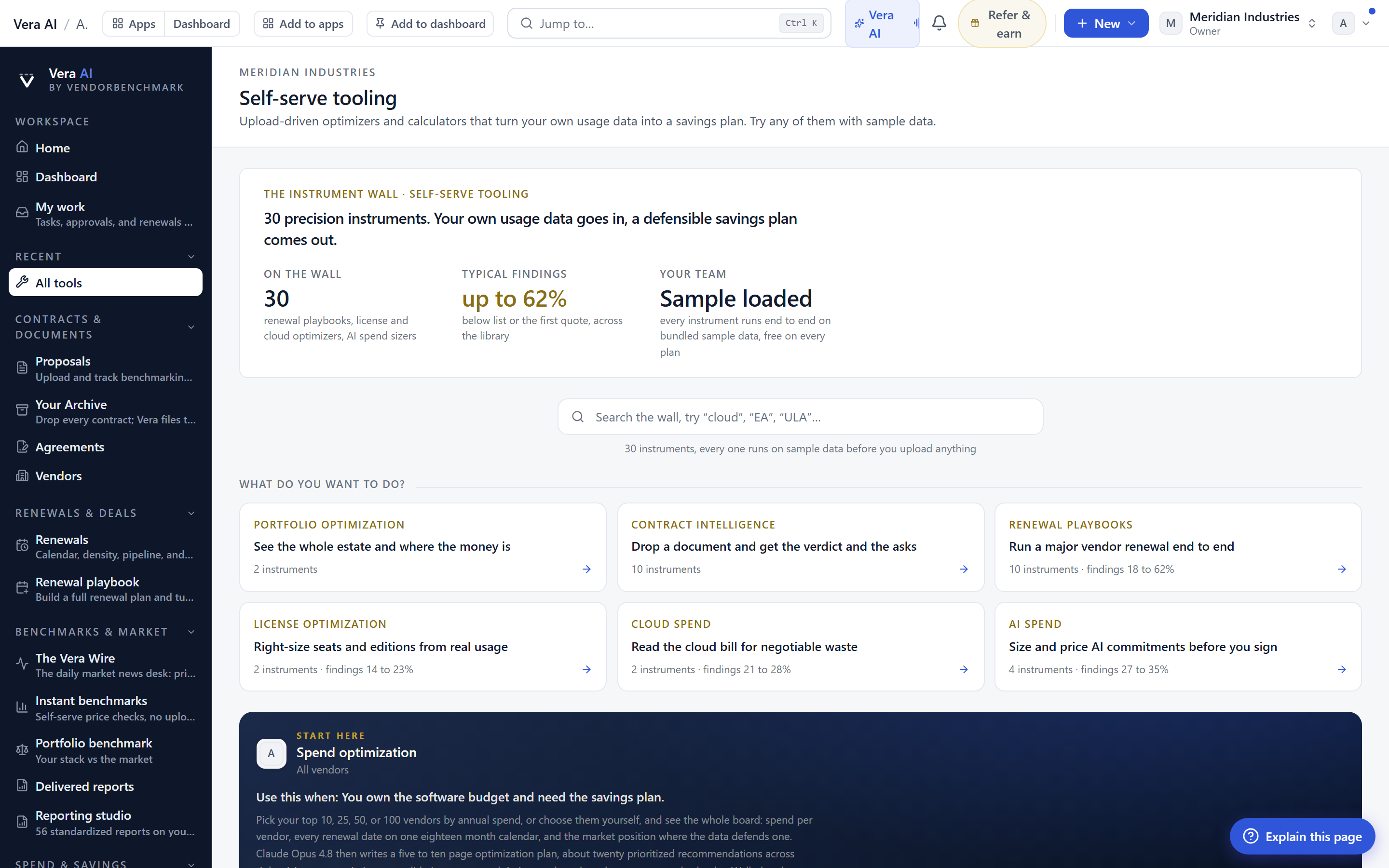
Week one is about getting your own data in, because a benchmark against your real contract is the moment the platform stops being a demo. The course walks you through the ways to load an estate that fit how your data actually lives: connect a source, forward contracts to a private inbox address, or upload in bulk. It does not demand the hardest path first. It offers the one that gets you to a real answer fastest, and leaves the deeper integrations as later lessons.
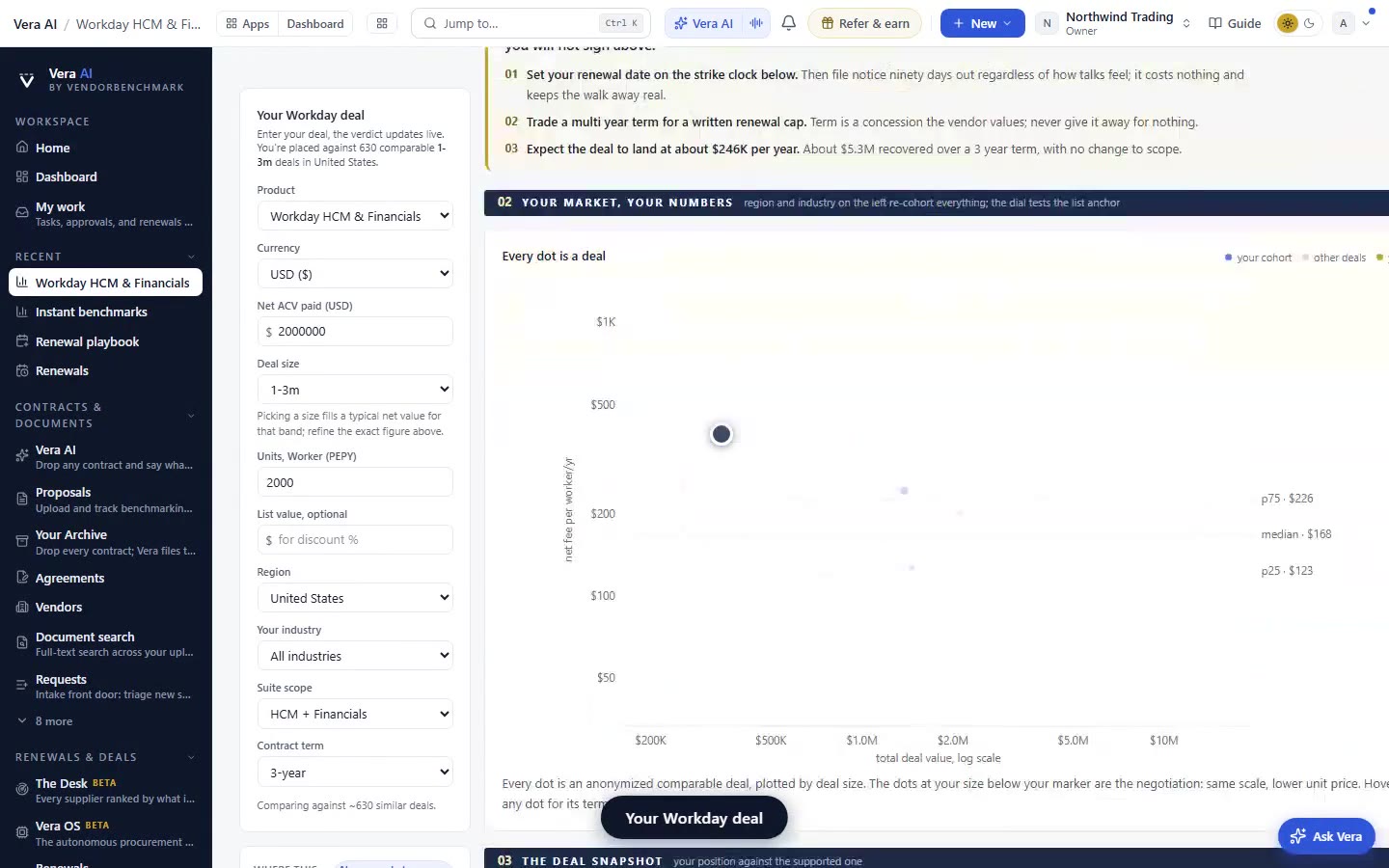
With even a little estate loaded, the first benchmark lands, and that is the pivot. Seeing your own Salesforce or Microsoft position placed against comparable deal cohorts, with a real rank and a real dollar gap, is worth more than any amount of feature tour. Each lesson carries an explicit outcome, the thing you walk away with, so you always know why you are doing a step and what you will have when it is done. Progress is visible, the next step is always named, and the course keeps you moving toward the answer rather than wandering the menus.
Want to be updated when major licensing and pricing changes land? One analyst brief a week: the price rises, metric changes and audit campaigns that move software costs. Work email only.
Week two: from answer to habit
The second week is where a first answer becomes a working practice. Having benchmarked one vendor, the course moves you to saving a deal, setting up the watches that will tell you when something changes, and turning on the routines that run on their own. This is the step most onboarding skips, and it is the one that decides whether the platform is used in month three. A benchmark you ran once is a demo you gave yourself. A saved deal, a renewal on the calendar, and a watch that emails you when a price moves is a habit.
The course is also patient. It does not expect two weeks of uninterrupted attention, because nobody has that. It remembers where you stopped, greets a returning user with how many lessons are left and a direct link to the next one, and a single always available control gets the guidance out of your way once you no longer need it. The path is there when you want it and invisible when you do not, which is the only way a course survives contact with a real job.
From login to habit, in order
A course points the way, the work is still yours
A guided track cannot make the decisions for you, and loading an estate still takes some effort that no wizard removes entirely. The course shortens the path from login to value and makes sure you do the steps that matter in a sensible order. It does not replace the judgment about which vendors to prioritise or which deals to fight, which is the work you came to do.
What it removes is the maze. The difference between a platform that gets used and one that gets abandoned is almost never the depth of its features, it is whether the new user reached a real result before their attention ran out. By designing the first two weeks as a path to a saved deal rather than a tour of the menus, the platform earns the third week, and then it is just the tool you use.
Fredrik has spent more than twenty years in enterprise software, with time at Oracle, IBM, SAP, and Salesforce before moving to the buy side. He structured and priced the kind of large agreements most buyers only see once or twice in a career, which taught him where the leverage sits and how far a vendor will actually move. He started VendorBenchmark to hand that knowledge to every sourcing team.
The week in enterprise software buying, in one email.
What shipped on the platform, and the pricing and licensing moves worth knowing before your next renewal. One email a week, to your work address. Unsubscribe any time.