Integrations: meeting your stack where it already is.
The fastest way to kill a procurement platform is to make it a place people have to re-key everything they already have. So the point of integrations is the opposite: the contract can arrive by email, the ticket can flow from ServiceNow, and the data can stream to your warehouse, without anyone copying a thing.
Every enterprise software team has a graveyard of tools that were going to change everything and instead became another place to log in. The pattern is always the same. The tool is genuinely useful, but using it means re-entering data that already lives in five other systems, so the re-entry never happens, the data goes stale, and the tool quietly dies. A procurement platform is especially exposed to this, because the information it needs, contracts, tickets, spend, identities, is scattered across the systems a company already runs.
So the design goal for integrations is not to be another destination. It is to meet the stack where it already is. The contract should be able to arrive without an upload, the intake request should be able to flow from the tool where requests already start, and the analysis should be able to stream back out to the warehouse where the rest of the business already reports from. The platform earns its place by removing re-entry, not adding it.
Connect the systems you already run
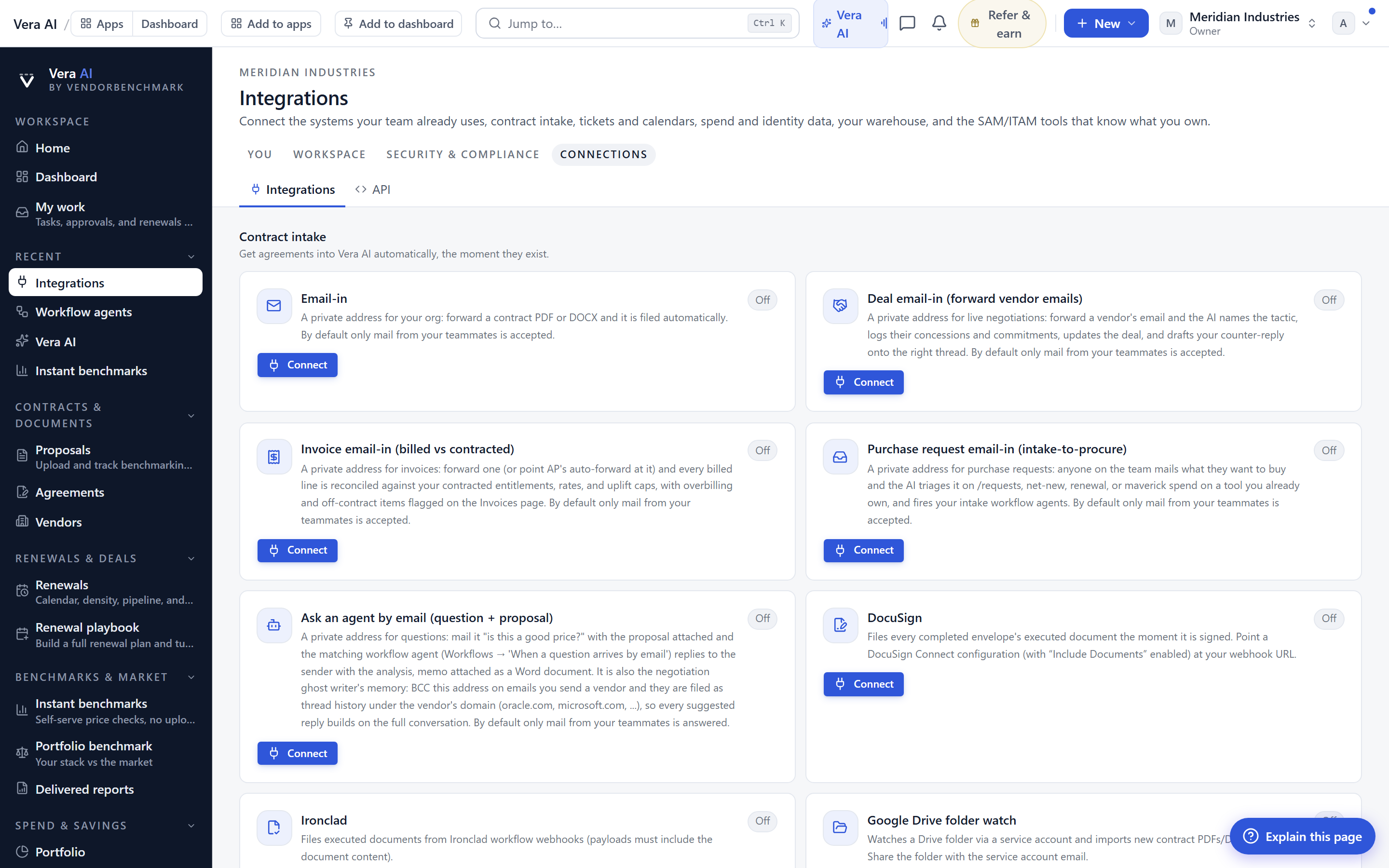
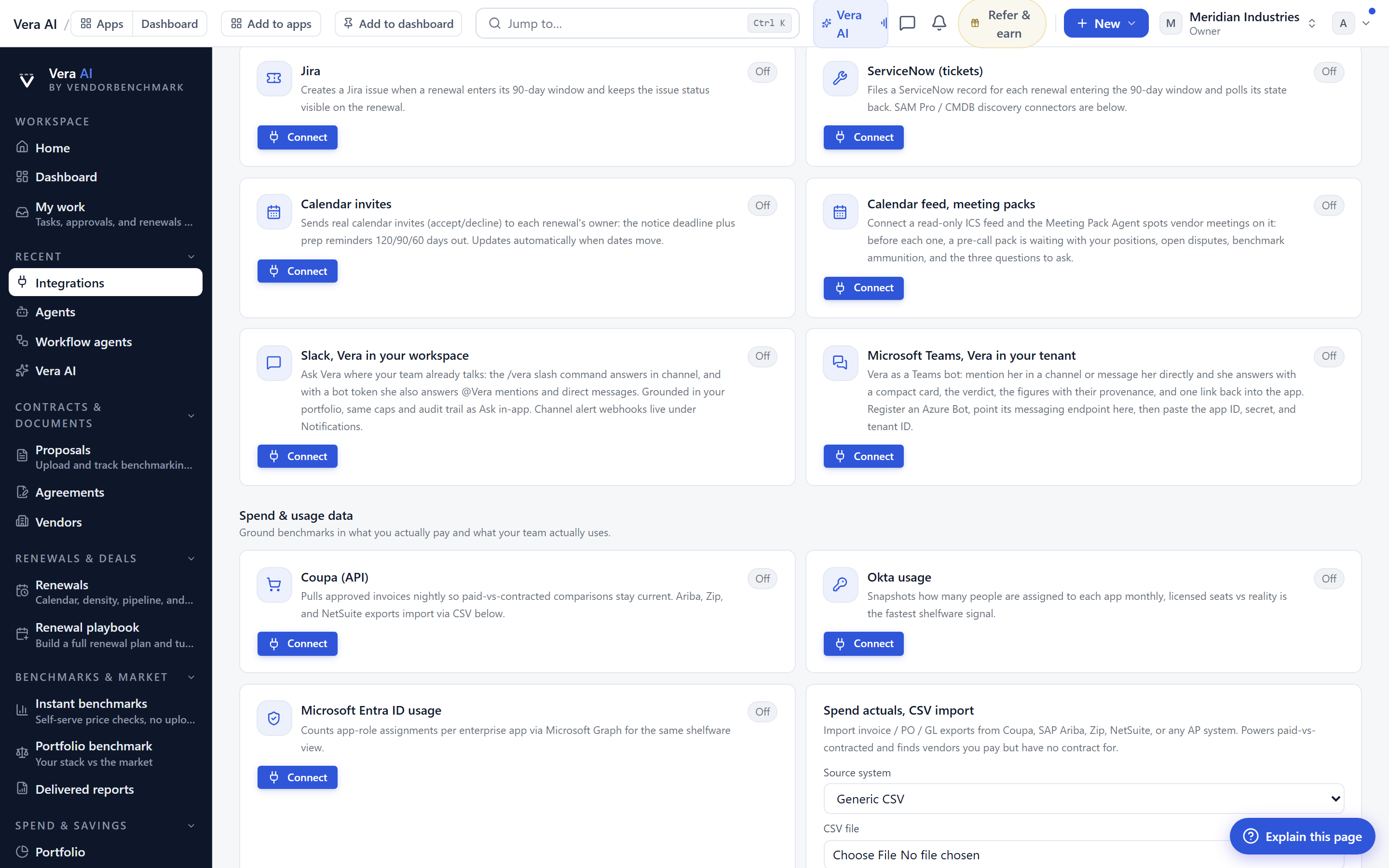
The integration layer covers the systems a procurement function actually touches. Ticketing and intake through ServiceNow and Jira, so a software request starts where requests already start. Procurement and finance through Coupa, so spend and purchase data flows in rather than being re-keyed. Identity through Okta and Entra, so access follows the accounts you already manage. E-signature and contract lifecycle through DocuSign and Ironclad, so an executed agreement lands automatically. Storage through the document repositories your contracts already sit in. Each connection is configured once and then it simply runs.
The credentials that make those connections work are treated with the seriousness they deserve. Every secret is sealed with strong encryption at rest, never stored in the clear, and every connection to a customer system is checked to be a legitimate destination before a single request is sent. Connecting your stack should reduce your risk surface by ending the copy-paste, not expand it, and the plumbing is built on that assumption.
The contract that arrives by email
The clearest example of meeting the stack where it is has no dashboard at all. Every organization gets a private inbound address, and a contract forwarded to it is ingested automatically: checked for a real file signature and scanned for malware, de-duplicated so the same document does not land twice, and enriched and indexed like any other. No login, no upload, no wizard. The way a contract already moves around a company, as an email attachment, becomes the way it enters the platform.
The same philosophy runs through the inbound routes. An executed agreement from your e-signature tool arrives through a verified webhook the moment it is signed. A request raised in your ticketing system becomes an intake here without anyone re-typing it. The goal in every case is that the data enters through a door that already exists in your process, rather than a new one you have to remember to walk through.
And the data that flows back out
Meeting the stack is a two way street. The analysis the platform produces, benchmarks, renewals, savings, spend, should not be trapped where it was generated any more than your contracts should be trapped in your inbox. So the data flows back out. A warehouse feed exports the structured record to your own data store, so your analysts can join procurement data with everything else the business measures. Outbound webhooks fire on the events that matter, a renewal approaching, a deal closing, so your other systems can react without polling.
Those outbound events are signed and verifiable, so a downstream system can trust that a message genuinely came from the platform and was not tampered with in transit. The result is that the platform behaves like a well mannered member of your stack rather than a walled garden: it takes data in through the doors you already use, and it hands data back out through channels the rest of your tools can consume.
What meeting the stack looks like
Plumbing serves the work, it is not the work
Integrations are enabling, not magic. A connector still has to be configured, a warehouse feed still has to be consumed by someone downstream, and meeting your stack where it is does not remove the need to actually run the procurement. The plumbing makes the data flow. The judgment about what to do with it stays exactly where it was.
But plumbing that works is the difference between a platform that gets used and one that becomes another dead login. By fitting into the systems you already run, taking contracts through the inbox they already travel in, and handing results back to the warehouse you already trust, the platform earns a place in the stack instead of demanding one. That is the quiet precondition for everything else it does.
Fredrik has spent more than twenty years in enterprise software, with time at Oracle, IBM, SAP, and Salesforce before moving to the buy side. He structured and priced the kind of large agreements most buyers only see once or twice in a career, which taught him where the leverage sits and how far a vendor will actually move. He started VendorBenchmark to hand that knowledge to every sourcing team.
The week in enterprise software buying, in one email.
What shipped on the platform, and the pricing and licensing moves worth knowing before your next renewal. One email a week, to your work address. Unsubscribe any time.