From license counts to negotiation ammunition: SAM meets the deal.
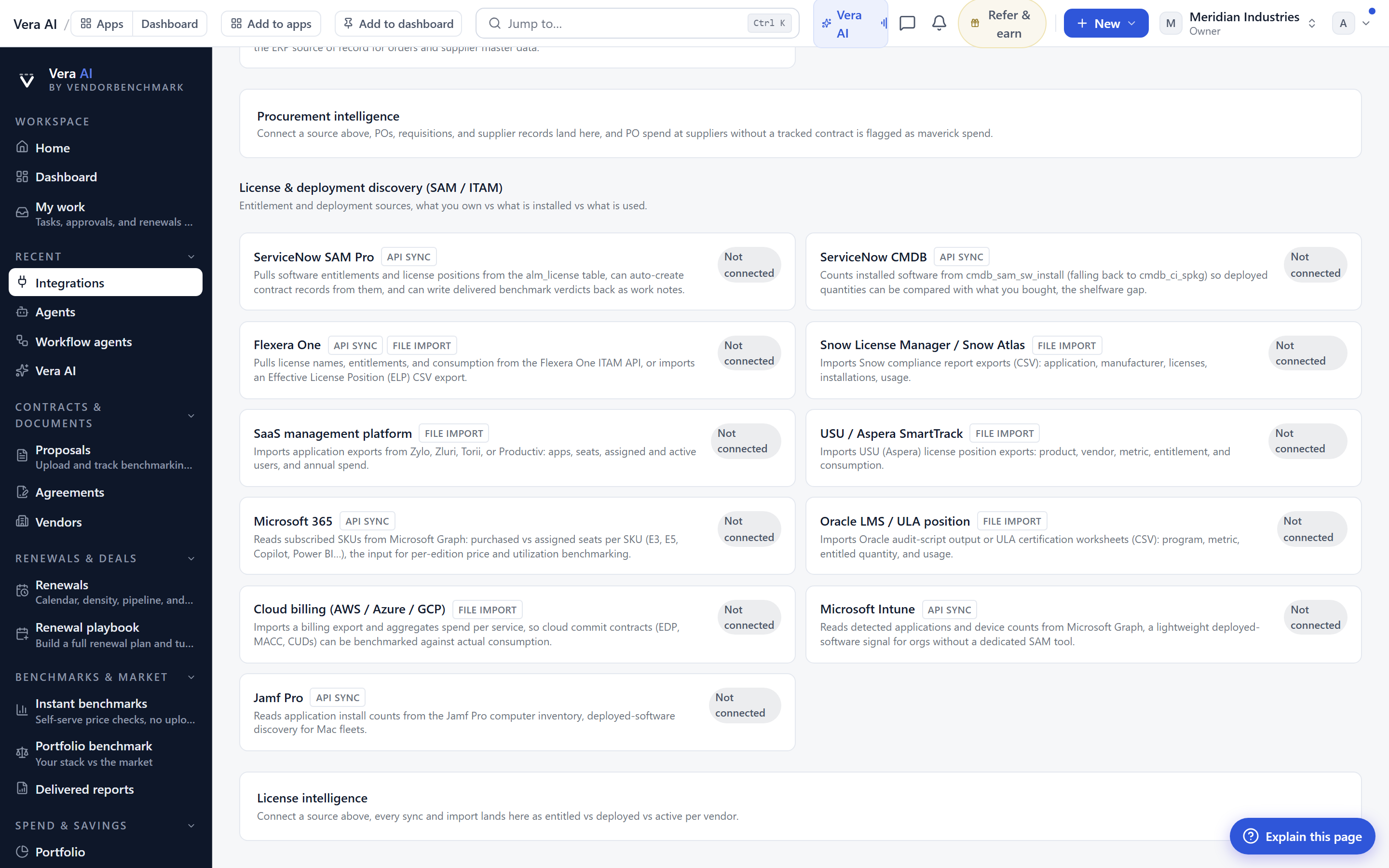
The software asset management team already knows what you own, what is deployed, and what actually gets used. That truth almost never reaches the negotiation, where it would be worth the most. Eleven connectors close the gap between the SAM database and the deal.
In most enterprises there are two teams who both know a great deal about the software estate and rarely talk at the right moment. The software asset management team knows exactly what you are entitled to, what is installed, and what is genuinely being used. The procurement team runs the renewal. And the SAM truth, the single most useful ammunition in a negotiation, tends to arrive after the deal is signed, in a true up bill, rather than before it, on your side of the table.
The reason is plumbing, not willingness. The entitlement data lives in a SAM tool, the deployment data in a discovery agent, the usage data in an identity provider or a cloud console, and none of it is shaped for a renewal conversation. Closing that gap is a connector problem, and it is the problem this discovery layer sets out to solve.
Eleven connectors, one license position
The discovery layer ships with eleven connectors covering where entitlement and usage data actually live: ServiceNow SAM and CMDB, Flexera One, Snow Atlas, USU, SAP's own measurement, Microsoft 365, Oracle LMS, cloud billing, Intune, and Jamf. Each reads what it holds and writes into one normalised place, a license position per vendor and product, so the estate stops being a scatter of tools and becomes a single answer to a single question: for this vendor, what do we own, what is deployed, and what is active?
That normalisation is the quiet, unglamorous work that makes everything downstream possible. Once entitled, deployed, and active sit in one row, keyed to the same canonical vendor, the gap between them is computable, and the gap is where the money is.
From a count to a cost to a card you can play
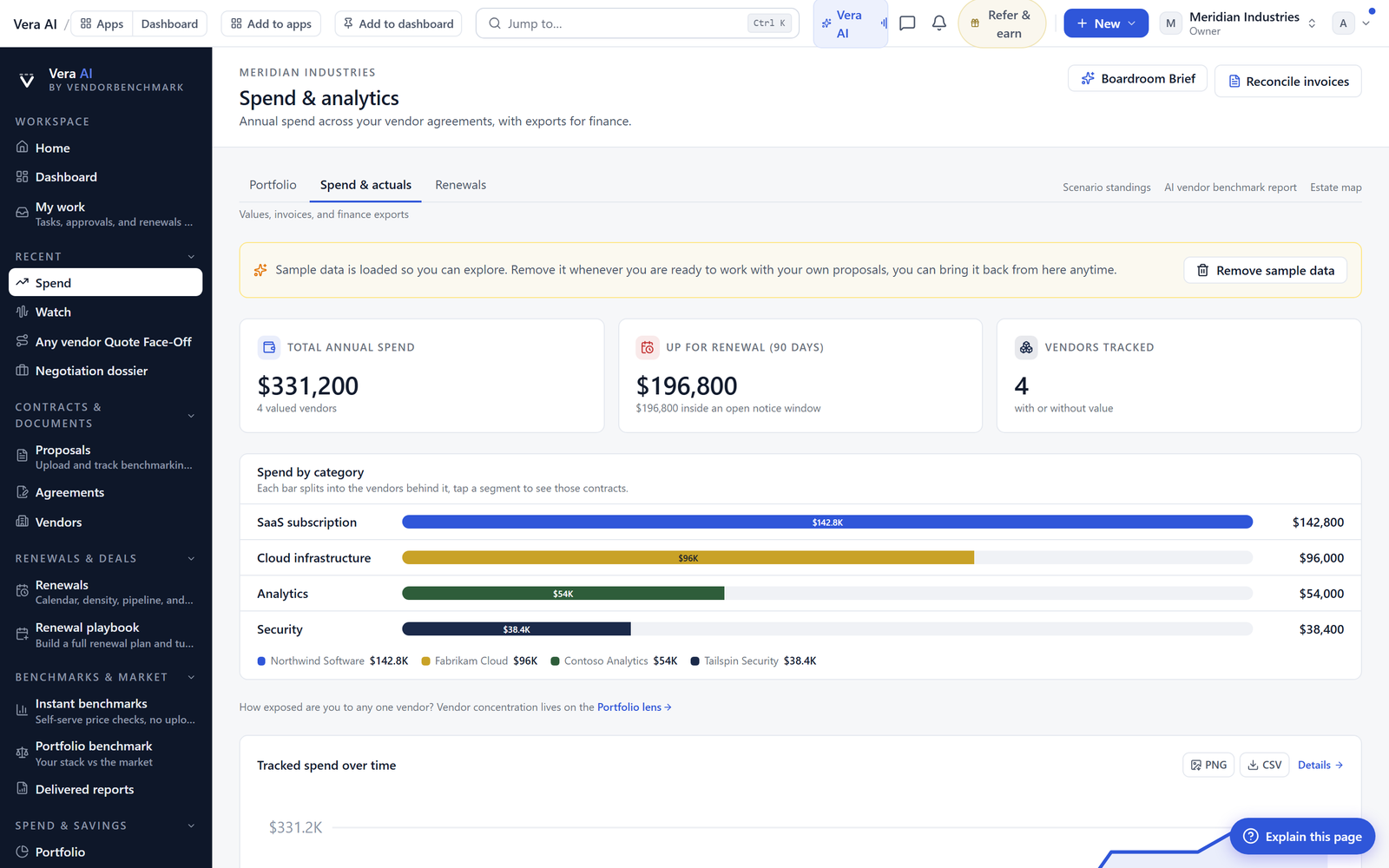
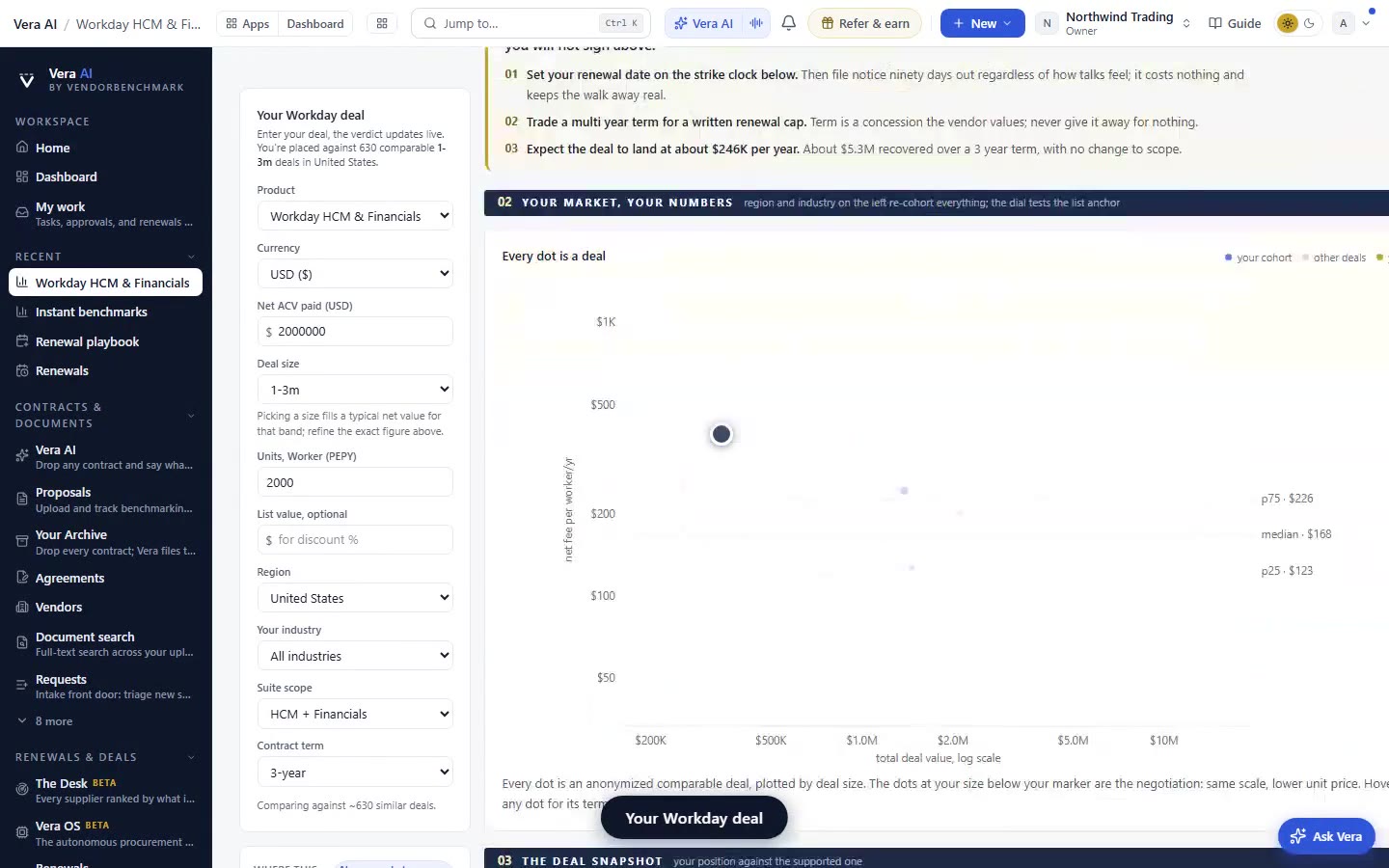
A license count is not leverage. "We own two hundred seats and deploy a hundred and forty" is a fact, not an argument. It becomes ammunition when the gap is priced against what the market actually pays and set against the renewal that is coming. Sixty idle seats at your real contract rate is a number you can put on the table, and a reason to right size before you sign rather than true up after.
This is the move that changes the renewal. Instead of the vendor arriving with usage telemetry that tells them exactly how dependent you are, you arrive with entitlement and deployment data that tells you exactly where you are overbought. The information asymmetry that usually runs one way starts running both. The SAM database stops being a compliance artefact and becomes the opening position.
Closing the loop back into the tool
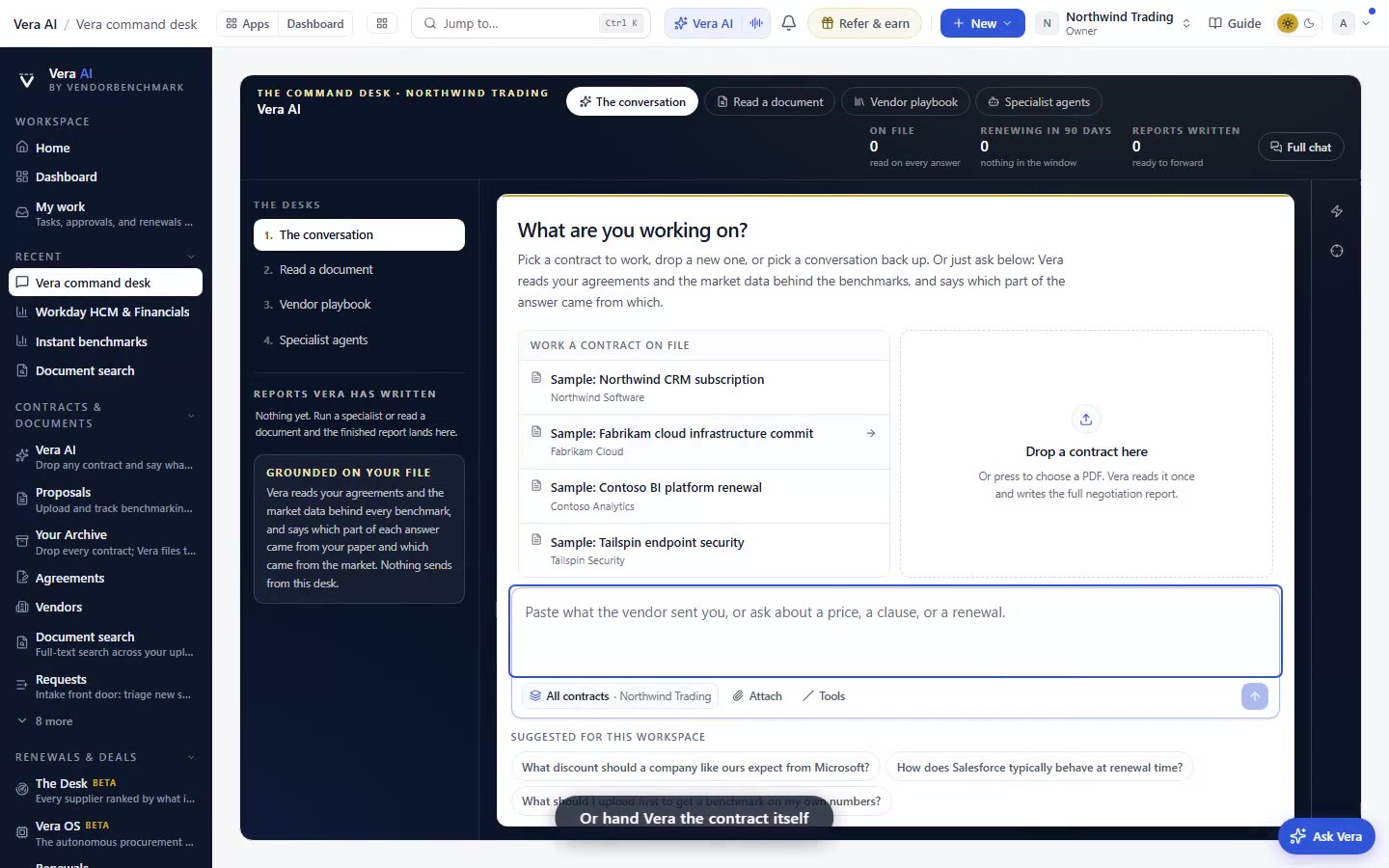
The value does not only flow toward the deal. Where the connector supports it, verdicts flow back the other way, written into the source system as notes against the record, so the SAM team sees the negotiation outcome next to the asset it concerned. The discovery that fed the renewal is updated by what the renewal decided, and the loop closes.
That two way flow is what turns a one off data pull into an operating rhythm. The SAM team's work reaches the deal while it can still change the number, and the deal's outcome reaches the SAM team while it still means something. The two functions that always knew the same truth finally act on it at the same time.
Where the truth already lives
Data opens the door, a negotiator walks through it
Discovery data is only as good as the sources feeding it, and a normalised position still needs a human to judge which idle seats are genuinely reclaimable and which are seasonal or strategic. The connectors do not renegotiate the contract, and a gap on a screen is not yet a saving. It is an argument, waiting for someone to make it.
But it is a far better place to start than a spreadsheet the SAM team emailed over after the deal closed. When entitled, deployed, and active reach the negotiation together, priced and current, the buyer walks in knowing exactly where they are overbought. That knowledge, arriving on time for once, is the whole point.
Fredrik has spent more than twenty years in enterprise software, with time at Oracle, IBM, SAP, and Salesforce before moving to the buy side. He structured and priced the kind of large agreements most buyers only see once or twice in a career, which taught him where the leverage sits and how far a vendor will actually move. He started VendorBenchmark to hand that knowledge to every sourcing team.
The week in enterprise software buying, in one email.
What shipped on the platform, and the pricing and licensing moves worth knowing before your next renewal. One email a week, to your work address. Unsubscribe any time.