Oracle ULA exit: certify without the panic.
Every Unlimited License Agreement ends at the same fork in the road: certify what you deployed and walk away with perpetual licenses, or renew and keep paying for "unlimited" you probably no longer need. Oracle has a strong preference about which path you take, and its favorite tool for steering you is your own anxiety. Here is the exit, run as a project instead of a scramble.
The ULA bargain is simple on the way in. You pay a fixed fee, and for the term of the agreement, usually three years, you deploy the named Oracle products without counting. On the way out it gets interesting. At the end of the term you either certify, declare your deployment counts, which convert into perpetual licenses at those quantities, or you renew and keep paying for the right not to count.
Oracle's economics strongly favor your renewal, and the sales motion reflects it. As the end date approaches, expect the account team to raise questions about your deployment data, hint at compliance exposure in areas the ULA does not cover, and present a renewal, ideally broader and more expensive, as the safe harbor. None of this is improper. It is a well-rehearsed play that works because most customers arrive at the fork unprepared, with the clock running and no independent count of their own estate.
The entire game, therefore, is to arrive prepared. A ULA exit run as a twelve month project is routine. The same exit run in the final quarter is a negotiation you conduct while the other side holds your inventory.
The renew or certify decision is arithmetic, not sentiment
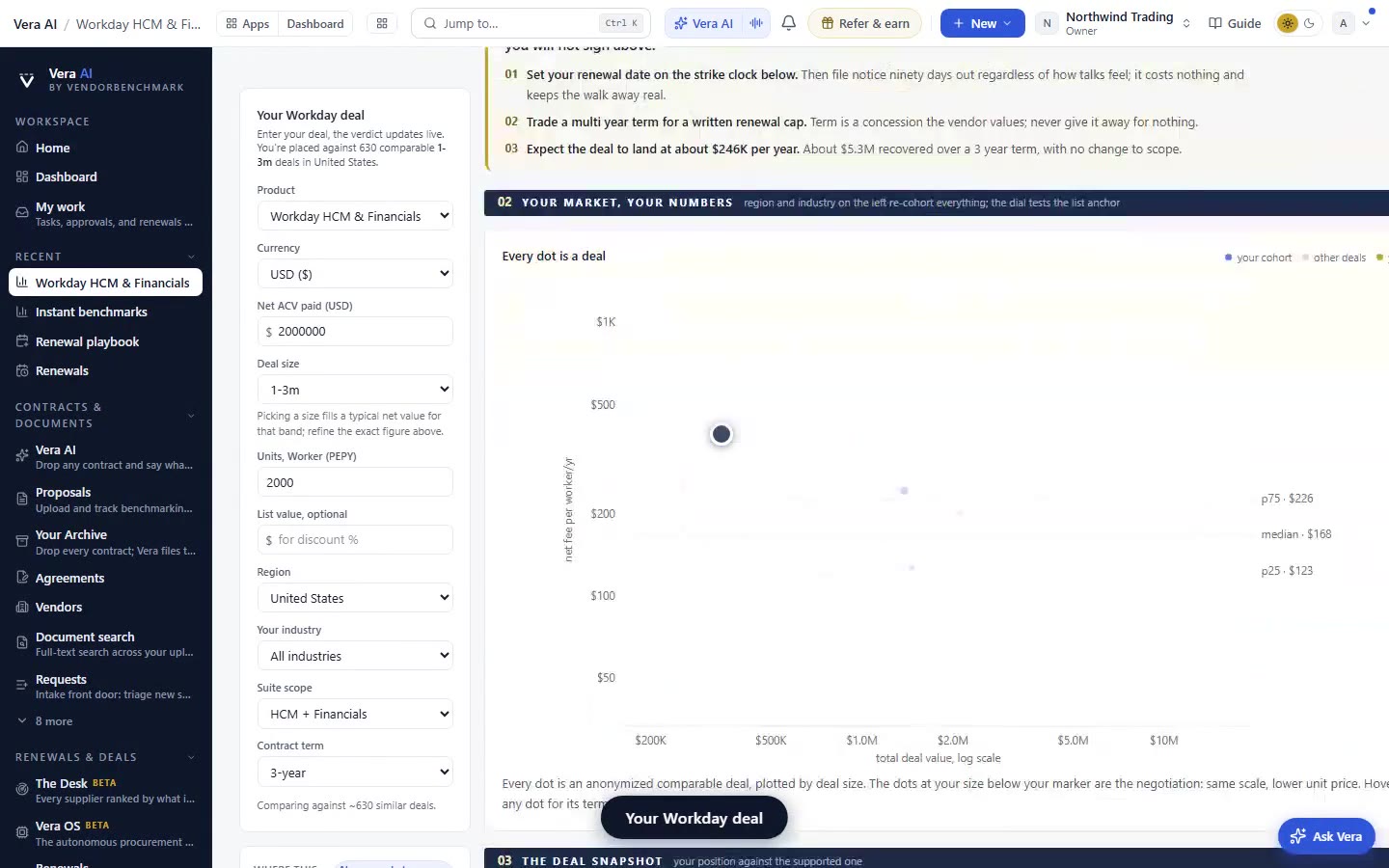
Renewing a ULA makes sense in exactly one case: your deployment of the covered products is genuinely still growing fast enough that unlimited deployment beats owning what you have. That is an empirical question with two inputs. First, your real deployment trajectory, measured, not felt. Second, what the market actually pays, which is where the benchmark comes in: VendorBenchmark prices ULA positions on net license fees against the product count and deployment size, drawn from modelled deal cohorts, so you can see whether the renewal quote prices your growth or your fear.
Most estates that reach a second or third ULA cycle are not growing into it. Databases are migrating to managed services, workloads are leaving the products the ULA covers, and the "unlimited" is insurance against a counting exercise nobody has done. If that is your position, the renewal fee is not buying capacity. It is buying postponement, at compounding support cost, and the certification path wins on plain arithmetic.
Want to be updated when major licensing and pricing changes land? One analyst brief a week: the price rises, metric changes and audit campaigns that move software costs. Work email only.
Certification is a counting exercise. Win it by counting first.
Certification converts deployments into perpetual entitlements, so every properly deployed instance on the certification date is an asset you keep. Three disciplines decide how well it goes.
Count independently, before Oracle does. Your certification numbers should come from your own measurement of the estate, reconciled against what the contract actually counts, cores, processors, named users, per product. Doing this early surfaces the surprises, the forgotten cluster, the product outside the ULA's list, while there is still time to fix them quietly.
Read the certification clause like it will be enforced, because it will. Which entities count, which environments count, and how cloud deployments are treated are all creatures of your specific contract language, and older ULAs treat public cloud very differently from newer ones. This is exactly the reading the platform's contract decode does in minutes: the certification mechanics, the covered product list, the territory and entity definitions, and the support basis, quoted from your own paper with the traps flagged.
Deploy what you are entitled to before the clock stops. The ULA is a use-it-or-lose-it asset in its final year. Planned growth that is real, brought forward legitimately into the term, converts into owned licenses instead of future purchases. This is the one lever that gets cheaper the earlier you start and disappears entirely at the end date.
And one warning that saves real money: support does not shrink at certification. Your support stream generally carries forward based on what you paid, not what you certified down to. If the exit plan includes reducing the estate, the support conversation belongs in the negotiation, not after it, and third-party support for the stable remainder is a credible lever worth pricing.
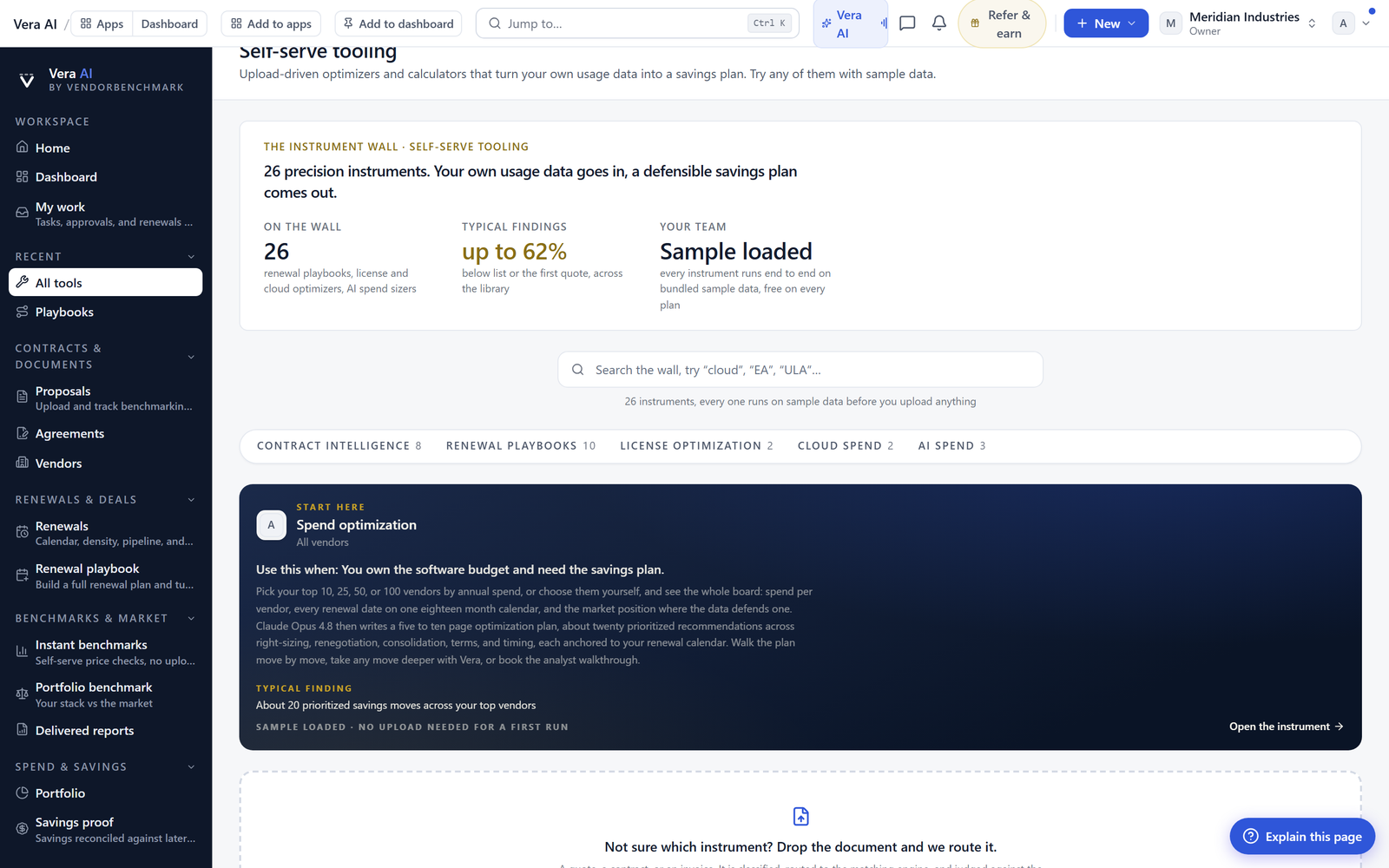
The twelve month exit, in five moves
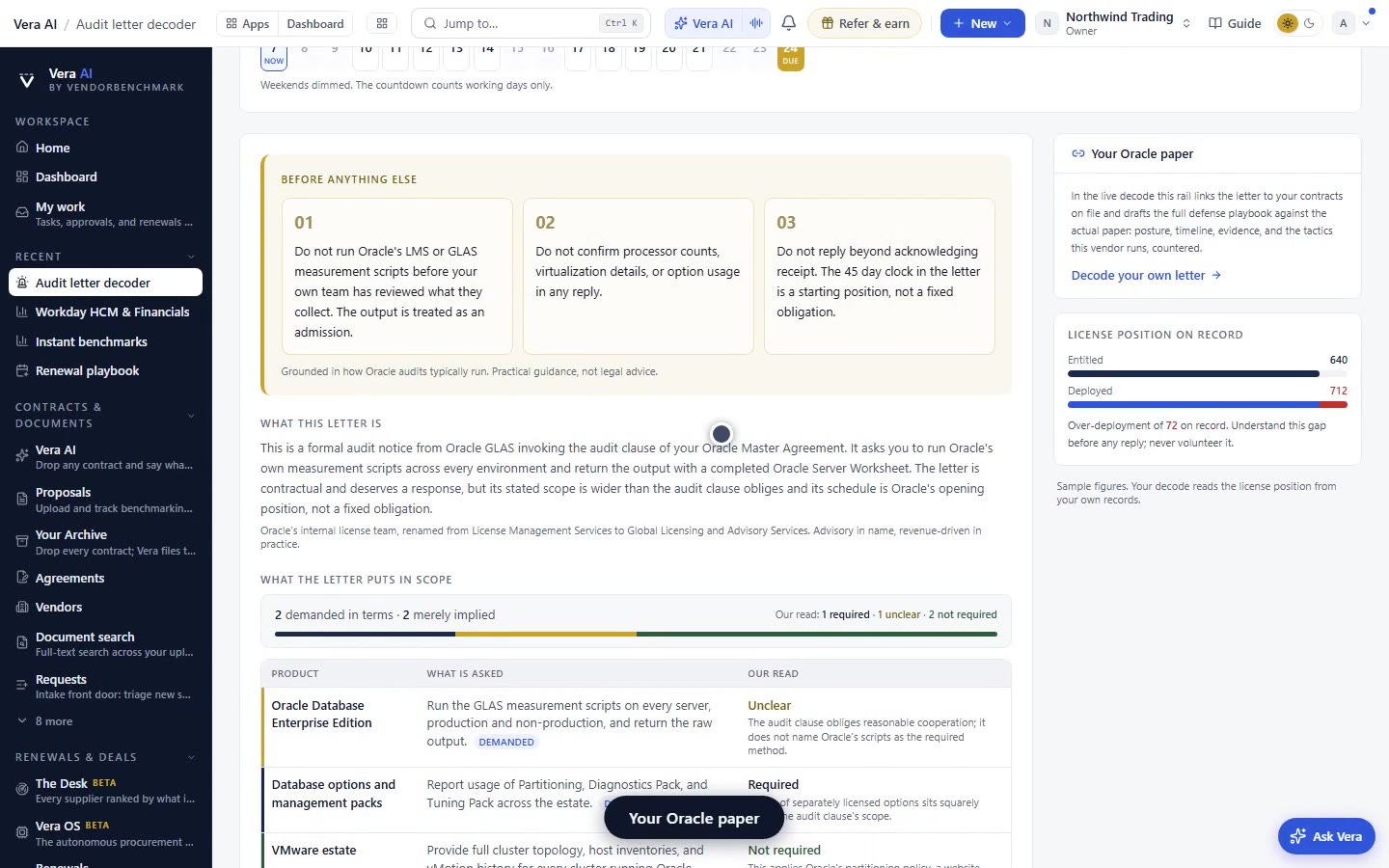
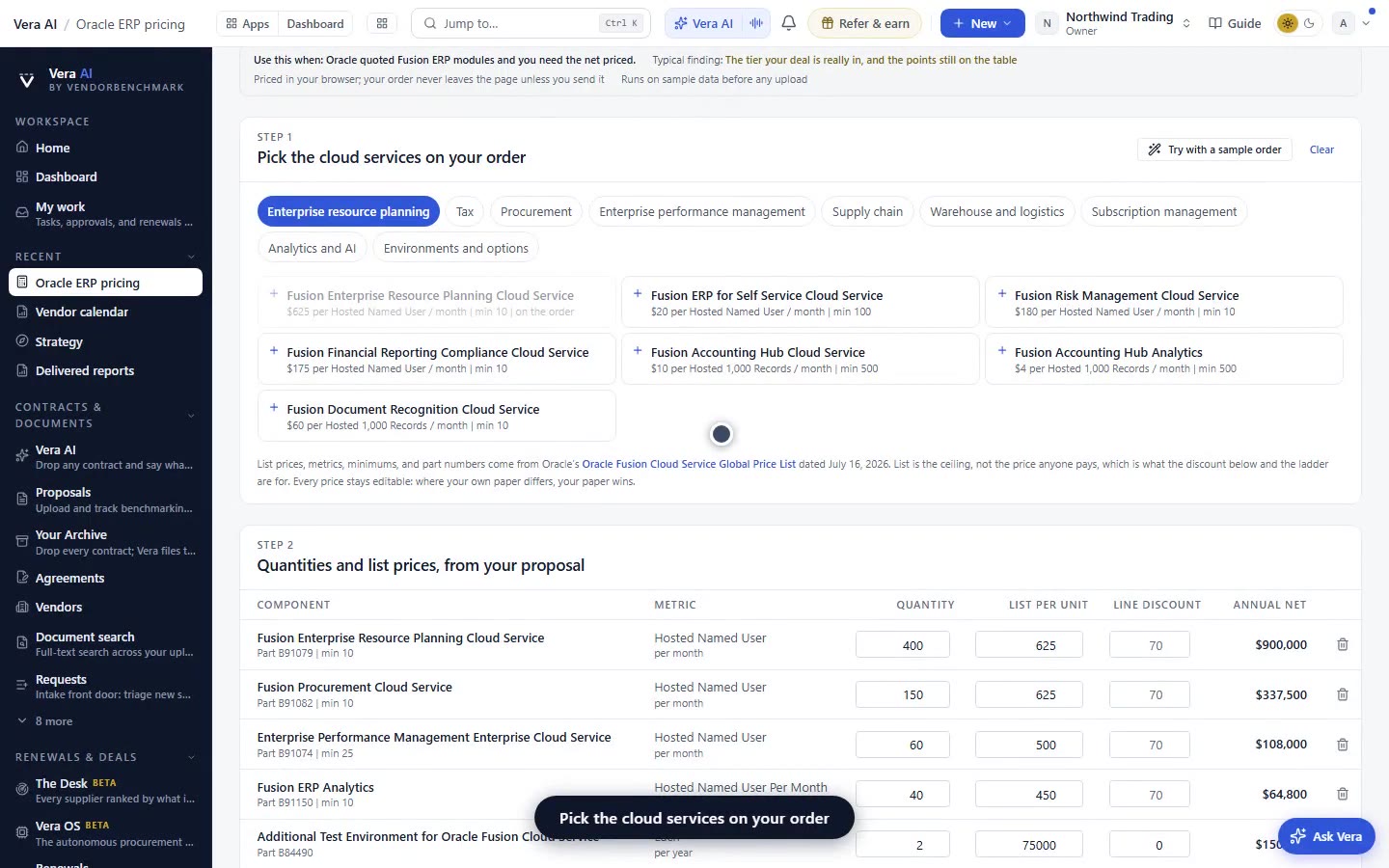
The platform runs this as a working desk, not a memo: the contract decode of your actual ULA, the benchmark of the renewal quote, the rights register tracking what you certified, and the audit letter decoder standing by for the sequel. The honest caveat is the usual one. The counting, the reading, and the brief are agent work now. Deciding how hard to hold the line with a vendor you will still be running in production for a decade is yours.
Fredrik has spent more than twenty years in enterprise software, with time at Oracle, IBM, SAP, and Salesforce before moving to the buy side. He structured and priced the kind of large agreements most buyers only see once or twice in a career, which taught him where the leverage sits and how far a vendor will actually move. He started VendorBenchmark to hand that knowledge to every sourcing team.
The week in enterprise software buying, in one email.
What shipped on the platform, and the pricing and licensing moves worth knowing before your next renewal. One email a week, to your work address. Unsubscribe any time.