Quote Face-Off: three confusing quotes, one benchmarked board.
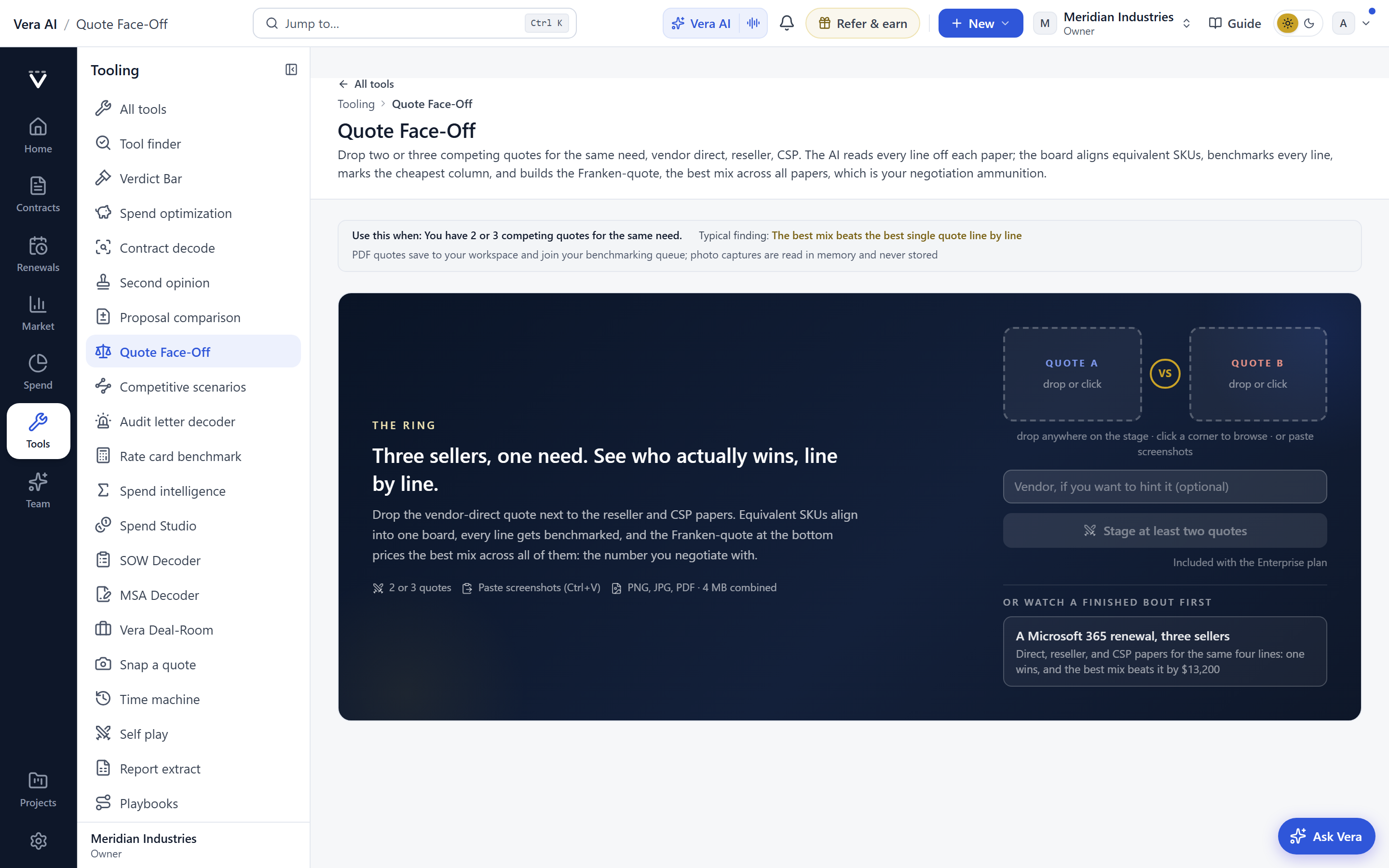
Ask three channels to quote the same software and you get three documents that share almost no line items, no order, and no common SKUs. Quote Face-Off lines them up anyway, benchmarks every price, and shows you the best-mix quote hiding across all three.
Run a competitive process for a piece of enterprise software and you will end up holding two or three quotes that are almost impossible to compare. The direct quote, the reseller quote, and the CSP quote describe the same deal in different languages. They renumber the SKUs, reorder the lines, bundle different things together, and slip in a support fee here or a one time charge there. Laying them side by side on a spreadsheet is an afternoon of squinting, and you still are not sure you matched everything correctly.
That confusion is not always accidental. A quote that cannot be cleanly compared is a quote that is harder to negotiate against. Quote Face-Off exists to strip the confusion out: drop in the competing quotes and get back a single aligned board where every line is matched, every price is benchmarked, and the cheapest path through all of them is drawn for you.
Aligning quotes that share no common SKUs
The hard part of comparing quotes is the matching, and it is harder than it looks because resellers renumber everything. So the alignment does not trust SKUs alone. It matches on the SKU where it can, and falls back to comparing the line descriptions when the SKUs disagree, so the same product priced under two different codes still lands on the same row. The result is a tale of the tape: every line item from every quote, aligned into one board, with the gaps where a quote is silent on something the others charge for made obvious.
Those gaps matter as much as the prices. A line that appears on two quotes but not the third is either a saving or a missing scope, and the board flags it either way. A padding line that appears on only one quote gets a short read on whether it is legitimate, filler, or unclear, so an inflated extra does not hide in the noise.
A benchmark on every line, not just a comparison
Comparing three quotes to each other only tells you which of three is least bad. The board goes further and benchmarks each line against modelled deal cohorts, so you learn not just that the reseller beat the direct quote, but where each of them sits against where comparable deals land. Every line carries a standing: favorable, mid pack, or poor, held to a minimum cohort size so a thin comparison never masquerades as a benchmark.
This is the difference between winning a bake off and knowing your number. Three expensive quotes compared against each other produce a slightly less expensive quote. Three quotes each benchmarked against the market tell you that all three are above where they should land, which is a completely different conversation to walk into.
Want to be updated when major licensing and pricing changes land? One analyst brief a week: the price rises, metric changes and audit campaigns that move software costs. Work email only.
The best-mix quote you should actually pay
Once every line is aligned and priced, an obvious move appears: take the best price for each line across all the quotes and assemble them into one. The board builds this best mix automatically, over the lines that every quote covers, so you can see the quote you should be paying, not the quote any single channel offered. It is a legitimate ask, because every price in it is a price some channel already put in writing.
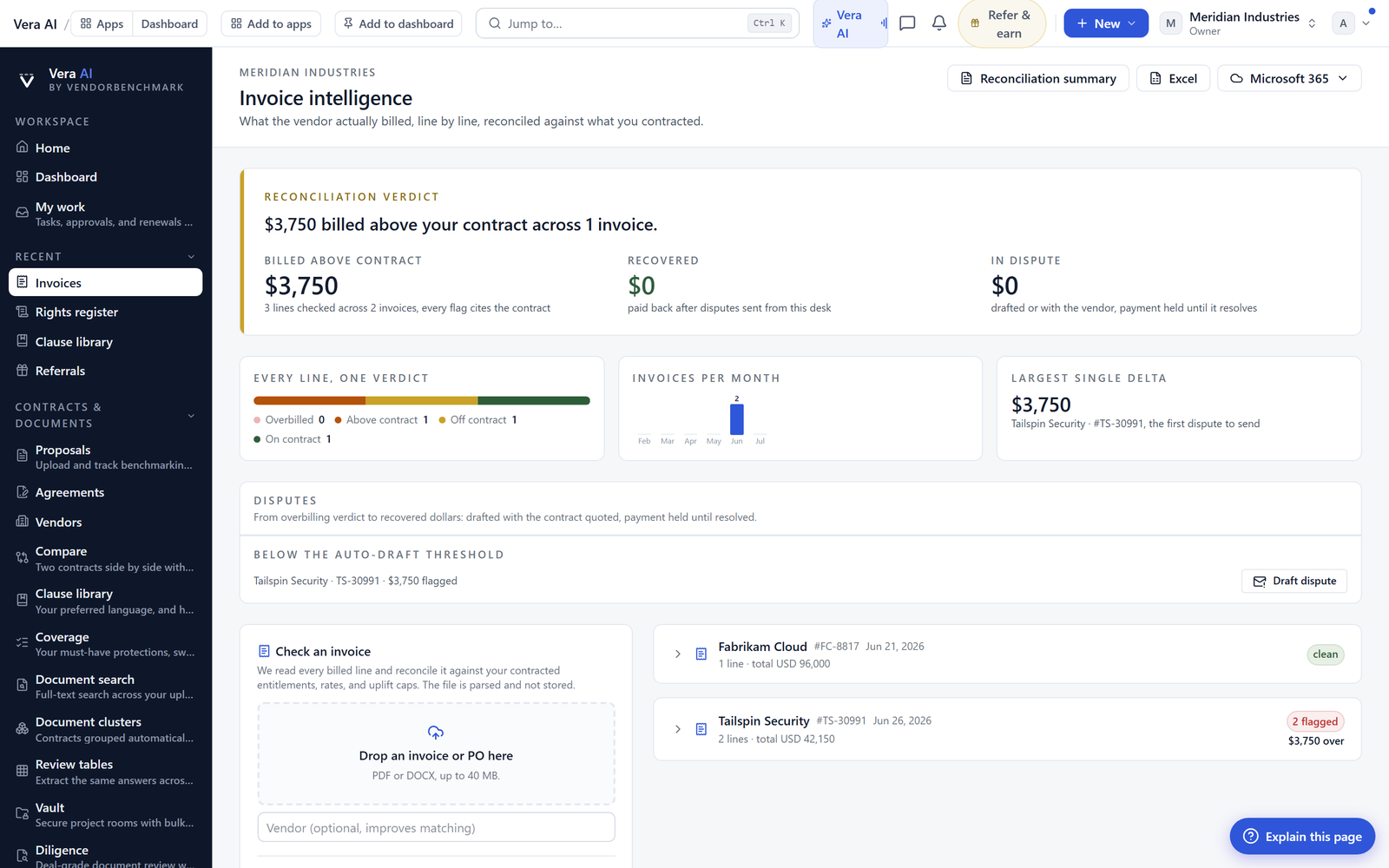
A grounded memo pulls it together, citing the specific quotes, lines, standings, and padding reads behind each conclusion, and exports as its own document. You walk into the reseller conversation not with a vague sense that the deal could be better, but with a line by line target where each number is one a competitor already committed to.
What the face-off produces
The board sets the target, you run the play
A best mix quote is a negotiating target, not a purchase order. Some channels genuinely cannot match another's price on a given line for reasons that are real, volume, program eligibility, support scope, and the board cannot see every one of them. The alignment is also only as good as the quotes you feed it, so a scope difference dressed up as a price difference still needs a human eye.
What the board removes is the fog. Instead of three documents you cannot line up and a nagging sense that you are leaving money somewhere, you have one board, a benchmark on every line, and a target built entirely from prices someone already offered. The negotiation that follows is yours to run, but you start it knowing exactly what good looks like.
Fredrik has spent more than twenty years in enterprise software, with time at Oracle, IBM, SAP, and Salesforce before moving to the buy side. He structured and priced the kind of large agreements most buyers only see once or twice in a career, which taught him where the leverage sits and how far a vendor will actually move. He started VendorBenchmark to hand that knowledge to every sourcing team.
The week in enterprise software buying, in one email.
What shipped on the platform, and the pricing and licensing moves worth knowing before your next renewal. One email a week, to your work address. Unsubscribe any time.