A Request Arrived With a Submitter, Not an Owner, and Now Nobody Can Answer Your Questions
A submitter name is not an accountable owner. When procurement needs a requirement clarified and finds nobody with the authority or context to answer, the whole timeline stalls.
Here is the week you probably just had. A request lands in your queue with a submitter attached, someone in a business unit who filled in the form and moved on. You read the requirement, and it does not add up. The seat count implies a team of forty but the department has eleven people. The integration line references a system you retired last year. So you reply to the submitter with two clarifying questions, and the answer comes back: I just raised this on behalf of my manager, I am not sure of the details. Now you are three days in with nothing decided, and the person whose need this actually is has never appeared in the thread.
This is not a form-quality problem and it is not a lazy-submitter problem. It is an ownership problem. The request has a name on it, but the name belongs to a messenger, not to anyone with the authority or the context to answer procurement's questions. And an unowned request is, in practice, an unanswerable one. Every clarification cycle it triggers pushes the timeline further and quietly inflates the rework you will do later, when the real owner surfaces and disagrees with the assumptions you were forced to make in their absence.
Why the submitter is almost never the owner
Intake forms capture who typed, not who decided. Those are frequently different people, and the gap widens the larger the organisation gets. An executive assistant raises a tool request. A junior analyst forwards a vendor's quote because their director asked them to. A project coordinator opens a ticket to unblock a launch that three teams depend on. In each case the field marked submitter is accurate and useless at the same time. It tells you where the request entered the system, not who can defend a requirement or approve a tradeoff.
This is the sibling of a problem we have written about before, where the intake ticket already names the vendor so procurement inherits a decision instead of a need. Both failures happen at the same moment, the moment of intake, and both leave procurement holding something it cannot fully interrogate. When the request names a product but no problem, you cannot test the fit. When the request names a submitter but no owner, you cannot even ask.
The reason this persists is structural. Most intake tooling treats accountability as optional metadata, a field you can leave blank without the form rejecting you. So it gets left blank, or it gets filled with whoever is in the room. Nobody is being negligent. The path of least resistance simply does not require an owner, and unrequired things do not happen at scale.
The cost is not the delay, it is the rework
It is tempting to file this under slow and move on. But the delay is the visible cost, not the expensive one. The expensive cost is the rework that ownerless requests force. When you cannot get a requirement clarified, you do not stop. You make a reasonable assumption and proceed, because the timeline is already promised, often before you saw it, a pattern we covered in the plan was finished before procurement saw it.
Then the real owner appears, usually at sign-off, and says the assumption was wrong. Now the scoping, the benchmarking, and sometimes the shortlist all have to be revisited. Every hour of that rework traces back to a single missing field at intake. The clarification cycle does not just add days, it multiplies work, because each unanswered question becomes a guess and each wrong guess becomes a redo.
The platform motion: ownership required, clarifications routed
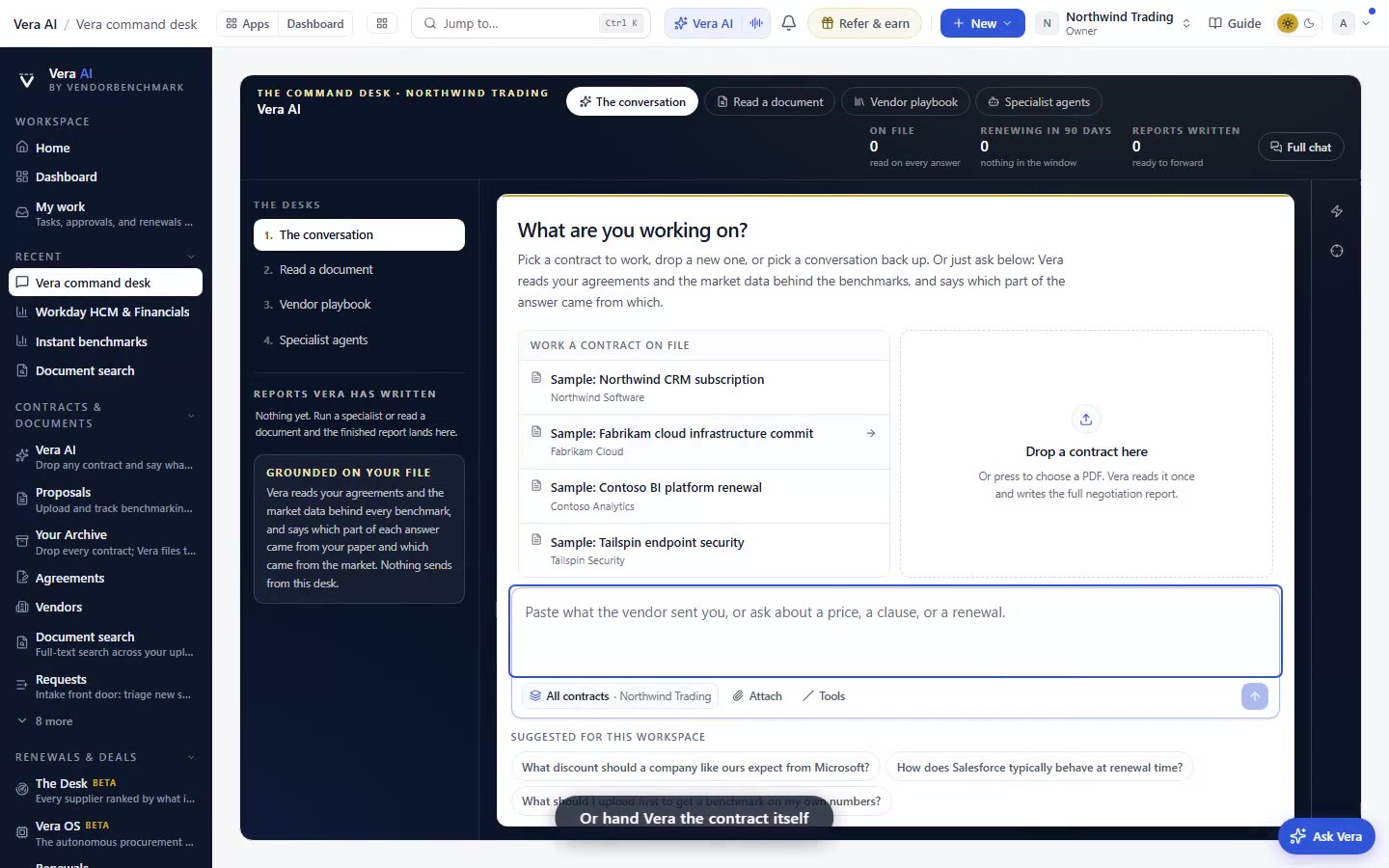
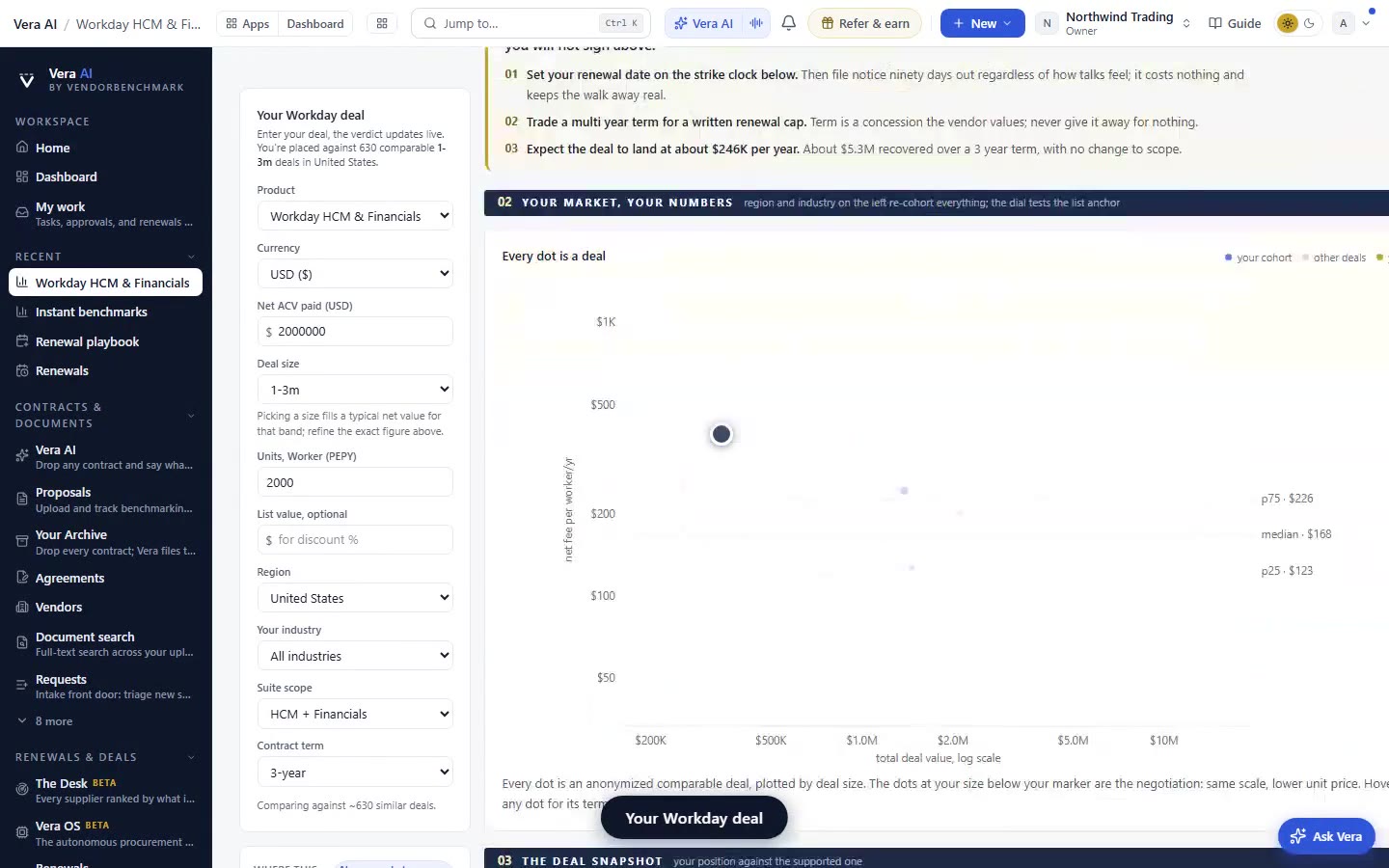
Vera, our AI analyst, treats a missing decision owner as a defect at intake, not a formatting preference. When a request lands with a submitter and no accountable owner, it is flagged before it reaches your queue. That single change removes the most common cause of the clarification loop, because you are no longer discovering the ownership gap three days in. You know at the door.
When you do have a question, the platform routes it to the person with authority over the requirement, not to whoever happened to type the form. The messenger is not asked to defend a spec they did not write. Six specialist agents and thirteen inbox agents handle the routing and the follow-through, so the clarification reaches the right desk without you assembling the thread by hand.
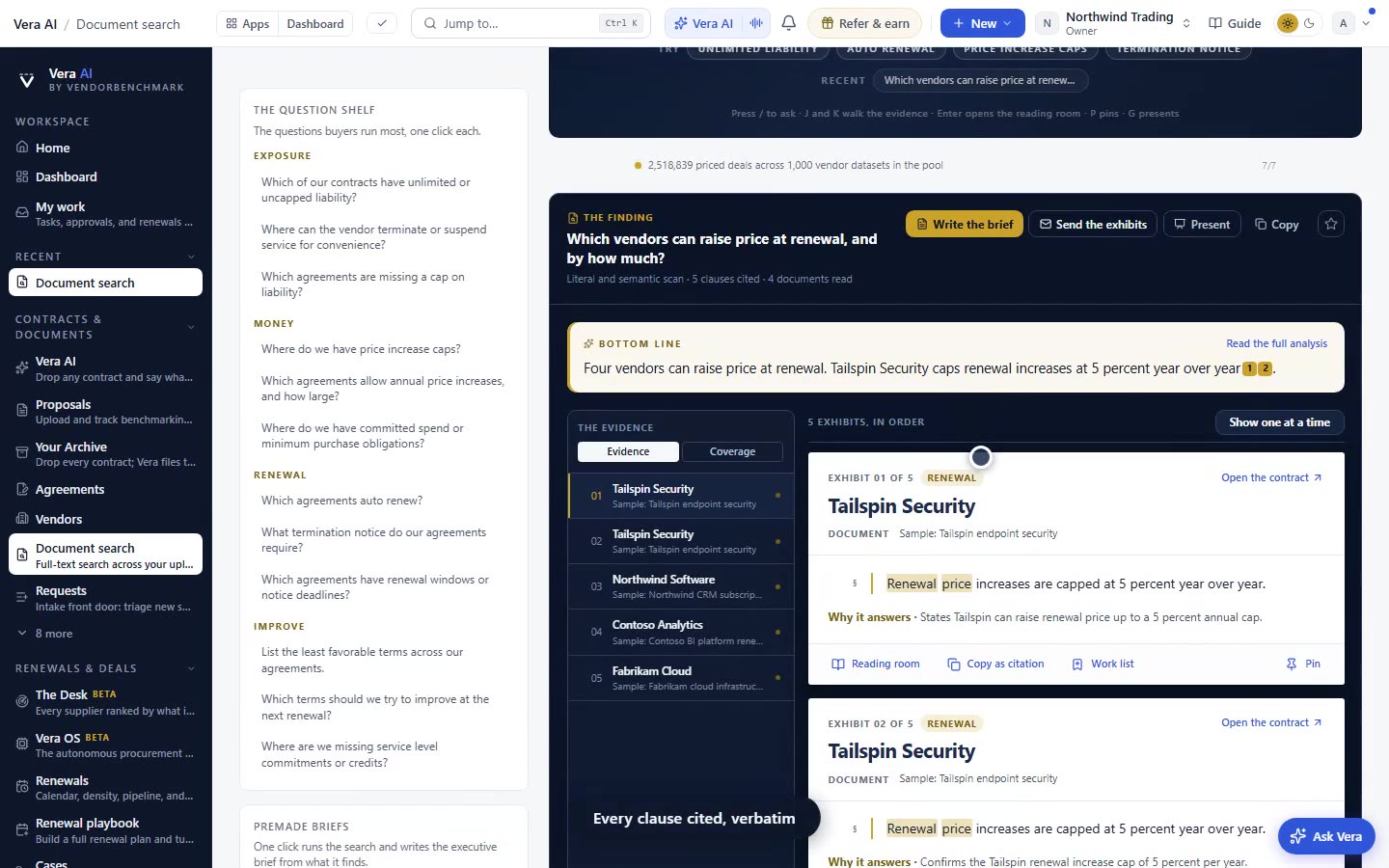
Just as important, the platform keeps a record of who validated each requirement. This matters far beyond the current request. When someone leaves, the context they held usually leaves with them, which is why we treat institutional memory as infrastructure in the org brain. If the analyst who validated a spec moves on, the validation still stands in the record. Accountability survives the staff turnover that would otherwise reset every requirement to unowned again. It also feeds cleanly into the deal sign-off chain, because the approvers at signature are the same owners who validated the requirements upstream, and the brief each one sees is already attributed.
What this does not solve
Be honest with yourself about the limits. Vera can require an owner and route the question, but it cannot make a named owner competent or engaged. If your organisation names an owner who does not know the requirement any better than the messenger did, the flag is satisfied and the answer is still weak. The platform enforces that someone accountable exists. It cannot manufacture the accountability itself. That remains a management responsibility, and no tool replaces it.
Nor does this fix the upstream politics of who should own a request that genuinely spans several teams. When a purchase touches three budgets, the platform can record the owner you designate, but it cannot arbitrate which of three directors that owner should be. It removes ambiguity about whether an owner exists. It does not remove the harder organisational question of who it ought to be, and pretending otherwise would be dishonest.
What it does deliver is narrow and real. The clarification cycle that used to consume days now closes in the time it takes the right person to answer one question. The rework that used to appear at sign-off is caught at intake instead, because the assumptions were validated by an accountable owner the first time. That is the whole argument. An unowned request is an unanswerable one, and the cheapest place to fix that is the door, before the guessing starts.
Fredrik has spent more than twenty years in enterprise software, with time at Oracle, IBM, SAP, and Salesforce before moving to the buy side. He structured and priced the kind of large agreements most buyers only see once or twice in a career, which taught him where the leverage sits and how far a vendor will actually move. He started VendorBenchmark to hand that knowledge to every sourcing team.