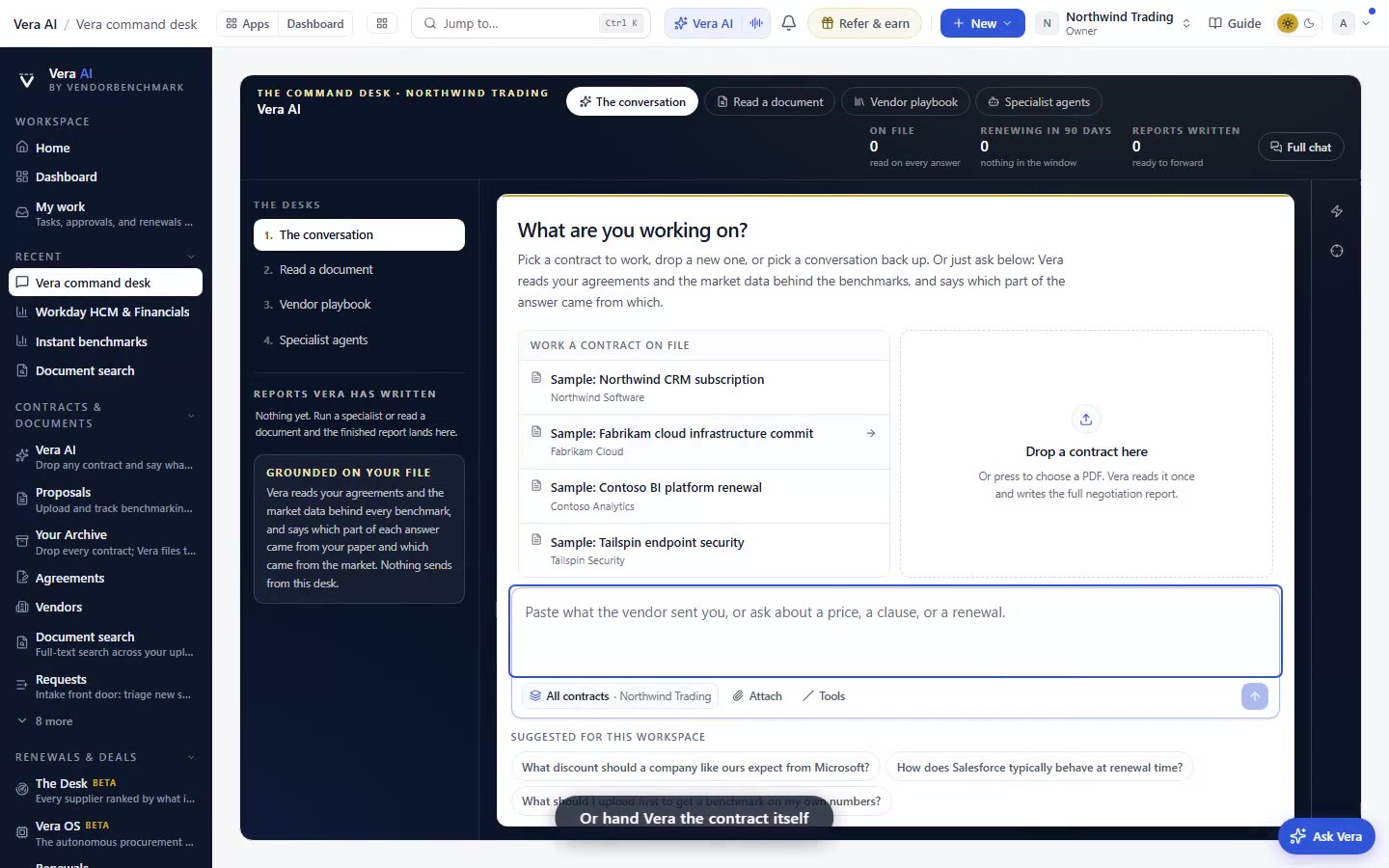
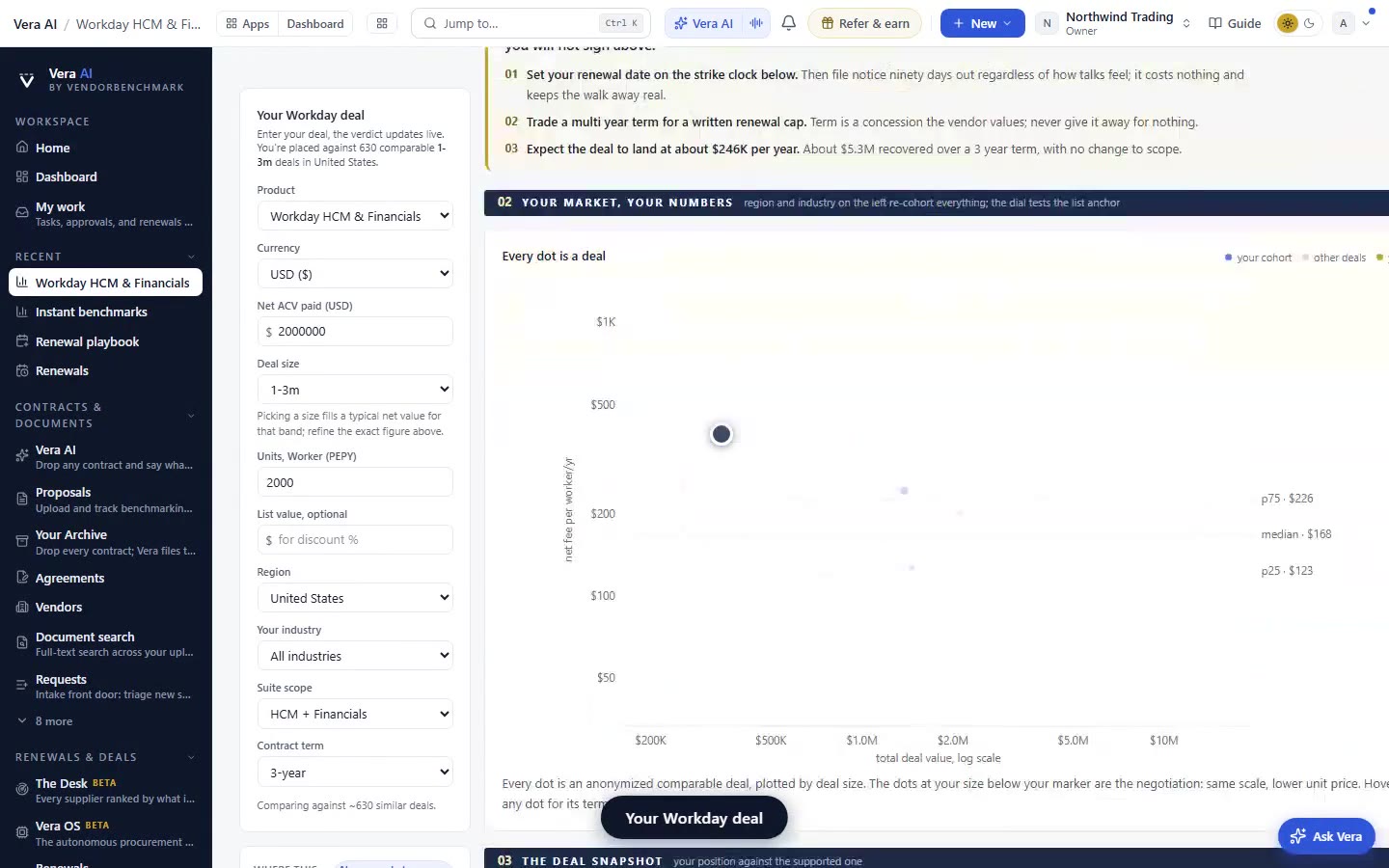
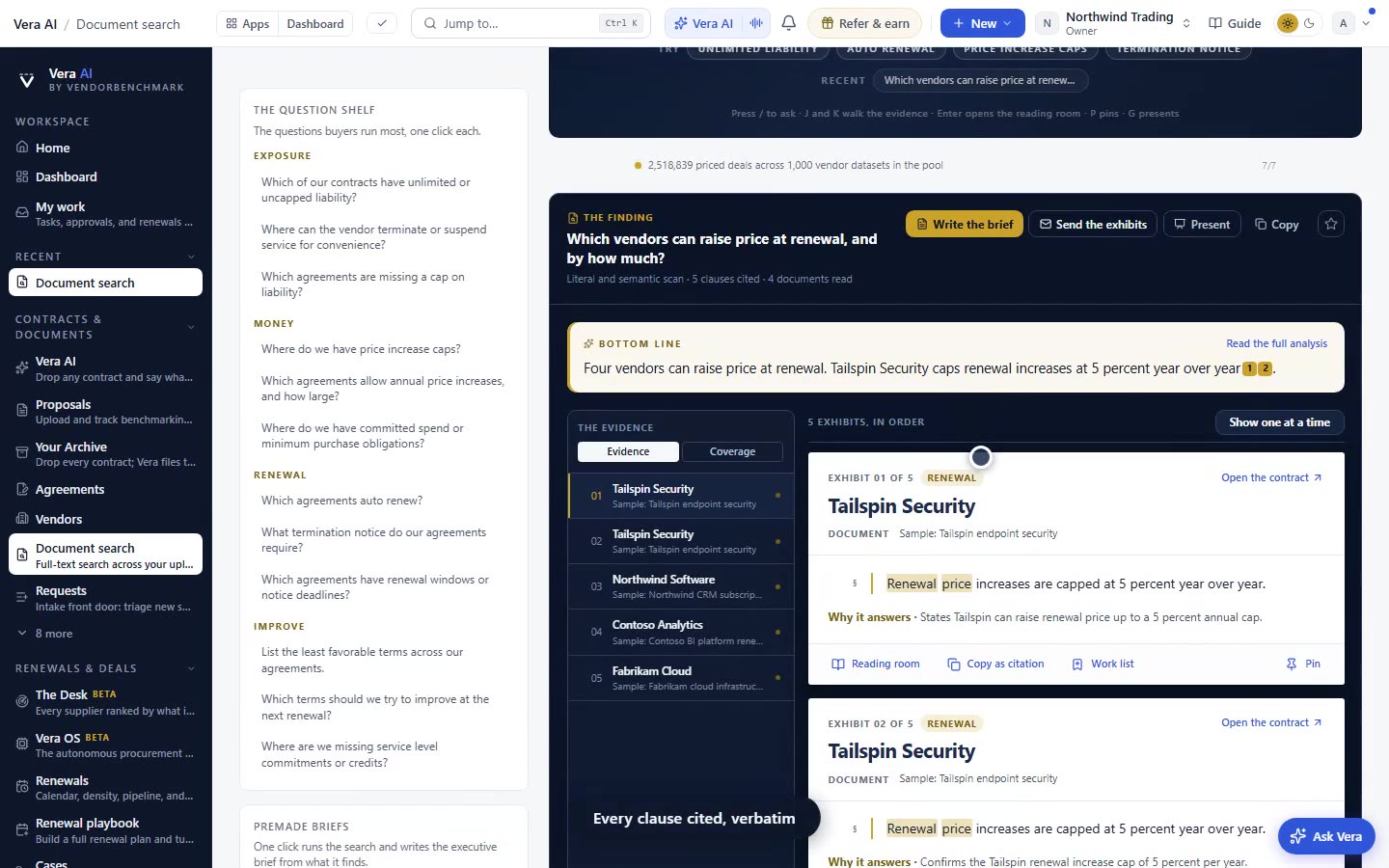
The same capability, described two ways, bought twice
Overlap you cannot see is overlap you pay for. Spend visibility surfaces duplicate tools across the estate before a second signature lands.
Last month two requests crossed your desk in the same week. One asked for a customer feedback platform. The other asked for a survey and NPS tool. Different teams, different sponsors, different language, and each one arrived with its own urgency. You ran two intake conversations, pulled two sets of pricing, negotiated two orders, and signed. Only at the next renewal did someone notice that both tools do substantially the same job for overlapping audiences. You did not buy the wrong things. You bought the same thing twice because nothing in the request told you they were the same thing.
Why the same capability arrives under two names
Requesters do not describe capabilities. They describe the outcome they want in the vocabulary of their function. A marketing lead asks for a survey tool. A product manager asks for user research software. A support director asks for a voice of customer platform. Three requests, three categories, one underlying capability. Procurement receives these as unrelated line items because the intake form captures the requester's language, not the market's taxonomy. There is no villain here. This is simply how demand surfaces inside a large organisation.
The problem compounds because the requests rarely arrive together. They land weeks or quarters apart, routed to different buyers, approved against different budgets. By the time the second request appears, the first tool is already live, already invoiced, and already invisible in the noise of a large estate. We wrote about the adjacent failure mode in the intake ticket that names the vendor instead of the need. Muddy demand is the same disease wearing a different coat: the request hides the capability, so the overlap hides with it.
Unrecognised overlap is paid for in duplicate subscriptions
Every duplicate tool is a recurring cost you negotiated at a disadvantage. Consider the arithmetic. Two overlapping platforms at, for example, roughly 40,000 a year each is 80,000 committed annually, when a single consolidated seat count might have landed under 55,000 with better volume leverage. You did not just overspend by the price of the second tool. You forfeited the discount that consolidated demand would have earned on the first.
There is a second, quieter cost. Two contracts mean two renewal cycles, two sets of terms to track, two integrations to maintain, and two vendors who each believe they hold your full account. Fragmented demand weakens you at every table. This is the mechanism behind most shadow IT and duplicate tool waste, and it is exactly the kind of redundancy a downturn exposes first, which we covered in the downturn playbook.
The platform motion that removes the overlap
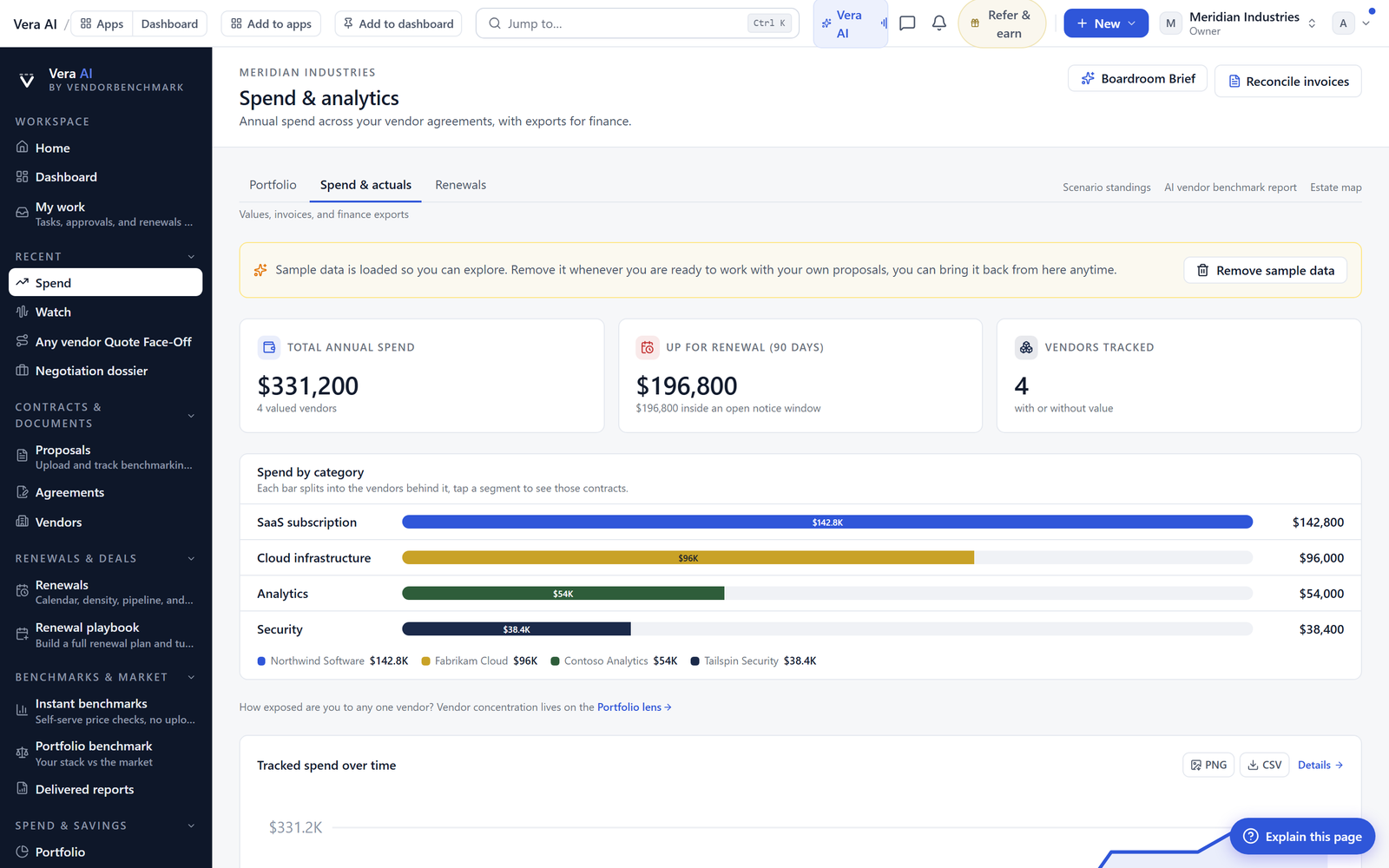
Spend visibility inverts the intake problem. Instead of accepting the requester's category, the estate view reads what you already own and groups it by the capability the tool delivers. When a new request arrives, you check it against the existing clusters before you open a negotiation. If the capability is already covered, the new request becomes a seat expansion on the incumbent contract, not a second procurement.
The mechanism is unglamorous and that is the point. Background jobs reconcile your invoices, contracts, and connected SAM data into one estate picture, so the same platform that appears as a marketing line item and an engineering line item resolves to one entry with one true spend total. Vera then answers the question that matters at intake: do we already own something that does this, and what did we pay for it. The estate map puts the whole stack on one canvas so the overlap is visible rather than inferred.
When consolidation is the right move, the benchmark data turns it into leverage. Against benchmarks across 1,483 vendors, calibrated to documented market evidence, you can see whether the incumbent's expansion price is fair and what comparable buyers paid when they consolidated. That converts a defensive cleanup into an offensive negotiation. From there, the spend to savings plan ranks the consolidation against your other moves so it competes for attention on merit.
What changes in the intake week
What this does not solve
Spend visibility surfaces overlap. It does not decide for you whether two overlapping tools truly serve one need or two genuinely distinct ones. A survey tool and a customer feedback platform may share a category and still differ on the one feature a team cannot live without. That judgement stays with you and the requesting teams. The platform gives you the clustered view and the priced comparison, not the verdict on functional fit.
It also depends on the completeness of your data. Tools bought on personal cards, or spun up under free tiers that later convert, will not appear until they hit an invoice or a connected system. The estate view is only as honest as the feeds behind it, so overlap catching improves as coverage improves. And it cannot force organisational will. If a department is determined to keep its own tool for reasons of politics rather than capability, visibility informs that conversation but does not end it. What the platform removes is the excuse of not knowing. The overlap is named, priced, and on the table before the second signature, which is the only moment the saving is still available to you.
Fredrik has spent more than twenty years in enterprise software, with time at Oracle, IBM, SAP, and Salesforce before moving to the buy side. He structured and priced the kind of large agreements most buyers only see once or twice in a career, which taught him where the leverage sits and how far a vendor will actually move. He started VendorBenchmark to hand that knowledge to every sourcing team.