The vendor's AI already knows your price. This year, yours does too.
Enterprise software sellers have priced with algorithms for a decade. In 2026, AI agents finally arrived on the buyer's side of the table. Here is what a procurement agent actually does, what we shipped this quarter, and what changes for the people who sign.
Every enterprise software deal is a negotiation between two information systems. On one side sits a deal desk that has priced thousands of transactions this quarter, knows exactly where its discount floor is, and increasingly runs the whole exercise through pricing software. On the other side sits a buyer who negotiates with that vendor two or three times a decade, armed with a spreadsheet, an expiring quote, and whatever an analyst report from eighteen months ago had to say.
That asymmetry is not new. What is new is that AI made it dramatically worse before it started making it better. Vendor reps now arrive with AI generated battlecards about your company. Usage telemetry tells them precisely how dependent you are before you say a word. Renewal uplifts are set by algorithms that price your switching costs, not your loyalty.
Meanwhile the average enterprise now runs more than 300 software vendors. Renewals land every week of the year, and the procurement team did not triple in size. Something on the buyer's side had to change, and this is the year it did.
What an AI agent actually does on a procurement desk
Start with what an agent is not. A chatbot that paraphrases the internet will happily tell you that "discounts of 10 to 30 percent are common for enterprise agreements." That sentence is true, useless, and occasionally dangerous, because the difference between 10 and 30 percent on a $2M renewal is $400,000 a year.
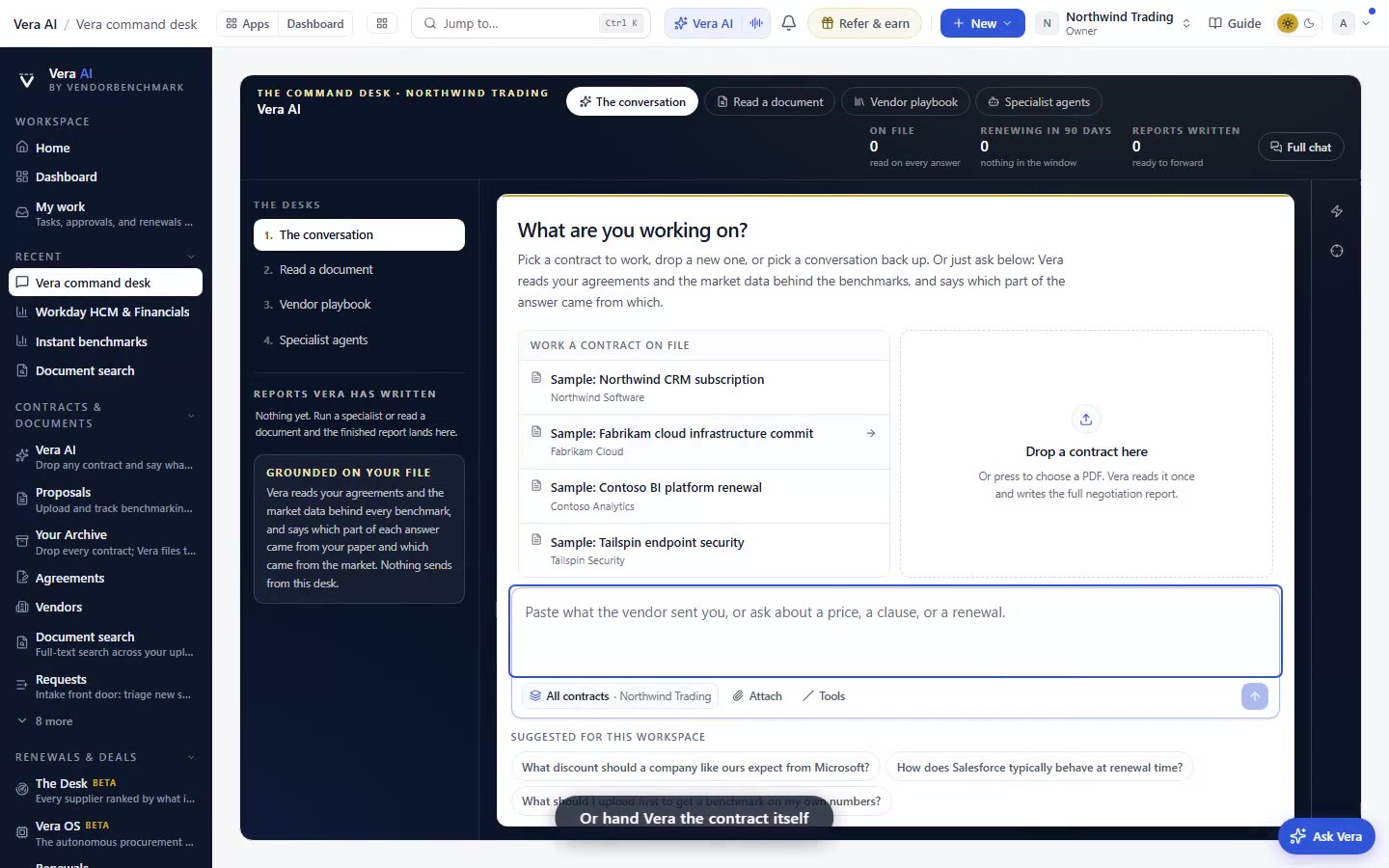
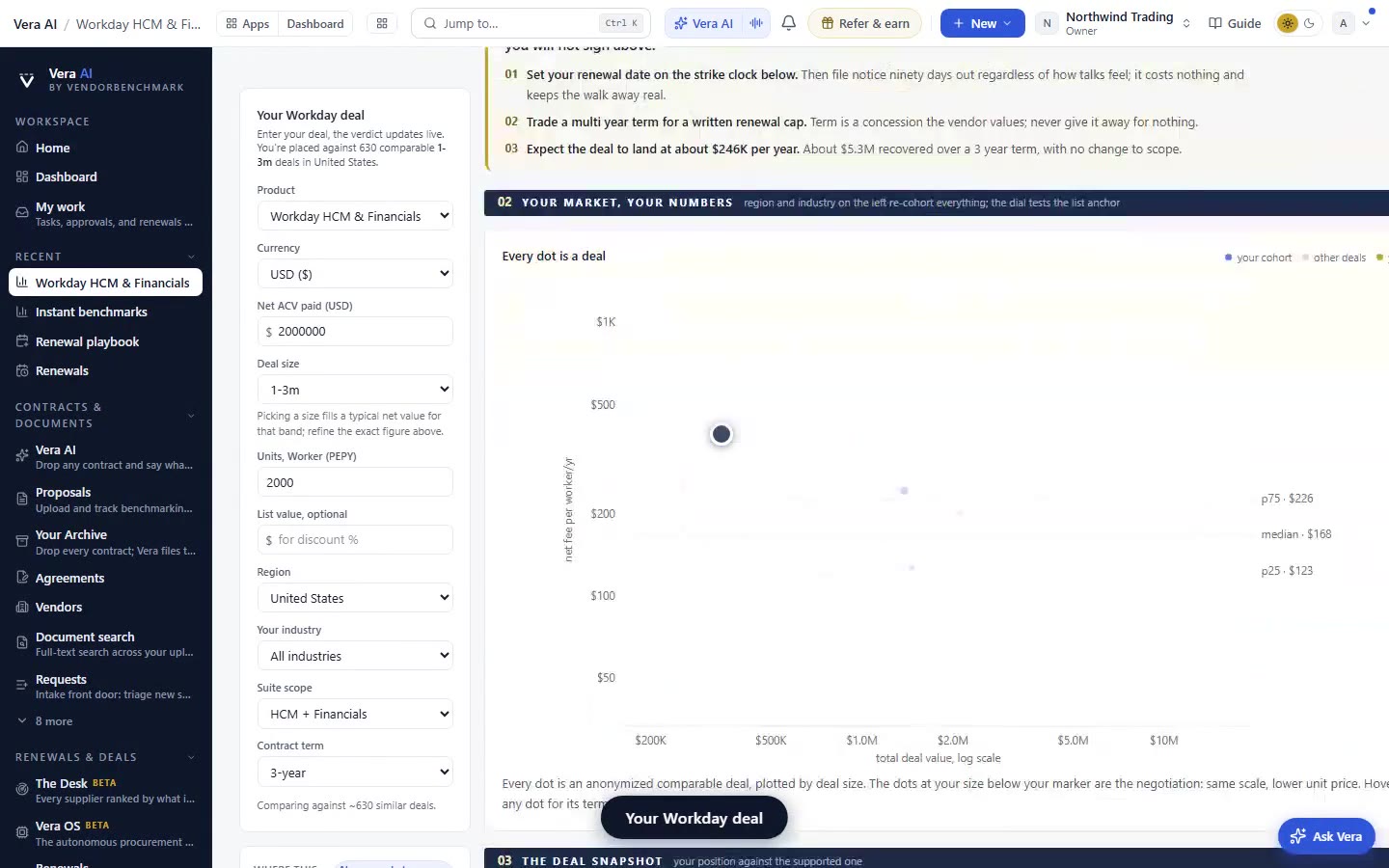
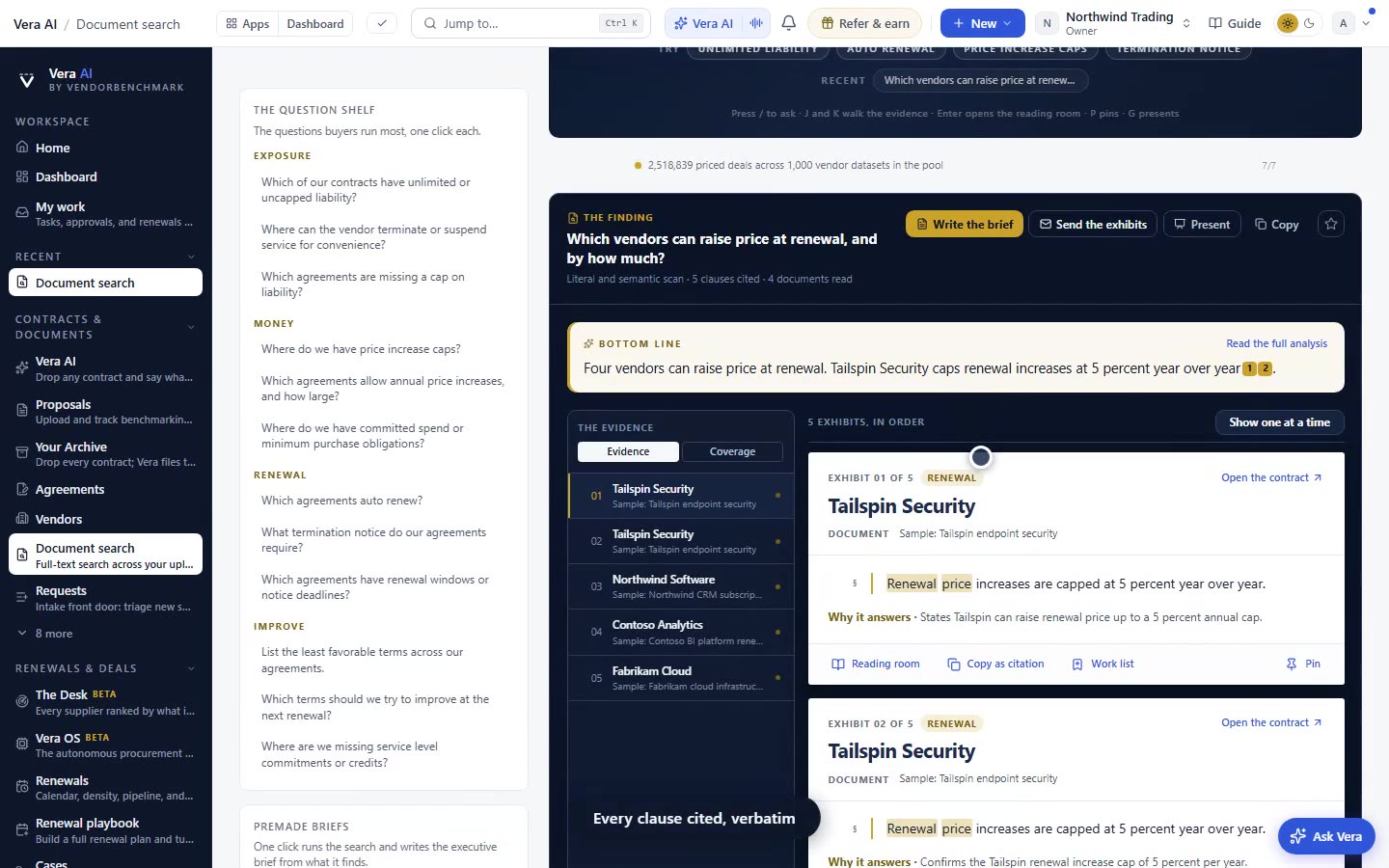
An agent is different in three ways: it has your data, it has tools, and it has a job. Ask Vera, the analyst that lives inside VendorBenchmark, whether you are overpaying for Salesforce, and she does what a human analyst would do. She reads your contract, checks your last twelve invoices, pulls the cohort of comparable deals from modelled deal cohorts, and answers with a number, a percentile, and a citation for every figure. If the data does not support an answer, she says so instead of improvising one.
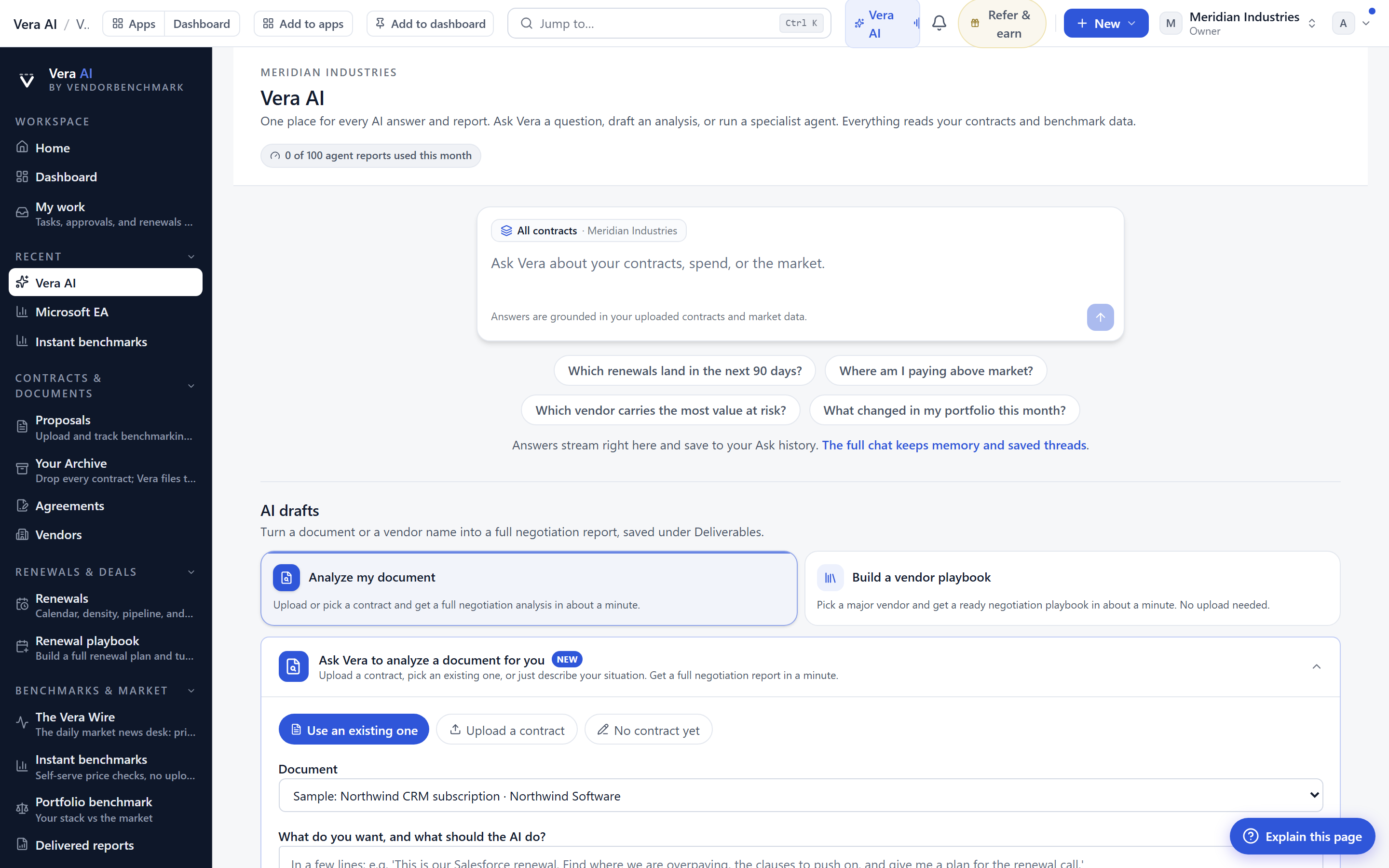
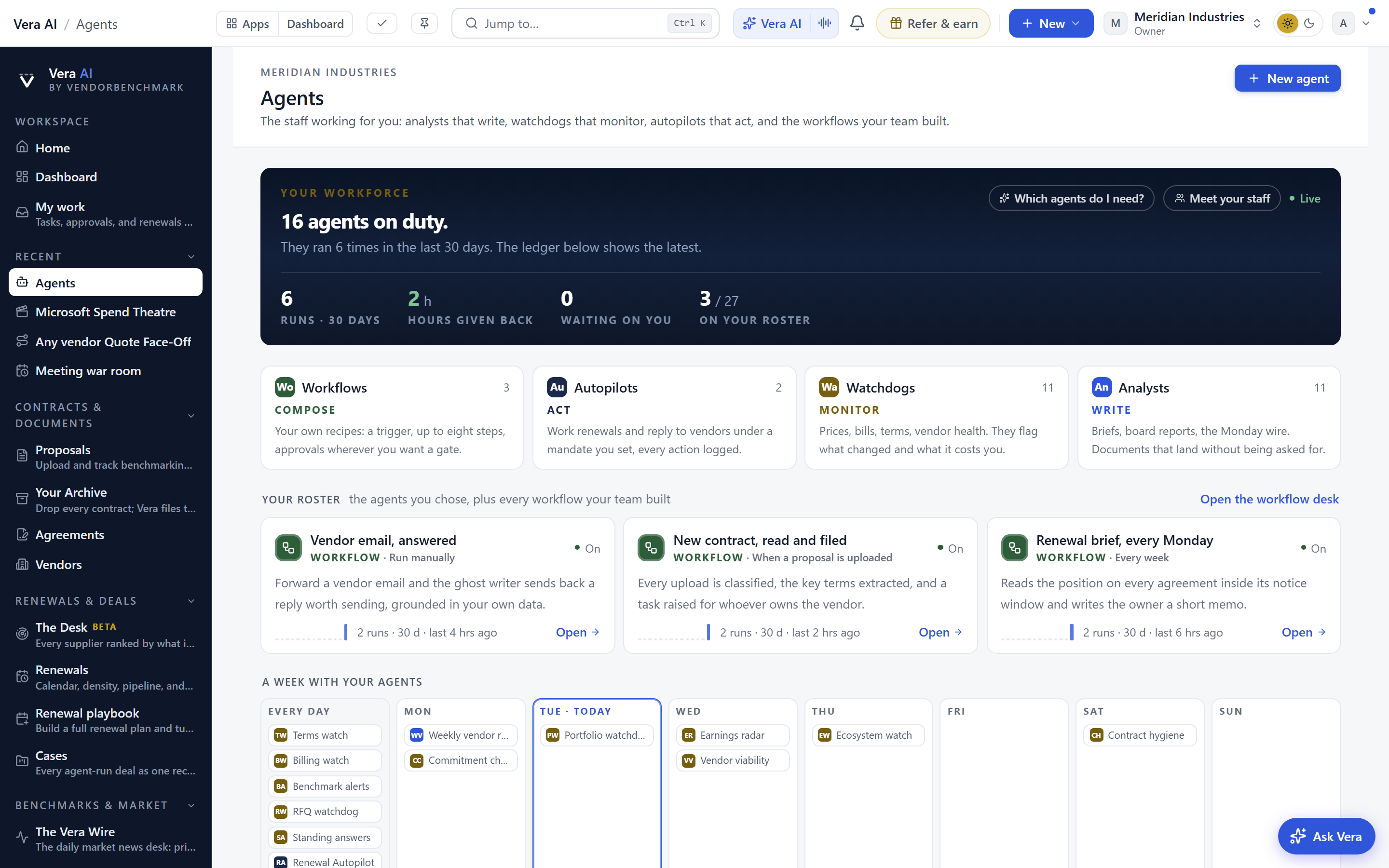
One assistant is useful. A staffed desk is what changes the job. Behind Vera sit six specialist agents, covering benchmarking, legal terms, licensing, contract flexibility, executive briefs, and talking points, plus a ghost writer that drafts replies to vendor emails in your voice, thirteen inbox agents you can simply email a quote to, and 99 background jobs that watch renewals, invoices, and vendor news while you sleep.
From answering questions to doing the work
The second shift is the move from answers to deliverables. Answering "is this price fair?" saves you an afternoon. Producing the negotiation package saves you the week.
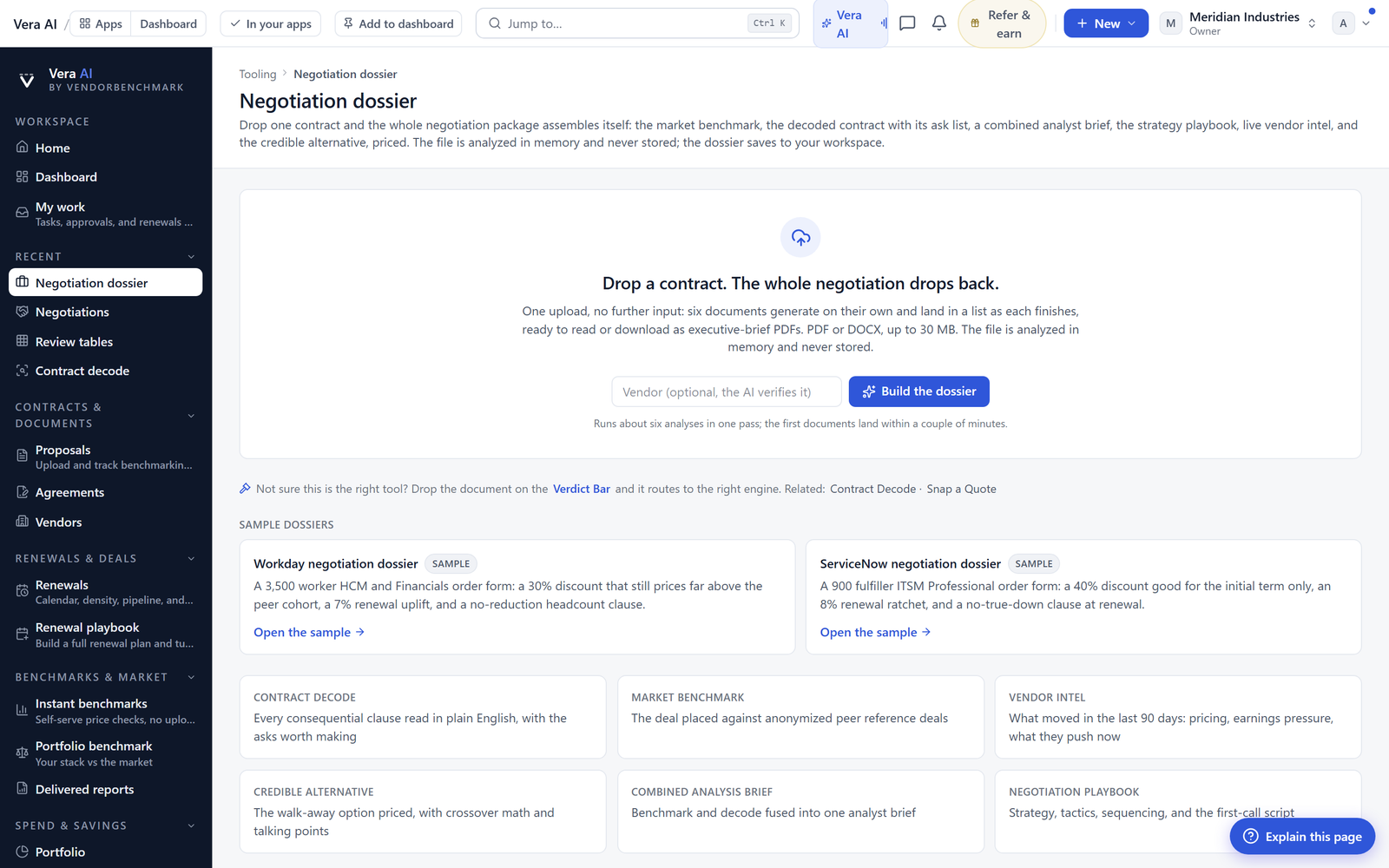
The clearest example is the Negotiation Dossier. Upload one contract or renewal quote and the agents assemble the full preparation an advisory firm would bill days for: a benchmark of your position against comparable deals, the contract decoded into plain English asks, an analyst brief, a strategy playbook, live vendor intelligence, and a priced walk away alternative. Each piece exports as its own document, ready to forward.
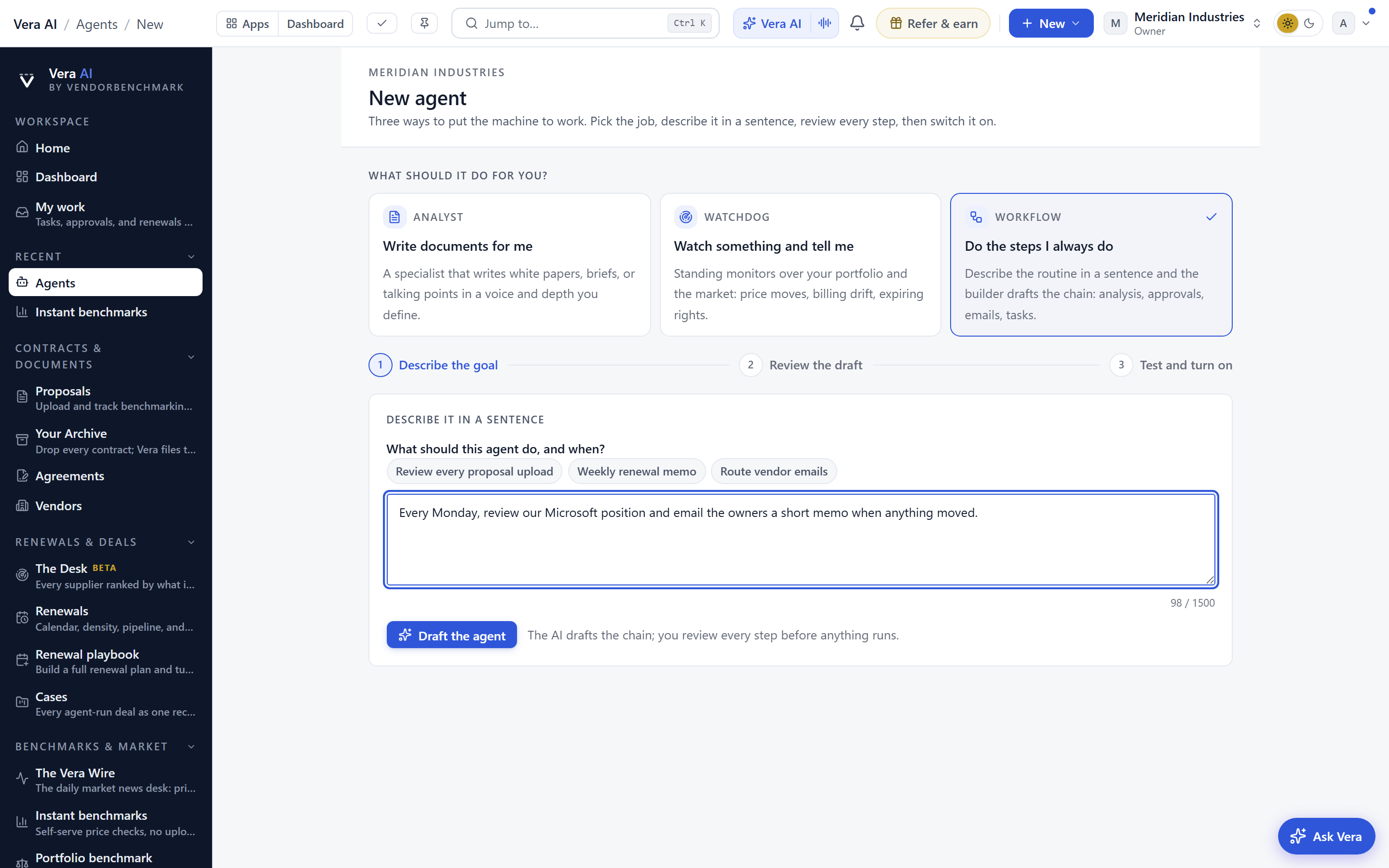
And because no two procurement desks run the same process, the agents are composable. The workflow builder lets anyone chain them without code: seven triggers, ten step types, and templates like a weekly renewal radar or a risky terms screen that runs on every upload. "Summarize every new contract into Slack" is a five minute build, not an engineering ticket.
What shipped this quarter
The platform picked up six capabilities this quarter that show where agent-side procurement is heading. The two below changed the shape of the work rather than the shape of a report: the agents stopped being features you open and became a roster that runs, and the desk grew a room that tells you what the roster did overnight.
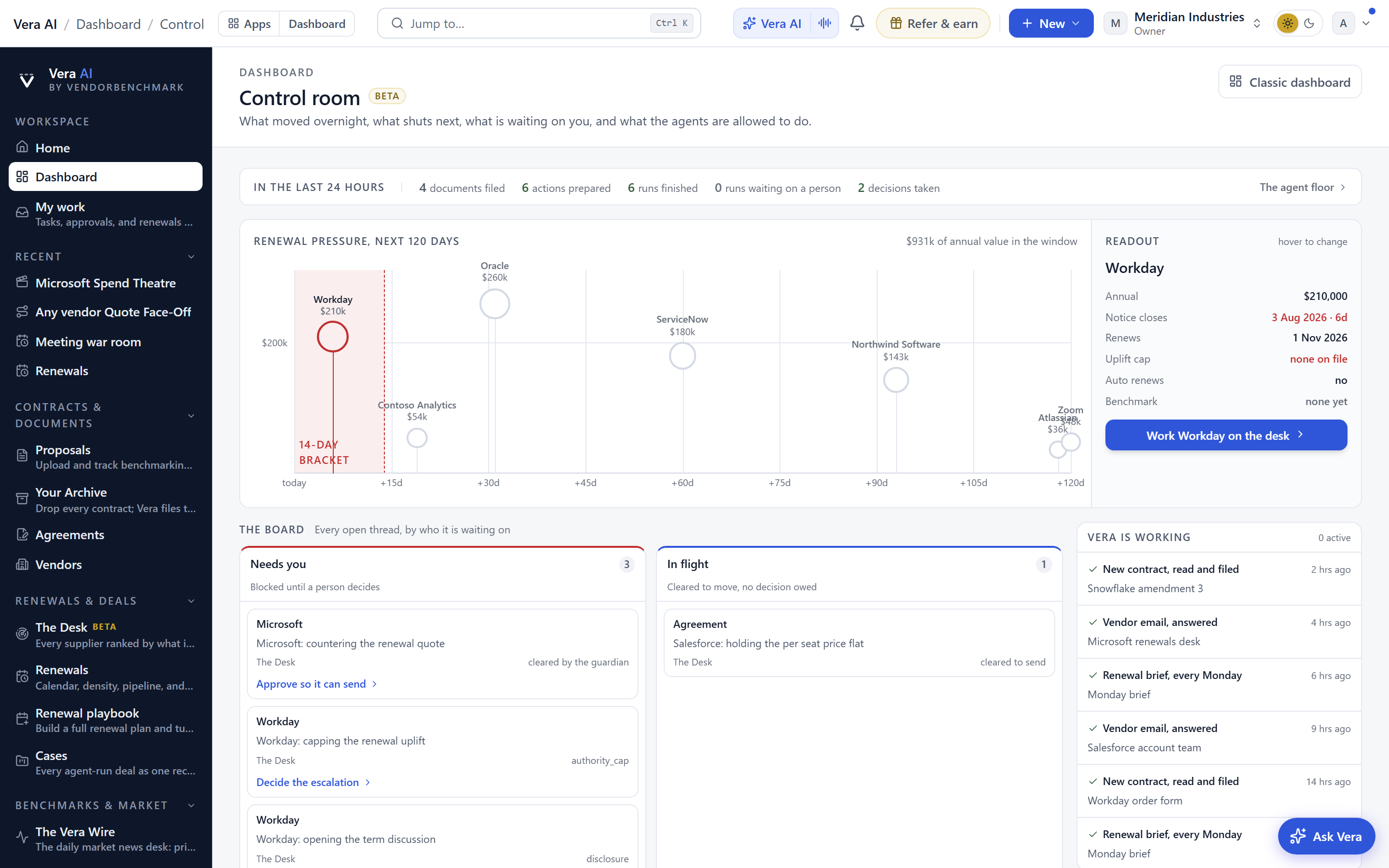
A real time whisper rail during the vendor call: live transcript, grounded prompts, and the exact fact you need surfaced the moment the rep makes a claim.
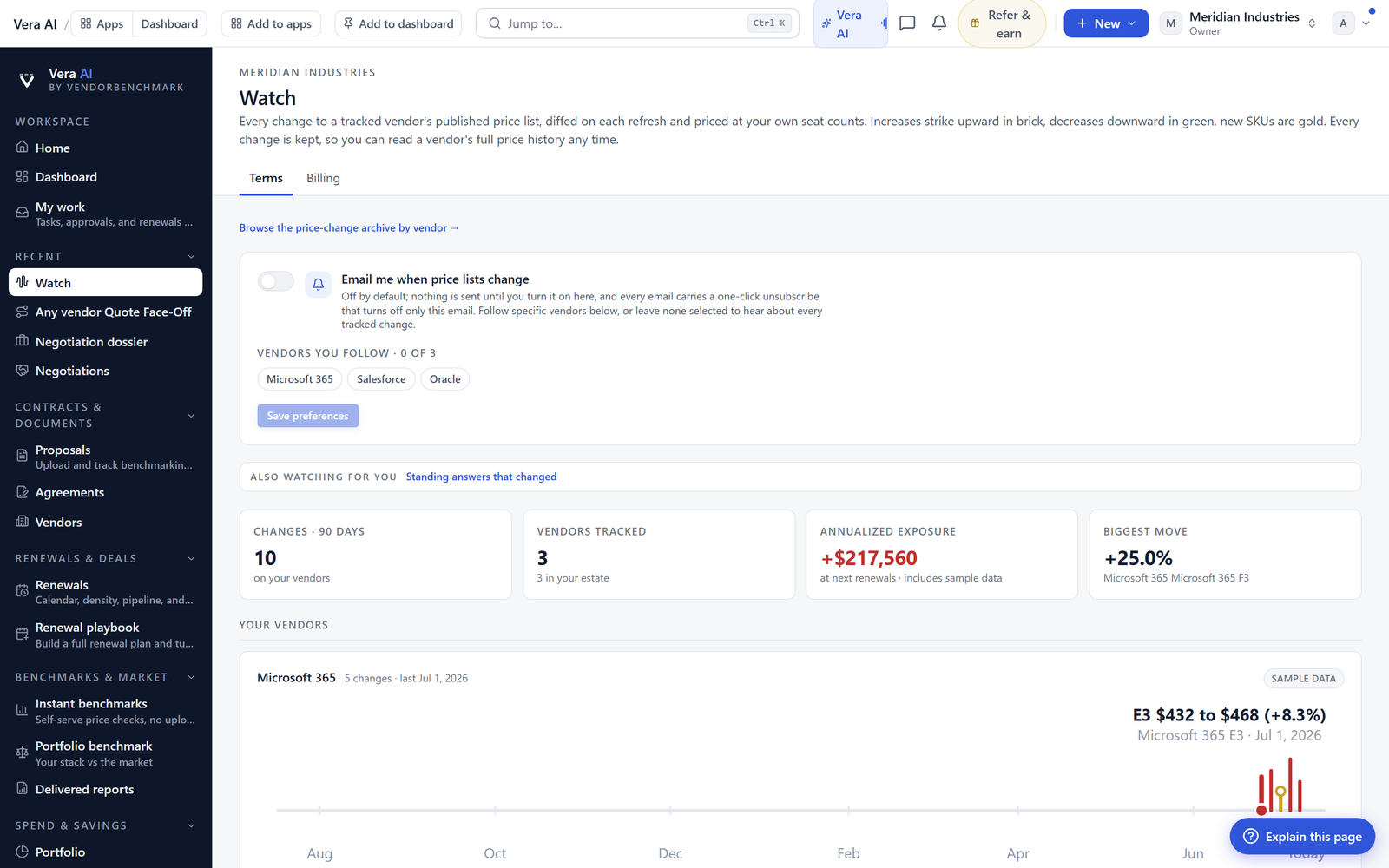
Vendor published price lists are diffed on every refresh and priced at your seat count, so a quiet list change shows up as a dollar figure, the week it happens.
A give to get layer: contribute one anonymized outcome and unlock the realized uplift peers actually paid. Never a survey number, and never fewer than five peers in a cohort.
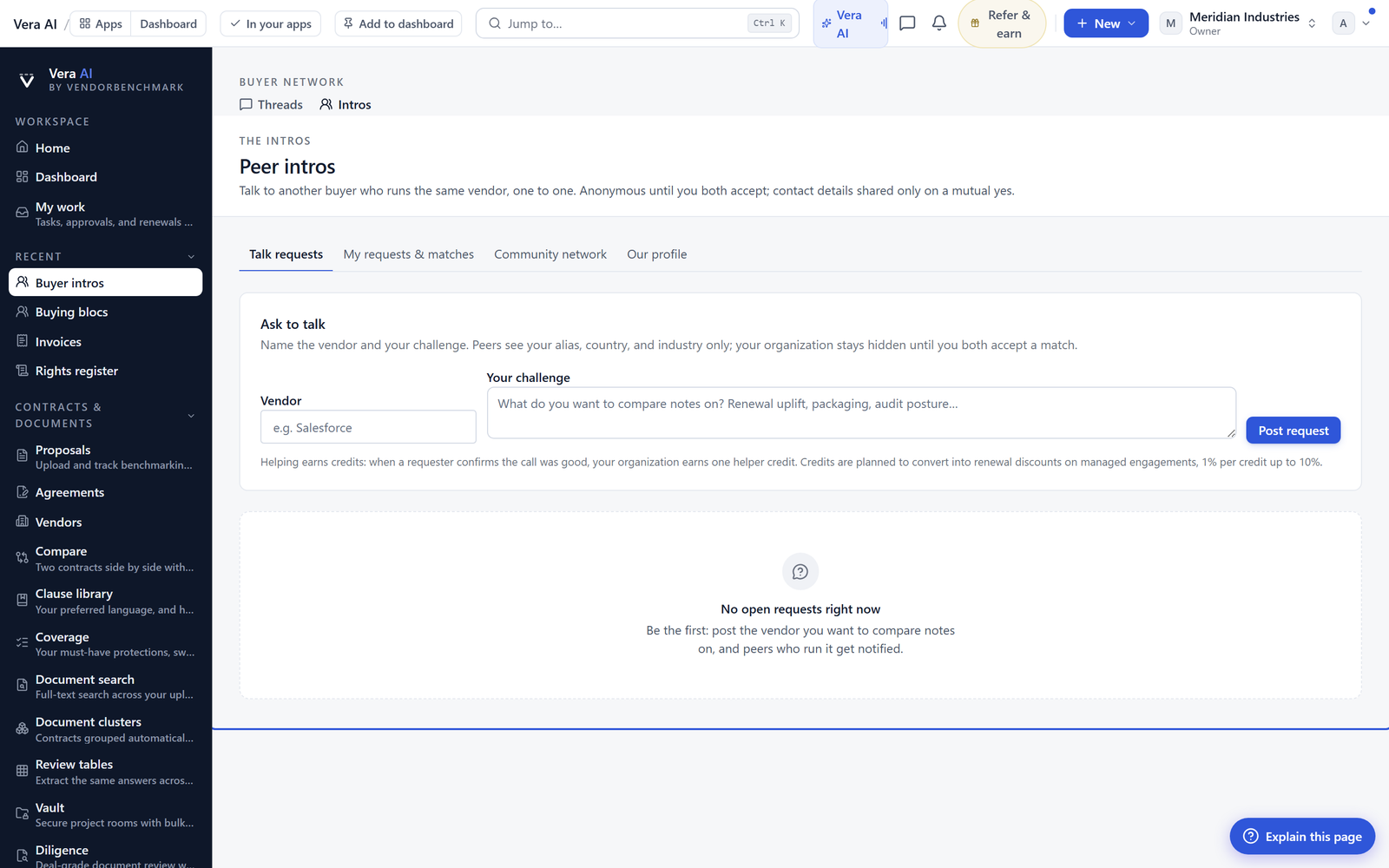
Pseudonymous desks where buyers of the same vendor compare notes, tactics, and timing without exposing their own numbers or names.
Your top vendors by spend, mapped against renewal timing, turned into a prioritized plan of roughly twenty recommendations you can hand to the team.
An open protocol so your AI agent can negotiate against a vendor agent, with signed identities and a hash chained ledger of every move neither side can rewrite.
Two of these deserve a closer look, because they change what "market data" even means. Terms Watch ends the era of finding out about a list price increase from the renewal quote. The moment a vendor edits a published price list, the diff lands on your desk priced at your own seat count.
The Outcome Network attacks the other half of the data problem: survey benchmarks. Self reported discount surveys flatter everyone. The network only trades in verified, anonymized outcomes, what deals actually closed at, aggregated with a strict five peer minimum so no single deal is ever identifiable. You contribute one outcome to see the cohort. Skin in the game keeps the data honest.
Four things that actually change
What we will not let the AI do
A procurement agent that invents a benchmark is worse than no agent at all, because you will repeat its number in a negotiation. So the platform is built around a simple rule: no figure without a source. Every number an agent produces carries a citation tag back to a stored document or a benchmark cohort, and answers pass a groundedness check before you ever see them. When the data is thin, the honest answer is "the data is thin."
The same conservatism applies to action. Agents draft, humans send. The ghost writer prepares the counter reply, the copilot whispers the fact, the dossier assembles the package, and a person makes the call that commits the company. Every agent action lands in the audit trail alongside the human ones.
That division of labor is the real story of AI in procurement. The machines take the reading, the watching, the reconciling, and the first draft. People keep the relationships, the trade offs, and the signature. The desk gets faster and better informed, and it stays yours.
Morten brings two decades of enterprise and software procurement, with stints across Oracle, IBM, SAP, and Salesforce shaping how he reads a deal. He has led sourcing through hundreds of renewals, from mid market order forms to nine figure global agreements, and learned that the buyers who win are the ones who walk in knowing the market. He built VendorBenchmark to make that pattern recognition repeatable.
The week in enterprise software buying, in one email.
What shipped on the platform, and the pricing and licensing moves worth knowing before your next renewal. One email a week, to your work address. Unsubscribe any time.