Ask Vera what is covered, and what a good discount looks like
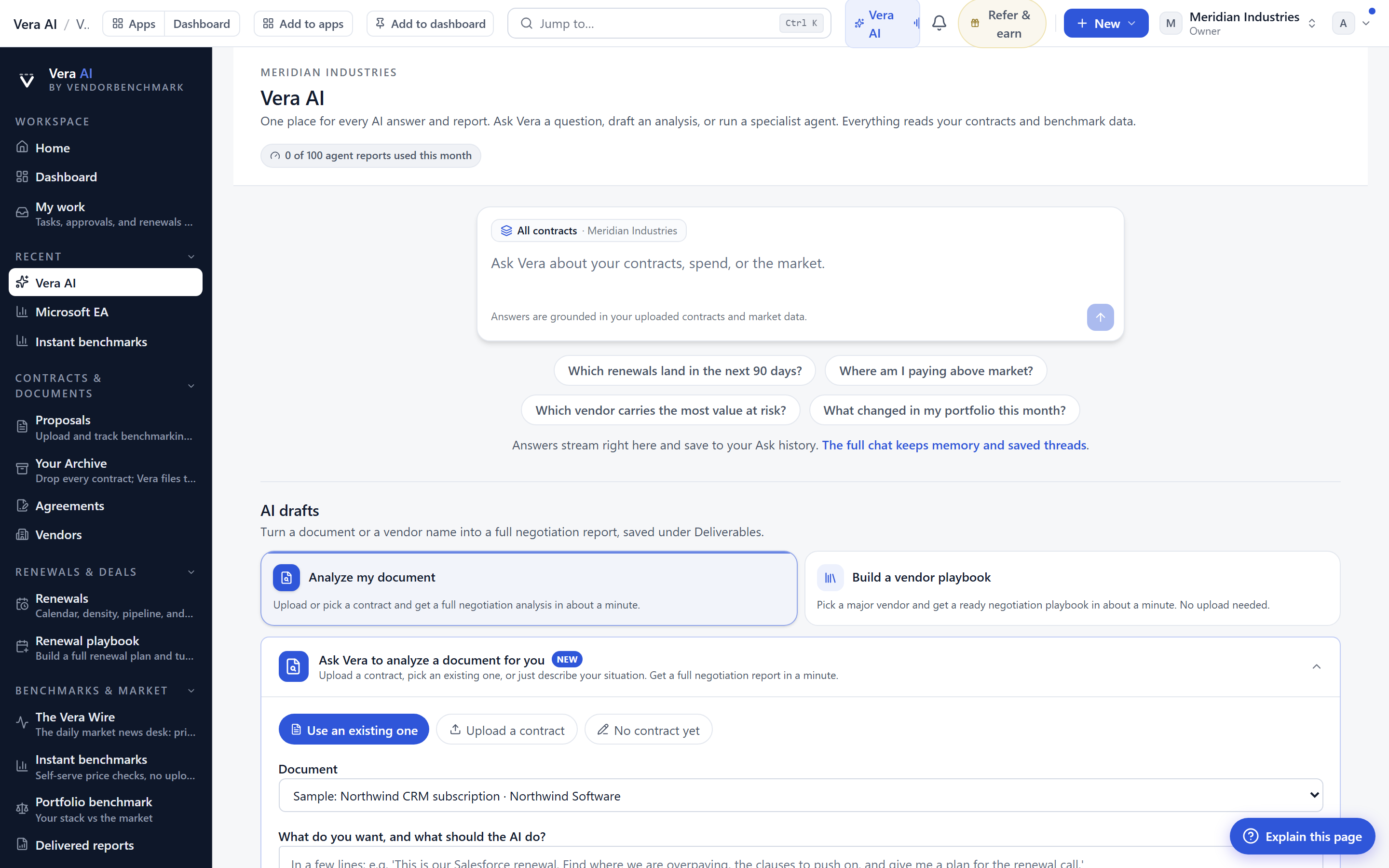
Two questions that used to produce hedged answers now produce numbers. Vera reads the benchmark library for coverage, and the same cohorts the interactive tools rank against for what a good discount actually looks like.
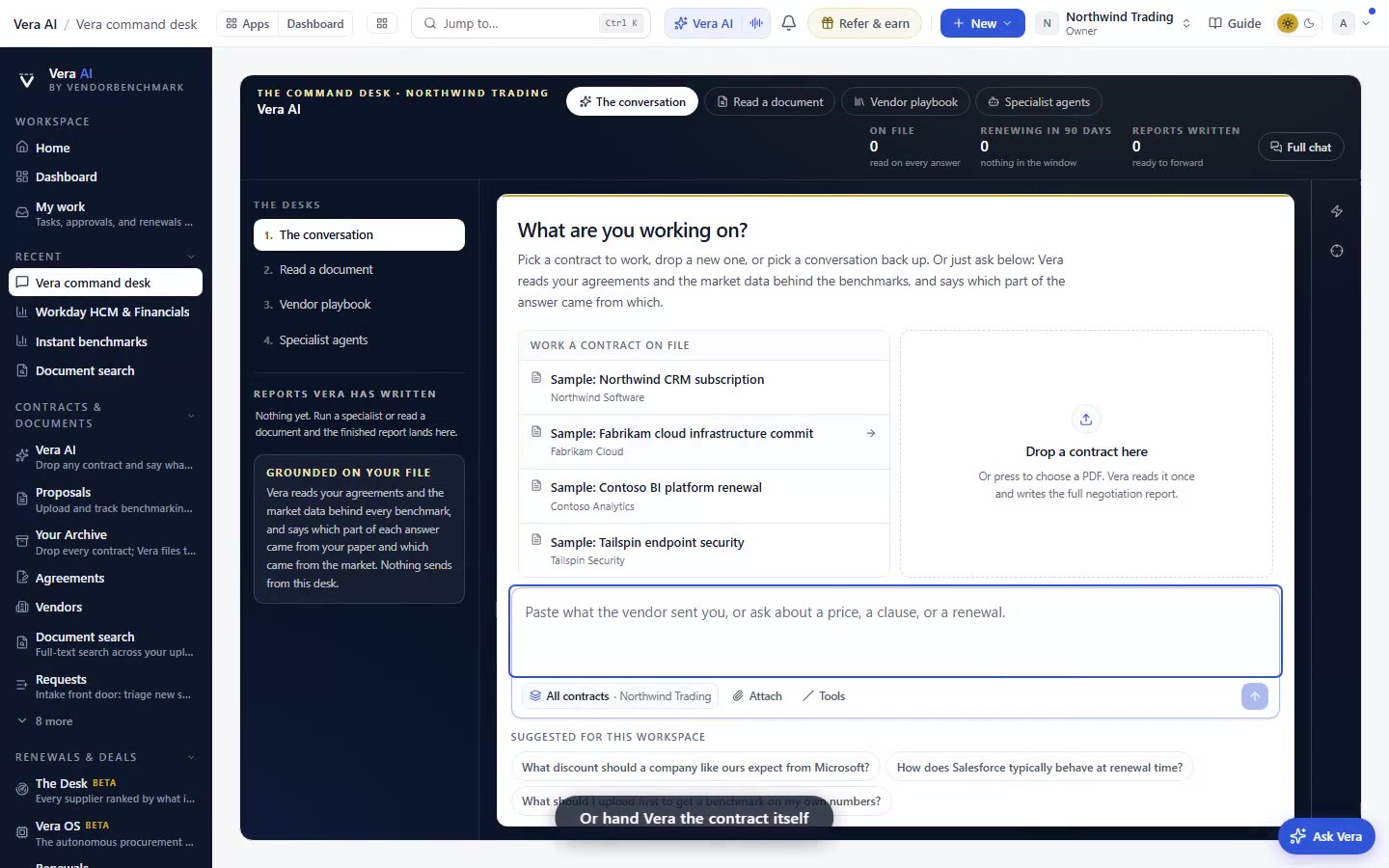
Two questions get asked before any real negotiation work starts, and until now both of them got answered badly. The first is do you actually have anything on this vendor. The second is what does a good discount look like here. Buyers ask them at the start of a renewal, in the first five minutes of a supplier review, or in a Slack thread with a category lead who wants to know whether it is worth pulling a file. The honest answer from most tools has been a shrug dressed up as a paragraph. We have shipped a change that removes the shrug. Vera now answers both questions from the live reference sets rather than in generalities, and she cites what she read.
The coverage question, answered from the shelf rather than from memory
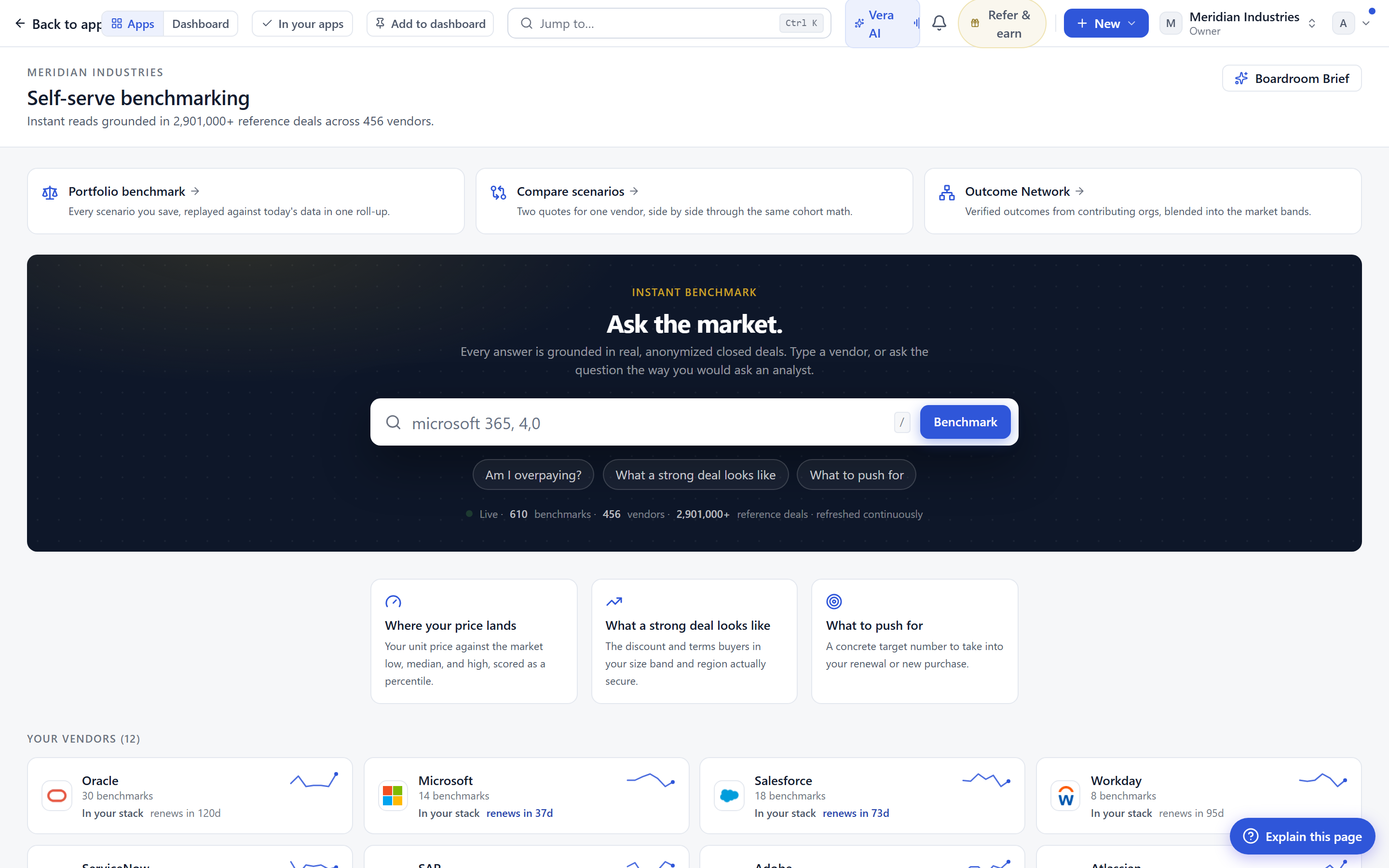
Ask Vera which vendors the platform covers and she reads the benchmark library itself. Not a marketing page about the library, not a cached summary written six months ago, the library. She comes back with the total, the shape of it by category, and a direct yes or no on the specific supplier you named. If the vendor is in scope she says so and points at the record. If it is not, she says that too, and tells you what the nearest comparable category holds, which is often the more useful answer when you are looking at a niche tool that sits inside a market we do cover well.
This matters more than it sounds. The most common way a benchmarking exercise dies is not a bad number, it is twenty minutes of uncertainty at the start about whether the exercise is even possible. A category manager who cannot confirm coverage in under a minute will default to the old method, which is emailing three peers and hoping one of them replies with something usable. The shape by category is the second half of the answer. Knowing that the library is deep in a market you buy heavily in, and thinner in one you touch once every three years, tells you where to trust the number cold and where to treat it as a starting position. We wrote up the method behind that depth in 1,483 vendors, one method, and the coverage answer is now simply that same library reading itself out loud.
The practical effect is that coverage stops being a sales question and becomes an operational one. You can ask it mid workflow, on the way to something else, and get an answer that is true at the moment you ask rather than true when a page was last edited.
What a good discount looks like, before you hand over your own numbers
The second question is the one that used to require you to go first. Most tools will tell you where your number sits once you have given them your number. That is fine at the end of a process and useless at the beginning, when what you want to know is whether this negotiation is worth the calendar time. Vera now answers the discount question without needing your figures at all.
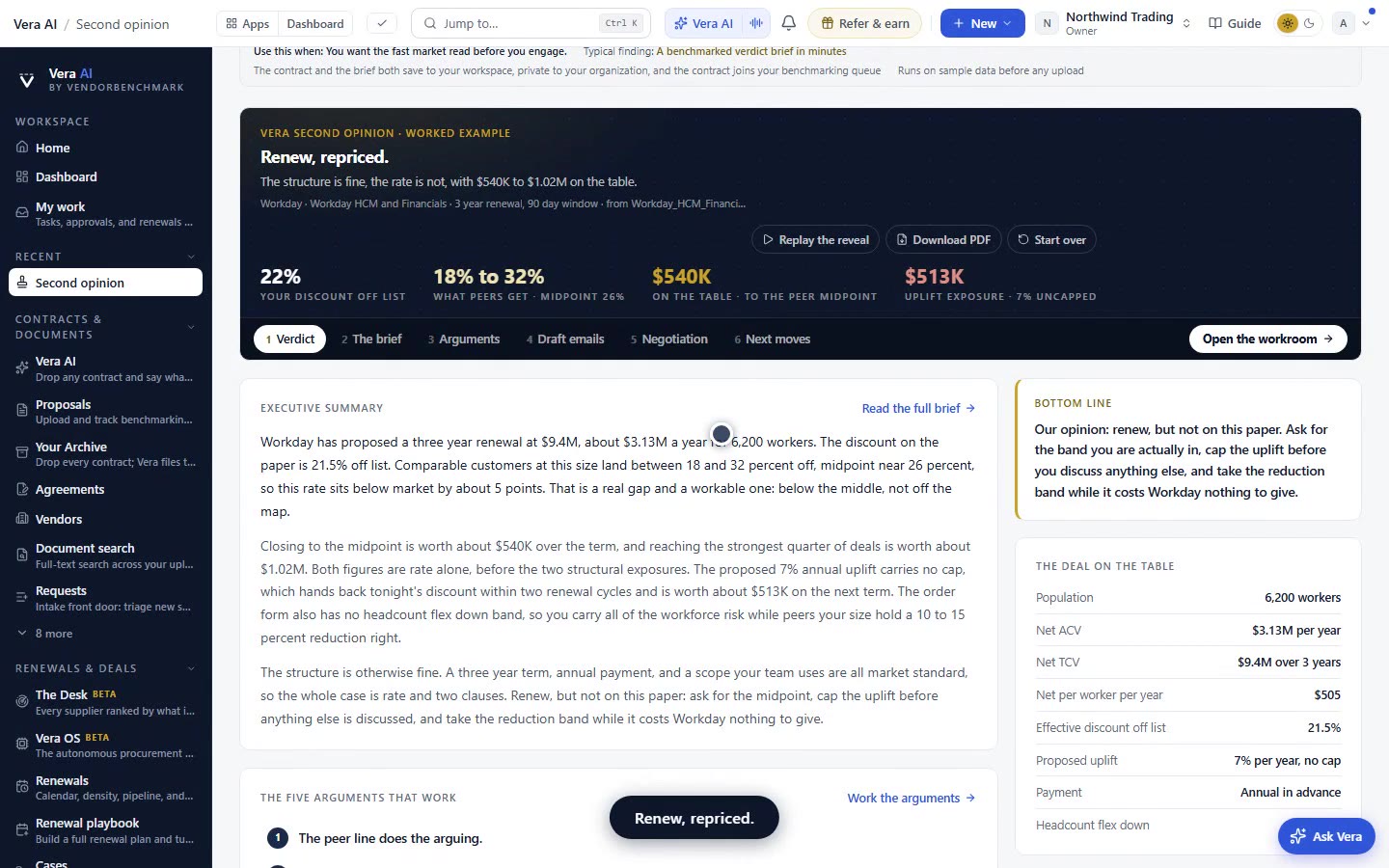
Ask what a good discount is on a vendor and she returns three points on the distribution. The typical outcome, meaning the median discount off list. What top quartile buyers actually get, which is the number a competent team should be aiming at. And the strongest tenth, which is the ceiling that exists in the data rather than the ceiling someone imagines. For vendors priced per unit rather than as a percentage off a list, the shape of the answer changes to match the commercial reality: the typical net fee per unit, and the best quartile net fee per unit. That distinction is deliberate, and it is the same argument we made in discount off list is a trap. A 62 percent discount off an inflated list is worse than a 40 percent discount off a disciplined one, and a per unit answer refuses to let you be fooled by the percentage.
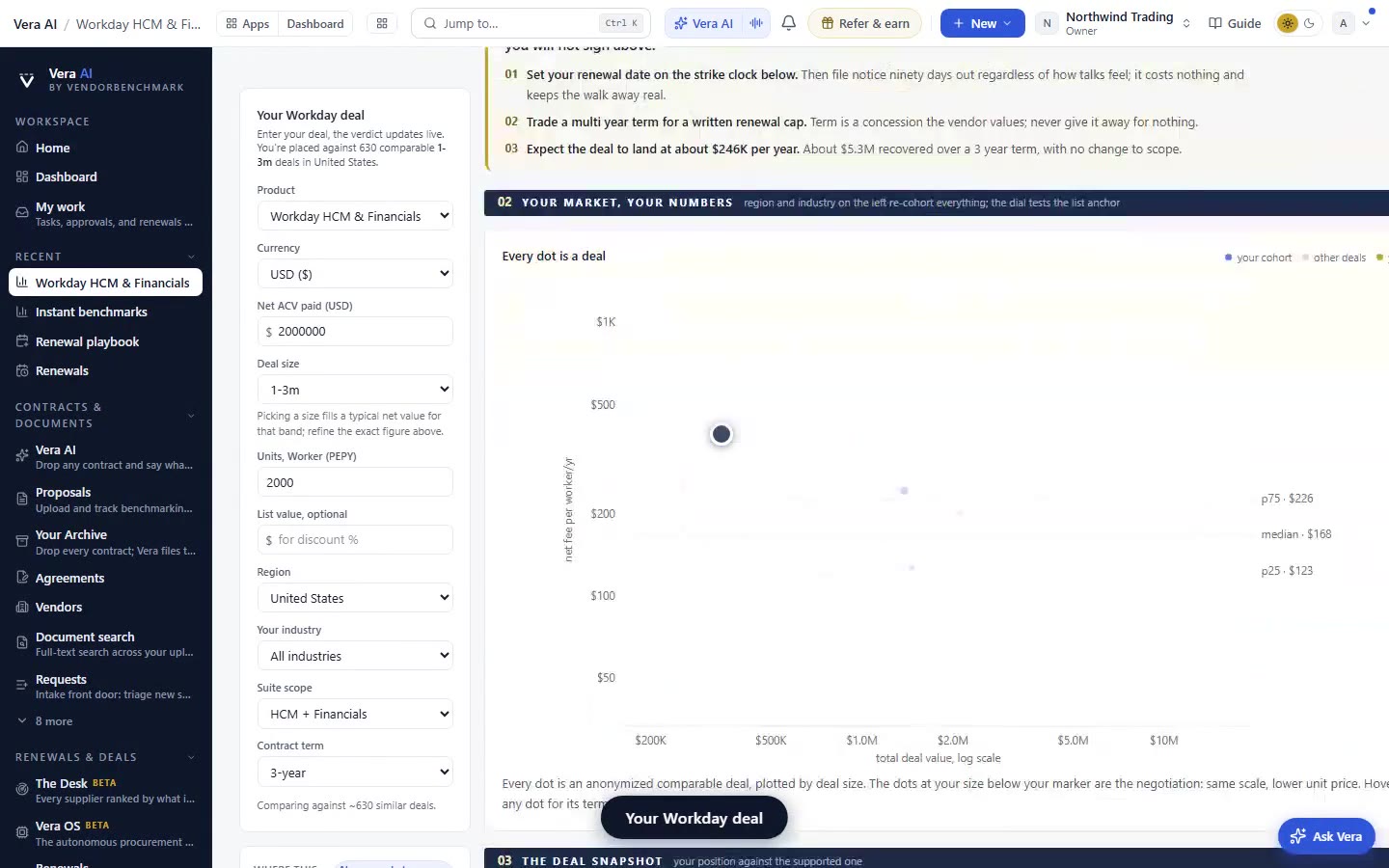
Every one of those figures comes from the same cohorts the interactive benchmark tools rank against. That is the part worth underlining. There is no separate, softer dataset behind the conversational answer. When Vera says the top quartile is at a given level, she is reading the cohort that the percentile bars on the benchmark detail page are drawn from, which is drawn in turn from documented market evidence rather than list prices, survey responses or vendor claims.
What happens once your own figures are on file
The cohort answer is the opening move, not the destination. Once your own figures are on file, whether that is a quote you uploaded, a contract we parsed, or a renewal record with a unit count and a net fee, Vera stops giving you the general distribution and runs the exact standing instead. Same question, different answer: not what a good discount looks like on this vendor, but where your specific deal sits against the cohort, at what percentile, and what the gap is worth in money at your volume.
That progression is the workflow. Coverage question first, which takes seconds and tells you whether to proceed. Distribution question second, which tells you whether the gap is likely to be worth a fight. Exact standing third, once you have something concrete to measure. Then the output goes where the work actually happens, into a renewal file, a deal room, or a counter offer document. None of this asks you to change how you work. It removes the two waiting periods at the front of the process.
The citation behaviour is unchanged and non negotiable. Every figure Vera gives you names the cohort it came from and the sample behind it, because a number that walks into a negotiation without a provenance trail is a liability rather than an asset. We set that standard out in what grounded AI means when the number goes into a negotiation, and nothing in this release relaxes it.
The honest limits
A median is a description of what happened, not a promise about what you will get. If a cohort shows a typical discount at some level, that reflects the mix of deal sizes, terms, regions and negotiating postures inside it. Your deal is one point, not the average of the set. A buyer with three year commitment, a reference agreement and a competitive alternative in play should be aiming well above the median. A buyer renewing a small seat count in month eleven of the vendor's fiscal year, with no alternative, may find the median optimistic. Timing alone moves the number, which is why vendor fiscal calendars sit next to this in the workflow rather than underneath it.
Coverage is not the same as depth. A vendor being in the library means we hold benchmarks on it. It does not mean every product line, every region and every commercial model within that vendor is equally well represented. Vera reports the shape by category so you can see where the mass sits, and she will tell you when the comparable set behind a particular answer is thinner than you would want. Treat a thin cohort as a hypothesis to test, not a position to defend in front of a vendor's pricing desk.
Two more caveats. First, list price is a moving target on some vendors, so a percentage answer can drift underneath you between the day you ask and the day you sign. That is exactly why the per unit view exists and why price list movement is monitored separately. Second, this feature answers commercial position questions. It does not read your contract, does not assess legal risk, and does not know what your security team will object to. Those are different jobs with different tools behind them. The discount answer tells you what to aim at. It does not tell you whether the thing you are buying is the right thing to buy.
This shipped quietly because it should feel like something that was always true rather than a launch. Two questions, asked in plain language, answered from the actual reference sets with the cohort named. If you want to see what we hold on a supplier in your estate, or what the distribution looks like before you open a file, ask Vera and read the citation underneath the number.
Fredrik has spent more than twenty years in enterprise software, with time at Oracle, IBM, SAP, and Salesforce before moving to the buy side. He structured and priced the kind of large agreements most buyers only see once or twice in a career, which taught him where the leverage sits and how far a vendor will actually move. He started VendorBenchmark to hand that knowledge to every sourcing team.