1,471 vendors, one method: how the benchmark library is built.
A pricing benchmark is worth exactly as much as the deals behind it and the honesty of how it is compared. Built on the wrong data or the wrong peers, it flatters everyone and helps no one. Here is how the library is actually built, and why the method matters more than the number.
Every vendor negotiation eventually reaches the same sentence: "that is a very competitive price for a company your size." It is an appeal to a benchmark, and it usually works, because the buyer has no better benchmark to answer with than a half remembered analyst figure or a number a peer mentioned at a conference. The entire value of a pricing benchmark is that it replaces that vagueness with something specific and defensible. Which means the benchmark itself has to be built honestly, or it is just a more confident version of the same guess.
The library covers 1,471 vendors, and the number that matters underneath it is a different one: it is built on modelled deal cohorts. Not survey responses, not list prices, not what a vendor says the market pays, but what deals actually closed at. How those transactions become a benchmark you can put in front of a vendor is a method, and the method is the product.
Researched pricing evidence, because surveys flatter everyone
The foundational choice is the data source, and it is the one most benchmarks get wrong. A survey benchmark asks buyers what discount they got, and the answers are unreliable in a predictable direction: nobody under-reports the deal they won, memories soften, and the sample skews toward the people willing to answer. The result is a distribution that makes everyone look like they did about average, which is comforting and useless. A vendor can dismiss a survey number in one sentence, because they know how it was made.
Researched pricing evidence cannot be argued with the same way. It is grounded in researched pricing evidence, and a library calibrated to that evidence produces a distribution that reflects the market as it is, not as respondents wished it were. For the flagship vendors, that means thousands of comparable deals behind a single benchmark, enough that the shape of the distribution, the floor, the median, the top quartile, is real rather than an artefact of who happened to reply.
Normalized, then compared to the right peers
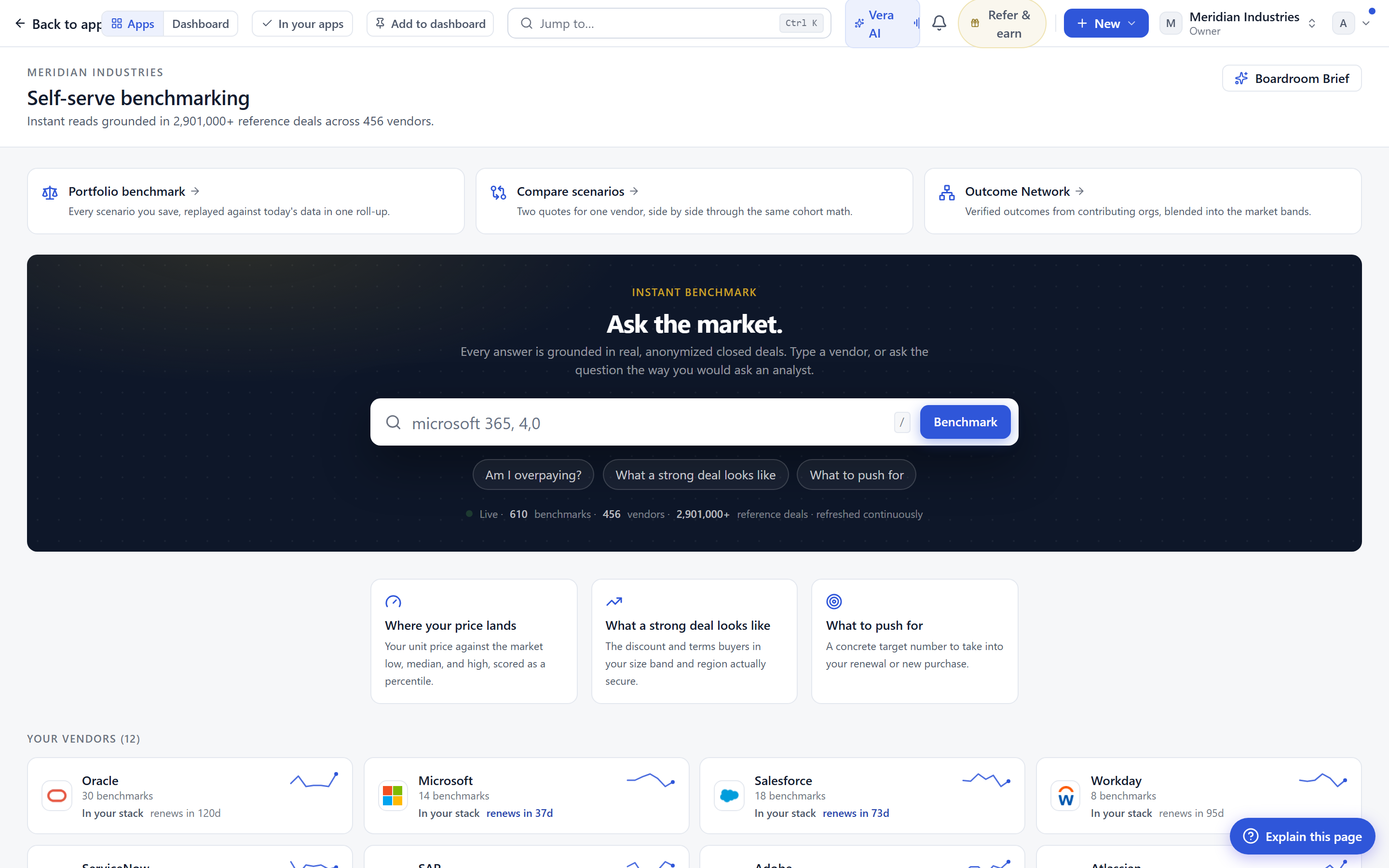
Raw deals are not comparable as they arrive. One is a three year term, another is one year. One bundles support, another prices it separately. One is a global enterprise, another a mid market buyer in a different region. Comparing them directly would be its own kind of lie, so the deals are normalized to a common footing before they are ever compared, so that a benchmark reflects a real like for like rather than an accident of contract structure.
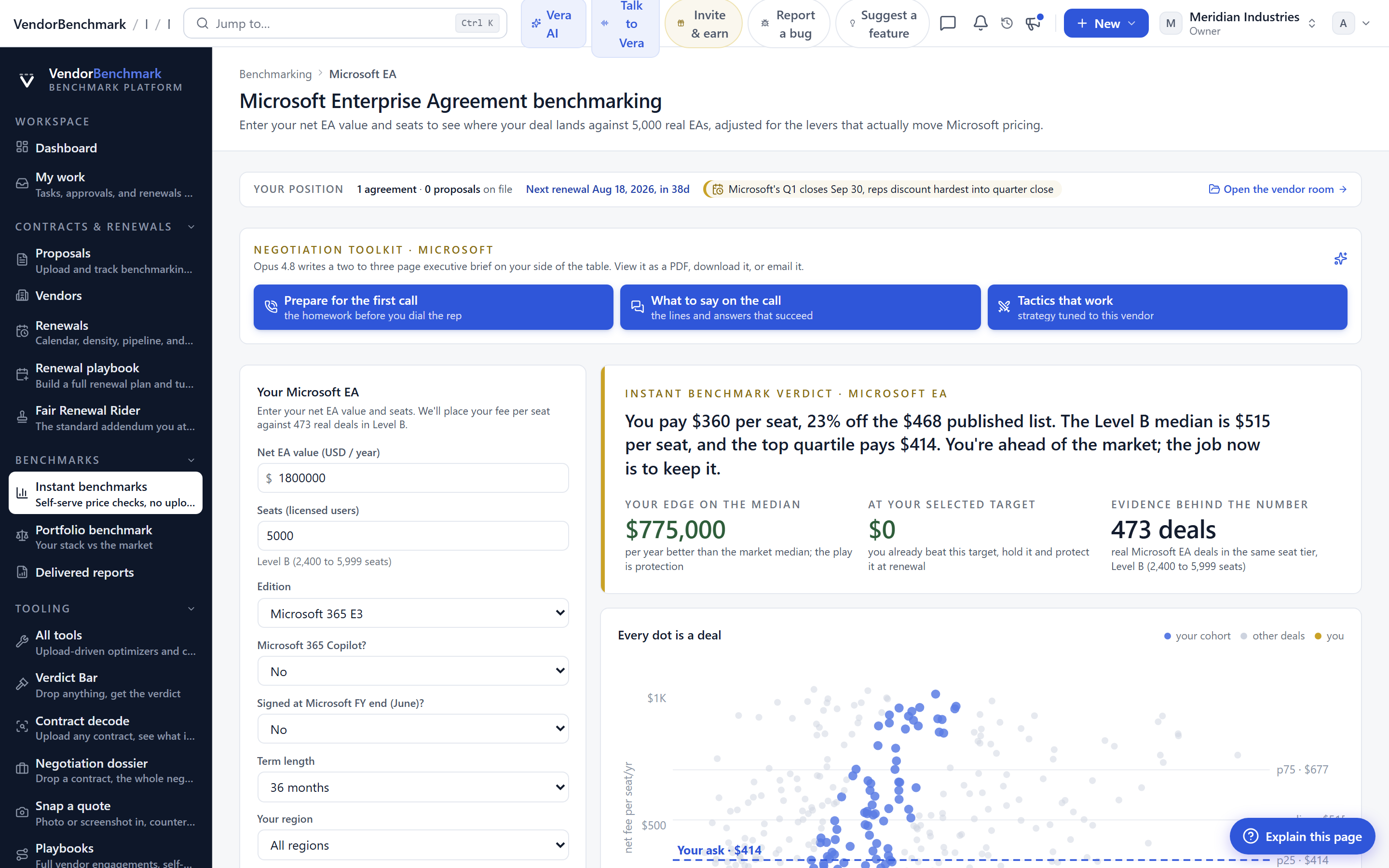
Then comes the part that decides whether a benchmark is fair: the cohort. Placing your deal against every deal in the library is the wrong comparison, because a Fortune 100 buyer and a mid market one do not face the same price. So your position is placed against the peers that actually resemble you, by size, by industry, by region, and by the deals nearest to yours, and you can switch between those lenses to see how your standing changes. A price that looks poor against the whole market may be strong against your true peers, and only the right cohort tells you which.
Graded by confidence, kept fresh, verified by peers
An honest benchmark says how sure it is. A cohort of four hundred comparable deals and a cohort of six support very different claims, and hiding that behind a single confident percentile is how benchmarks mislead. So every standing carries a confidence label tied to the size of the cohort behind it, and a thin comparison is shown as thin rather than dressed up as certainty. Knowing a benchmark is provisional is far more useful than trusting one that should not have been trusted.
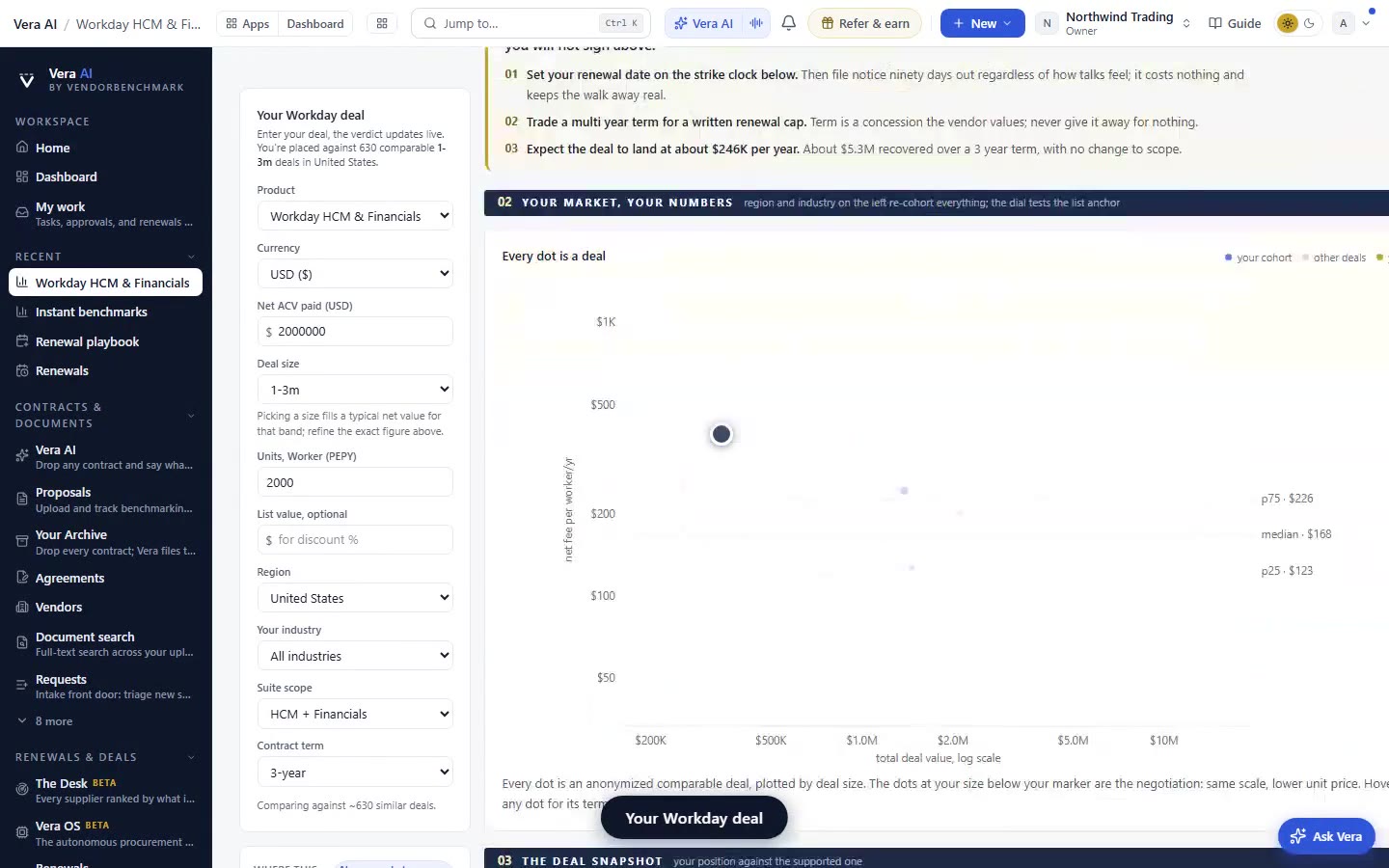
The method also has to stay current, because a benchmark is a photograph of a market that keeps moving. The library is recency weighted and recalibrated as new deals land, so a price that was strong two years ago is not still reported as strong today. And it is reinforced by a verified peer layer, an outcome network where buyers contribute their own real, anonymized results to see the cohort, with a floor on how few peers can make up a comparison so no single deal is ever identifiable. Modelled cohorts set the base, and verified peer outcomes keep it honest.
What makes a benchmark defensible
A benchmark is a position, not a verdict
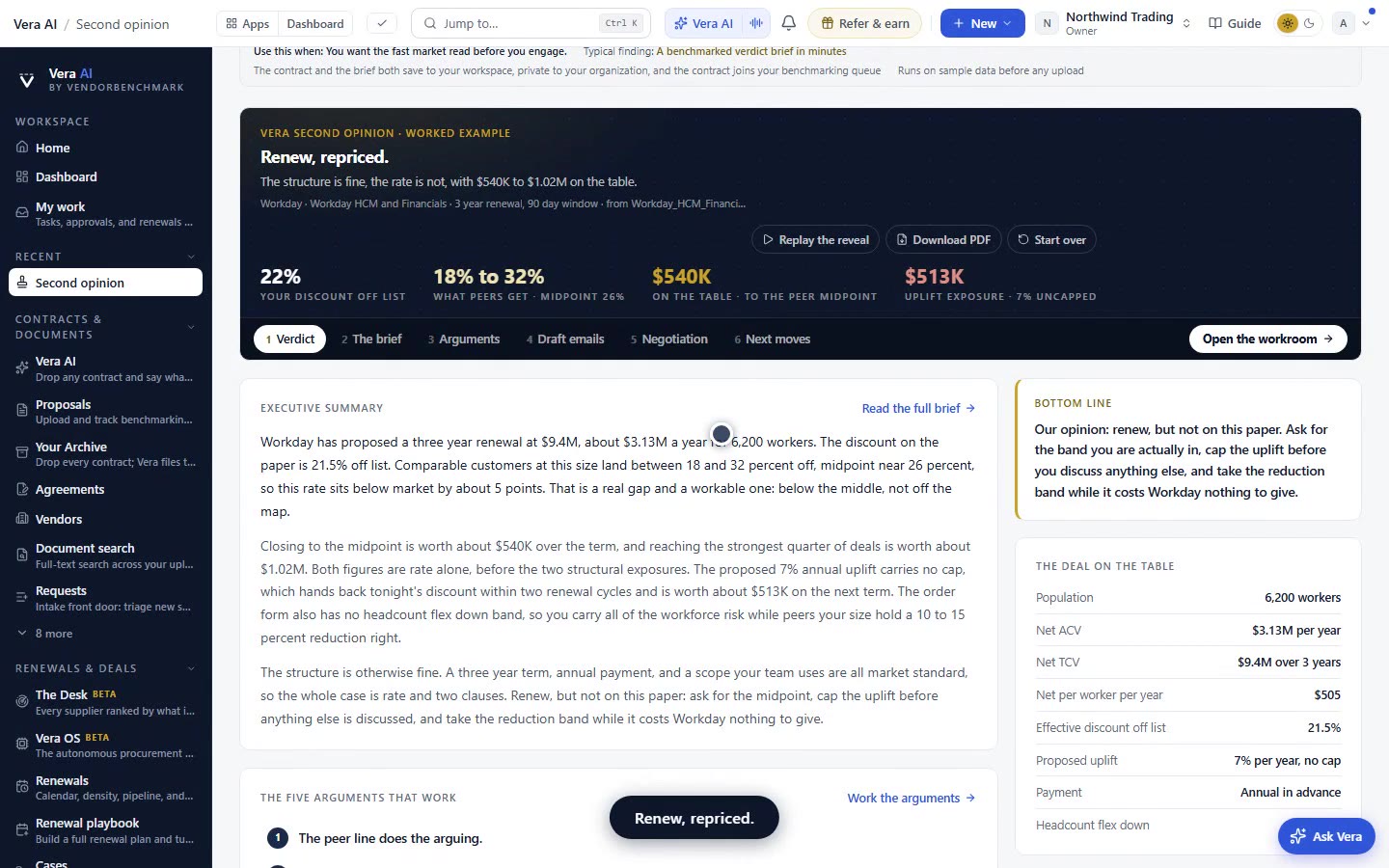
A benchmark tells you where your price sits against comparable deals. It does not know the parts of your situation that never reach the data: a strategic relationship you value above price, a switching cost that makes a high number rational, a bundle whose true value is hard to compare. A number at the top of the distribution is a flag to investigate, not proof you were robbed, and the judgment about what to do with it is still yours.
What the method guarantees is that the flag is real. When the benchmark says you are paying above your true peers, it is because hundreds of comparable deals, normalized and placed in your cohort, sit lower, and it will tell you how confident it is in saying so. That is a number that survives being read back to you across the table, which is the only test of a benchmark that ever mattered.
Morten brings two decades of enterprise and software procurement, with stints across Oracle, IBM, SAP, and Salesforce shaping how he reads a deal. He has led sourcing through hundreds of renewals, from mid market order forms to nine figure global agreements, and learned that the buyers who win are the ones who walk in knowing the market. He built VendorBenchmark to make that pattern recognition repeatable.
The week in enterprise software buying, in one email.
What shipped on the platform, and the pricing and licensing moves worth knowing before your next renewal. One email a week, to your work address. Unsubscribe any time.