The audit trail: who saw what, and why it matters in procurement.
A procurement platform holds contracts, prices, and the record of how deals were done. A trail of who did what and when is not paperwork, it is what lets you answer, months later, who accessed a contract, who approved a deal, and on what basis, when someone finally asks.
Every procurement decision eventually gets questioned. A deal that looked fine at signing is challenged a year later; a contract everyone assumed was reviewed turns out to have a clause nobody remembers agreeing to; an auditor asks who had access to a sensitive negotiation; a dispute turns on who approved a commitment and on what basis. In each case the value of the answer depends entirely on whether there is a record, and a trustworthy one. A platform that holds your contracts, your prices, and the history of how deals were done should be able to tell you, precisely, who did what and when, and if it cannot, then in the moment you most need the answer you will not have it.
An audit trail is that record, and it does double duty. As a security control, it is how unauthorized or suspicious access is detected and investigated, the log against which anomalies show. As a governance asset, it is the evidence that decisions were made properly, access was appropriate, and the process was followed, which is exactly what an auditor, a board, or a counterparty in a dispute wants to see. The same trail that catches a bad actor also demonstrates good practice, and on a platform holding this kind of data, both jobs matter.
A record of actions, not just logins
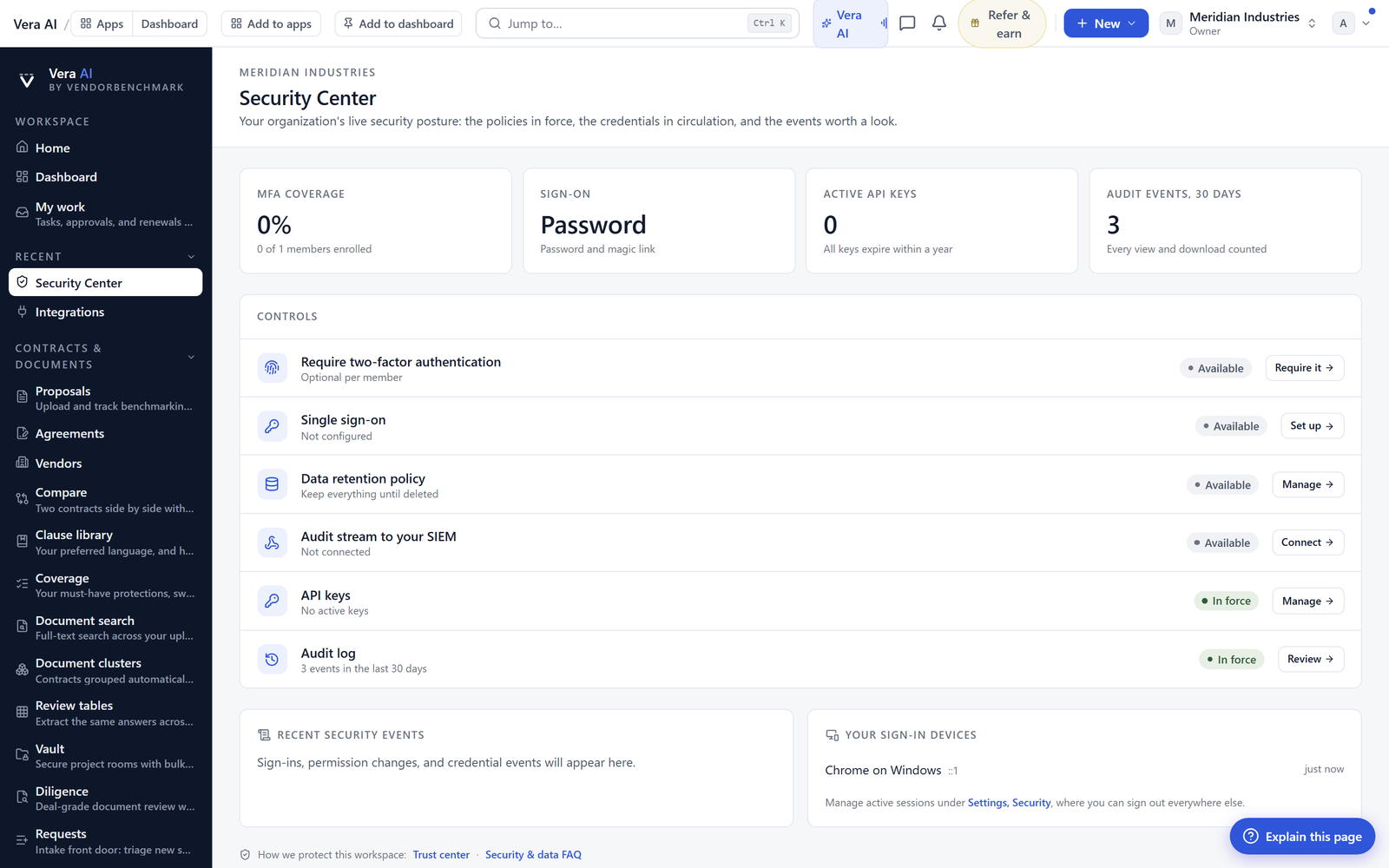
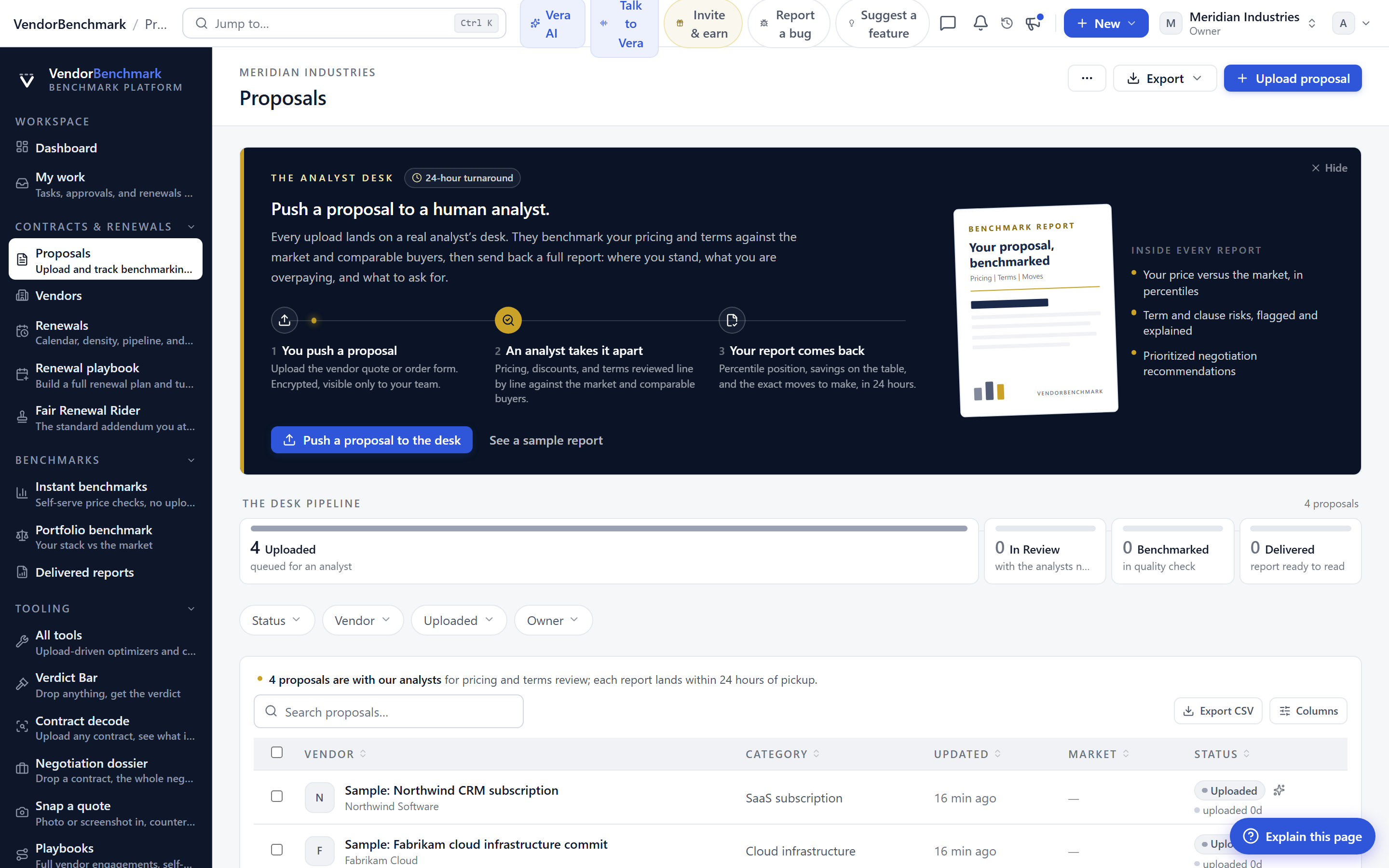
A meaningful audit trail records actions, not merely the fact that someone logged in. It captures who did what, to which specific record, and when: who viewed a contract, who downloaded a file, who ran a benchmark, who created or edited a deal, who approved a commitment. The distinction matters because the questions that get asked later are about specific actions on specific records, "who accessed this contract?", "who exported this pricing?", and a log that only knows about sessions cannot answer them. The trail has to be granular enough that a real question maps to a real entry.
Crucially, the sensitive reads are logged, not just the writes. It is easy to record when someone changes something and harder, but more important for this kind of data, to record when someone merely looks at it. On a platform holding contracts and negotiated prices, viewing and downloading are themselves the sensitive actions, because the risk is not only that data is altered but that it is seen or taken by someone who should not, or leaked. A trail that captures the views and the downloads of contract files, and not only the edits, is the one that can actually answer the access questions that matter most.
The trail that survives scrutiny
An audit trail is only worth having if it can be trusted when it is examined, which means it has to be reliable, complete, and hard to quietly alter. A log that individuals can edit to cover their tracks is not evidence, and a log with gaps where the inconvenient actions went unrecorded is worse than none, because it creates false confidence. The trail has to be written consistently by the platform itself, not optionally by the people whose actions it records, so that its completeness does not depend on anyone choosing to be recorded, and it has to be protected so that the record of what happened cannot be rewritten after the fact.
This reliability is what turns the trail from a nice-to-have into a governance instrument. When a decision is challenged, the trail either supports your account of what happened or it does not, and its value is precisely that it is not your account, it is the system's neutral record. For that to carry weight, it must have been recorded automatically, at the moment the action occurred, and preserved intact. A trustworthy trail is one you did not curate, which is exactly why a board or an auditor will believe it when they would not believe a reconstruction assembled after the question was asked.
A control you can also hand to the buyer
The audit trail is not only for the platform operator; it is a control the customer benefits from directly, and increasingly one they ask about in their own diligence. A buyer evaluating a platform that will hold their contracts wants to know that access to their data is logged and that they can see the record, because their own governance depends on it. Being able to show a customer that every view and download of their contracts is recorded, and that the record is theirs to inspect, is both a security assurance and a selling point, because it lets them extend their own audit requirements onto the platform rather than accepting a blind spot.
Internally, the same trail supports the organization's own governance. Who on the team accessed a sensitive negotiation, who approved a deal and when, who ran the benchmark that justified a number, all of it becomes answerable, which is what proper internal controls require. The trail turns "we think the process was followed" into "here is the record showing it was," which is the difference between asserting good governance and being able to demonstrate it, and demonstration is what matters when the question comes from a board, a regulator, or a counterparty rather than a colleague.
What a real audit trail gives you
A record enables accountability, it does not create it
An audit trail records what happened; it does not by itself make an organization accountable, because a log nobody reviews and rights nobody enforces is just storage. The trail is the precondition for accountability, the evidence that makes it possible, but the governance around it, who reviews access, how anomalies are followed up, what the consequences are, is organizational work the record enables rather than performs. A platform can give you a trustworthy trail; using it to actually hold people and processes to account is your part.
What the trail removes is the blind spot that made the hard questions unanswerable. Without a reliable record, "who saw this?" and "who approved that?" are answered with memory and assumption, which is to say not answered at all, and the absence surfaces at the worst moment, in the dispute or the audit. A complete, system-written, inspectable trail means the answer exists before the question is asked, which is the whole point: on a platform holding your most sensitive commercial data, the record of who did what should be there waiting, not reconstructed under pressure when it is already too late.
Morten brings two decades of enterprise and software procurement, with stints across Oracle, IBM, SAP, and Salesforce shaping how he reads a deal. He has led sourcing through hundreds of renewals, from mid market order forms to nine figure global agreements, and learned that the buyers who win are the ones who walk in knowing the market. He built VendorBenchmark to make that pattern recognition repeatable.
The week in enterprise software buying, in one email.
What shipped on the platform, and the pricing and licensing moves worth knowing before your next renewal. One email a week, to your work address. Unsubscribe any time.