The E5 question: Microsoft 365 licensing and the price of convenience.
Every Microsoft renewal arrives with the same gentle push toward E5. Sometimes it is the right move. Often it is a convenience tax on features a fraction of your users will ever open. Here is how to answer the E5 question with evidence instead of a shrug.
The Microsoft renewal conversation has a gravity to it. Everything pulls toward the bigger bundle. E3 becomes E5, standalone security becomes the security suite, and now Copilot sits on top of all of it. Each step is framed as simplification, one SKU, one number, one less thing to manage. And each step is also a price increase you are being invited to wave through in the name of tidiness.
The bundle is not a trap exactly. For some organizations E5 genuinely pays for itself. But the default assumption, that everyone should be on it because it is simpler, is a convenience tax, and it is one of the largest recurring lines most enterprises never actually examine. The E5 question deserves an evidence based answer, not a reflex.
What E5 actually adds, and who actually needs it
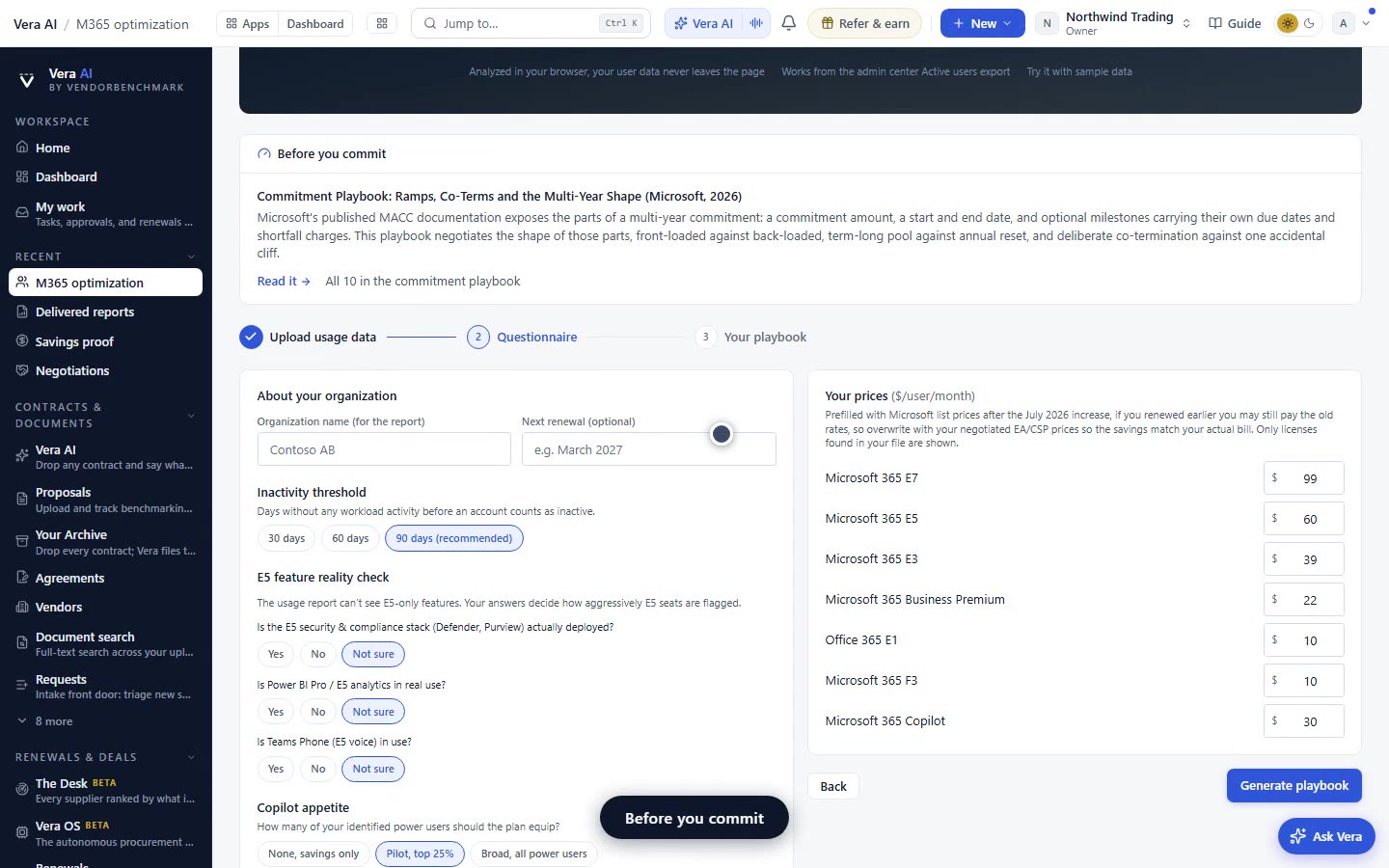
E5 over E3 is mostly three things: advanced security and compliance, voice, and analytics. The security stack is real and valuable, if you are going to use it and if you are not already paying for equivalent tools elsewhere. That second condition is where the money hides. Plenty of organizations buy E5 for its security features while still running a separate endpoint and identity stack, paying twice for overlapping protection.
The honest test is per persona, not per organization. A security operations analyst may need everything E5 offers. A warehouse kiosk worker needs a fraction of E3. Treating every seat as identical is how a Microsoft estate quietly inflates. The question is never "should we be on E5," it is "how many of these specific people need it, and what are the rest costing us at the wrong tier?"
Bundling works on the buyer precisely because unpicking it is tedious. It is genuinely easier to put everyone on the top tier than to defend a mix of E1, E3, and E5 across a workforce. The vendor knows this, and the convenience premium is priced into the ease. The counter is not to refuse the bundle on principle, it is to make the tedious comparison once, with data, so the simplicity you are buying is a choice you costed rather than a step you skipped.
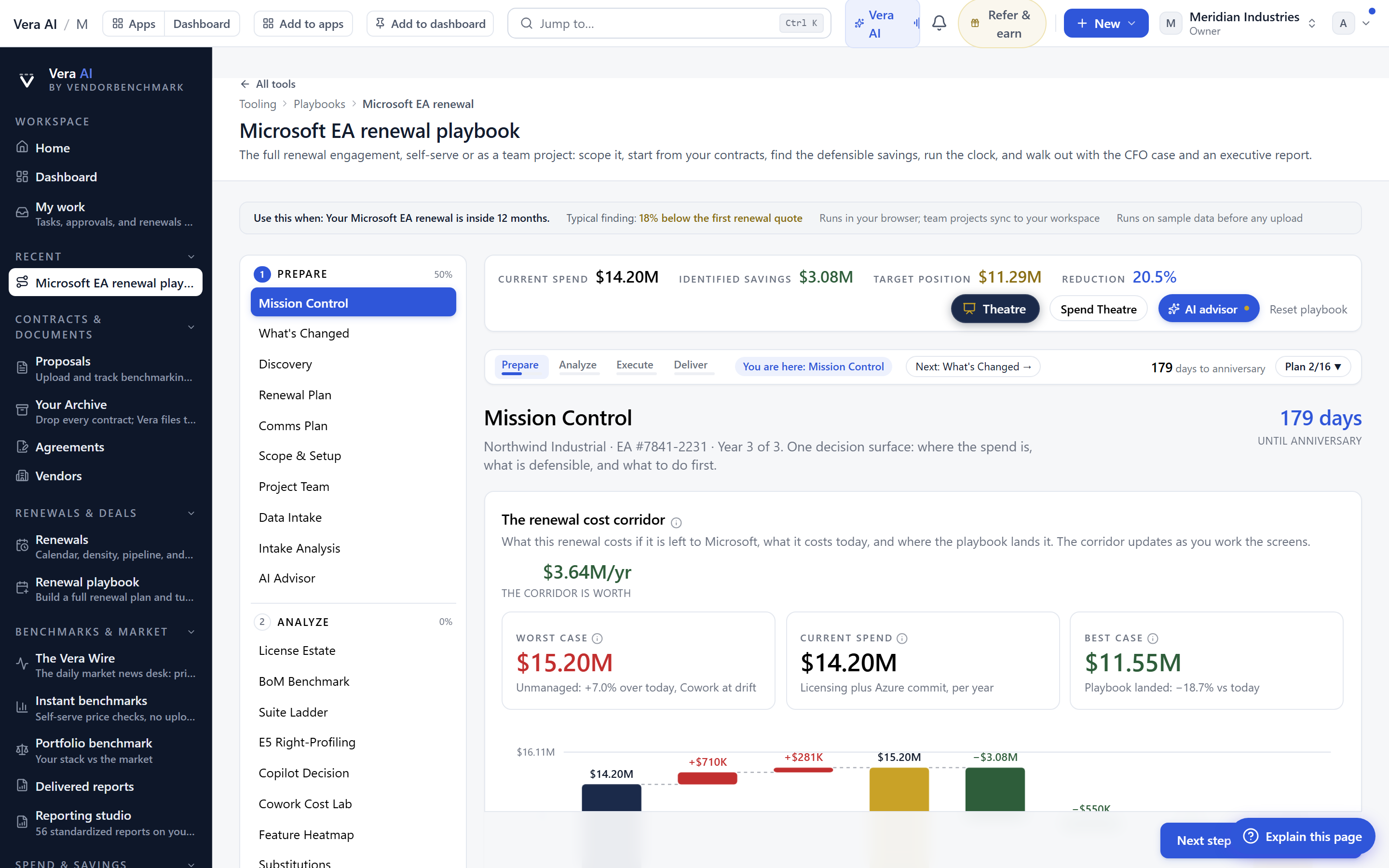
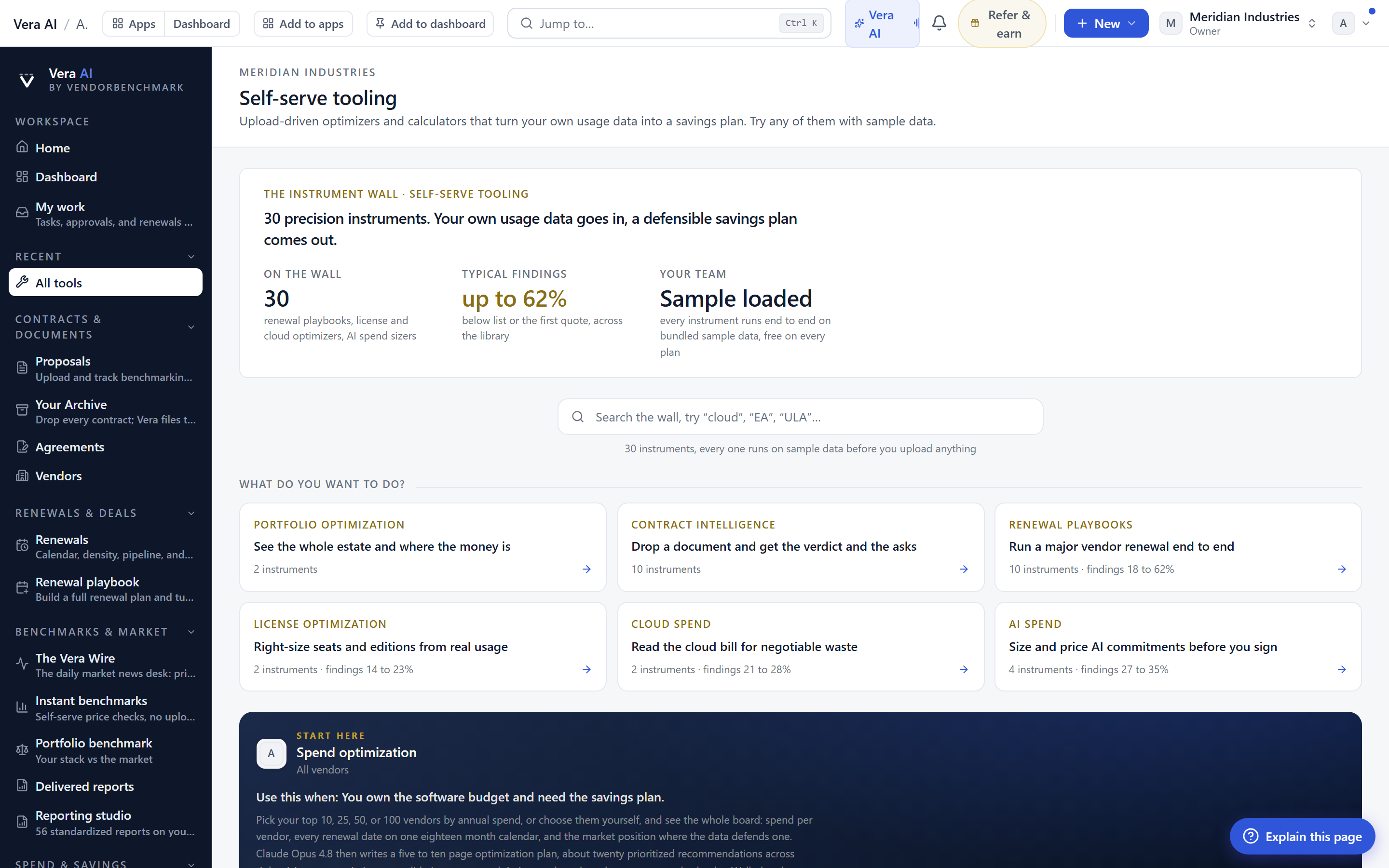
The playbook approaches an EA the way it deserves to be approached, as a year long project rather than a signature. Net value per seat, the E5 and Copilot push, and the timeline from twelve months out are all laid out, so the renewal is a position you already hold rather than an event you scramble to prepare for.
Right size before you renew, with usage as the argument
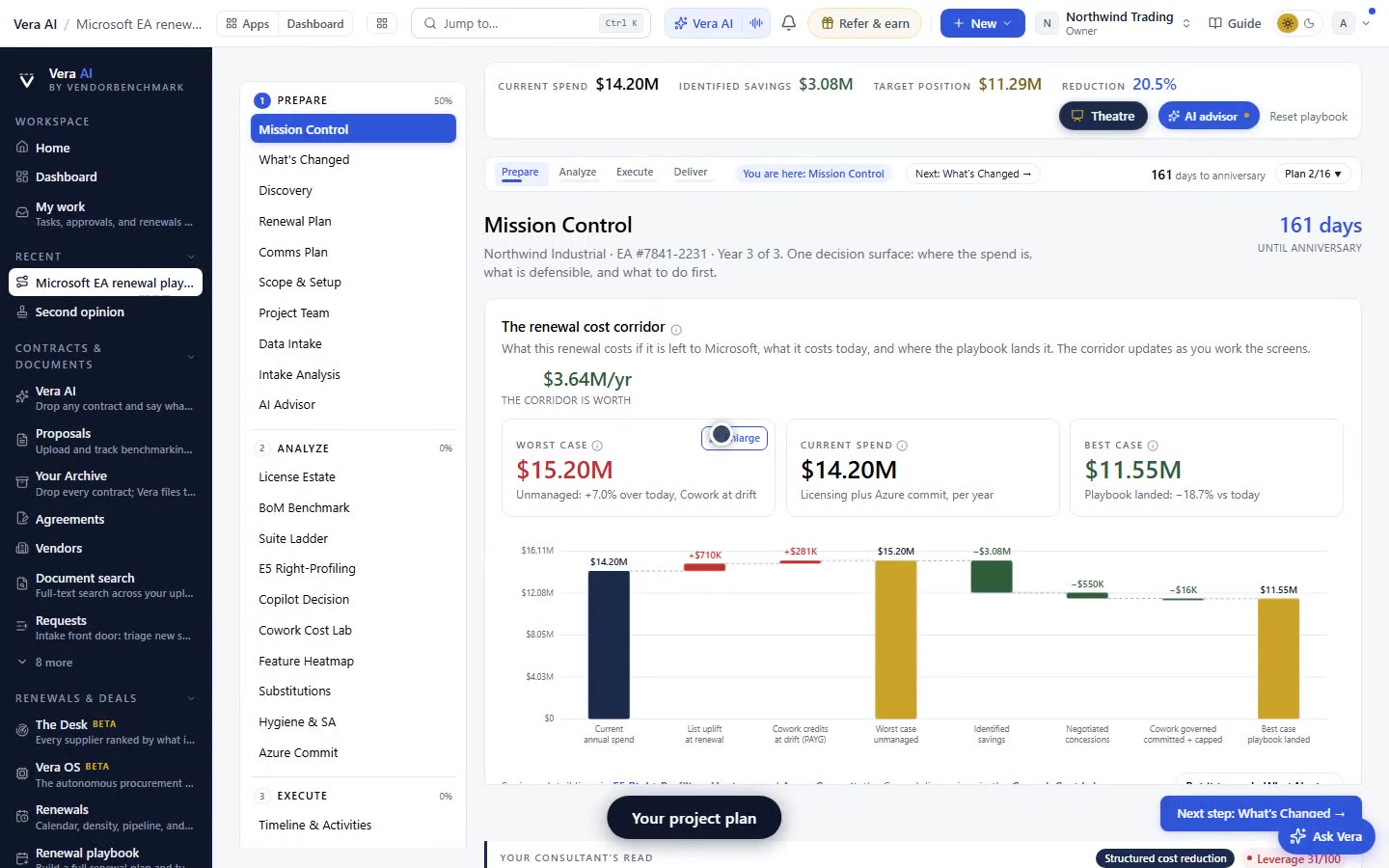
The strongest move at a Microsoft renewal is not a discount ask, it is a profile. Before you talk price, know how many seats are genuinely using E5 capabilities, how many are over licensed, and where the overlaps with other tools are. Usage evidence turns a vague "we might not need all these" into a defensible count the vendor cannot easily wave away.
The same discipline applies to Copilot. The AI add on push is intense, and sometimes justified, but it should be sized from a pilot and real adoption, not from the vendor's growth story. Price the add on against what your users actually do with it, and the conversation moves from enthusiasm to evidence.
Right sizing also changes the tone of the whole renewal. Walk in asking for a discount and you are a supplicant negotiating against a rep who does this all day. Walk in with a per profile seat analysis showing exactly who is over licensed and where you pay twice, and you are presenting a finding the vendor has to answer. The number you are asking for is no longer a favor, it is the correction of a count you can both see. That is a far stronger place to stand than hoping for goodwill on price.
Want to be updated when major licensing and pricing changes land? One analyst brief a week: the price rises, metric changes and audit campaigns that move software costs. Work email only.
Before you accept the E5 upgrade
Sometimes E5 is the right answer
This is not an argument against E5. For an organization that will genuinely use the security suite, retire overlapping tools, and adopt the analytics, the bundle can be the cheaper path once you count what it replaces. The point is that you should be able to say which of those things is true for you, with numbers, before you sign.
The convenience the vendor sells is real. It is just not free, and it is rarely the right fit for every seat at once. Answer the E5 question one profile at a time, bring usage to the table, and the renewal stops being a bundle you accept and becomes a decision you made.
Morten brings two decades of enterprise and software procurement, with stints across Oracle, IBM, SAP, and Salesforce shaping how he reads a deal. He has led sourcing through hundreds of renewals, from mid market order forms to nine figure global agreements, and learned that the buyers who win are the ones who walk in knowing the market. He built VendorBenchmark to make that pattern recognition repeatable.
The week in enterprise software buying, in one email.
What shipped on the platform, and the pricing and licensing moves worth knowing before your next renewal. One email a week, to your work address. Unsubscribe any time.